
NASCAR’s annual all-star race has had a vast and dizzying multitude of formats over the years as race designers have tried—and occasionally succeeded—to come up with a way to force competitors into an entertaining race.
Next up: Zaniness at Dover Motor Speedway, which will host the race for the first time Sunday. The format is both wacky and interesting. It could shine; it could fizzle.
Whatever happens, it’s unlikely they’ll top the 1992 race, the last lap of which still sends fans to video archives to revisit the drama.
Related Story
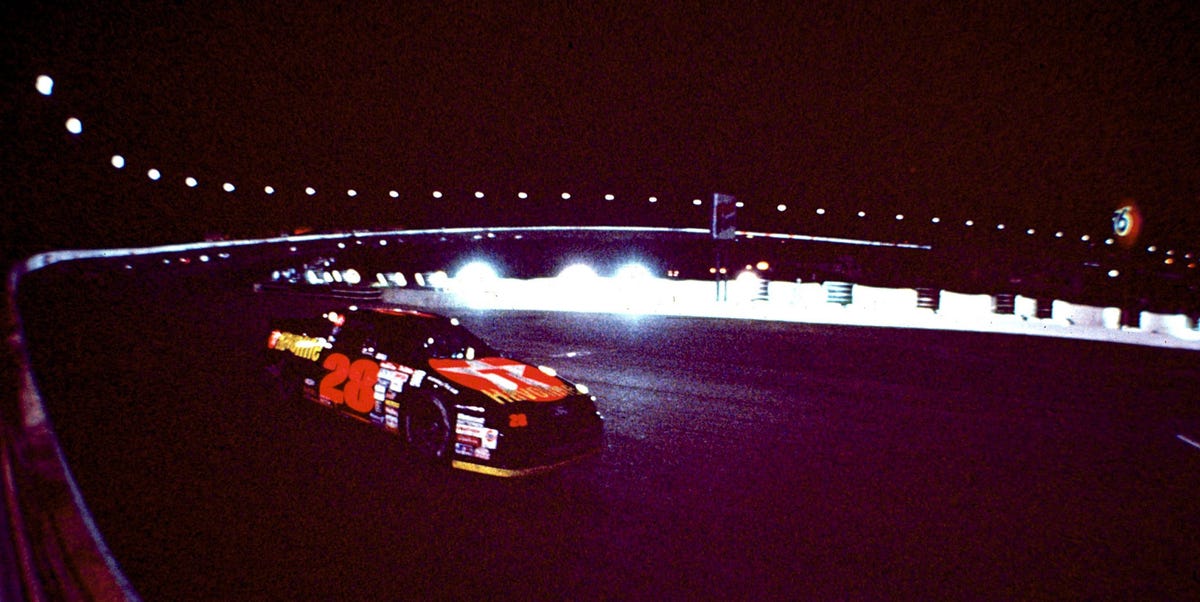
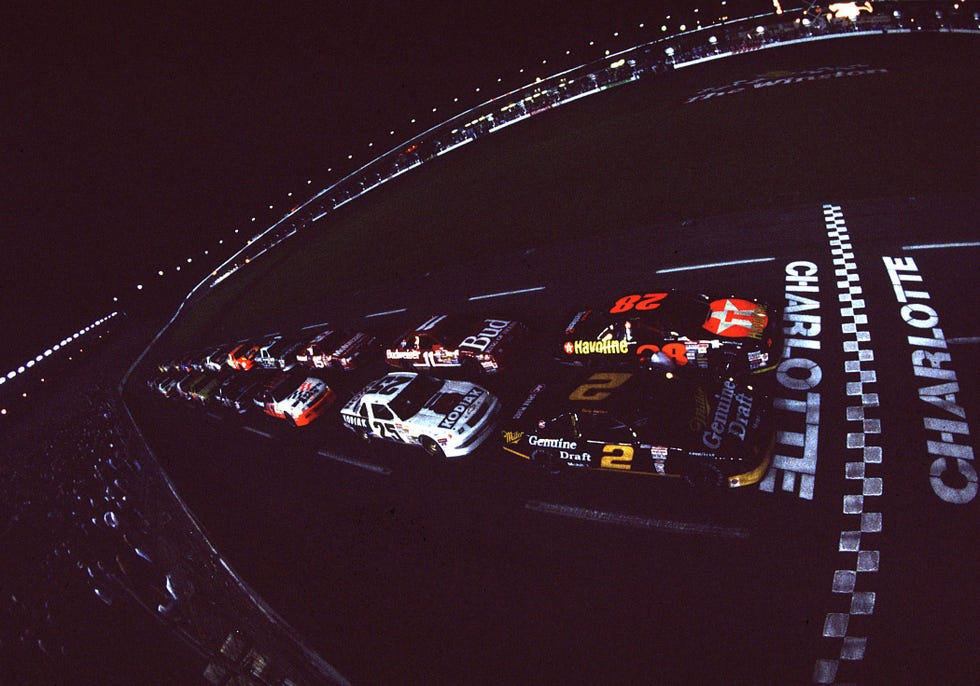
It was the infamous One Hot Night, so named by promoter extraordinaire Humpy Wheeler, who turned Charlotte Motor Speedway into a cauldron of anticipation, excitement, and entertainment for one memorable evening.
The night began with no one knowing how it might end. And that was part of the drama. In a moment of brilliance, Wheeler, fearful that the then-popular all-star event might be moved from its seemingly forever home at CMS, came up with the idea to light the track for night racing. It was a bizarre thought at the time, and some in the garage were hesitant to endorse the concept. Racing at those speeds at night? I dunno, some said.
But Wheeler, working with lighting experts, came up with a then-revolutionary lighting concept that brought the racing surface to life at night. A night-time test run resulted in NASCAR and virtually every driver giving the OK.
RacingOne//Getty Images
“It was like daylight,” Kyle Petty said. “No one paid any attention.”
Tickets sold like cheap gas.
The buildup to the race almost required a spectacular finish, and that was delivered.
Dale Earnhardt led as the white flag flew, but Petty, whose car seemed to improve with each lap, surged to the front. As they entered turn three, Earnhardt dropped low, forcing Petty to the far inside of the track. Petty refused to give up on the idea of winning, despite Earnhardt’s aggressive move. There was no contact, but Earnhardt lost control of his Chevrolet and went into a long slide.
Related Story
Petty took the lead and seemed safe. But Davey Allison roared into the picture and pulled alongside Petty as they approached the finish line. Allison edged in front as they drove under the checkered flag, winning the race. But the cars collided a half-second later, and Allison slammed into the outside wall, his car winding up mangled and sitting in smoke on the inside of turn one.
A few minutes later, there was the oddest of celebrations in victory lane. The driver wasn’t there. Allison was transported to a nearby hospital with a concussion and bruised lung. He recovered to race eight days later in the Coca-Cola 600, finishing fourth, one spot behind Petty.
The Allison-Petty finish in the all-star race resulted in many fans remaining in the stands, somewhat stunned and absorbing the drama of what they had seen instead of rushing to beat post-race traffic.
It became the template for a great all-star race.
Dover will get its shot at all-star history Sunday with a format that will stretch the length of the race with segments of 75, 75, and 200 laps.
The top 26 finishers in the first segment will be inverted for the start of segment two. The field for the final segment will be set by the average finish of drivers in segments one and two.
There will be an automatic caution around lap 75 of the final segment. Rules require the race to finish under green.

Mike Hembree has covered auto racing for numerous media outlets, including USA Today, NASCAR Scene, NBC Sports, The Greenville News and the SPEED Channel. He has been roaming garage areas and pit roads for decades (although the persistent rumor that he covered the first Indianapolis 500 is not true). Winner of numerous motorsports and other media awards, he also has covered virtually every other major sport. He lives near Gaffney, South Carolina and can be convinced to attend Bruce Springsteen concerts if you have tickets.