

Listen to this article
Estimated 4 minutes
The audio version of this article is generated by AI-based technology. Mispronunciations can occur. We are working with our partners to continually review and improve the results.
“Were the Canadian Rockies made in Nevada?”
That’s the question Nick Zentner posed to a room full of fellow geologists Monday afternoon at GeoConvention, a three-day earth science conference at the Calgary TELUS Convention Centre.
“It’s a provocative thought, and I don’t expect the 700 Canadian geologists this afternoon to be loving me as I share this,” said Zentner, a geology professor at Central Washington University, during an interview with CBC Radio’s Calgary Eyeopener ahead of his presentation.
His talk is based on research by Arizona geologist Robert Hildebrand, who argues the Canadian range of the Rocky Mountains didn’t form where they are today. Rather, they were located in the latitude of what is now Nevada back in the Cretaceous Period, before being moved north into Canada thanks to “a major strike-slip fault known as the Tintina fault.”
LISTEN | Learn more about the theory that the Rocky Mountains were formed in what is now Nevada:
Calgary Eyeopener8:07A new study poses a theory that the Rocky Mountains were formed in what is now Nevada
The Canadian Rockies may have a very different origin story than originally thought. We spoke with a geologist who’s giving a talk in Calgary all about some emerging research.
The Tintina Fault’s existence isn’t a new idea. The roughly 1,000-kilometre geological feature, stretching from Alaska and the Yukon to northern British Columbia, was discovered more than a century ago, and has long been compared to California’s famous San Andreas Fault.
“But this Tintina Fault … just kind of stops on a map once you get down in this neighbourhood,” Zentner said. “And so, this guy Hildebrand says, the Tintina is right underneath the Rockies here.”
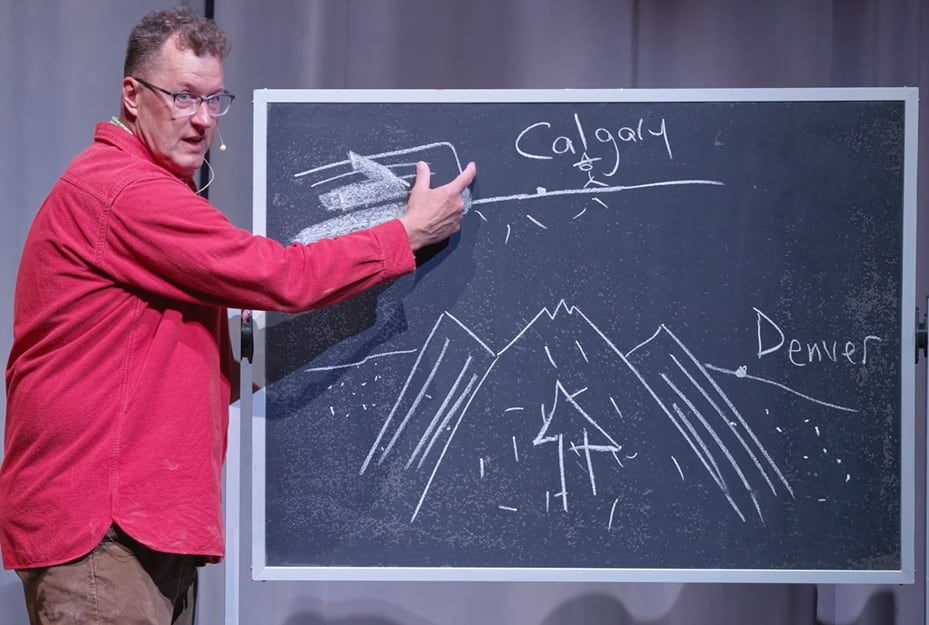 Central Washington University geology professor Nick Zentner pictured giving a presentation on the northward movement of the Rocky Mountains on his YouTube channel. (Nick Zentner/YouTube)
Hildebrand’s findings are supplemented by paleomagnetic data, which Zentner described as “a cross between geology and physics.”
“You can drill into a mountain, you can measure the orientation of the iron particles and determine where that bedrock formed originally due to its magnetism,” said Zentner.
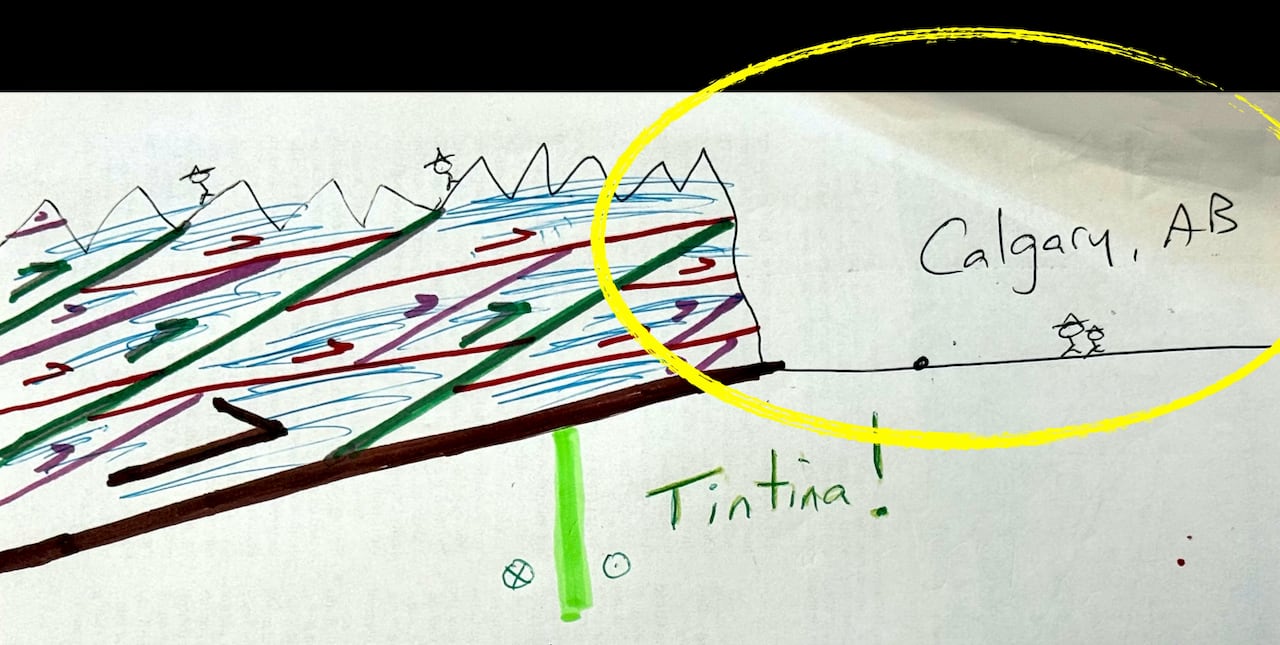 A drawing illustrating the Tintina Fault’s presence under the Canadian Rockies. (Nick Zentner/YouTube)
Paleomagnetic data found in Late Cretaceous-era lava in the Yukon “is the centrepiece for this idea of the Canadian Rockies moving north,” Zentner said.
“That data continues to say there needs to be this major amount of motion — more than 1,000 kilometres of motion,” he said. “And so then you’re looking for the fault that can move all this crust.”
That’s where the Tintina Fault comes in.
“That’s the smoking gun,” Zentner said. “That’s the fault that is shifting not just the Canadian Rockies from Nevada to Alberta, but everything west of this fault moving 1,300 kilometres between 70 and 54 million years ago.”
Not everyone agrees
It’s “a very controversial subject,” said former University of Calgary geologist William Matthews.
“Those geologists who object will say that we just don’t see the evidence in the rocks of these major faults that would have allowed those rocks to move northward,” Matthews said.
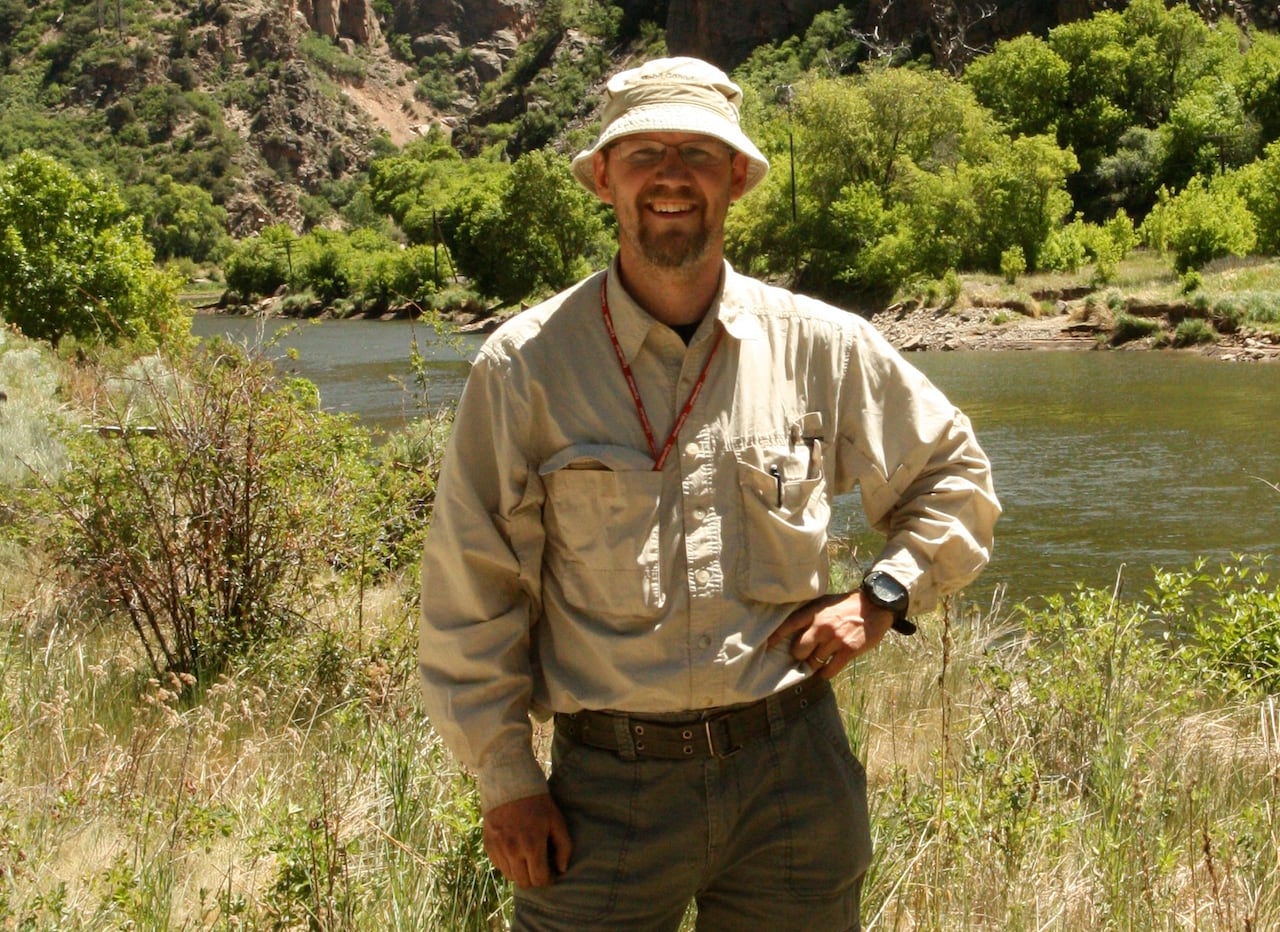 Former University of Calgary geologist William Matthews. (Submitted by William Matthews)
He said the proposed movement happening more than 50 million years ago means evidence — large fault traces or massive scars in the earth, for example — is not highly visible today, compared to how easy it is to observe such evidence of the San Andreas Fault’s activity in California.
“They take the paleomagnetic observations … and they say, ‘Well, there must be other ways to explain those geophysical measurements that don’t involve transport of the rocks northward,” Matthews said.
LISTEN | New research shows the Rocky Mountains are the result of a violent crash:
Radio Active6:30New research shows the Rocky Mountains are the result of a violent crash
Most of us learned that the Rocky Mountains formed slowly over time, but new ground-breaking research from the University of Alberta shows a different reality. Jeff Gu is a geo-physicist at the U of A.
It’s a subject bound to generate disagreement, Zentner acknowledged.
“I think everyone at this convention this afternoon agrees with the idea that the Canadian Rockies were entirely in British Columbia until 54 million years ago, and then they started to get shoved towards Calgary on a big flat, thrust fault,” said Zentner.
“There’s multiple chapters in the history of this mountain range, and I’m just adding Bob Hildebrand’s sexiest chapter, which involves moving the stuff north before we then shove it towards town here.”