

Listen to this article
Estimated 3 minutes
The audio version of this article is generated by AI-based technology. Mispronunciations can occur. We are working with our partners to continually review and improve the results.
When the capelin roll in on Newfoundland beaches, they bring hungry whales with them — but a scientist says these marine mammals can be spotted in our waters at other times of the year too.
Earlier this week, a humpback whale was spotted from the shores of Holyrood in Conception Bay and Memorial University marine ecologist Ian Jones said seeing these marine mammals off Newfoundland isn’t actually unusual for this time of year.
“Some of our humpback whales — that are really a national treasure for Newfoundland — they’re here in the winter time and some of them are here in early spring. So that it’s not unprecedented,” he told CBC Radio’s The St. John’s Morning Show.
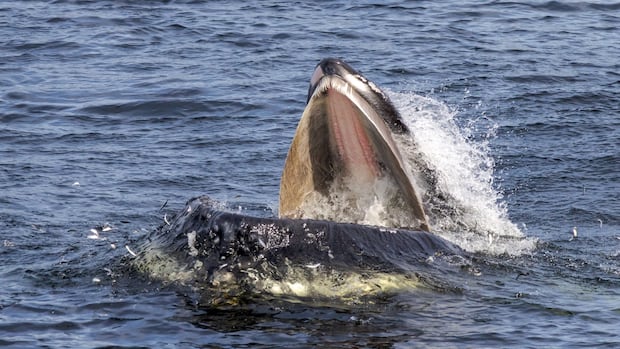
WATCH | Humpback whale makes appearance in N.L. waters: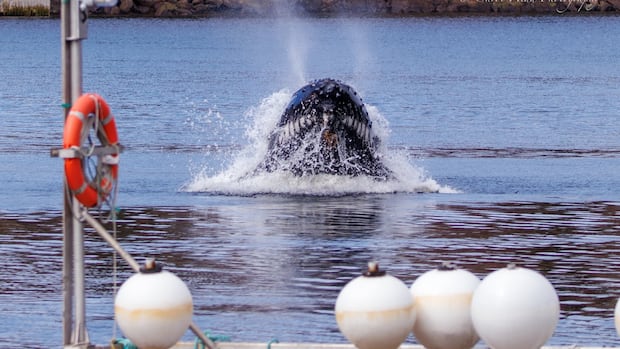
A whale of a time in Holyrood
Sightings of humpback whales in Holyrood prompt the question: is it too early to see whales? Marine ecologist Ian Jones explains what’s behind this early sighting.
Jones said more whales will be arriving in approximately six weeks time to coincide when the capelin rolls in, but other types of fish can attract whales too.
Humpback whales are the most common type spotted off Newfoundland, he said. Most of the population winters in tropical waters of the Caribbean where they have their calves and live off stored fat they built up over their summertime visits to Newfoundland.
“These animals move long distances and they’re deliberately coming here in the biggest numbers later during the summer to feed on the capelin,” said Jones.
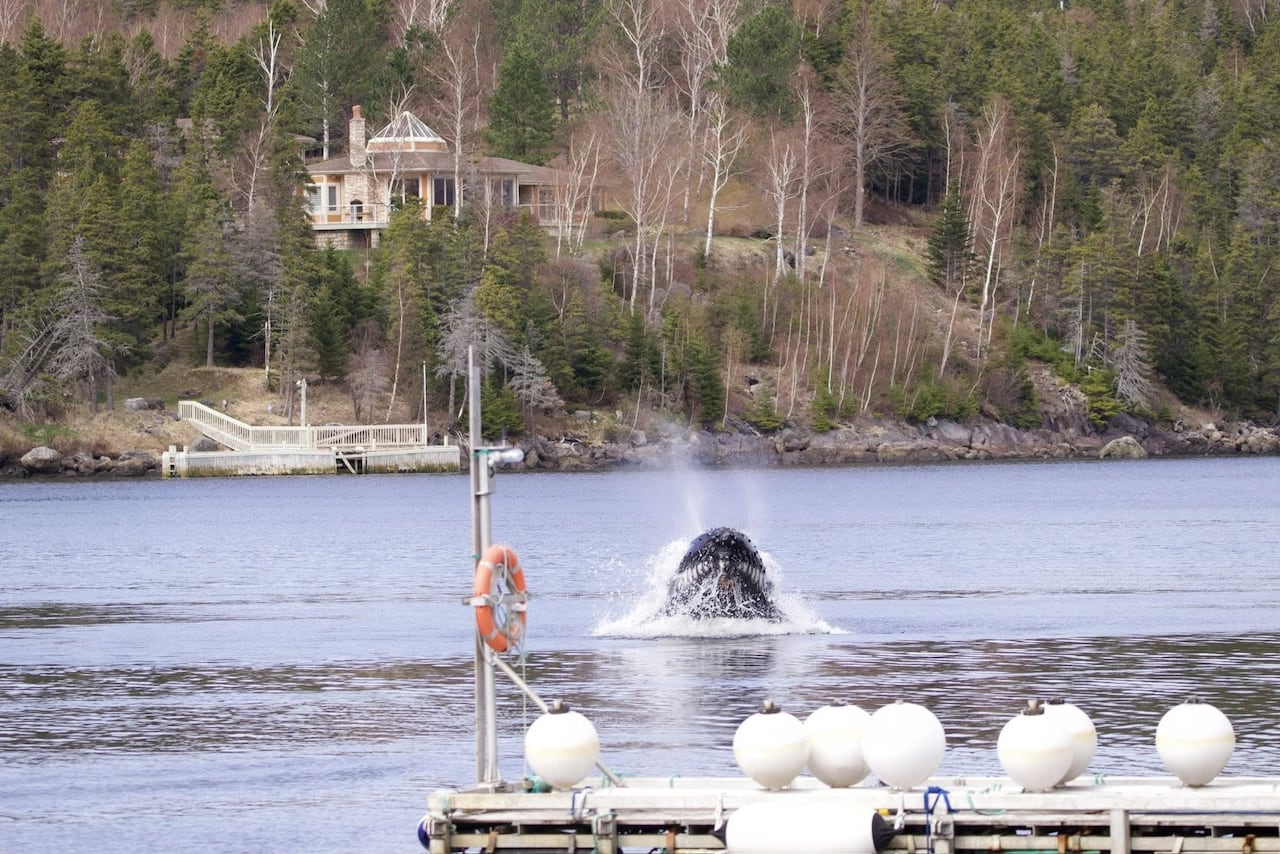 In recent days, a humpback whale has been spotted from the shore of Holyrood. (Submitted by Carol Hedd)
Whales appearing off Newfoundland in the winter and spring are usually males who are able to find pockets of other fish like herring, he said.
While there might be less of an abundance of food off Newfoundland, he said the whales who hang about also don’t have to make the arduous journey down south and could be conserving energy that way.
He said females who are calving need the warmer waters.
“Their best option is really to migrate and they can just hang out in warm water, minimize energy expenditure while they’re down there, and then return to capture our capelin abundance.”
Jones said he was recently on the online database Happy Whale, where people submit photos of a whale’s unique tail markings — also known as a fluke — to track individual whale sightings.
“That pattern is very distinct and it’s very relatively easy to photograph. And then by that individuals can be tracked. So it’s like a fingerprint,” said Jones.
He said one whale spotted near Holyrood Monday was recently clocked in the Caribbean, adding without seeing the fluke he can’t say if the same whale has been spotted there in recent days.
Download our free CBC News app to sign up for push alerts for CBC Newfoundland and Labrador. Sign up for our daily headlines newsletter here. Click here to visit our landing page.