

Listen to this article
Estimated 4 minutes
The audio version of this article is generated by AI-based technology. Mispronunciations can occur. We are working with our partners to continually review and improve the results.
Christie Little wants to get the word out: The field across from her home of 20 years could be taken over by an AI data centre, an outcome she says would be “devastating.”
“We made our home here. We thought we were going to live here, I mean for another 50 years, as long as we possibly could because we absolutely love it here,” Little said. “The concern that this is happening definitely makes a big question mark in our future.”
Las Vegas-based Jet.AI and Vancouver-based Consensus Core announced plans to build an AI data centre north of Île des Chênes in the rural municipality of Ritchot. The site would be built on 141 hectares of land.
Little is concerned about the proximity to the community and the potential impacts of noise, light and air pollution.
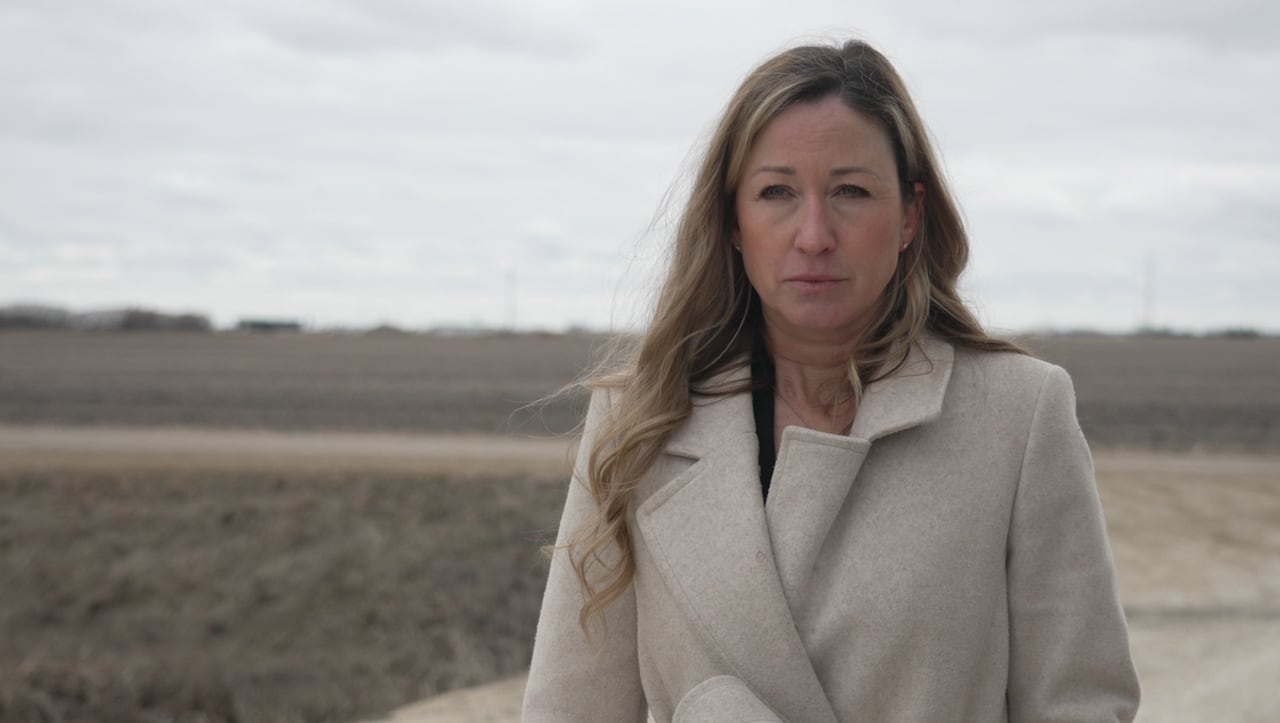 Christie Little’s home of 20 years sits across the road from a proposed AI data centre building site. Little, who is concerned about noise, light and air pollution, says it would be “devastating” if the project goes ahead. (Jura McIlraith)
The companies told CBC News late last year a natural gas-fired power generation plant with up to six turbines would be built on that parcel of land.
When Little learned of the plans, she began an online petition that has gathered more than 10,000 signatures to date.
RM of Ritchot Mayor Chris Ewan was unavailable for an interview. An emailed response to CBC News from a spokesperson said the RM is aware of the petition and has questions similar to those of residents.
The statement said the RM is seeking information directly from the company, and asked that the community be given a chance to ask questions.
A spokesperson from the Government of Manitoba said they are aware of Jet.AI‘s desire to build a data centre in the province. Applications for power would first be sent to Manitoba Hydro before being submitted to the province.
In an email statement, Manitoba Hydro said applications or proposed developments are not discussed with the media.
Little had never heard of AI data centres before coming across a social media post about the one proposed near her home.
“I started the petition just to get the word out there,” Little said. “I find that the more people know and the quicker we know it, the better.”
In Saskatchewan, construction has begun on a similar project south of Regina in the RM of Sherwood. Nearly 200 protesters gathered there to oppose Bell Canada’s AI data centre.
The RM approved the project on April 20 despite residents raising concerns. A petition opposing the site gathered 13,000 signatures.
Regina resident Jay-Jay Bigsky, who participated in the protest, says there’s a feeling of helplessness.
 Regina resident Jay-Jay Bigsky is protesting the AI data centre that is now being built near the city in the RM of Sherwood. He says physical petitions are harder to ignore than online petitions. (Alexander Quon/CBC News)
“It shows the amount of people that are within your cause. That being said, online petitions can only go so far,” Bigsky said in a telephone interview. “There needs to be collective action. Physical petitions are ones that cannot be ignored.”
Bigsky is “staunchly” against AI. He is concerned about power consumption, water usage and environmental hazards associated with the massive data centres.
He hopes those concerns will be taken seriously.
“It is foolish to assume that if you do not exist in the area that it does not affect you,” Bigsky said. “That is simply untrue.”
While David Gerhard acknowledges there are negative impacts associated with data centres, including noise and environmental pollution, the head of the University of Manitoba computer science department says there is a larger question at play.
 David Gerhard, head of the University of Manitoba computer science department, says there could be negative impacts associated with data centres, including noise pollution and environmental pollution. (Zoom)
“It comes back to sort of how do we feel about AI at all, right?” Gerhard said through Zoom. “If we think this is a thing that is problematic and is going to put a lot of people out of work, then it’s hard to justify spending a lot of time and money and environmental impact to build one of these things.”
On the other hand, he said, if it’s viewed as a transition that’s inevitable, having control over local data centres has “some benefit.”
For Little, who moved to Île des Chênes with her husband for the peace and quiet, the benefits don’t outweigh the drawbacks.
“It is a big concern for me that the peace and the landscape will be changed,” Little said. “We sit out watching the sunsets and we sit in our backyard watching the sunrises.”
WATCH | Proposed AI data centre raises concerns in southeastern Manitoba: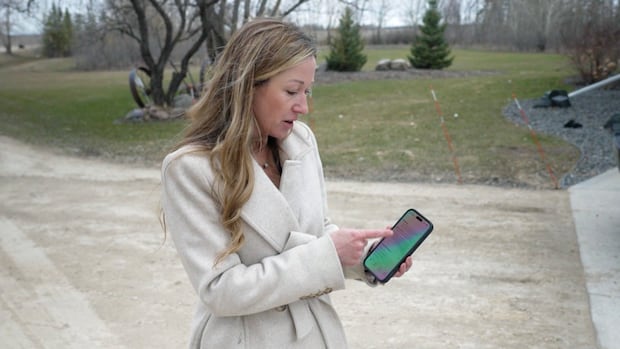
Proposed AI data centre raises concerns in southeastern Manitoba
An Île des Chênes resident has started an online petition opposing a potential AI data centre across from her home, saying she’s worried about possible noise, light and air pollution.