
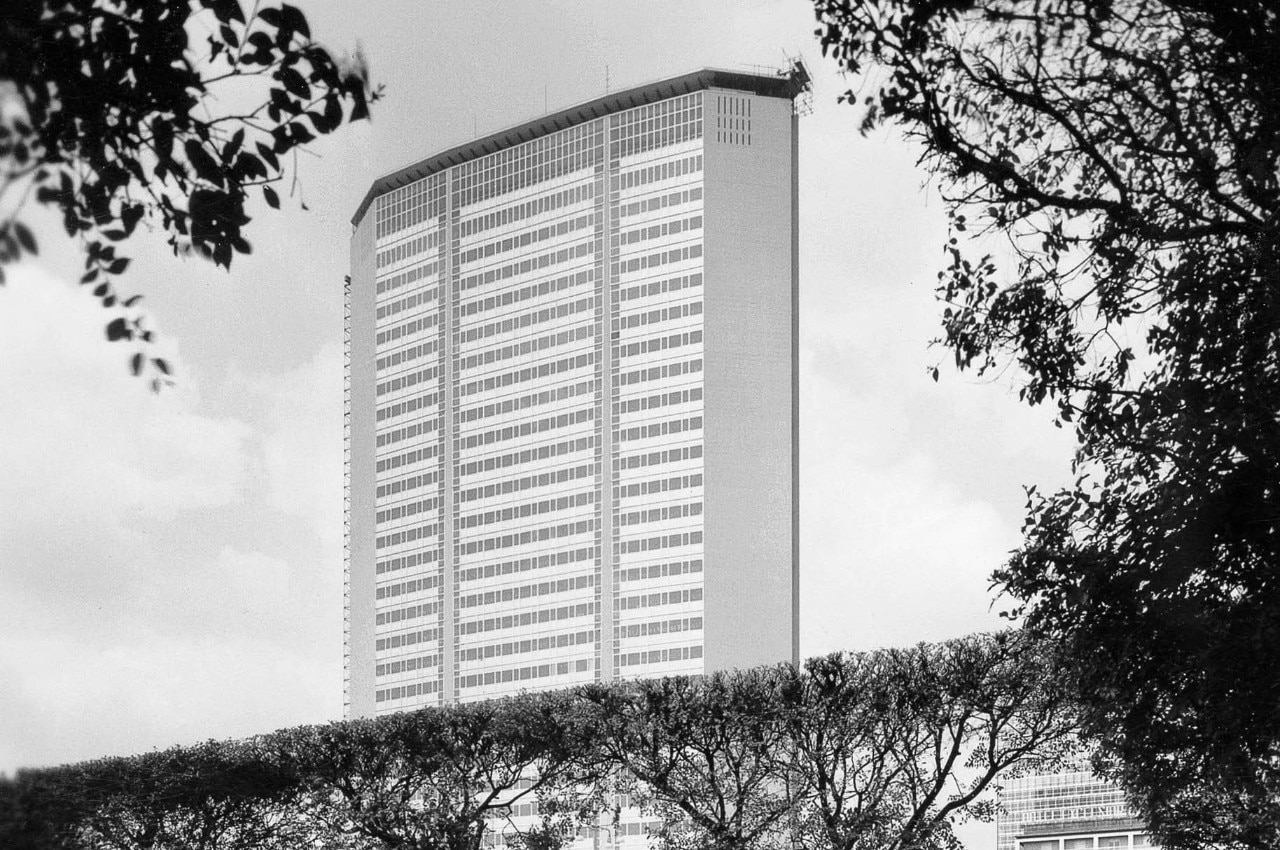
In Milan he worked for the Triennale exhibitions, for the studios of BBPR, Gio Ponti, Albini and Scarpa, as well as for publishers and museums. But above all, he developed a new photographic language. Silvia Paoli — photography historian and curator of Milan’s Civico Archivio Fotografico at Castello Sforzesco, the institution that collaborated on the volume — emphasizes this point throughout her essay: Monti was not a mere documentarian. For him, photography meant composition, mental construction and formal research.
He photographed architecture while constantly moving through space, searching for multiple viewpoints and rejecting the traditional frontal architectural shot. His images engage with Bauhaus aesthetics, German New Objectivity, Antonioni’s cinema and the entire visual culture of postwar Europe.