
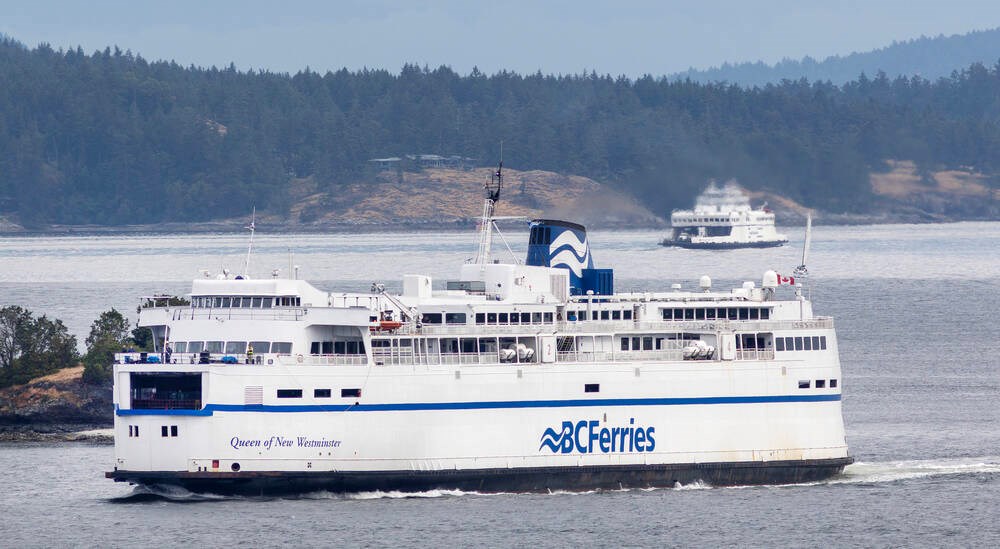
B.C. Ferries says there will be 1,800 extra round-trip sailings starting June 11 in anticipation of a busier-than-normal summer season.
In advance of the busy summer travel season ahead, B.C. Ferries is promising to do all it can to keep vessels running on schedule.
The summer season will start on June 11, two weeks earlier than in past years, to deal with an expected increase in demand. There have been 1,800 round-trip sailings added for the summer period.
The assurances came at a news conference on Wednesday at the Tsawwassen ferry terminal in advance of the Victoria Day long weekend, and follow a spate of mechanical issues for several ferries in the past few months.
“We know how frustrating it is for our customers when sailings are delayed or cancelled, and that’s exactly why all these preparations matter,” said Melanie Lucia, B.C. Ferries vice-president of customer experience. “It’s the work we do in the months leading up to peak season to prepare the fleet, strengthen operations and be ready to minimize the impact of disruptions and respond when they do happen.”
Despite all of the planning, she said there will be times when sailings are full, and terminals are congested.
“So our message to customers is simple,” she said. “Plan ahead, book early, travel off-peak where possible and give yourself plenty of extra time.”
Brian Anderson, B.C. Ferries vice-president of strategy and planning, said added demand will include travel linked to World Cup games held in Vancouver.
He said the ferry system is “large and complex,” and includes 37 vessels plying 25 routes to 47 terminals.
Summer preparations have included refits on 22 vessels and the completion of regular maintenance on the rest of the fleet. More than 630 seasonal employees have been hired to reduce the possibility of crewing-related cancellations.
“Our focus is on delivering reliable service with the fleet and capacity we have today, while planning for the additional vessels needed to support expected future demand,” he said.
But with the level of demand and fleet limitations, he said, there is little flexibility to bring in replacement vessels if a breakdown occurs.
Anderson said that B.C. Ferries is monitoring fuel price volatility tied to geopolitical events as the summer season nears, with any decision on the need for a temporary fuel surcharge to be shared in advance with the public.
“We know affordability matters, and we don’t make these decisions lightly,” he said. “Global fuel prices have increased significantly in recent weeks, with no clear indication they will ease in the short term.”
B.C. Ferries experienced a rough few weeks this spring. This included having to take three ferries out of service on the Easter long weekend, including the Queen of Surrey — which runs between Tsawwassen and Duke Point — after problems were found during a routine refit.
Also out of service were the Spirit of Vancouver Island from the Tsawwassen-Swartz Bay route, due to a generator issue, and the Pune’luxutth, which runs from Chemainus to Penelakut and Thetis islands.
The Pune’luxutth had to be pulled from duty after hitting a large tire in the ocean, which became lodged in its propeller.
B.C. Ferries chief executive Nicholas Jimenez said at the time that it was not the level of service customers want, and tied the problems to a combination of factors, including aging vessels, a shortage of vessels, unexpected breakdowns and a tight schedule for vessel refits.
Anderson said 10.3 million passengers and 4.1 million vehicles were carried on the ferries last summer.
“For many people, ferry travel is not optional; it’s how they get to work, access health care, connect with family and move goods,” Anderson said. “We anticipate that demand for ferry travel will continue to grow, especially during peak season when the system is under the most pressure.