
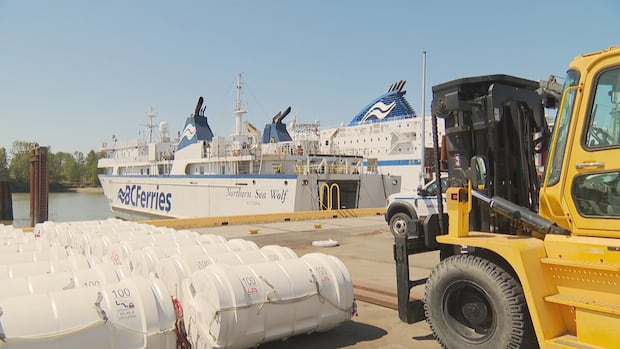
Are cancellations on B.C. Ferries routes increasing? Decreasing? Are ferries arriving or departing late more frequently?
CBC News wanted to know what the trends are and what they can tell us about the company’s readiness for a potentially record-breaking 2026 travel season.
B.C. Ferries provided CBC News with data from their 2017 to 2025 fiscal years. For example, 2025’s numbers reflect performance from April 1, 2024 to March 31, 2025.
They show an escalating number of cancelled sailings in those nine years, with mechanical issues and severe weather increasingly leading to scheduled sailings being called off.
Cancellations across all routes nearly tripled in those years, from 952 in 2017 to 2,809 in 2025.
But those numbers, B.C. Ferries points out, also show the vast majority of sailings were completed as planned: 98.6 per cent in 2025, the most recent year for which the company provided CBC News with a complete data set. That is down from just over 99 per cent in 2017.
In the same time frame, the rate of delayed sailings has increased from 11 per cent to 16 per cent.
But a company spokesperson says positive news is on the horizon. Numbers from the 2026 fiscal year show the cancellation percentage has dropped to 0.7 per cent, and late sailings decreased to 14 per cent.
The numbers for the 2026 fiscal year were not available as a complete data set during the time of CBC’s analysis.
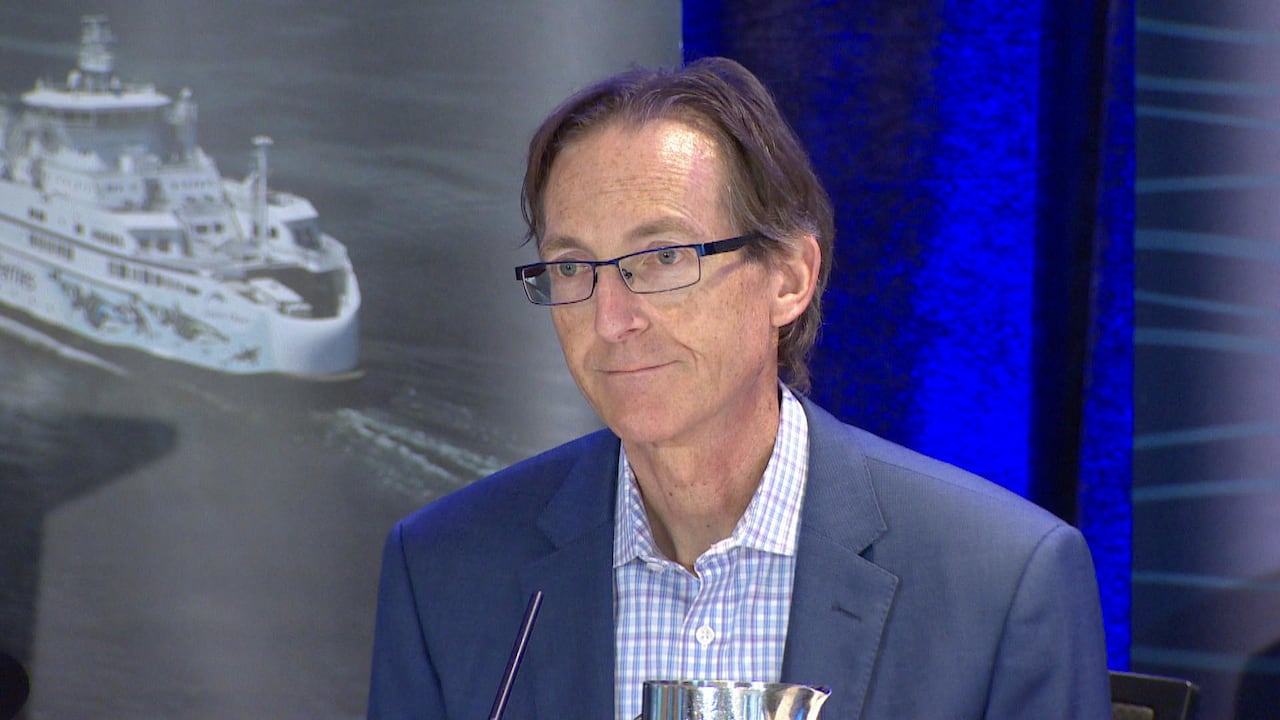 B.C. Ferries CEO Nicolas Jimenez, seen here at a 2023 annual general meeting, said nearly 99 per cent of sailings go out as planned. (Mike McArthur/CBC)
“We have to accept that as these ships age, the cost of running these ships and the incidence of reliability is going to be challenged. We’re also seeing more problematic weather,” said B.C. Ferries CEO Nicolas Jimenez.
“But overall, I think the reliability remains very, very good…. Almost 99 per cent of our sailings go out as planned, which is a very, very strong industry metric.”
Depending how you view them, the numbers could illustrate a shipshape system, or one increasingly off course.
What trends are playing out along major routes?
B.C. Ferries’ “major” routes — defined in the Coastal Ferry Act — connect the Lower Mainland, Vancouver Island and Sunshine Coast.
Since 2017 — and 2021 especially — those routes have seen a spike in the percentage of late and cancelled sailings up to 2025.
The growth of cancellations on the Tsawwassen-Swartz Bay route has largely been driven by mechanical issues. Not a single cancellation for this reason was logged in 2017, but that rose to 47 in 2022, 151 in 2024 and a whopping 535 in 2025 — driving the overall cancellation rate of six per cent.
Crew shortages for routes like Horseshoe Bay-Nanaimo were also pronounced in recent years. In 2022, 72 sailings were cancelled for this reason, almost doubling to 127 in 2023, giving the route a four per cent cancellation rate that year.
The good news? Horseshoe Bay-Nanaimo didn’t see a single crew-related cancellation in 2025.
Why can mechanical breakdowns be so debilitating?
Multiple debilitating breakdowns on the 62-year-old Queen of New Westminster serving the Tsawwassen-Swartz Bay route — the busiest on the coast — might offer the starkest illustration of what B.C. Ferries says are the costs of relying on aging vessels.
“What we’re finding, especially post-COVID, is material and parts timelines are significantly longer,” said Baljinder Mahal, head of the fleet maintenance unit at B.C. Ferries.
“The vessels themselves are old and a lot of these parts are not stocked on the shelf. Most of them have to be fabricated.”
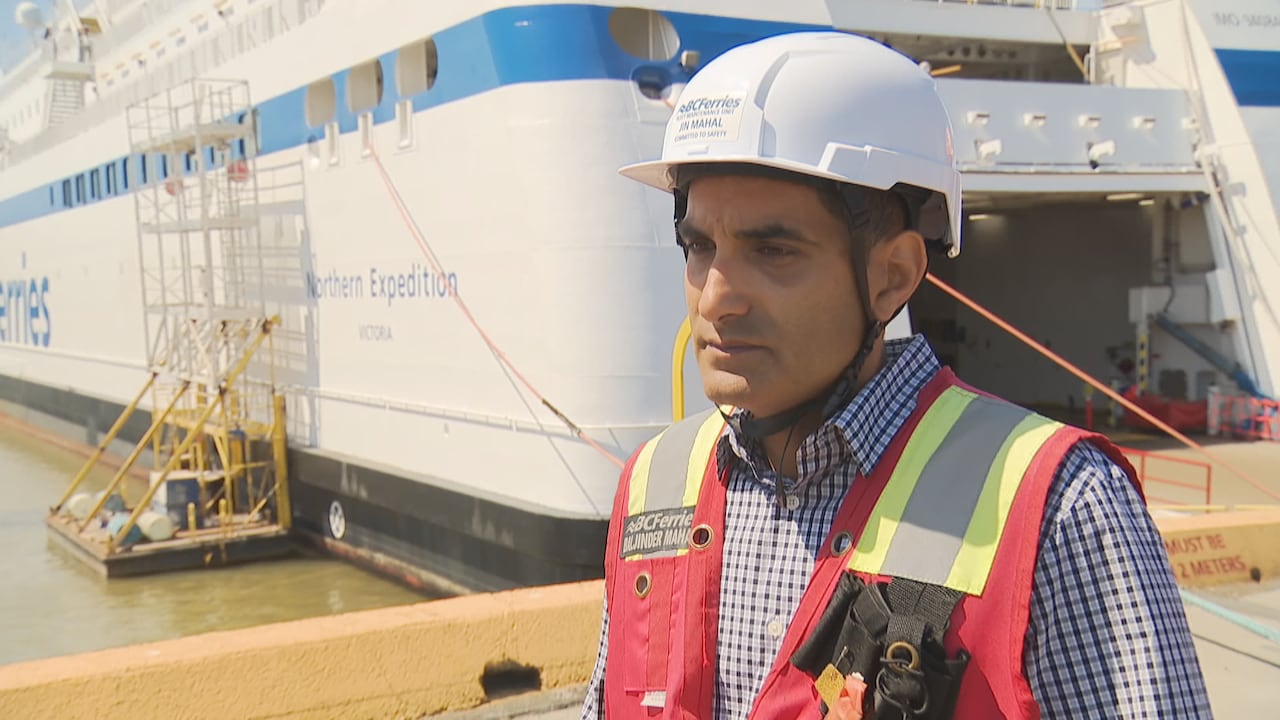 Baljinder Mahal stands in front of the Northern Expedition, which is undergoing a “quarter-life” refit costing over $4 million. The Northern Expedition is one of the last ships to undergo maintenance at the fleet maintenance unit, headed by Mahal, ahead of the peak summer travel season. (Mike Zimmer/CBC)
B.C. Ferries is modernizing its fleet, including adding four new major vessels. A requested fifth was not approved by the B.C. Ferries Commission.
“Right now, we do not have any redundancy in our system,” Mahal said. “The ability to take a ship out of service and have a spare vessel ready to go in its place, I think, is incredibly critical for us.”
Are crew shortages still a problem?
What could be a positive sign for B.C. Ferries and its passengers is a massive drop in crew-related cancellations over the last three fiscal years.
B.C. Ferries spokesperson Ritinder Matthew told CBC News in an email that this is because of the company’s expanded hiring, improved training capacity and new scheduling practices that are “focused heavily on building a more stable workforce pipeline.”
But Eric McNeely, provincial president of the B.C. Ferry and Marine Workers’ Union, argues the numbers may only tell part of the story.
He agrees there have been workplace improvements but says union workers report more overtime and being called in to work on days off more often.
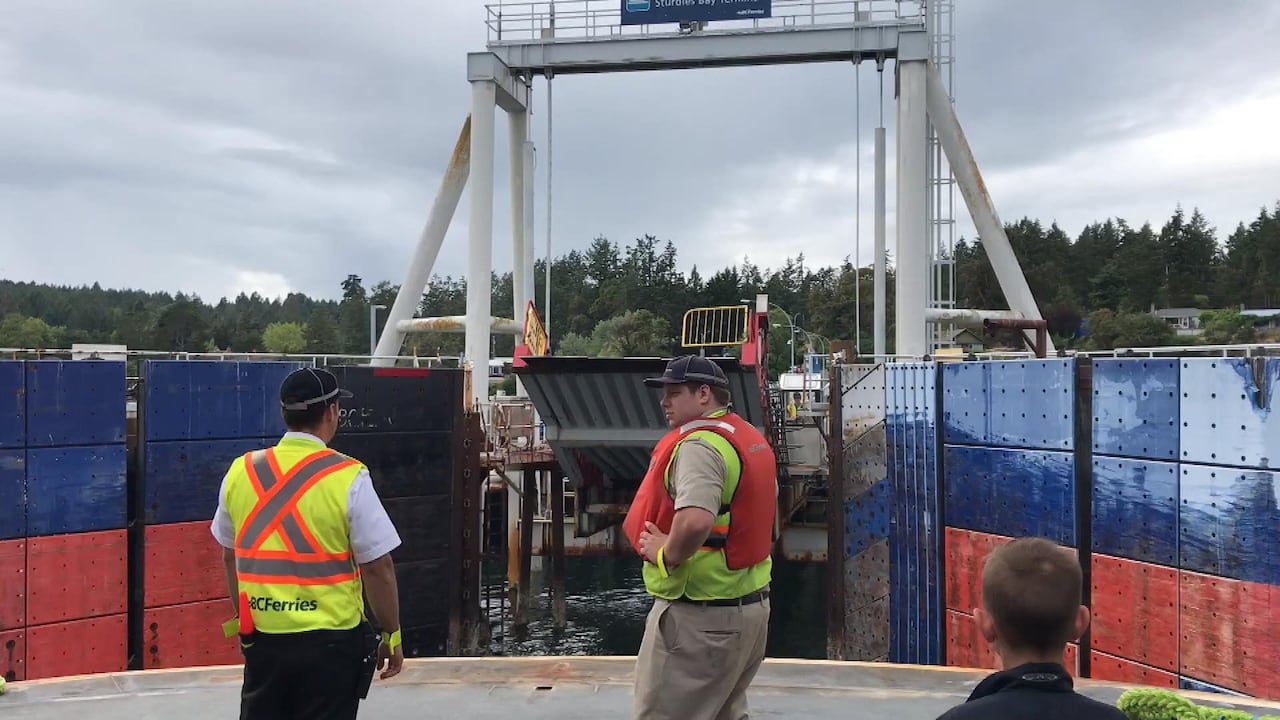 Staffing issues plagued B.C. Ferries in recent years, leading to hundreds of cancellations. However, the number of sailings cancelled for this reason have declined sharply. (Margaret Gallagher/CBC)
“It’s a good news story that ships are running … but the concern we hear from our membership is one of burnout,” McNeely said. “We have real concerns about whether it’s a sustainable process.”
He believes mariner recruitment is at “an inflection point” across Canada and there needs to be improvements in training and quality of life across the sector so more workers choose a career at sea.
Matthew admitted overtime is part of B.C. Ferries’ operations, but said “the broader trend is really being driven by workforce stabilization and planning improvements.”
How are things different on minor and northern routes?
B.C. Ferries’ minor routes vary considerably — everything from circuits across multiple small islands or remote communities to well-travelled connections to large metropolitan hubs.
For instance, the Campbell River-Quathiaski Cove route connecting Quadra Island to Vancouver Island faced a higher-than-average cancellation rate from 2023 to 2025, with weather as the leading reason. Cancellations due to the elements rose from 88 in 2023 to 363 in 2025.
Another route with higher-than-average cancellations is the Port Hardy-Central Coast route serving Bella Coola. A massive 18 per cent of sailings on this route were called off in 2023 due to a combination of issues: problems with a dock, vessel breakdowns and crew shortages. That said, the cancellation rate was down to six per cent in 2025.
WATCH | How ferries get cancelled for weather: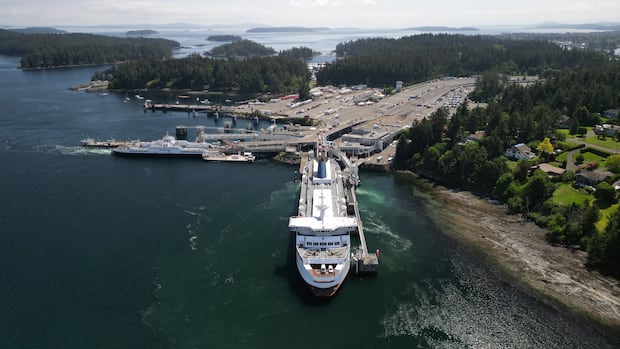
This is how your ferry gets cancelled for weather
The Salish Sea is one of the most unpredictable marine environments on the planet, yet the ‘go, no-go’ decision for a B.C. Ferries route often feels like a black hole to the public. It turns out the process behind the call is a high-stakes calculation involving a 24/7 nerve centre, a strict mathematical matrix and decades of human seafaring experience. CBC’s Johanna Wagstaffe pulls back the curtain.
Matthew explained that minor and northern routes are quite different from major routes.
Some are longer and in the winter especially there are fewer sailings overall so a cancellation can mean a very long wait until the next trip, she noted.
Weather is also a concern, as are a lack of redundancies: fewer alternative vessels are available for these routes and even fewer water taxis.
“At the same time, many of these routes continue to operate with very high completion rates overall,” Matthew wrote.
Why are weather-related cancellations growing?
Across the B.C. Ferries system, the number of weather-related cancellations has tripled, from 364 in 2017 to 1,181 in 2025.
As B.C. Ferries’ director of operations and security Jason Boyd explains, the decision to call off a sailing for this reason considers waves and wind and how different vessels can handle the conditions.
Boyd highlighted that extreme weather events are becoming more frequent but crews may also be approaching things differently over time.
“We try to be a learning organization,” Boyd said. “If we’ve had instances where our passengers are getting injured because we’re sailing where it probably wasn’t safe to do so, then we make those adjustments to make sure that we’re not doing that.”
So, are these numbers good or bad?
It depends on how you see things. It’s a bit of a Fata Morgana situation.
That’s the term for a type of mirage at sea that can make ships in the distance appear distorted: maybe they’re levitating, maybe even upside down.
And while numbers about B.C. Ferries’ past years are no mirage, whether they instil confidence or make you think the service is, well, upside down, is a matter of perception.
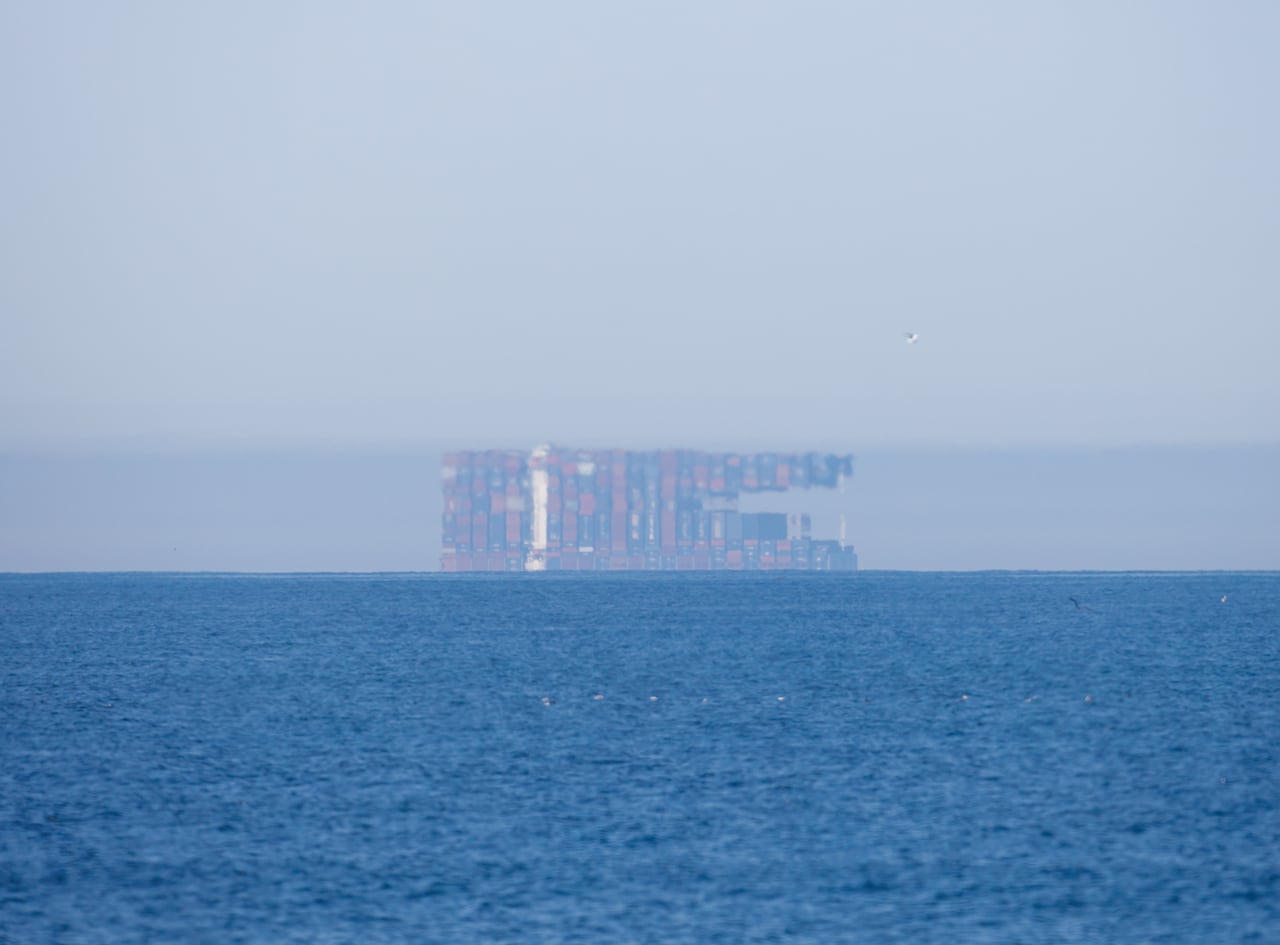 A distant container ship off the coast of California is distorted by Fata Morgana. (RBTKTN/Wikipedia)
“In this last year, we had a very good operational year,” said Jimenez. “I would say in the last two months we’ve really struggled because we’ve had issues with some of our vessels.
“But our operational statistics, if I’m just looking in the last one to two years, are strong … I feel very good about that fact.”
And while a Fata Morgana mirage typically affects objects far in the distance, a possibly record-breaking travel season for B.C. Ferries is near on the horizon — and will bring into stark focus whether that confidence is warranted.
How have cancellations changed on the routes I travel?And how about delays on those routes?