
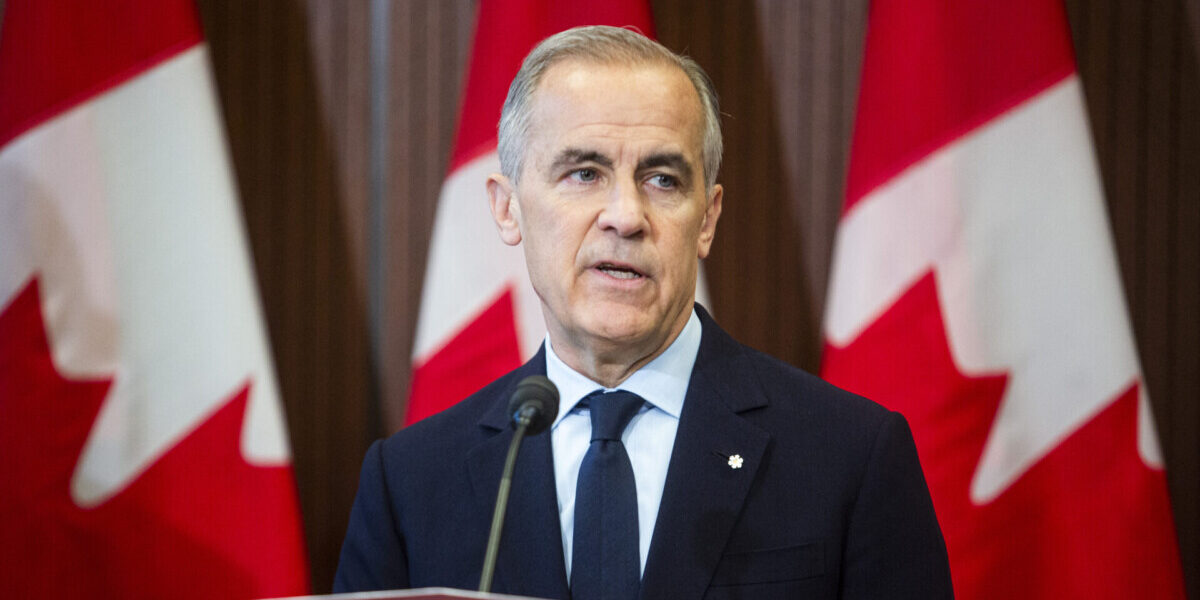
Prime Minister Mark Carney announced his government’s plan to double the capacity of Canada’s electricity grid by 2050, in part by potentially rolling back Trudeau-era regulations for clean electricity in a move that environment experts call “a huge betrayal.”
“Our sovereignty, our sustainability, our prosperity will depend on our ability to supply and control our energy,” Carney (Nepean, Ont.) said on Parliament Hill on May 14.
“We have to unlock Canada’s full potential as an energy superpower.”
The strategy, dubbed Powering Canada Strong, is part of an effort that will cost more than $1-trillion, and aims to lower energy costs for 70 per cent of Canadian households.
It’s not immediately clear how much of that will be government funded, but Carney said “doubling generation in the next few decades will require massive investment.”
Get Today’s Headlines Newsletter
Wake up to the day’s top political and policy headlines. Weekday Mornings.
By entering your email address you consent to receive email from The Hill Times containing news, analysis, updates and offers. You may unsubscribe at any time. See our privacy policy
Carney added a key part of the strategy involves “linking together as many grids as possible,” across the country. Consultations on the strategy are expected to take place this summer.
 Environment and Climate Change Minister Julie Dabrusin said Canada is ‘laying the path’ to net-zero emissions via this new electricity strategy. The Hill Times photograph by Andrew Meade
Environment Minister Julie Dabrusin (Toronto—Danforth, Ont.) said Canada’s “path to net zero, to fighting climate change, and to building a strong and resilient economy runs through electrification, and today we’re laying that path.”
The strategy says the existing Clean Electricity Regulations—which came into effect in late 2024 under Carney’s predecessor—were put in place to guide the electricity sector towards net zero by 2050, and “the federal government remains committed to achieving this.”
However, the government says the global context has changed, “and Canada faces new and urgent pressures and threats. An evolved approach is required,” the strategy reads.
Natural gas focus takes ‘Canada backwards’: Environmental Defence
The government intends to “adjust” the Clean Electricity Regulations in part to provide “greater flexibility to offset residual emissions elsewhere,” the document says. It adds these changes will maintain the goal of net-zero emissions by 2050.
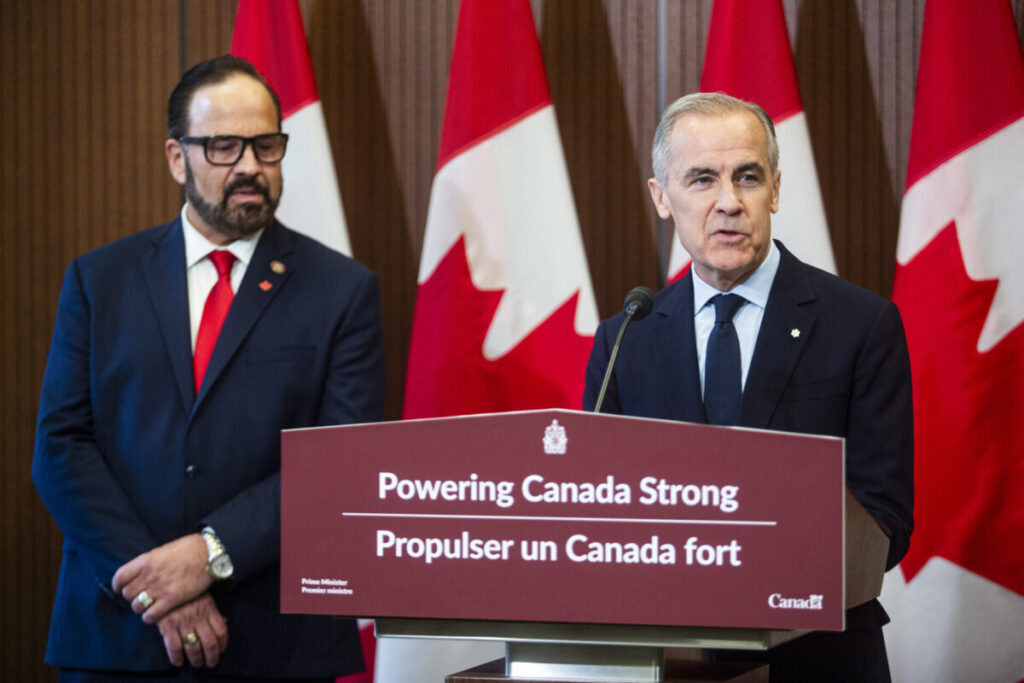 Prime Minister Mark Carney, right, said ‘our sovereignty, our sustainability, our prosperity will depend on our ability to supply and control our energy.’ The Hill Times photograph by Andrew Meade
But climate experts say the rollback of regulations will take Canada’s efforts to reach net-zero emissions backwards.
“It’s talking about opening up the clean-electricity regulations and adding more gas to the grid, and that will add emissions to the electricity sector,” Keith Brooks, program director of Environmental Defence, told The Hill Times.
Brooks said a key tenet of the regulations was that it limited the amount of natural gas that could be used by the electricity grid. This was meant to deliver on former prime minister Justin Trudeau’s promise to deliver a net-zero electricity sector by 2035, though doubts lingered if the regulations were strong enough to do so.
“But now the government’s talking about opening up these regulations, allowing more offsets,” Brooks said. “So we could have a [natural gas] plant, but we’re going to plant some trees, or something.”
Natural gas is marketed as a cleaner fuel, but it’s not, Brooks said. “It’s a fossil fuel, and it’s just as bad as coal when it’s used to generate electricity. So this is taking Canada backwards.”
The strategy describes Canada’s comparative advantage in its “diverse electricity mix and domestic energy resources,” and said natural gas—along with hydro, solar, wind, and biomass—“can play a useful role as a part of this diverse portfolio.”
Brooks said renewable energy already met 100 per cent of the demand for global growth in 2025.
“If Canada is going to be going for more [natural gas,] we’re headed in the opposite direction of where the rest of the world is going,” he said. “We need to pick up the pace, not slacken it. But this discussion paper talks about more gas.”
Carney noncommittal on 2030 climate targets
When asked if the Liberals will meet emissions reductions targets by 2030, as previously pledged by Trudeau, Carney said the government is putting in place initiatives that “will make material emission reductions.”
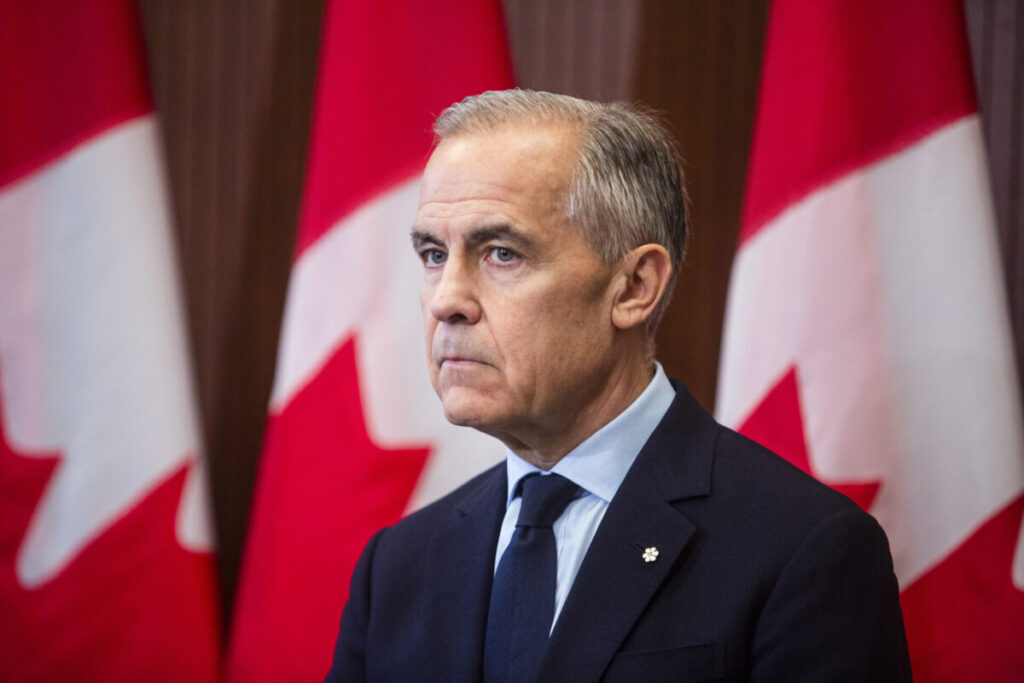 Prime Minister Mark Carney announced on May 14 a plan to double the capacity of Canada’s electricity grid by 2050. The Hill Times photograph by Andrew Meade
Carney said climate plans and emissions reductions targets will be updated “in due course,” but electrification will remove 250 to 300 megatonnes of emissions.
When asked to elaborate on updating emissions reductions targets “in due course,” Carney said his government is “focused on practical steps that are going to get results.”
He added, “what you’re seeing today is the next iteration of a strategy that’s all connected.”
During his remarks, Carney said details will be forthcoming about a pipeline that will transport “at least one million barrels of low-emission Alberta oil per day to new markets.”
Stephen Thomas, clean energy manager at the David Suzuki Foundation, described the electricity strategy as taking “one step forward and two steps back.”
While he praised the emphasis on Ottawa’s role in building new energy transmission links between provinces, as well as union-led training and energy efficiency, “the strategy itself has a major backtrack on climate, and that is the weakening of clean electricity regulations.”
Thomas described the clean-electricity regulation as among the last of the Trudeau-era climate policies that the Carney government “hasn’t already gutted or abandoned, and the strategy signals that they’re going to be weakened to the point where they have no effect at all.”
The government’s goal to allow more fossil fuels on the grid is a mistake, he said.
“It’s a huge betrayal, and it’s a huge disappointment to see the clean electricity regulations abandoned in this policy.”
Thomas said Carney’s announcement “could have been a good news story” in this country’s efforts to build an affordable and reliable electricity grid, “but instead amounts to “a deeply cynical move” as it comes while “planning to gut more climate policies and advance new pipelines tomorrow.”
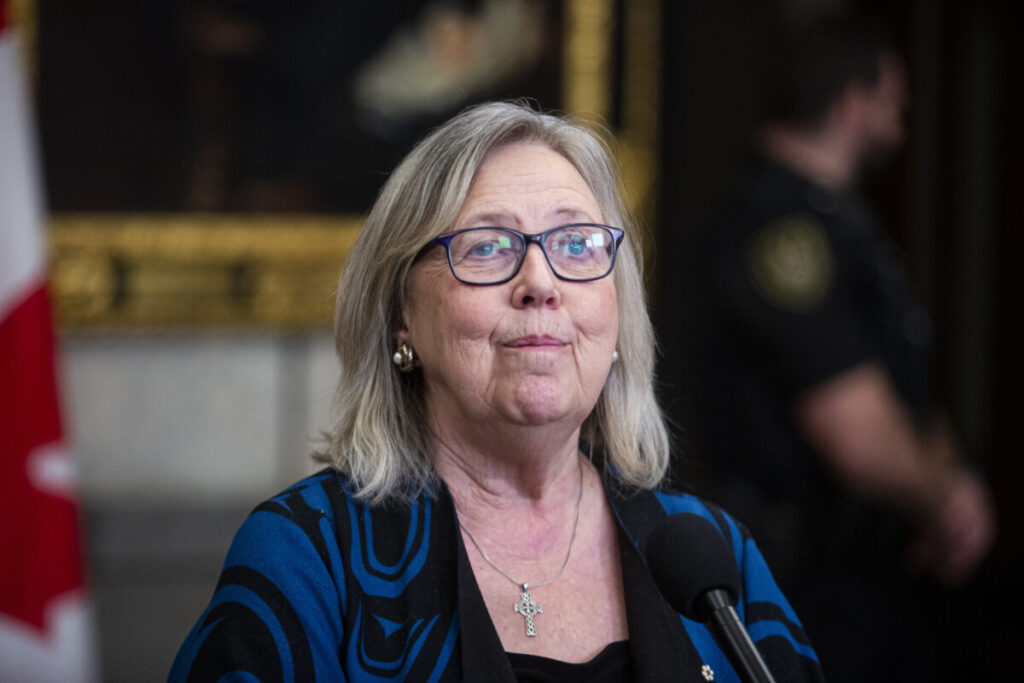 Green Party Leader Elizabeth May said she’s pleased to see some elements of Green Party policy proposals included in the Liberals’ new electricity strategy. The Hill Times photograph by Andrew Meade
‘Extremely irresponsible,’ says Green Leader May
Green Party Leader Elizabeth May (Saanich—Gulf Islands, B.C.) described the potential rollback of the clean electricity regulations as troubling.
“It’s not as if Trudeau put in place robust climate action,” she told The Hill Times. “So further retreat from climate action is extremely irresponsible.”
But May added she was “very pleased” that the strategy included some elements of longstanding Green Party proposals.
May said every Green election platform since 2019 has included building a power grid that extends east to west and also north, to allow provinces to sell excess power to each other.
“It’s always struck me as bizarre that the European Union, with separate sovereign nation states, has done a much better job integrating their electricity grid,” she said, while Canada’s 10 provinces and three territories each have their own “fractured” electricity grid. Creating an interconnected power grid, she said, should also come with looking at the “monopolistic” structure of provincial utilities that both generate and distribute electricity to rate-payers.
May said the strategy amounts to a discussion document, and was eager to get started with consultations.
The Hill Times

Marlo Glass is a news reporter covering the federal public service and all things newsworthy on Parliament Hill. She is deputy digital editor for The Hill Times. With a background in breaking news, she previously worked for newspapers in Ottawa, Saint John and Halifax. Send tips to mglass@hilltimes.com. See all stories BY MARLO GLASS