
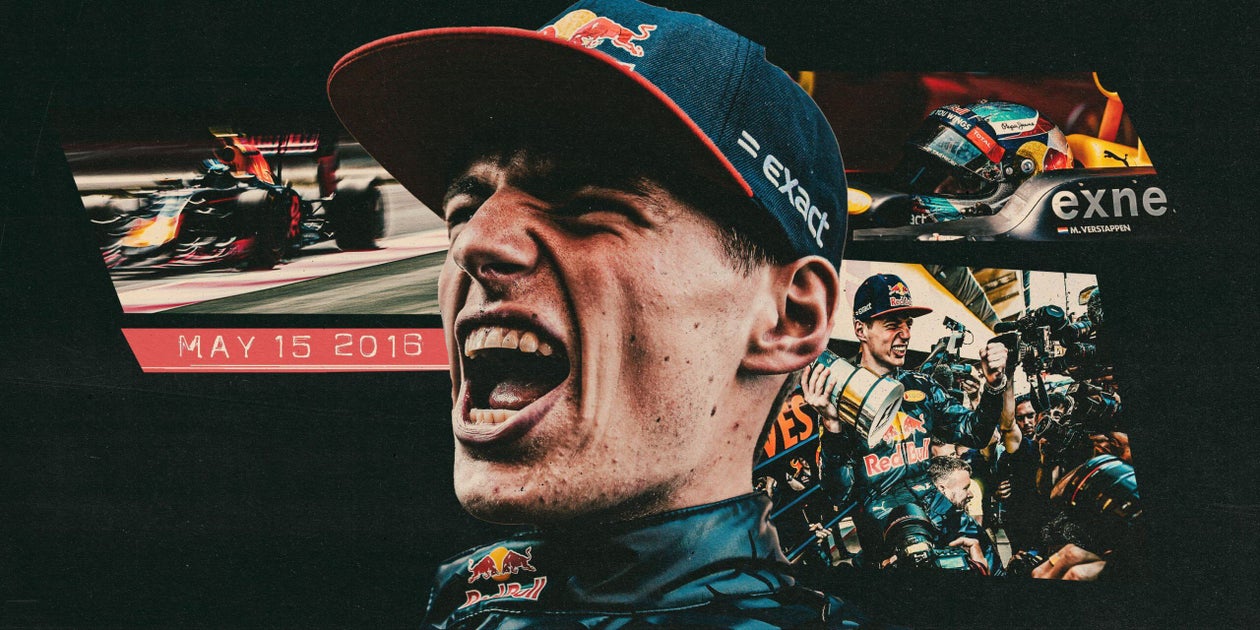
On May 15, 2016, Max Verstappen became the youngest race winner in Formula 1 history.
At 18 years, 7 months and 15 days, Verstappen’s victory at the Spanish Grand Prix fulfilled the promise that Red Bull identified in him at an early age, setting a record that may never be beaten.
What made Verstappen’s win all the more remarkable was that it came in his very first grand prix for Red Bull Racing. He’d been promoted from its junior team, Toro Rosso, just four races into the season.
Verstappen, 28, is now a four-time world champion and one of the sport’s all-time greats with 71 victories to his name.
In interviews with The Athletic to mark the 10th anniversary of his first win, Verstappen, two key members of his inner circle, and a commentator recalled their memories of the race.
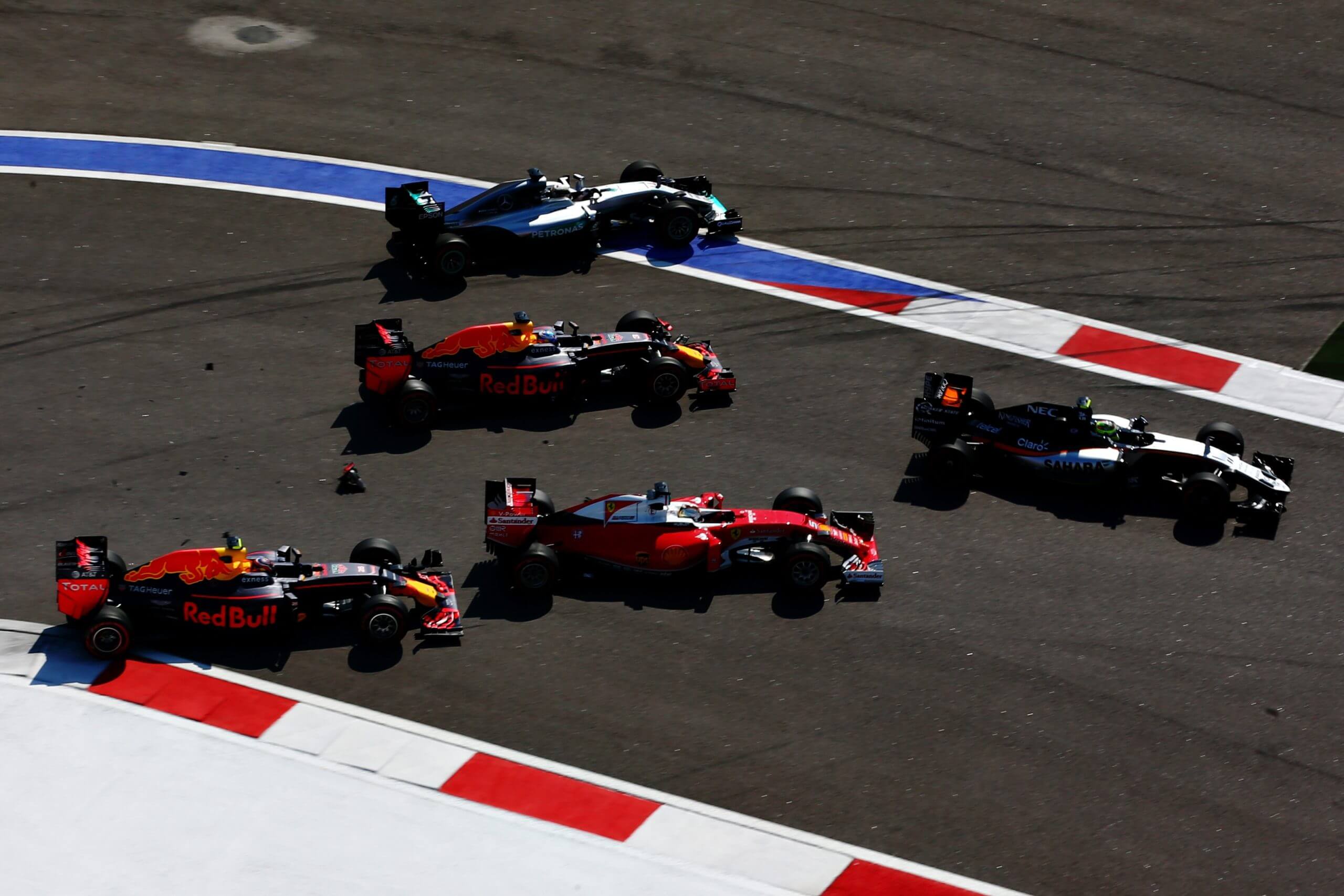
Daniil Kyvat (bottom left) collides with Sebastian Vettel’s Ferrari in Russia. (Clive Mason / Getty Images)
On May 5, four days after the Russian Grand Prix, Red Bull announced that 18-year-old Verstappen would take Daniil Kvyat’s place. In Russia, Kvyat, 22, had hit Ferrari driver Sebastian Vettel not once but twice on the opening lap (the second impact sending Vettel spinning into the wall) at his own home race, in front of his home crowd. The decision was swift.
Most thought Verstappen would eventually be promoted to Red Bull. But not this soon.
Max Verstappen: After the race in Russia, my dad was like, ‘I think you’ll be driving for Red Bull next race.’ I was like, ‘OK…’ I didn’t really want to believe it. So I flew home, and then the next day, Helmut (Marko, Red Bull’s long-serving driver talent scout) called and said, ‘You have to come to Graz (the Austrian city where Marko was based).’ At that time it was a bit unusual for me to go there.
On Tuesday or Wednesday I was in Graz, and during lunch, Helmut, out of the blue, was like, ‘Oh yeah, by the way, next race you’re driving for Red Bull, so we’re booking sim dates, you’re visiting the factory.’
GianPiero Lambiase, Verstappen’s race engineer: On Tuesday evening, Helmut called me to state that Dany would be swapping with Max. I think literally the next day he was in the factory in Milton Keynes.
Paul Monaghan, Red Bull’s chief engineer: It was a surprise. But I thought, ‘We’re bold enough to change things, good,’ because arguably it wasn’t our finest foot forward up to that point.
Red Bull formally announced Verstappen’s promotion on Thursday. In the Netherlands, the news was met with great excitement.
Olav Mol, Dutch F1 commentator: We went, ‘Wow, fantastic!’ He did things with the Toro Rosso car which a lot of people didn’t realize were possible. He was just a young gun who was made for racing. We were over the moon.
Verstappen: In a way it was… maybe not a relief, but I was just happy to finally be in a car to try and achieve a bit more.
Verstappen had been to Red Bull’s F1 factory before to use its simulator. But now he was officially a Red Bull Racing driver, things were different. And there was a lot to get through prior to Barcelona.
Verstappen: Everything was really different with the systems, the steering wheel, the approach of things (compared to Toro Rosso). It was quite a big learning curve within a week. I was really young, so it was more about just getting used to everything and letting them explain everything.
Lambiase: It was only my second season. So perhaps I was still trying to establish myself and finding my way. He definitely was, despite being an 18-year-old, very intimidating.
Monaghan: (I remember) the impression of how mature he was for his years within his mind, what he wanted. The focus reminded me a lot of Fernando Alonso.
Lambiase: I had worked with and been introduced to plenty of young drivers over the years. And most of them are pretty subservient, they just sit there quietly looking up at you, just believing everything you say. Max was different. He was like, ‘Well, how do I go about this? Where’s this?’ He’s already poking and probing.
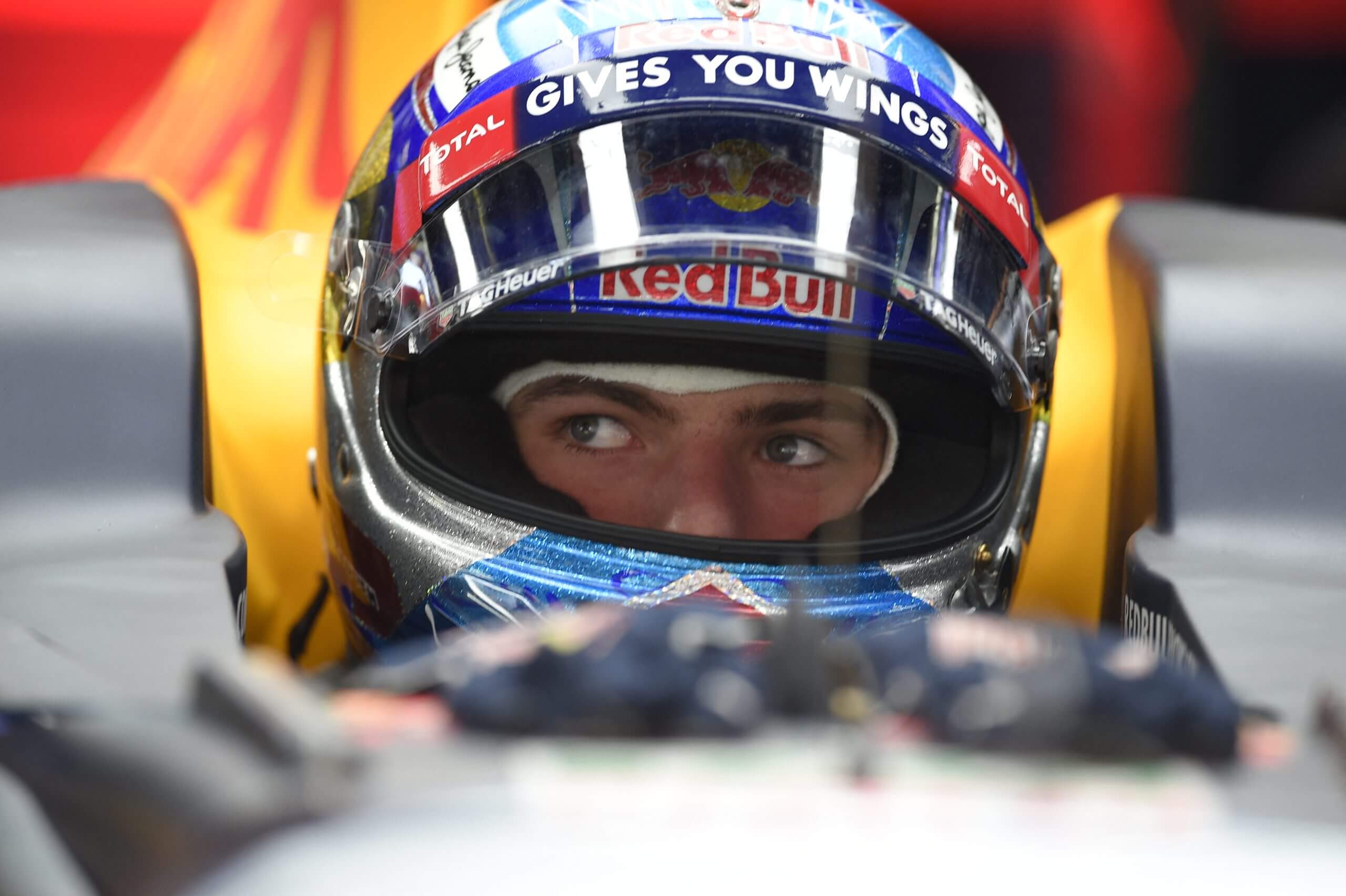
Max Verstappen in the pits during first practice at Circuit de Catalunya before the 2016 Spanish Grand Prix. (Lluis Gene / AFP via Getty Images)
Verstappen arrived in Barcelona firmly in the media spotlight, given his age, inexperience, and the cutthroat nature of his promotion. Driver changes in F1 are common but usually in the offseason. If they do happen mid-year, they’re typically in the second half — not after just four races. To some, it seemed like a gamble.
Verstappen: Not everyone was agreeing with the move. Helmut put himself a bit on the line to do that. For me, it was just about getting used to the car.
Verstappen was moving up to Red Bull alongside Daniel Ricciardo, then the team leader and arguably in the prime of his F1 career.
Verstappen: (Marko told me) try to learn, try to have fun, try to, of course, be as close to Daniel as possible. But no clear target. But I also knew in the back of my mind, if I rocked up there and I was a second off, that’s not good.
Mol: Danny Ric was a qualification animal. He was very, very good at that point. Maybe at his best.
Verstappen: As soon as I drove out in (first practice), I was like, ‘this is amazing.’ (The car was) just 10 times better driving-wise.
Despite not driving the actual Red Bull car before, Verstappen was within 0.2 seconds of Ricciardo in the first two practice sessions, then went quicker in the final practice session. They qualified third and fourth, Ricciardo ahead of Verstappen. The pace was immediately there.
Monaghan: All of a sudden you have two drivers capable of challenging for the top spots. So in that respect, it was fantastic.
Lambiase: There had already been signs of that in the three days that we’d spent on the simulator, just in the way he’d been so adept at picking up the characteristics of the new car.
Verstappen: I thought we could do a decent job. I just didn’t know how far I could push the car, really. The final lap, I didn’t really nail it. I locked up, I remember. And Daniel did a very good job to pull that lap out.
Monaghan: He was confident, a little bit arrogant, but had the skill to back up that. That’s just fine, that’s not unusual for the racing drivers. He was very relaxed, good sense of humor, very mature for 18 years old.
Verstappen: I didn’t really go into the race thinking about the podium. I more was thinking about just points.
Mol: In the complete history of Formula 1, we never had a Dutch driver actually cross the line on the podium. That wasn’t on our radar.
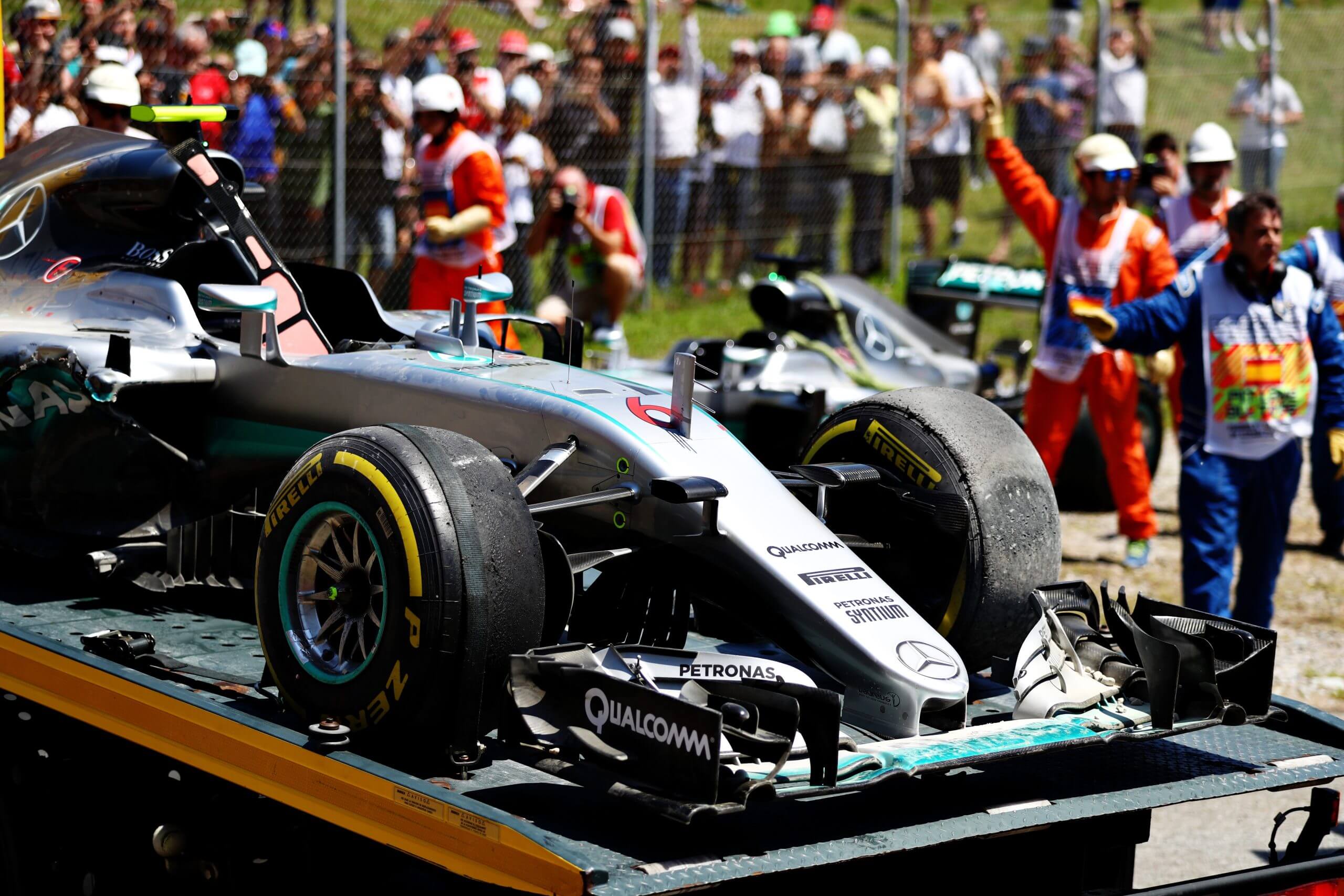
Nico Rosberg’s Mercedes is loaded onto a truck after colliding with Lewis Hamilton during the 2016 Spanish GP. (Clive Mason / Getty Images)
The 2016 season was dominated by Mercedes. It had a clear pace advantage that meant races were a straight fight between Lewis Hamilton and Nico Rosberg. Mercedes had taken 21 wins from the previous 24 races entering Barcelona; a collision or mechanical failure up front from the Silver Arrows was essentially the only realistic path to a Red Bull victory.
At Turn 4 on the opening lap, while fighting for the lead, Hamilton and Rosberg collided and were out of the race. Ricciardo and Verstappen were first and second.
Verstappen: I just overtook Seb (Vettel) around the outside to get back into position, so it was all a bit hectic. And then I saw the cars fly off. I thought, ‘Well, maybe a podium is possible today.’
Monaghan: What went through my brain was, ‘Don’t hit any flipping debris that’s been put on the track!’
Lambiase: Perhaps the excitement levels start to rise a little bit on the pit wall.
Mol: I just thought, ‘OK, well, let’s not overdo it.’ See what happens in the race, because it’s still Barcelona.
Once the race resumed, Verstappen spent the entirety of the first stint closely trailing Ricciardo. It was a clue to Lambiase that the win might be on.
Lambiase: Max was pressurizing Daniel pretty hard. Barcelona is a track where following is extremely difficult. For Max to be right up Daniel’s rear end, lap after lap after lap, was I think already a bit of an indication that he was the quicker driver on that day.
Red Bull then opted to split strategies. Ricciardo, the leader, would pit three times, while Verstappen would pit only twice. Ricciardo would have fresher tires, but would need to overtake to recover positions.
Ricciardo was the more experienced driver, but the priority for Red Bull was to maximize the team’s results against Ferrari, regardless of whether Ricciardo or Verstappen finished first or second.
Lambiase: We were comfortable that we should be focused on how to get our two cars to the end in first and second. Splitting the strategies was the most obvious way to us to have one car finish the race in first.
On Lap 43, Ricciardo pitted and released Verstappen into the lead, with Ferrari’s Kimi Räikkönen, the 2007 world champion, just one second behind. The track in Barcelona is tough for overtaking, with the only real opportunity being at the first corner on each lap.
Mol: I suddenly realized, it can’t be that he’s quicker than Kimi Räikkönen in Ferrari. So where does he (find time to stay ahead)? I started looking at the sector times, and I realized he was clever enough to know how many tenths of a second he needed entering the straight so that Kimi was not able to overtake him.
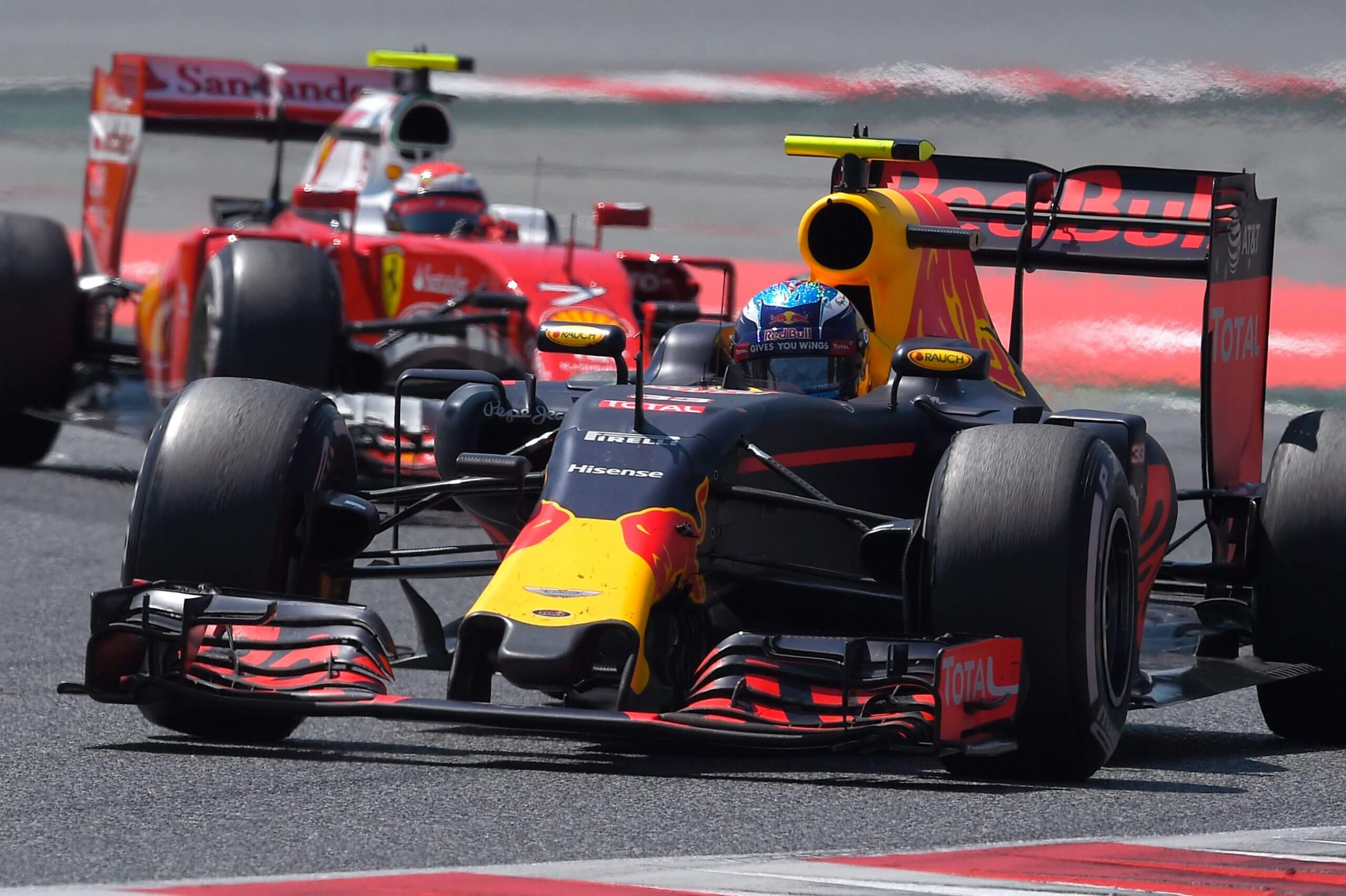
Max Verstappen successfully managed to fend off Kimi Räikkönen. (Lluis Gene / AFP via Getty Images.
Lambiase: Initially I was a little bit concerned, because as Kimi comes up to the back of Max, you wonder basically how long is it going to be until he gets past? But as the number of laps count down, you actually realize that Max has just got a handle on this. He’s found a way to work the last corner to get clear enough to Turn 1.
Ricciardo was struggling in fourth behind Vettel. It started to sink in that Verstappen could win the race. Even Verstappen knew it was on.
Verstappen: It was more with like 10 laps to go, I would say. I didn’t know how long my tires were going to last. I had Kimi constantly in the DRS. One little mistake in the final chicane and he would have gotten me.
Monaghan: He was so calm in the lead of the race. His messages on the radio are so calm. He’s in control, he’s not panicking, he’s not wobbling, he’s not overawed by the situation. It is a position in which he expects to be.
Mol: I still didn’t want to say ‘Ooh, it’s happening!’ because this is motorsport. You can’t say 15 laps before, ‘This is going to happen.’ And then you get to the final part and you go like, ‘Oh God, two laps to go!’
Verstappen: You are nervous, but at the same time, I was also just very focused and just doing my thing, just trying to settle in. You know the laps (remaining). I just need to keep hitting my marks and hope that the tires stay alive. That’s the only thing that I can control.
Mol: And then I went, ‘There he is in the final corner in Barcelona!’ And that’s where I basically opened up the valve between my brain and my mouth. I just said, ‘Yo, hey! Yo ho!’ And then because I speak a lot of English with mechanics, ‘F–king hell, how bizarre!’
Verstappen had just become the youngest race winner in F1 history, breaking Vettel’s record by two-and-a-half years, and the first Dutch grand prix victor. His father Jos, who had competed in 107 grands prix himself, was watching on.
Verstappen: I almost cramped celebrating in the car. That’s the first goal that I wanted to achieve, of course, in Formula 1, to be on the podium and win a race. That was already something really crazy at the time.
Mol: I said, ’Sports victories are so beautiful, and this is the most beautiful one I’ve ever seen.’ And then I broke into tears.
Verstappen: It was the perfect start. My dad’s nose was bleeding from emotions.
Mol: I found out that fans in several football stadiums were shouting Max’s name, because they found out on their phones that was happening.
Lambiase: It was just pure elation and relief. It was the absolute best possible start to what had, 10 days earlier, been quite an intimidating encounter between the two of us.
Verstappen: We went out, we had a good night. It was a good celebration, for sure. The next day, the Prime Minister called me. For the Netherlands, it was the first race win. It was a big thing.
Mol: It was a victory for the nation. Suddenly, it was normal for people who worked in an office to start talking about F1 on Monday morning next to the coffee machine.
Verstappen: My dad has the trophy in his house. He has a few, but I gave that one to him.
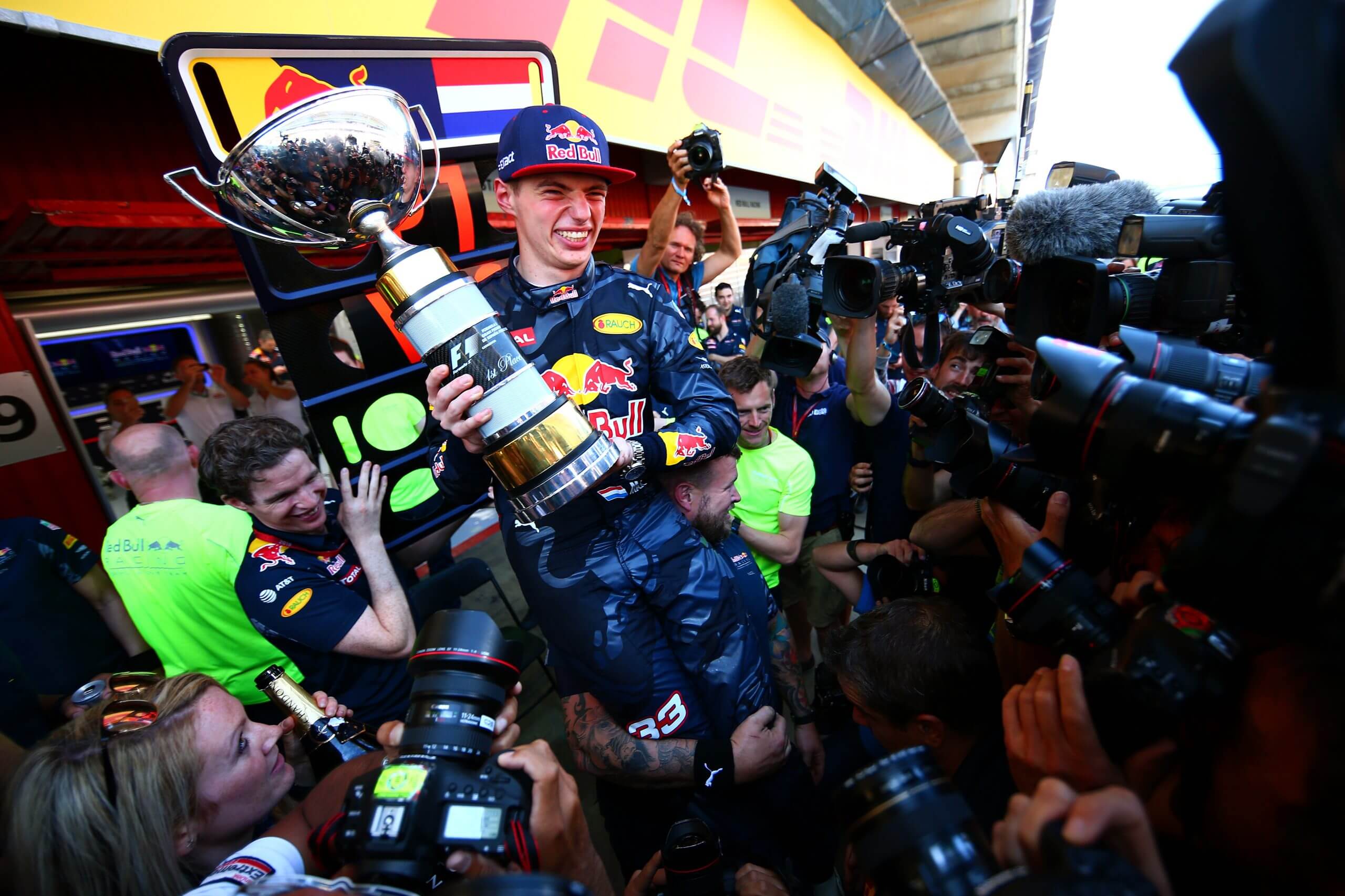
Max Verstappen celebrates after winning his first Formula 1 race. (Dan Istitene/Getty Images)
It would be another five years before Verstappen won his first world championship. He added further titles in 2022, 2023 and 2024, and came close to a fifth crown last year.
Monaghan: It was the first step on a long pathway to 2021.
Lambiase: If I think about my career highlights, or the moments that come to mind immediately, it’s his first race win, his first championship. There’s a few other scattered moments. But the first win and the first championship are the cherries on the cake.
Mol: (Spain) will never be topped for me as a Dutch bloke. That was truly unbelievable.
Lambiase: He’s gone from an 18-year-old — and I think I can call him a child at that time — to becoming a father. I’ve seen everything in between. It’s been fascinating. What hasn’t changed is his character and him as a person. He’s the same Max as he was 10 years ago.
And to Verstappen, regardless of the record he set, Spain 2016 will always hold a special place in his heart.
Verstappen: I had a lot of great wins, but nothing really beats the inexperience, the inexperience of the driver, but also with the team, the car. For sure, it’s one of the best ones.