
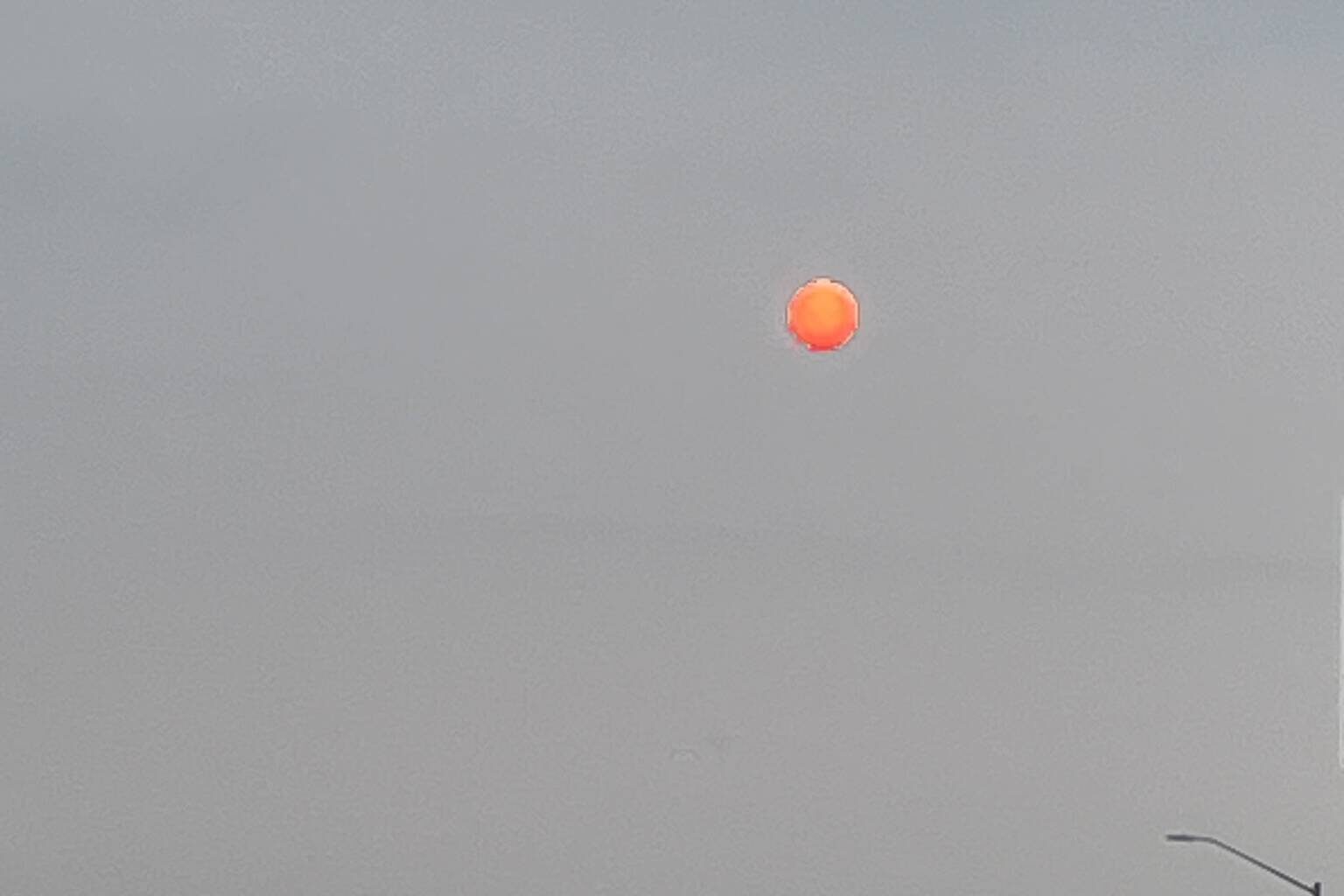
As the days get hot and the land gets dry, it’s time for an important public service announcement: don’t set the province on fire.
At least, make an effort not to, as much as anyone is able.
The City of Winnipeg issued a warning Thursday to exercise caution as dry, windy days increase the risk of wildfires.
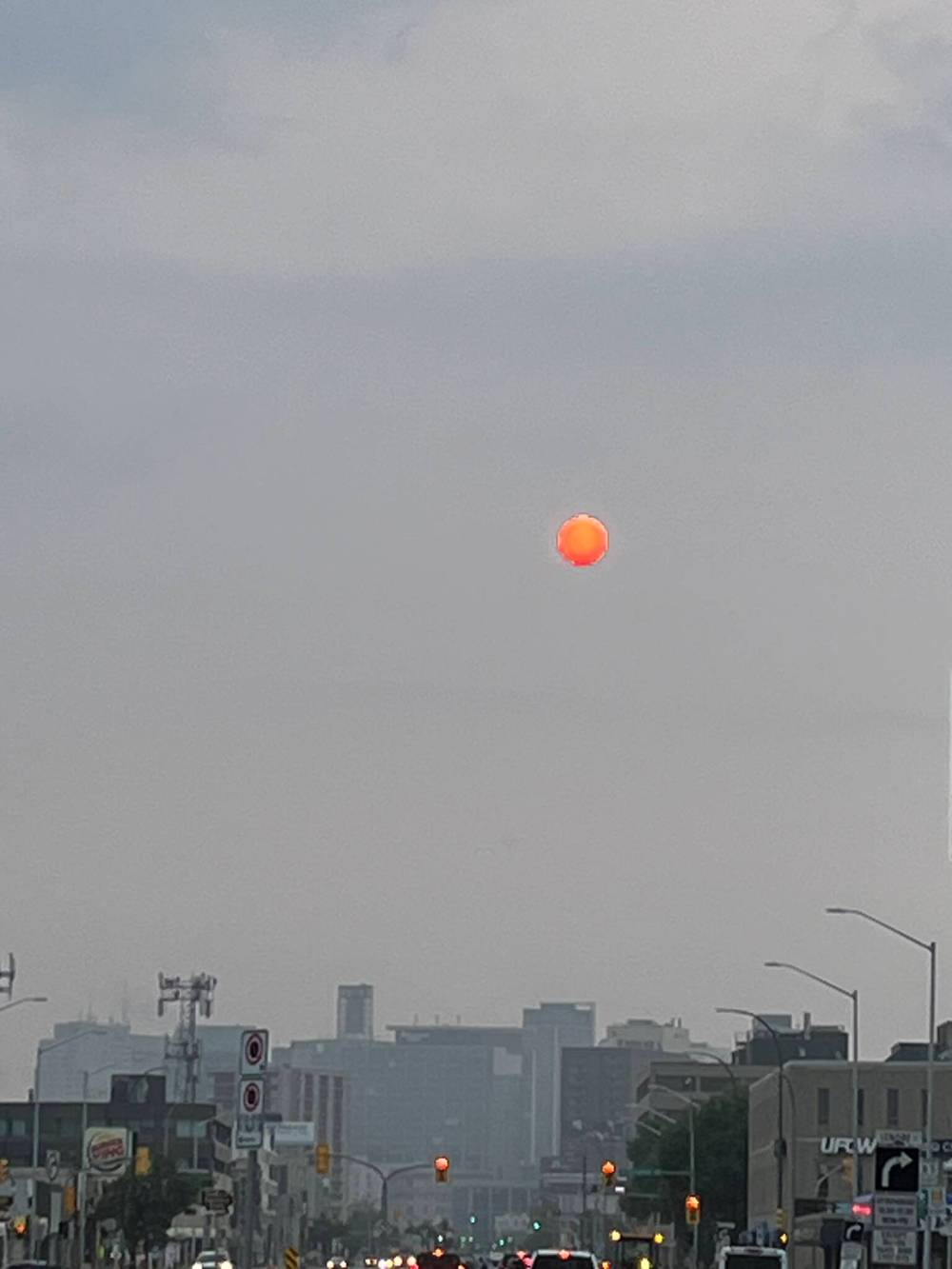
Russell Wangersky / Free Press Files
The sun behind forest fire smoke over Portage Avenue
“Almost all wildland fires are the result of human activity. We are asking residents to be cautious and take steps to prevent these fires,” Winnipeg Fire Paramedic Services deputy chief Scott Wilkinson said in a statement.
Because of the risk of human-caused fires, the city is encouraging people to reduce fire risks around their homes by thinning vegetation, watering plants and storing firewood at least 10 metres away from structures.
Smokers, be careful with your butts.
High winds increase the risk of fires — in Winnipeg, gusts higher than 25 kilometres per hour result in a fire ban, though the city had not implemented one by Thursday.
The province issued a bulletin May 6 announcing it is getting ready for wildfire season. Preparations include a $1.2-million upgrade to the Manitoba Wildfire Service’s weather information and fire-mapping systems, and the creation of a new initial attack and fire base in the Thompson area. The province is also investing $1.1 million in aerial firefighting among other preparations.
Except under a burning permit or in enclosed and approved fire pits, open fires are prohibited provincially from April 1 to Nov. 15.
Firefighters are already working tirelessly to respond to blazes in the province, including near the community of Richer and Long Plain First Nation. According to the province’s website, there have been seven fires so far this year — six of them caused by human activity.
Winnipeg Free Press | Newsletter

The risk is real and the consequences can be dire. Wildfires claimed two lives and displaced more than 30,000 people last year. Provincial parklands were severely damaged amid 2.3 million hectares burned in the provinces. Smoke from the wildfires polluted the air across the province. The effort of dealing with them cost half a billion dollars in Manitoba. Nationally, according to Natural Resources Canada, fighting wildfires costs over $1 billion annually.
According to Canada Wildfire, humans “are responsible for slightly more than half of all wildfires in Canada, primarily in densely populated forest and grassland areas.” These fires are caused by anything from discarded cigarettes to downed power lines.
As Canada and the rest of the world face the accelerating effects of climate change, we must all take responsibility for minimizing damage to the environment. The loss of forest is an acute pain in this regard; trees remain one of nature’s better carbon-absorption methods. Losing millions of hectares of them to preventable blazes is not just short-term damage draining public resources and poisoning our air for one summer. It contributes to a harsher summer the next year, more polluted air in the years to come.
“Climate change more than doubled the likelihood of extreme fire weather conditions in Eastern Canada in 2023,” states the Canadian Climate Institute’s website. “An overheating climate is making Canadian summers hotter and drier, with more erratic rainfall, including less summer rain in some regions… Wildfires are more likely to spread rapidly, with dry, windy days increasing by up to 50 per cent in Western Canada and doubling or tripling in Eastern Canada.”
With every poorly tended fire and irresponsible action in the deep, dry woods, we set our own future ablaze.