
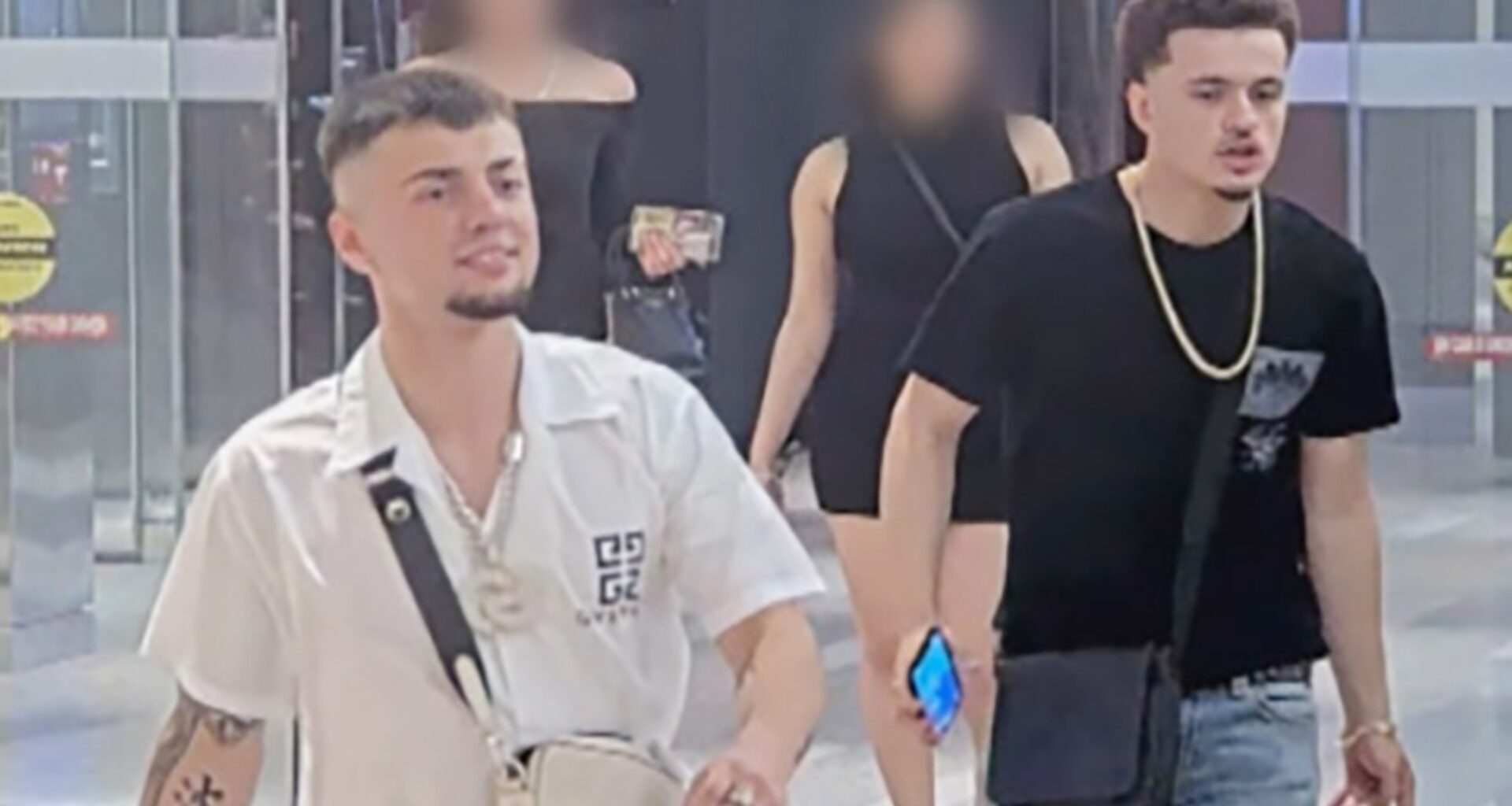
A jury at the Montreal courthouse emerged from its lengthy deliberation late Friday afternoon and found two brothers guilty of murdering a young man in the Sud-Ouest borough two years ago.
When a courthouse clerk asked a jury foreman what the panel decided on the sole count Chad and Jayden Pinel faced — second-degree murder — the man, referred to as juror No. 3 in court, uttered “guilty” for both men.
The brothers were standing next to each other inside a prisoners dock as the verdicts were read. One turned toward the other briefly before returning his eyes toward the jury.
Both brothers testified during the trial. They said it was Chad who stabbed 27-year-old Conor Patrick O’Loughlin in the heart during a brief altercation in the hallway of an apartment building where O’Loughlin lived on St-Antoine St. W.
They also claimed Jayden Pinel did nothing during the fight and was holding a bottle of vodka in one hand and bottle of water in the other when O’Loughlin sucker punched him.
The stabbing took place on May 18, 2024.
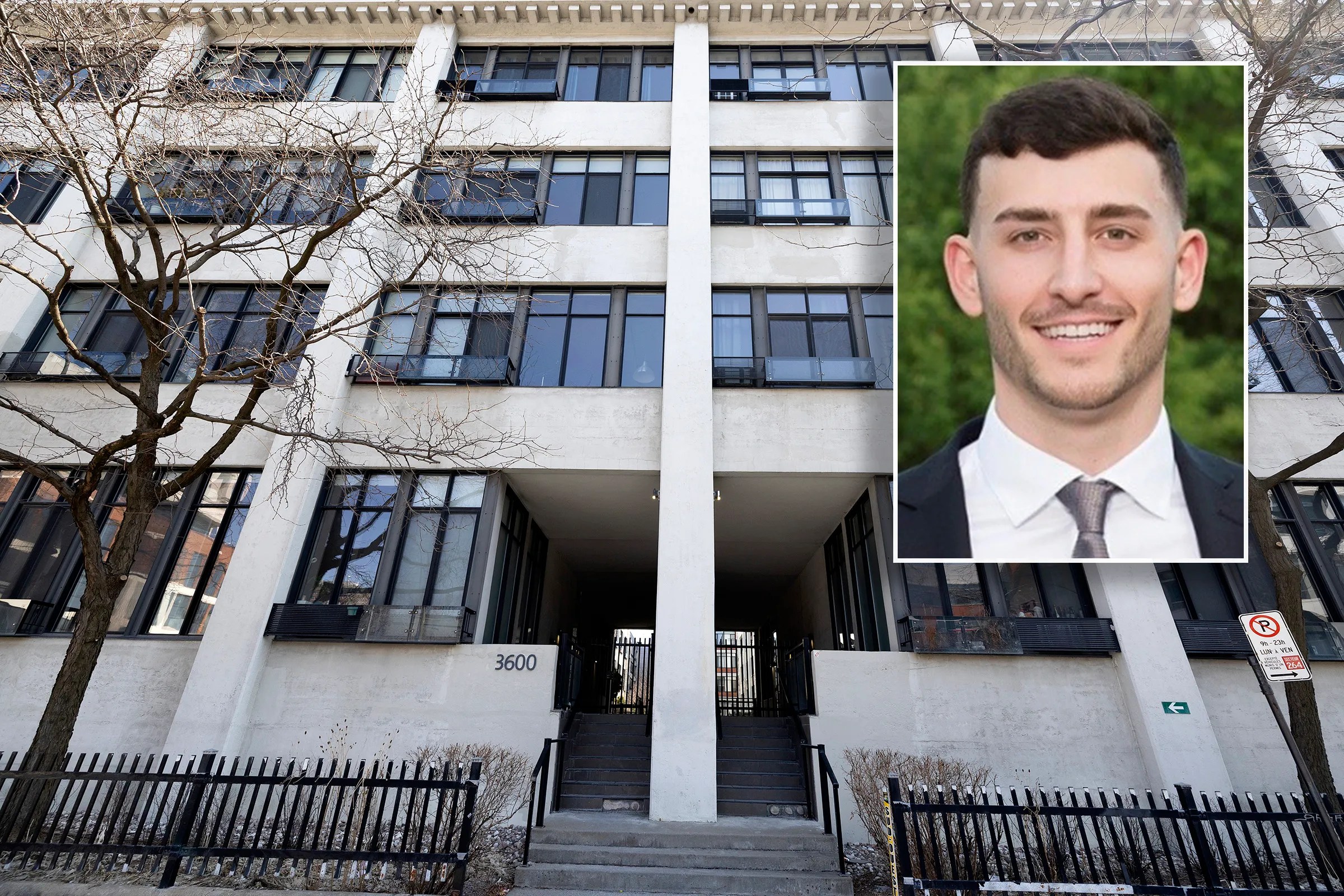 3600 St-Antoine St. W. condos, where Conor Patrick O’Loughlin (inset) was killed, seen in Montreal on Wednesday, April 8, 2026. Allen McInnis / Montreal Gazette/LinkedIn
When prosecutor Philippe Vallières-Roland made his closing arguments to the jury last week, he said the evidence showed both brothers acted in concert when they got into the fight with O’Loughlin. He asked the jury to consider the testimony of one of two women the brothers had partied with in the hours before the murder. During early morning hours, O’Loughlin had knocked on the door where the women lived, in the same building as the homicide victim.
O’Loughlin had a brief conversation with the brothers and it appeared to be friendly.
After O’Loughlin left, the woman testified, the Pinel brothers appeared to hold a brief meeting inside her bathroom before they came out, exited the women’s apartment and confronted O’Loughlin in the hallway.
The prosecutor argued Chad Pinel appeared to have positioned himself behind his younger brother to block O’Loughlin from seeing he had a knife in his hand.
When Chad Pinel testified, he said he always carried a knife in a “man purse” whenever he went to bars because he had been attacked in a bar, two years previous to the stabbing, by someone carrying pepper spray.
The knife was never recovered. Chad Pinel told the jury he tossed the knife out the window of the car Jayden was driving when they fled the crime scene. He said he tossed the hunting knife on to Notre-Dame St., near the Ville Marie Tunnel while the brothers headed to the duplex where their parents lived in Tétreaultville.
O’Loughlin, a former resident of British Columbia, did not know the Pinel brothers. He was celebrating a recent promotion with two friends from B.C. who were visiting him. The three men went to two bars and came home sometime near 4 a.m.
O’Loughlin, who was found to be over the blood/alcohol legal limit to have a person charged with impaired driving in Quebec, heard loud music coming from the apartment, two doors away from his, where the two young women and the Pinel brothers were partying.
A pathologist who testified during the trial told the jury, besides the alcohol, O’Loughlin consumed cocaine and an amphetamine before he was killed.
One of O’Loughlin’s friends told the jury O’Loughlin appeared to be curious about what was behind the music that came from the apartment near his. The Pinel brothers told the jury O’Loughlin knocked on the women’s apartment door and asked to join the party. One of the brothers said O’Loughlin was advised to find a woman he could bring with him. The brothers also claimed O’Loughlin insisted a second time to come in and that is what started the fight.
A conviction for second-degree murder comes with an automatic life sentence. Superior Court Justice Catherine Perreault will have to determine how much time the brothers will need to spend behind bars before they are eligible for parole. The minimum is 10 years and the maximum is 25 years.
She will hear arguments on the matter early in June.
The judge asked the jury to make a recommendation on the brothers’ period of parole ineligibility, but they declined.