

Listen to this article
Estimated 4 minutes
The audio version of this article is generated by AI-based technology. Mispronunciations can occur. We are working with our partners to continually review and improve the results.
The CEO of LNG Canada has responded to complaints about excess flaring at the company’s facility in Kitimat, saying he takes concerns “very seriously.”
Chris Cooper spoke at a press conference Thursday where federal and provincial government officials touted a new “enhanced cooperation agreement” around the company’s expansion plans in Kitimat.
LNG Canada’s proposed Phase 2 expansion has been designated a key national and provincial priority project, which was referred by Prime Minister Mark Carney to the federal major projects office last year.
LNG Canada will do everything to comply with regulations, Cooper said, noting he grew up in a backyard with five flare stacks himself.
“As a kid, I can remember what those flare stacks looked like, and I can remember the orange skies,” he said.
“I don’t remember whether they were compliant or permitted. So, the lived experience of the community is just as important as the compliance, and we work on both and take that very seriously.”
Flaring an ongoing concern
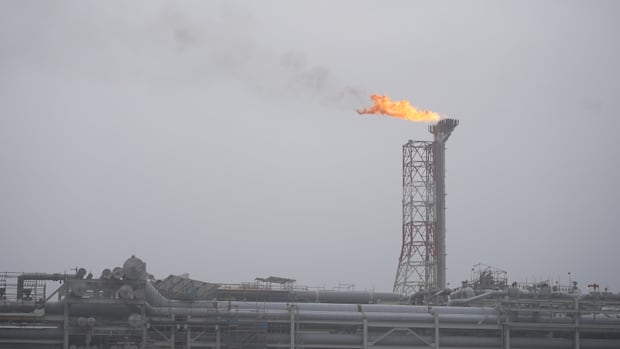
Flaring has been ongoing at the LNG Canada terminal in Kitimat, which is about 52 kilometres south of Terrace, since last year as the project comes online.
Last month, B.C.’s Energy Regulator told LNG Canada to identify the root cause of black smoke emissions during flaring at its Kitimat facility, and implement a fix by October.
Critics have also called for the project to be paused or shut down until the issues around unplanned flaring can be addressed.
Additionally, the City of Terrace recently joined Dawson Creek, Squamish, and Hazelton in asking the province to conduct an independent health impact assessment of the industry.
“LNG Canada boasted the cleanest LNG facility in the world, and I don’t really think we are there today,” said Terrace Mayor Sean Bujtas during discussions at an April 27 meeting.
“So the question is why, and when are we getting there? You can only get an airshed so dirty before it becomes a problem.”
LNG Canada has previously told CBC News that increased flaring is considered normal during the facility’s early operations phase, and that it reduces significantly during normal operations.
LNG trying to reduce flaring: Cooper
Cooper acknowledged the company is flaring more, but it is trying to reduce it as they move toward normal operations.
Monitors around the Kitimat airshed don’t show elevated levels of contaminants, and they continue to monitor their emissions in the community carefully, he added.
“All of those things are substantially below the permitted level that is known where health implications can start,” he said.
“We don’t want to be flaring. We’re trying to reduce that. It’s a normal part of startup, we will reduce that as we go towards steady operations.”
A final investment decision on expanding LNG Canada in Kitimat has not been made.
Cooper said the decision hinges on the company’s joint venture partners “satisfying many additional internal requirements,” including areas around supply chains, labour contractors, government and First Nations.
Meanwhile, the Canadian Association of Physicians for the Environment, along with other environmental groups, are calling on Ottawa to suspend all financial support for the LNG industry.
It said the facility has been exceeding its monthly authorized emissions for several months and the flaring activity exposed residents to “health-harming chemicals, including black carbon and benzyne.”
They are also requesting a mandated study looking at the impacts the industry is having on human health.
WATCH | Locals express safety concerns over flaring gas at Kitimat LNG facility: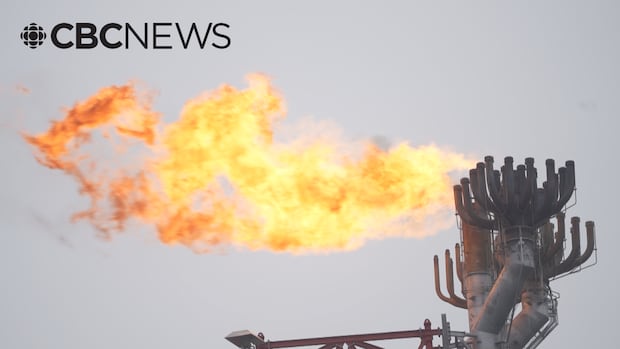
Locals express safety concerns over flaring gas at Kitimat’s LNG export terminal
Flaring gas towering high over Kitimat, B.C., is a regular sight as the Canada LNG export terminal — considered a nation building project — comes online. But as the CBC’s Terrace reporter Catherine Garrett shares, some locals are worried about its impact.