
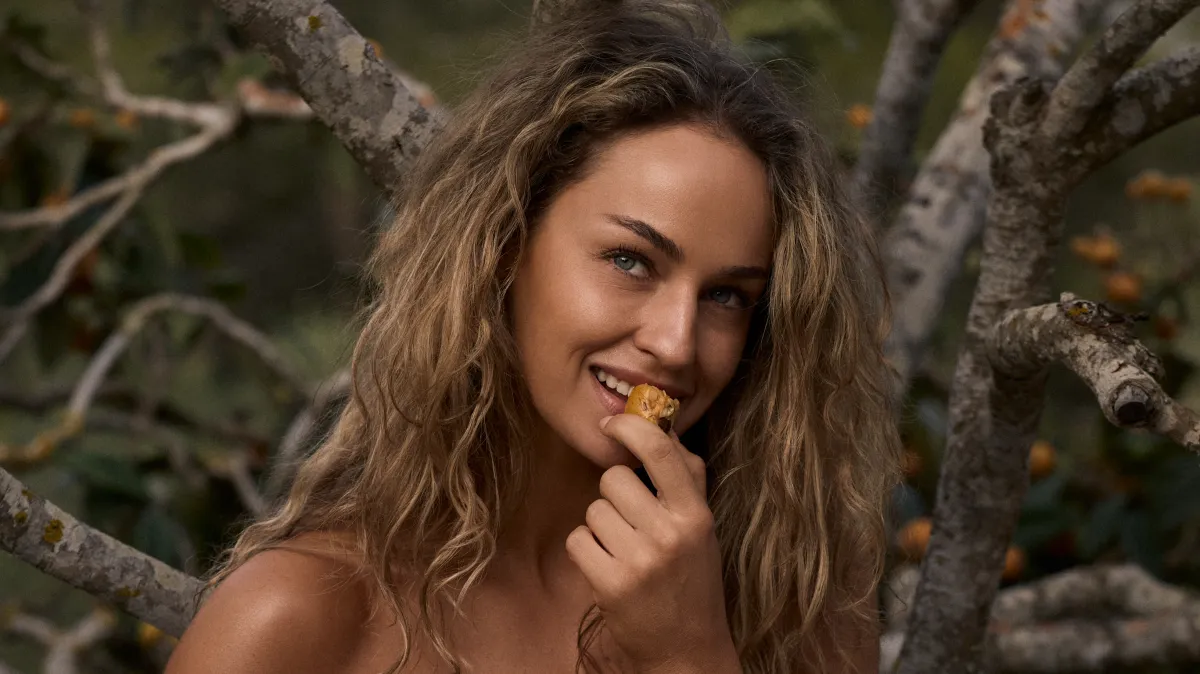
With her honeyed skin, sculpted abs and high-wattage smile, it is hardly surprising that Thalia Heffernan has managed not merely to survive but to flourish in the unforgiving world of modelling for more than half her life.
What is more unexpected — and rather bracing — is that her online presence is not a seamless parade of filtered perfection. Recently the model and influencer posted a reel about struggling with adult acne.
“I do it because my relationship with social media was quite toxic when I was younger,” she says. “I was always striving towards people’s best, most edited versions of themselves, without realising how unreal it all was. I saw an opportunity to be honest — to show young girls that it isn’t all sunshine and rainbows, that life is challenging, and that I definitely don’t always look as though I’ve just stepped off a runway.”
Ireland newsletter
Our best in-depth reads, exclusive features, news and a note from our editors in Ireland.
Sign up with one click
Heffernan, 31, from Dublin, laughs. “Do I enjoy going online and showing my spots to the world? No. It’s not exactly doing wonders for my self-esteem. But I do it because a young girl who isn’t feeling good about herself might see that video and think, OK, I’m not on my own.”
For the model, letting go of the pursuit of perfection is central to genuine wellbeing — far more important, she believes, than obsessing over nutrition targets or clocking up a prescribed number of steps. In fact, she is wary of the language of “fitness goals” altogether. At their worst, she says, they can become another stick to beat ourselves with: a source of pressure, anxiety and fear of failure, rather than a route to feeling better.
“The language around it is all ‘you don’t have enough’, ‘you’re lacking’ — and it trains you to think, I’m not enough, I’m not doing enough, my diet isn’t enough,” Heffernan says. “Of course, we all have wriggle room. But I’m pretty healthy. I’m doing my best. I’m trying.”
More than any anxiety about her appearance, she says, there is another, deeper strand of perfectionism she has had to unpick. “Something I’ve struggled with all my life is that I don’t like not being good at things,” she says.
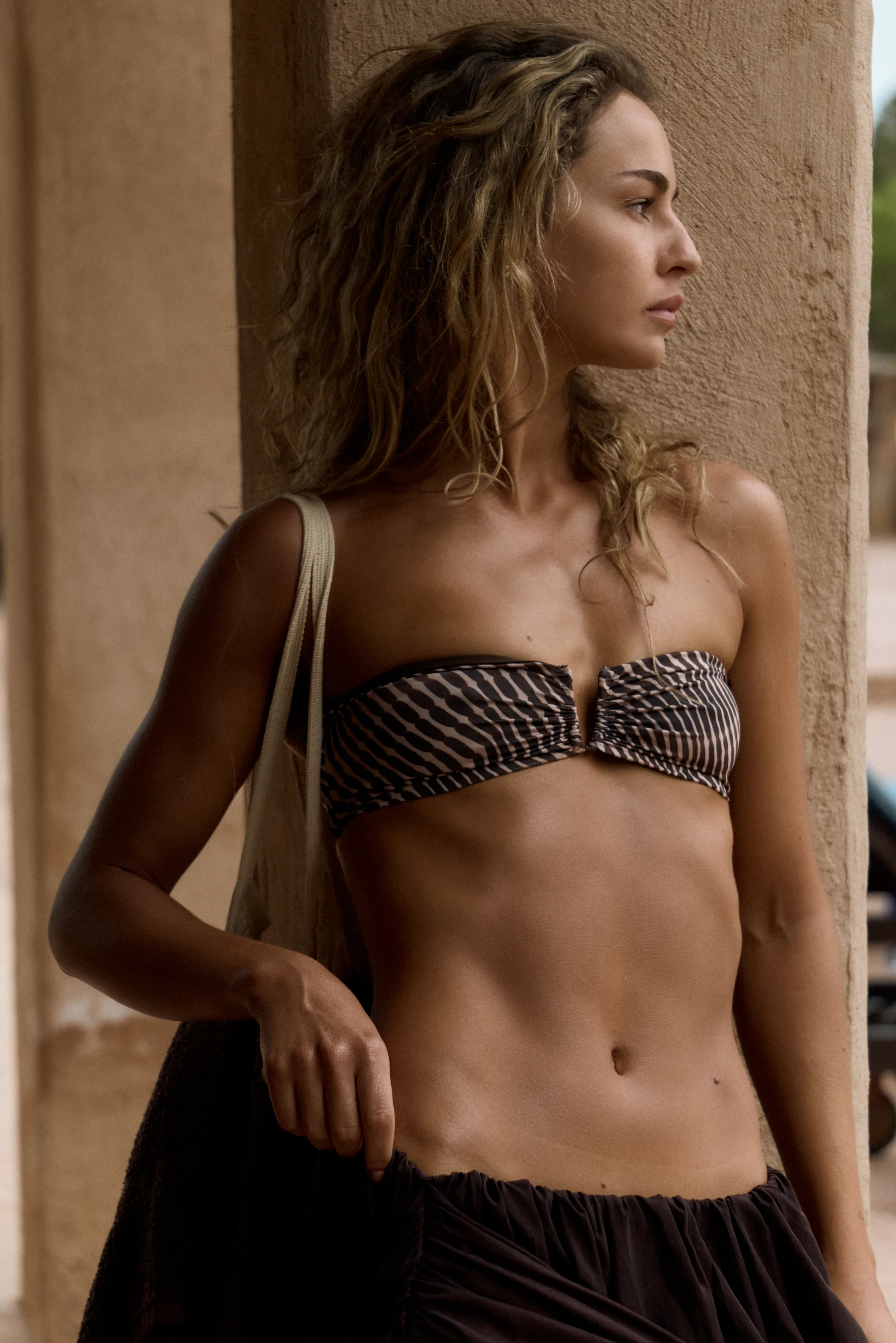 Heffernan: “My relationship with social media was quite toxic when I was younger,”
“I can be a bit of a perfectionist, and I struggle with trying new things because I’m afraid I won’t be good enough. I’m trying to stop doing that, because the narrative is wrong. Holding yourself back through fear, embarrassment, shame or judgment is something I think we do a lot, particularly as women. We live in a state of fear, rather than just thinking, f*** it — what’s the worst that can happen?”
Quite. But rewind for a moment. Did Heffernan — fresh from a gleaming photoshoot as brand ambassador for the Irish tanning brand Vita Liberata — just say she has struggled with how she looks? Surely, of all people, she must feel at ease in her body?
“No! Does anyone?” she says, emphatically. “I think learning to love yourself is a huge journey, but it’s one I’ve been navigating over the past few years and I’m definitely better than I was. I don’t love my body, but I am very glad of my body. I’m very lucky to be healthy and fit and able.”
Heffernan began modelling at just 14, becoming known in the industry as “the girl who would go to work in her school uniform afterwards”. At the time she was not exactly the prevailing ideal of the Grafton Street press-call era, all bikinis, blow-dries and pneumatic glamour.
“I came into the industry when glamour was the big thing, but I was not a glamorous girl,” she says, smiling. “I was 14, gangly, with long curly hair and not a boob to my name. I didn’t fit that mould. But the industry was changing and shifting, and I was very lucky to ride that wave.”
After finishing her Leaving Cert, she moved to New York to model. There, despite being a slender size 6, she was told she needed to lose weight. After a successful decade working in Europe, she signed with the elite agency IMG Models and returned to New York in 2022, but after 12 months she relocated back to Dublin.
When I ask whether she has watched the recent America’s Next Top Model documentary, which revisits the darker side of an industry long sold as aspirational, she gives a dry laugh.
“I haven’t had the balls to watch it yet. I was too triggered,” she says.
Apart from a stint on RTE’s Dancing with the Stars in 2017, was she ever tempted by the reality television route herself? “No, I avoided that like the plague, and I’m glad I did,” she says.
In those early years her relationship with exercise was rather different from the one she has now. “When I started my career, the gym was definitely just a means to an end,” she says. “It was to keep me in shape and keep my size down for my job. Now it’s my grounding force. It’s something I can rely on when things feel a bit all over the place. I know I feel better when I train. It’s about more than my clothes fitting better — it’s about feeling better in myself and in my mind.”
These days she often has a willing gym partner in her boyfriend of almost a year, the Tyrone GAA footballer Conor Meyler. The couple met last August at the launch of Meyler’s business, Veyo Breathing, and had their first date in the gym.
“It’s a trait I wanted in a partner, and I’d say he’d say the same,” Heffernan says. “Being able to train together is so good. I know couples who would never, but Conor and I love going to the gym together. With our schedules being so busy, it means we get to spend more time together doing something we both love.”
A case of #couplefitnessgoals, I suggest — only belatedly remembering that, in Heffernan’s world, goal mentality is precisely the enemy.
“But it shows how ingrained that word is in society, doesn’t it?” she says, laughing. “It’s the word your brain reaches for. I think I’d call it more of a journey.”
In November she got last-minute tickets to a Hyrox event and found that people were faintly horrified she was entering without weeks of training behind her, or a target time in mind. “But my attitude was, I’ll just do it,” she says. “If I do it in 20 minutes, wow. If I do it in two hours, I’ve still done it. There doesn’t need to be a goal. Making everything about goals leeches the joy out of it.”
There is, she says, too much pressure in all of it: protein targets, step counts, the relentless language of “hitting” and “smashing” and “optimising”. “We can’t always be performing at our best,” she says. “We can’t always be hitting the goals. And anyway, whose goals are they? Who is making these goals? Often, when you look back at it, it’s someone who’s trying to make money — a protein powder company or someone like that.
“When you set your goals based on what other people are pushing you to do, it can be quite unfulfilling. Make it about doing something that makes you feel better about yourself, rather than worse. It’s about learning what’s best for you — and then trusting that that’s enough.”