

Listen to this article
Estimated 4 minutes
The audio version of this article is generated by AI-based technology. Mispronunciations can occur. We are working with our partners to continually review and improve the results.
Whether you’re a tourist or a commuter, there’s a special thing that happens on B.C. Ferries sailings.
“Attention passengers,” the captain announces. “If you want to make your way to the starboard side of the ferry, we’ve got a humpback whale and her calf swimming alongside us.”
Meanwhile, a bald eagle flies overhead. And then it dives down to catch a fish.
OK, that would be particularly magical. But seeing wildlife from the ferry, when you’re simply on your way to visit family or see a concert, can be a welcome benefit of the journey.
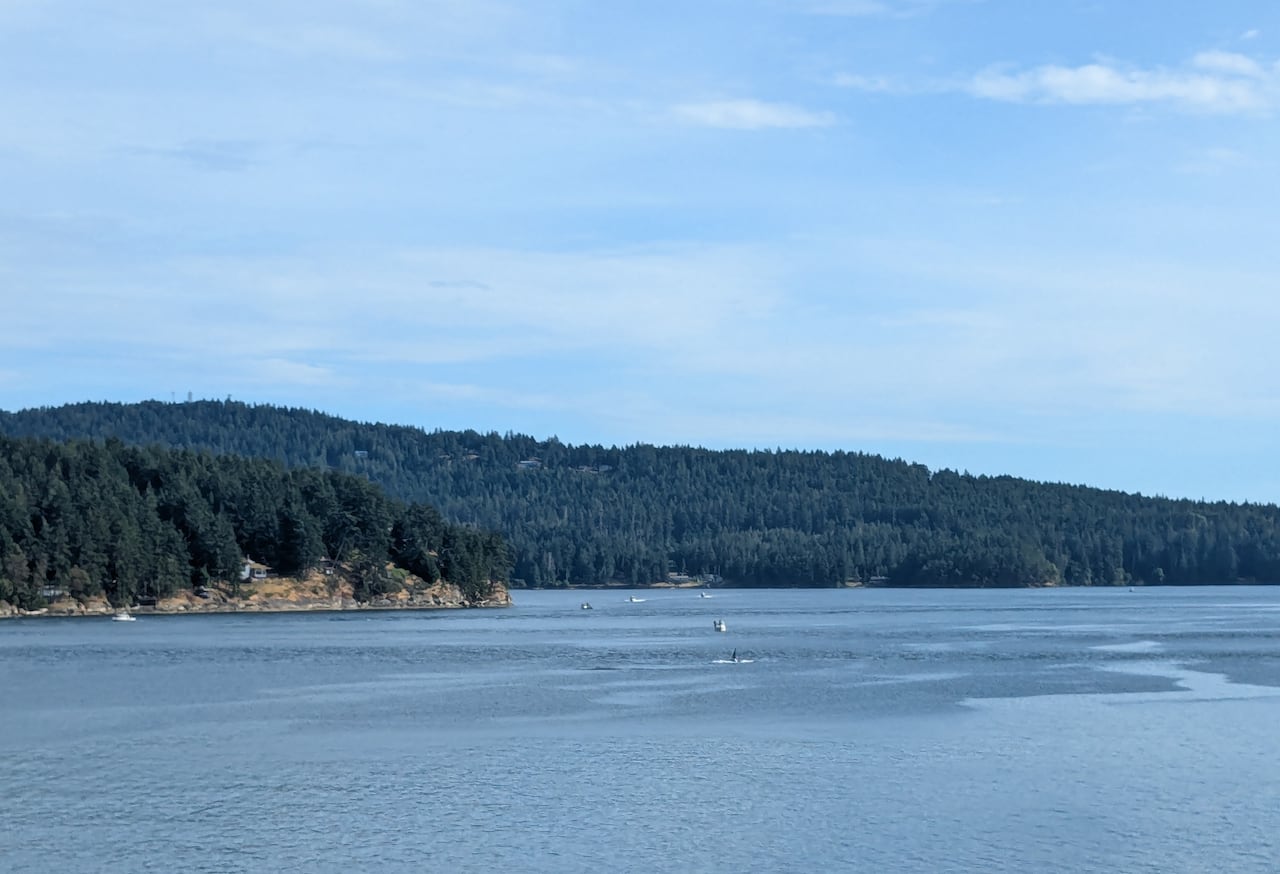 If you look really closely, there’s an orca fin in this picture, taken near Galiano Island. As B.C. Ferries regulars will know, photos of marine mammals taken from the ferry rarely do the creatures justice. (Courtney Dickson/CBC)
That’s why nature enthusiasts encourage travellers to spend time out on the deck, or at least looking out the window, watching for creatures in the sea, in the air and on land.
‘Active Pass is always active’
Birder Ann Nightingale said taking a ferry ride specifically to watch birds and other wildlife is a cheap, enjoyable way to spend the day.
“For under $20, including your coffee, you can spend five hours out on the water. That’s a pretty nice charter,” she told CBC’s On The Island.
This time of year, she said, most of the bird activity is happening in Active Pass, the channel between Mayne and Galiano islands.
“If you can imagine, the winter is really the best time for ferry birding here and most of those birds have now headed north for breeding,” she said. “But Active Pass is always active.”
In particular, she said, it’s busy with gulls.
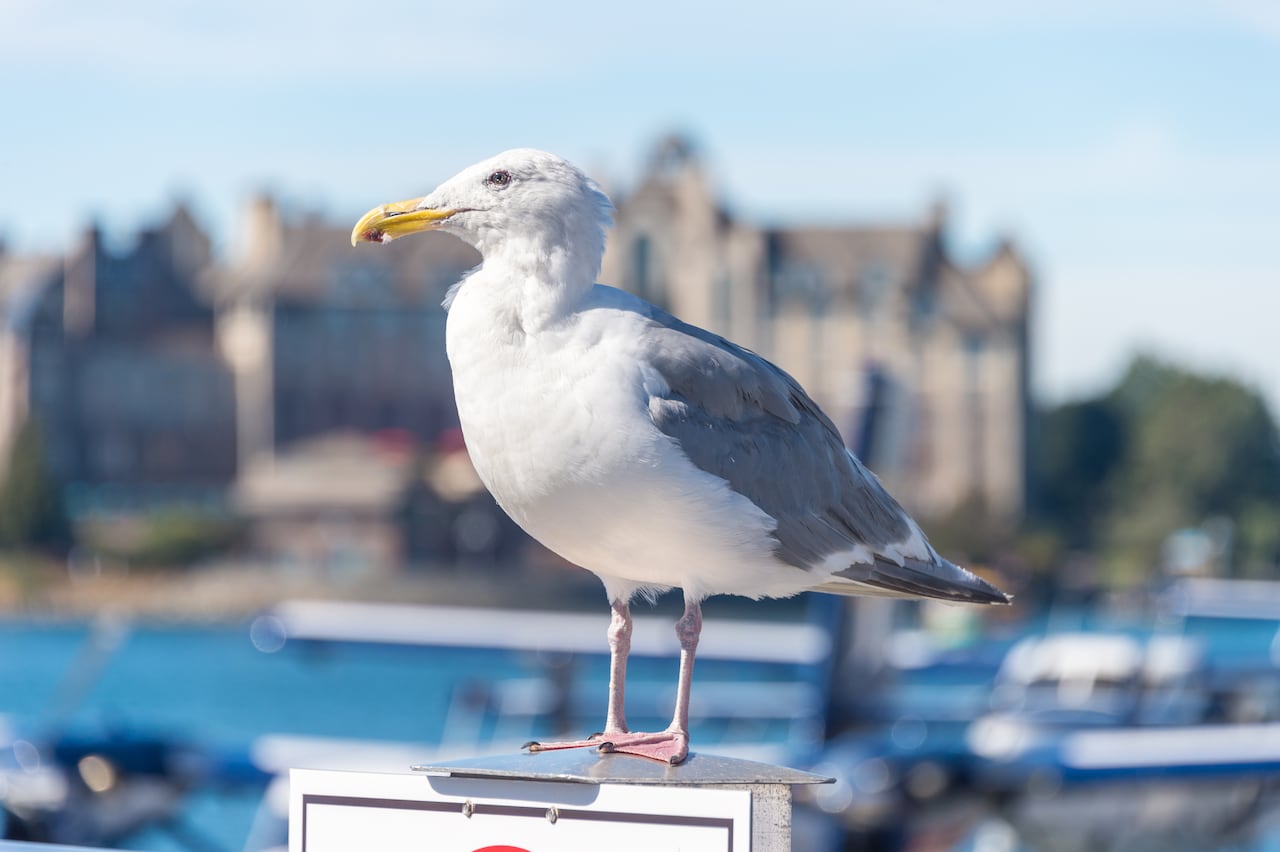 You love to hate them — but Ann Nightingale says gulls deserve a little more appreciation. (Shutterstock / Marc Bruxelle)
While a gull might not seem exciting, especially after one just stole your pizza on Granville Island, there are several species you can spot, each with unique behaviours, Nightingale said.
“There have been a lot of Bonaparte’s gulls in the pass lately,” she said. “I was on the ferry a couple times to go birding and there were over 7,000 in the pass.”
Other birds to try to spot on a ferry sailing include eagles, Rhinoceros auklets, guillemots and cormorants, Nightingale added.
Waters rich with marine life, says naturalist
Whenever naturalist Tina Kelly is travelling with B.C. Ferries, she keeps an eye on the water to see what might pop up.
“I’m constantly sort of craning my neck up and looking out and just seeing what’s out there. You just never know,” she said.
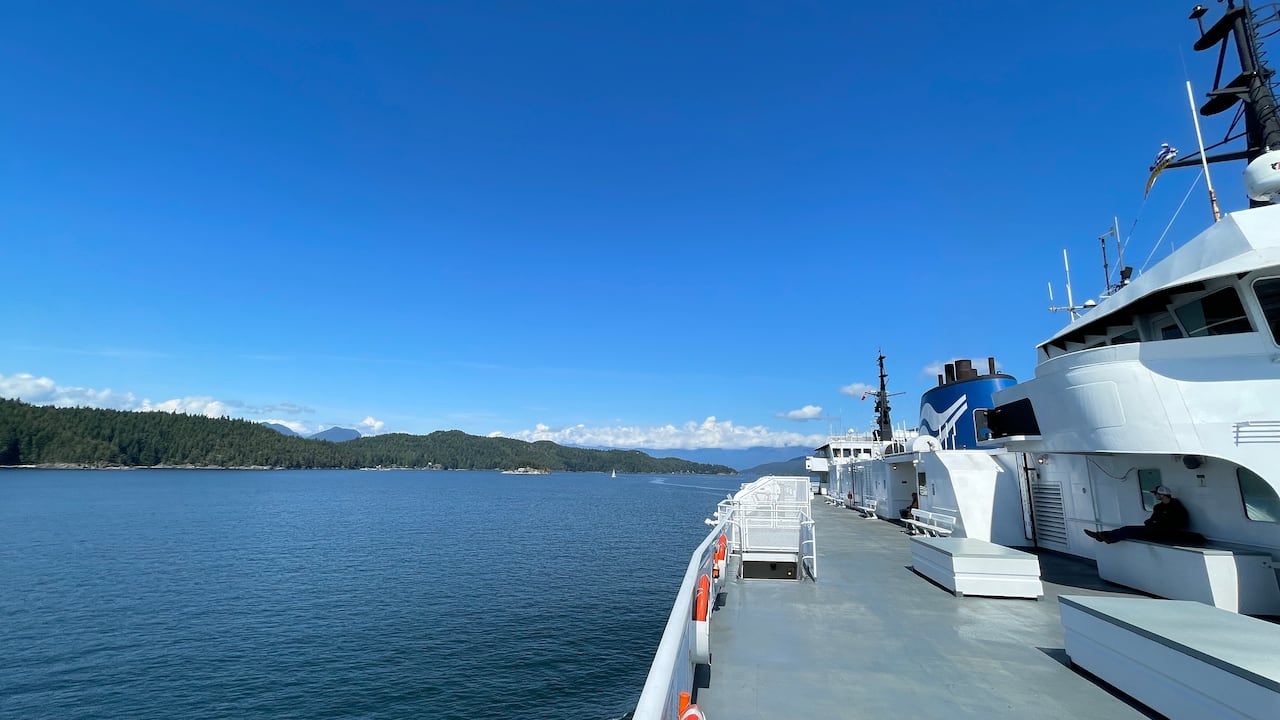 Step outside next time you’re on a ferry to watch for wildlife, naturalist Tina Kelly says. (Rafferty Baker/CBC)
Kelly, director of learning and communications at the Shaw Centre for the Salish Sea in Sidney, said that while the ocean beneath the ferries looks almost impenetrable, with its deep, dark colour, it’s rich with life.
Fish, sea stars, and marine mammals like whales and porpoises are abundant, but there’s also marine fauna like eelgrass and kelp, and phytoplankton.
Wherever the channel narrows, marine life becomes more obvious, Kelly said.
“We can see the tops of some kelp, kelp forests that prefer water rushing past them,” she said. “The moving water is bringing you plankton, is bringing you food and nutrients.”
That food brings seals, orcas and whales to the area.
“I have seen, quite regularly, whales in that region, including humpback whales.
“I grew up in Victoria, I’ve ridden the ferry lots and lots of times. I was well over a fully-fledged adult before we had the experience of seeing a whale on a ferry … some people just luck out and see a porpoise fin come up or humpback fin.”
The ecosystem also attracts birds looking for their next meal.
Kelly, like Nightingale, watches for birds as she journeys through the Gulf Islands.
She said a swarm of birds can be a good way to spot a whale.
“Whales also want those schooling fish. So it’s a good way to train your eye to sort of look in anticipation. Follow the birds.”