

Listen to this article
Estimated 4 minutes
The audio version of this article is generated by AI-based technology. Mispronunciations can occur. We are working with our partners to continually review and improve the results.
A shortage of a lifesaving bovine product is leaving some Alberta farmers struggling to protect their newborns this calving season.
Sidney Haeberle, a farmer and farm supply store owner in east-central Alberta, says sourcing enough bovine colostrum has become a recent challenge, despite it never being an issue in the past.
“There’s never been a colostrum shortage. This is kind of new territory and there’s really nothing that can replace it,” she said.
Bovine colostrum is the essential milk produced by a cow within the first few hours after giving birth.
In an interview Thursday with CBC’s Edmonton AM, Haeberle said the shortage is creating a stressful situation for Alberta’s cattle producers because the colostrum is an invaluable resource for their calves.
“They [call it] ‘gold in a bag.’ There’s nothing you can change [it] out with to give [calves] if you can’t find colostrum.”
Haeberle said the product is similar to baby formula and can be essential to a newborn calf’s fledgling immune system in the first 24 hours of life.
“The colostrum from a mother is essential for calves to live,” Haeberle said.
“It provides calves with antibodies and nutrients to get them through life,” she explained. “If they can’t get colostrum from the cows, farmers will intervene and mix bagged colostrum to give to the calves.”
Bovine colostrum is also vital when a cow rejects its calf, birthing complications arise, the mother dies, or twins are born without enough supply for both, Haeberle said.
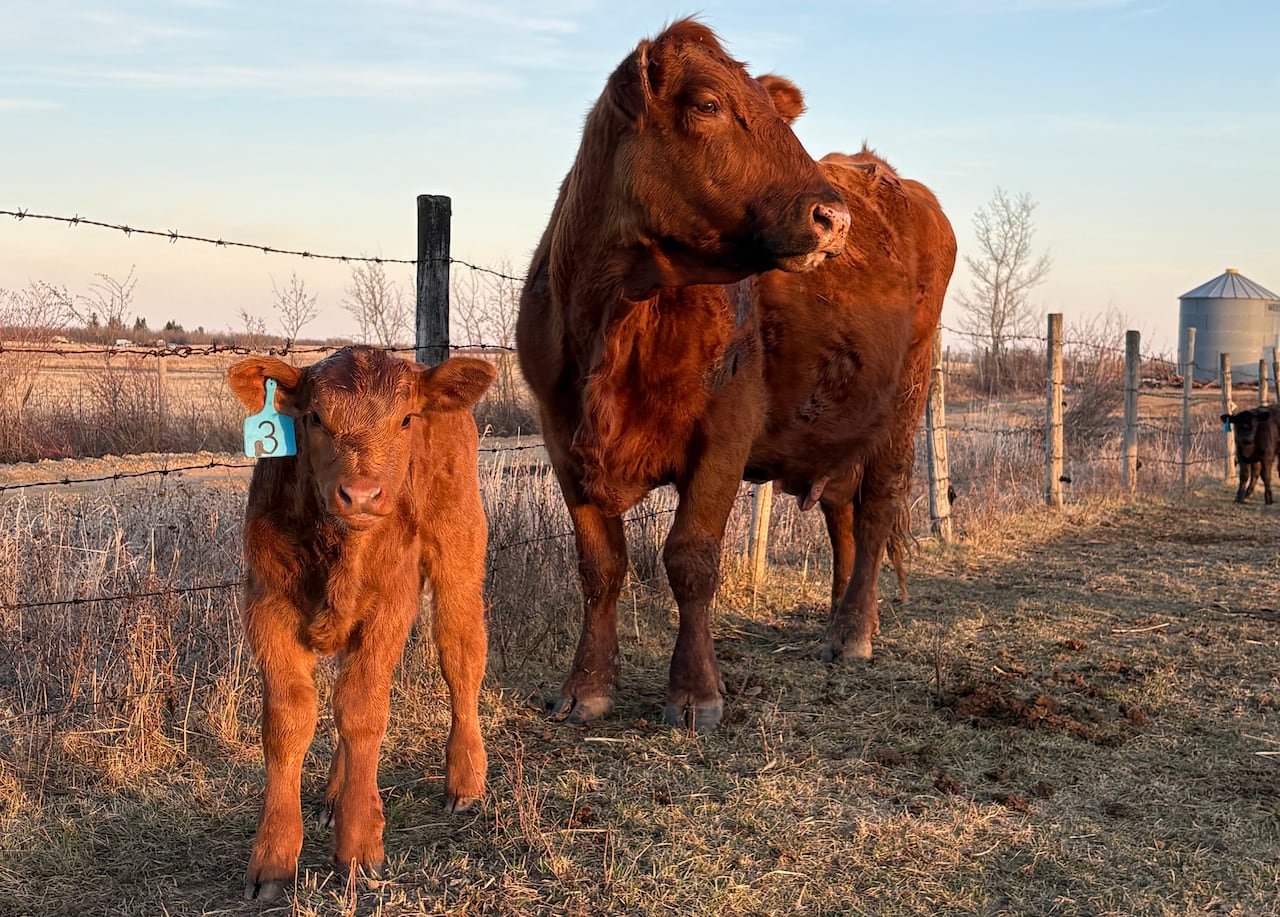 A cow and calf on Sidney Haeberle’s farm located near Vegreville, Alta. (Submitted by Sidney Haeberle)An unprecedented shortage
Haeberle noted that a colostrum shortage is unprecedented in her experience. Her store, SR Feed and Farm Supply in Vegreville — about 100 kilometres east of Edmonton — typically stocks at least 30 bags of the product.
However, until this week, Haeberle said her store had been without bovine colostrum on its shelves for three weeks, and has had a particularly difficult time acquiring product for the past two months. She said the shortage is leaving her customers very stressed.
Now, whatever supply Haeberle receives is flying off the shelves.
“On Wednesday, I was able to get two cases in, which is 24 bags. But within three hours I was down to 11 bags, because it is calving season,” she said.
Haeberle said some farmers have been stepping up to share their supply.
“Our customers are really good at sharing,” she said. “People will even bring extra bags back that they didn’t use.”
Haeberle said she has heard from suppliers that some of the colostrum is being purchased by people for its purported health benefits.
According to Health Canada, people may use bovine colostrum to help “maintain and support the immune system,” though the agency recommends consulting a physician before doing so.
One of Haeberle’s main suppliers, Saskatoon Colostrum Company Ltd. (SCCL), said in a statement to CBC News Thursday that it is experiencing a “temporary shortage of powdered colostrum demand and ongoing supply constraints impacting production timelines.”
The company said it is working “to restore inventory as quickly and responsibly as possible,” while expanding plant capacity and production capabilities.
The office of the Minister of Agriculture and Irrigation told CBC News in a statement Thursday it is aware of the concerns.
“If producers are concerned, we recommend they get in touch with their local feed supplier to see when they can expect shipments,” the province said.
Haeberle said she has placed an order for September or December delivery, but is unable to get a firm date.
“We are just hoping the colostrum shows up,” she said. “My livelihood, the wellbeing of my animals and my customers depend on it.”
Haeberle noted that the shortage could have far-reaching effects on the cost of beef.
“If we are losing calves because we aren’t giving them colostrum, if people think beef prices are high now they are only going to get higher,” she said.
“If calves are not living, we won’t have the demand to meet what consumers are needing.”