
The operating environment for private clients across Greater China is being reshaped by a steady tightening of global tax frameworks, increasing transparency, and a marked shift in how authorities interpret and enforce existing rules. While the underlying structures used in wealth planning remain broadly intact, the assumptions that previously underpinned their effectiveness are being materially challenged.
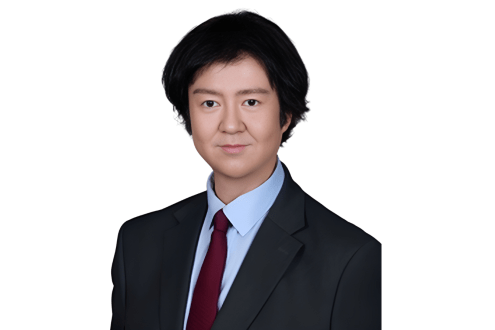
For John Wong, Senior Advisor in Private Clients and Family Office Services at PwC, this is not a moment of structural disruption, but one of recalibration. The emphasis is shifting from optimisation to defensibility, from flexibility to compliance, and from static structures to adaptive frameworks that can withstand closer regulatory scrutiny.
Against this backdrop, tax is no longer a peripheral consideration within wealth structuring. It has moved decisively to the centre of the advisory agenda, influencing everything from jurisdictional choices to the viability of long-established offshore arrangements.
Key Takeaways
Tax Transparency Is Reshaping the Advisory Landscape: The continued evolution of global information exchange frameworks, including enhanced versions of CRS, is materially increasing visibility for tax authorities and reducing the effectiveness of opaque structures.
Enforcement Has Accelerated, Particularly in China: The shift from legislative capability to active enforcement is now evident, with authorities leveraging data to pursue self-assessment and recover tax across offshore holdings.
Offshore Trust Structures Are Facing Heightened Scrutiny: Emerging cases suggest a willingness by authorities to look through trust arrangements, raising questions around historical assumptions of separation and tax treatment.
Advisory Models Are Shifting Towards Continuous Adaptation: Static planning approaches are becoming less viable, with advisers needing to recalibrate strategies in line with evolving enforcement patterns and regulatory interpretation.
Family Offices and Multi-Jurisdictional Structuring Are Expanding: Increasing complexity in asset allocation and family composition is driving demand for multi-location structures and more formalised governance frameworks.
Tax Transparency and the End of Structural Ambiguity
The trajectory of global tax regulation has been clear for over two decades, but its cumulative impact is now becoming fully visible.
Initiatives originating from bodies such as the OECD and reinforced through frameworks like the Common Reporting Standard (CRS) have progressively reduced the scope for opacity in cross-border wealth planning. What began with the identification of tax havens has evolved into a highly interconnected system of automatic information exchange, economic substance requirements, and increasingly granular reporting obligations.
As John Wong, Senior Advisor at PwC, notes, the direction of travel is unequivocal. “The framework has been building for years, but what we are seeing now is a more advanced and more stringent phase. The level of transparency is only increasing.”
This includes the anticipated progression towards what market participants are referring to as “CRS 2.0” – a more rigorous iteration of existing standards, with expanded scope and tighter enforcement mechanisms.
For advisers, the implication is straightforward.
“The message has not changed,” Wong observes. “Tax compliance is king. It has always been the case, but now it is being tested more directly.”
China: From Legislative Framework to Active Enforcement
Nowhere is this shift more evident than in mainland China, where the gap between regulatory capability and enforcement is narrowing rapidly.
While the legislative foundations for taxation of global income have been in place for some time, enforcement has historically been less consistent. That dynamic is changing. Since 2024, there has been a visible increase in tax bureau activity, particularly in the use of data obtained through CRS reporting.
Authorities are now systematically matching reported offshore financial data with domestic tax filings, driving a wave of self-assessment and tax recovery. “There has been a clear acceleration,” Wong explains. “The authorities already have the information. The focus is now on how they use it.”
This shift reflects a broader move towards international alignment, with China adopting mechanisms comparable to Controlled Foreign Corporation (CFC) rules seen in jurisdictions such as Australia and the United States.
The practical outcome is a more assertive enforcement posture, supported by both data and legislative backing.
Looking Through the Structure: Trusts Under Scrutiny
One of the more consequential developments is the emerging approach towards offshore trust structures.
Historically, trusts have been positioned as distinct legal arrangements, offering separation between assets and beneficiaries. However, recent cases suggest that authorities may, in certain circumstances, be prepared to disregard that separation.
“There are situations where the structure itself is not being recognised in the way it was historically assumed,” Wong notes. “Authorities are looking at the underlying economic reality rather than the legal form.”
This includes examining the timing of trust establishment and attributing accumulated income – including dividends, capital gains and investment returns – directly to the individual, rather than the structure.
Such an approach raises material uncertainty. While grounded in existing anti-avoidance provisions, including those introduced in China’s 2019 individual income tax reforms, its application to trust arrangements is still evolving.
“It is not a question of whether the rules exist,” Wong adds. “It is about how they are interpreted and enforced in practice. That is where the uncertainty lies.”
For ultra-high-net-worth families, this introduces a need for reassessment. Structures that were previously considered robust may require review, particularly where tax outcomes rely on formal separation rather than substantive economic distinction.
Advisory Implications: From Structuring to Ongoing Calibration
For advisers, the implications are operational as much as strategic.
The traditional model of establishing a structure and maintaining it with minimal adjustment is becoming less viable. Instead, there is a growing requirement for continuous monitoring and recalibration.
“We have to stay very close to real cases,” Wong explains. “Understanding how the rules are actually applied is critical. That informs how we adjust our advice.”
This places greater emphasis on responsiveness and adaptability. Advisory models must be capable of evolving alongside regulatory interpretation, rather than relying solely on established precedent.
At the same time, the foundational principle remains unchanged. “Whatever the structure, whatever the strategy, it must be fully compliant. That is non-negotiable.”
Taiwan and the Gradual Alignment with Global Standards
While China has moved decisively on enforcement, other jurisdictions in the region are progressing at a more measured pace.
In Taiwan, adoption of CRS has been comparatively limited, with a smaller network of exchange agreements and slower implementation of automatic information flows. However, the broader direction remains aligned with global standards.
Recent introduction of CFC rules reflects this trajectory, bringing Taiwan closer to international norms. “It is not moving as quickly as some expected,” Wong notes, “but the direction is consistent with the global trend.”
For clients, this reinforces the importance of forward-looking structuring. Even where enforcement is currently less intensive, alignment with international frameworks is likely to increase over time.
Hong Kong’s Enduring Role as a Structuring Hub
Within Asia, Hong Kong continues to play a central role in private wealth structuring, particularly for Greater China clients.
Despite geopolitical noise and ongoing comparisons with other centres such as Singapore, Wong remains confident in its long-term positioning. “The core attributes are unchanged – the legal system, the tax regime, and its role as a gateway.”
This gateway function is both geographic and functional. Hong Kong provides a bridge between onshore Chinese wealth and offshore structuring capabilities, supported by a mature financial ecosystem and increasing government focus on family office development.
“There is sustained interest,” Wong observes. “We continue to see enquiries around establishing family offices, particularly from mainland China and Taiwan clients.”
Rather than a binary choice between jurisdictions, the reality is increasingly multi-layered. Families are establishing presences across multiple locations, including Hong Kong, Singapore, and, selectively, emerging hubs such as Dubai.
“There is no single answer,” Wong explains. “It depends on the complexity of the assets and the objectives of the family. In many cases, it is not about choosing one location, but using several.”
The ‘United Nations’ Family: Structuring Across Borders
A defining characteristic of modern ultra-high-net-worth families is their geographic dispersion.
Family members are often resident across multiple jurisdictions, with differing tax exposures, regulatory environments, and personal priorities. This creates both complexity and opportunity.
“I often describe it as a small United Nations,” Wong says. “Different nationalities, different residencies, all within the same family structure.”
This diversification can support risk management and structuring flexibility, but it also requires more sophisticated coordination. Tax compliance, residency planning, and governance frameworks must be aligned across jurisdictions, with no margin for inconsistency.
The role of the adviser, therefore, extends beyond technical structuring to include orchestration of a multi-jurisdictional strategy.
Asset Protection, Succession and the Core Client Agenda
Despite evolving market dynamics and increasing regulatory scrutiny, the core priorities of ultra-high-net-worth clients remain relatively stable.
Asset protection continues to sit at the top of the agenda, particularly in an environment characterised by geopolitical uncertainty and regulatory change. “Protection of wealth is always the starting point,” Wong notes. “Everything else builds from there.”
Succession planning is similarly critical, with a growing focus on ensuring continuity across generations. This includes not only legal structures, but also governance frameworks and family alignment.
Tax and regulatory compliance, while fundamental, are now viewed as baseline requirements rather than differentiators. “Clients assume that compliance is handled,” Wong explains. “The real discussion is around how to structure effectively within that framework.”
Investment Trends: From ESG to AI
On the investment side, generational dynamics are becoming increasingly influential.
Next-generation family members are often more engaged in thematic investing, with a strong focus on areas such as environmental sustainability and technology.
“There is a noticeable shift,” Wong observes. “Younger family members are more vocal about where capital should be allocated.”
This includes increased interest in ESG-aligned investments and green finance, as well as growing exposure to artificial intelligence-related opportunities. However, sentiment remains mixed.
“Some clients are very optimistic about AI,” Wong notes. “Others take a longer-term view and question the timing of returns.”
This divergence reflects a broader trend towards more active and diversified investment approaches within family offices.
A More Demanding Operating Environment
The overarching direction is clear. The environment for offshore wealth planning is becoming more transparent, more regulated, and more demanding.
For advisers, this requires a shift in mindset – from designing optimal structures to maintaining defensible ones. For clients, it reinforces the need for flexibility, diversification, and rigorous compliance.
The fundamentals of private wealth management remain intact. However, the margin for error has narrowed, and the cost of misalignment – whether structural or regulatory – is increasing.
In this context, the ability to adapt, rather than simply to structure, is becoming the defining capability in serving Greater China’s ultra-high-net-worth clients.