
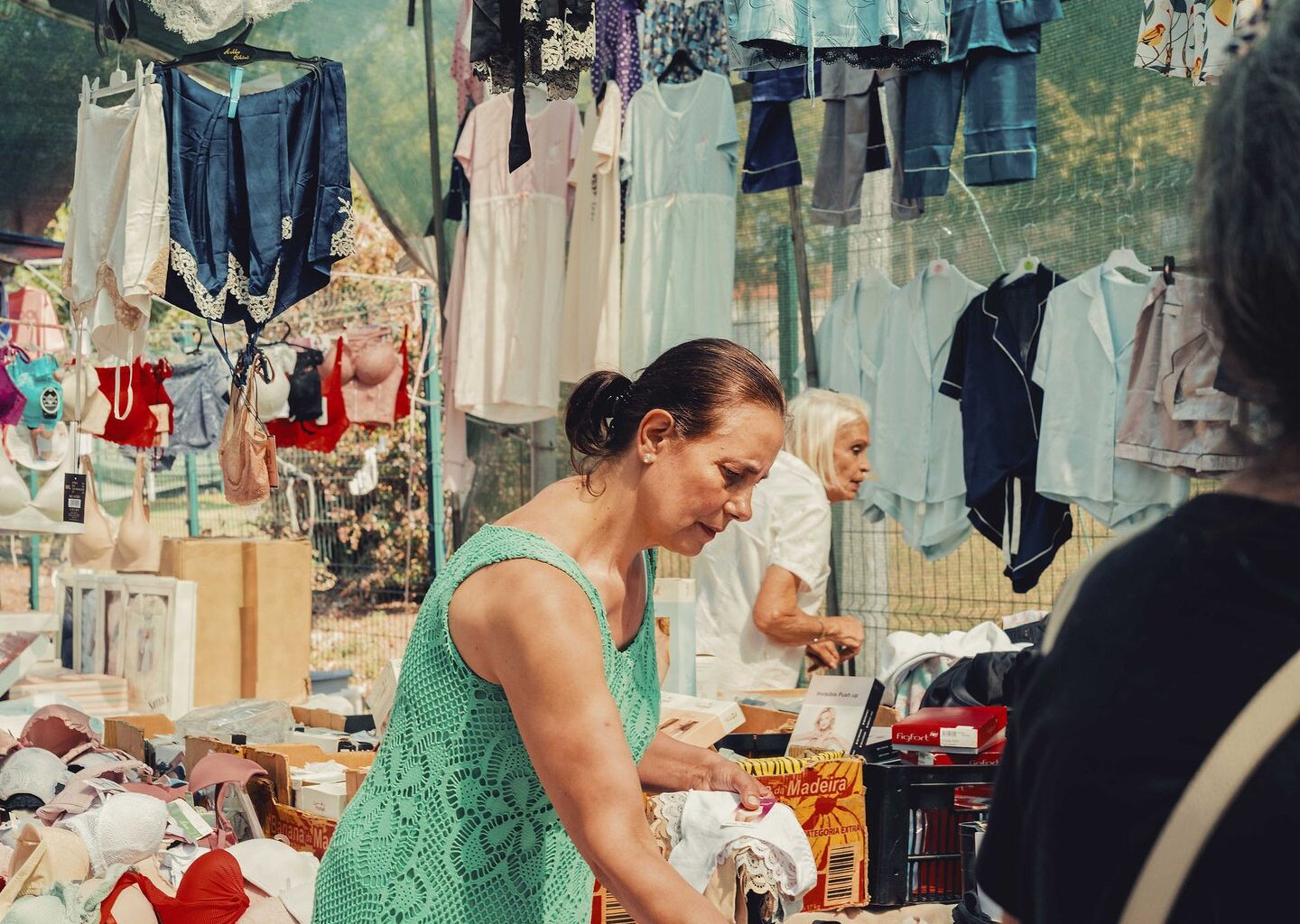
Weeks after her chat with Gem, Matilde found herself cleaning her film cameras and she was struck by an impulse to make her way to the market and see what inspired her to click the shutter – when she started, she found she couldn’t stop. From this very first day there was one core tenet that went on to inform the whole project – not focusing on making “good” photographs. The camera almost became secondary, or, in Matilde’s words, “superfluous”, and conversation came first. “[The market is] a perfect place to interact with others without having to excuse yourself for interrupting them,” Matilde says, and if an outfit, tattoo or hairdo caught Matilde’s eye, she ignored the urge to keep the compliment to herself and let the wearer know. “Familiarity here was key,” she adds, “people knowing my face, my name, was essential.”
Matilde began attending the market regularly, heading along with her family and her partner Mafalda Salgueiro, who was filming to create a short that would accompany the photo series. It made sense that Matilde frequented with those closest to her, as it mimicked the familial, intergenerational dynamics she witnessed and that her lens was so drawn to. The photographer points to a sun-drenched, close-up photo of a little girl sleeping, tucked up amongst blankets and the baby clothes her mother, Solange, sells. “Sellers wake up in the wee hours of the morning and eventually everyone needs to take a nap,” Matilde explains. “I love the diptych – this little world of serenity, motherhood and family in the chaos that is the market.”
These portraits of sellers and market frequenters are paired with shots of tables laden with denim of all description, nuts, eggs and moments of contrast – delicate lace hanging from plastic clip hangers, the well-worn back door of a van thrust open, made beautiful by a wash of sunlight. They’re images that Matilde describes feeling as “natural, unforced, non-hierarchical”, removed from the pressure of being the ‘perfect’ image to deliver to a client. The ideal conclusion to the project was having it exhibited in Porto, at the Leica Gallery, alongside Mafalda’s accompanying film. Curated by Magda Pinto, the images “took on a life of their own” and ended up on three-metre-high tarps, trailing the walls of the building. Matilde now has high hopes for the exhibition going on tour. Just like the sellers travelling with their wares, she dreams of taking the “cacophony” of the local Portuguese market to new eyes and ears.