

Air quality alerts have been issued across parts of New York, Maryland and Southern California, as the National Weather Service (NWS) warns that pollution levels could pose health risks—especially for vulnerable groups—through Monday, and advises those affected to stay inside.
With ozone and dust pollution pushing air quality to unhealthy levels in multiple regions, officials warn that even short-term exposure can have real health impacts.
Residents—especially those in high-risk groups—are advised to stay informed, limit outdoor activity and take steps to protect indoor air quality.
Why Air Quality Is Poor
The causes of poor air quality vary by region:
Northeast and Maryland: Elevated levels of ground-level ozone, a pollutant formed when sunlight reacts with emissions from vehicles, power plants and industrial sources.Southern California: High concentrations of fine particle pollution caused by windblown dust and dry conditions.
Ozone and particle pollution can worsen during warm, sunny or windy weather—conditions that are common in late spring.
Where Air Quality Is Impacted
In the Northeast, the New York State Department of Environmental Conservation has issued an air quality health advisory covering:
New York City (all five boroughs: Manhattan, Bronx, Brooklyn, Queens, Staten Island)Westchester CountyRockland County
The alert is in effect from mid-Monday morning until Monday night, with ozone levels expected to push the Air Quality Index (AQI) above 100.
The AQI is a scale used to show how polluted the air is:
0-50 = Good51-100 = Moderate101-150 = Unhealthy for sensitive groups
Meanwhile, in Maryland, a “Code Orange Air Quality Alert” has been issued for Monday across multiple regions, including:
Baltimore metro areaAnne Arundel CountyNortheast Maryland (Cecil and Harford counties)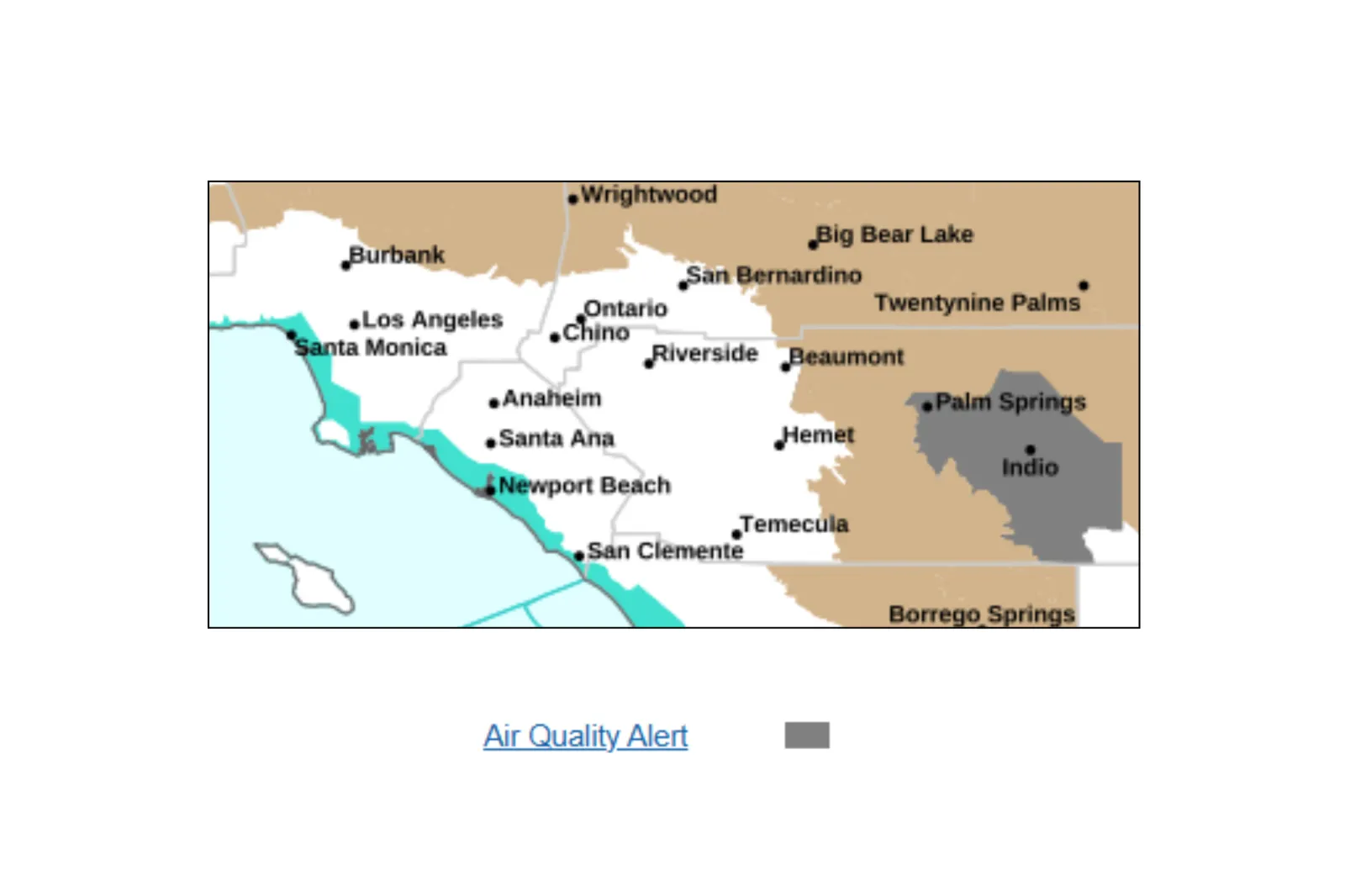
On the West Coast, a separate air quality alert is in place for Southern California’s Coachella Valley and San Gorgonio Pass, where windblown dust is driving dangerous levels of particle pollution through Monday morning.
Why Poor Air Quality Matters
Air pollution is linked to a range of health issues because it can irritate the lungs and enter the bloodstream.
Key risks include:
Reduced lung functionWorsening asthma and bronchitisIncreased risk of heart attacks and strokesEye, nose, and throat irritation
Fine particles of pollution are particularly dangerous because they’re so small they can penetrate deep into the lungs, while ozone can trigger inflammation in the airways, making breathing more difficult.
Who Is Most Affected
Health officials say certain groups are more vulnerable to air pollution:
Children, whose lungs are still developingOlder adults, who may have weaker immune systemsPeople with asthma, heart disease or other lung conditionsOutdoor workers and those who spend long periods outside
These groups are more susceptible because their bodies are either less able to filter pollutants or are already under strain.
What People Should Do
The NWS is urging residents in affected areas to take precautions, particularly during peak pollution hours, which are usually in the afternoon and early evening because of sunlight, heat and traffic, which drives ground-level ozone pollution.
To reduce exposure, residents in affected areas should:
Limit strenuous outdoor activities, especially in the afternoonTake breaks and avoid prolonged exercise outsideWatch for symptoms like coughing, wheezing, or shortness of breath
To improve indoor air safety:
Keep windows and doors closedUse air conditioning or air purifiers if availableAvoid indoor pollution sources (candles, smoking, grilling)
To help reduce pollution overall:
Carpool, use public transportation, or reduce drivingAvoid using gas-powered equipment when possible