
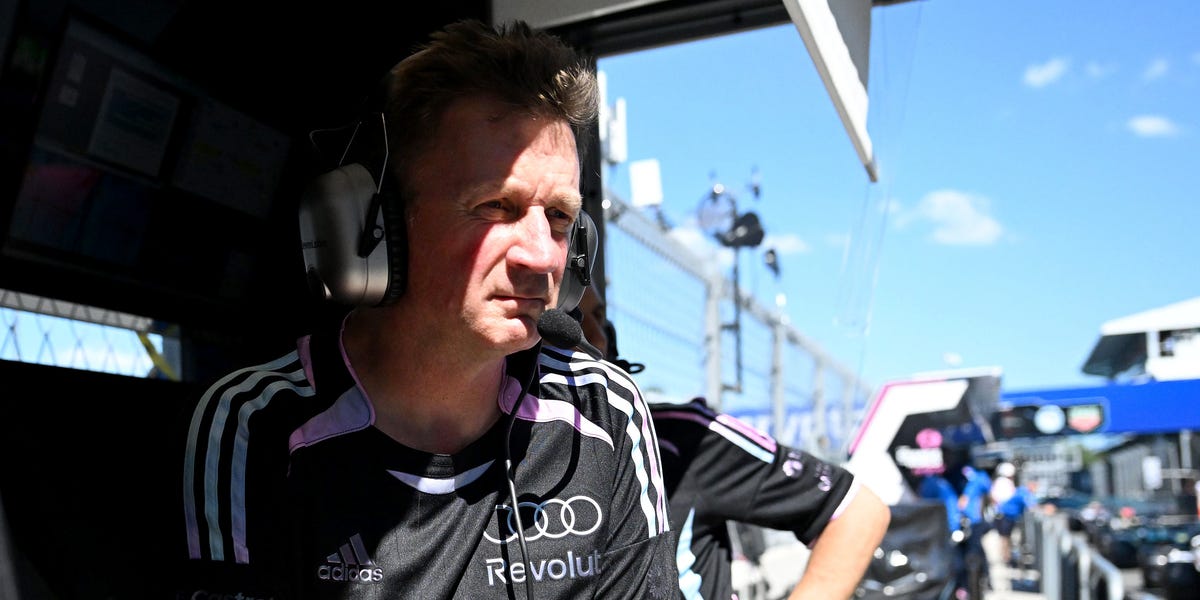
When Audi formally announced its future Formula 1 entry at the Belgian Grand Prix in August of 2022, the company brought along a generic show car wearing an early version of a possible livery. As the truck drivers who delivered it maneuvered the vehicle into the pitlane for a photo shoot, a man in an Audi shirt helped them position it, ensuring with a meticulous eye for detail that the Pirelli logos on all four tires were neatly aligned. I doubt parking show cars was ever on the job description of Allan McNish, but that little cameo gives some idea of the Scot’s largely unsung and wide-ranging contribution to getting the marque’s F1 project up and running.
Back then, he was officially “director, co-ordination of motorsport activities of the Audi Group,” a somewhat vague title. As of last month, he has a new job: racing director of the F1 team. He is not team principal as such; that role lies with Mattia Binotto, to who he reports. However, it is a significant role. Audi says he has responsibility for all trackside operations, and that remit includes “oversight of sporting matters, engineering coordination, driver management, race strategy and garage operations, as well as on-track media and partner activities.”
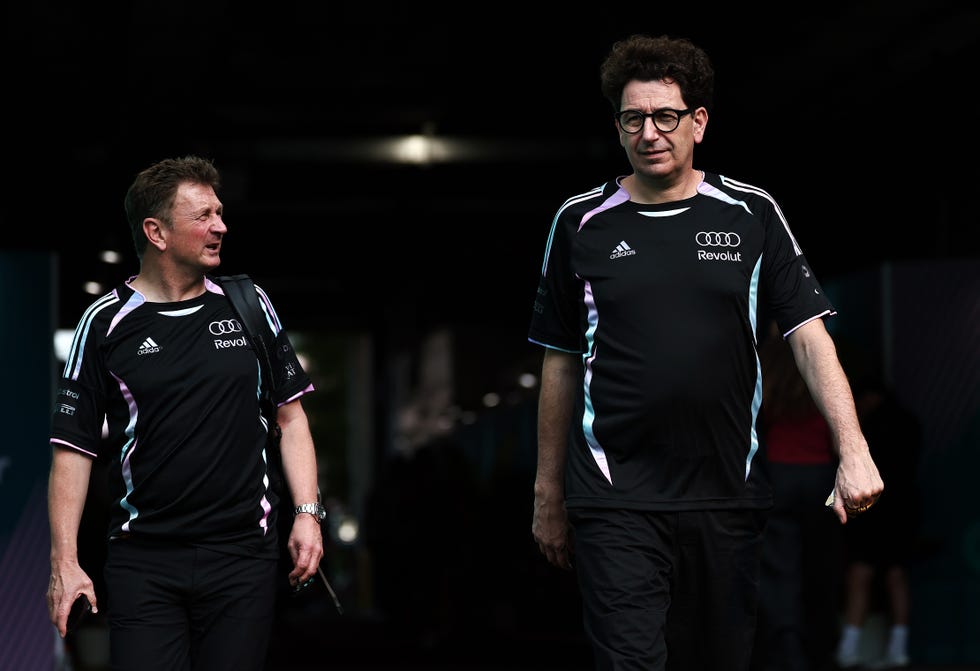
The reality is that McNish now has a high formal level of responsibility that he perhaps should have been given when everything kicked off in 2022. During that period there had been some turmoil in the camp, with Andreas Seidl and Jonathan Wheatley just two names on what is now quite a list of high-profile people who have been and gone while McNish worked quietly in the background. Seidl fell victim to internal politics back in July 2024 when Binotto came in; subsequently, Binotto and Jonathan Wheatley formed a two-pronged leadership team that survived Sauber’s final season in 2025, but which then lasted just three race weekends under the Audi name this year before Wheatley departed.
Icon Sportswire//Getty Images
No one knows Audi racing better than McNish, who is hugely respected internally. His connections with the marque go back to his first stint with the company’s sports car team in 2000. After a spell in F1 as a race driver for Toyota in 2001 and then as reserve and test driver for Renault, he returned to Audi in 2004 and quickly became a staple of its sports car racing squad until his retirement from driving in 2013. He won the FIA World Endurance Championship title in his last season, and was ALMS champion in 2000, 2006 and 2007; he also won Le Mans with Audi in 2008 and 2013, following an earlier success with Porsche in 1998.
After his driving career ended, he remained with Audi in a variety of jobs, including a stint as team principal of its Formula E outfit. He was involved with the F1 project from long before its official announcement in 2022, but always in a low-key background role that was never properly defined, at least in public.
In January of this year, however, his profile in the camp was raised when he was named as the head of Audi’s young driver development program. Wheatley’s sudden departure gave Audi a chance to rethink the team’s management structure, and rather than recruit from the outside it offered McNish a more substantial role—one that earlier in his career he might have been reluctant to take.
“When I retired from racing in 2013 I said I would never be involved in team management or anything else, because you’d have to deal with drivers like me,” he said in Miami. “And I knew how difficult I was! The reality is, things changed; life changes. So, the rule of that is never say never. I’ve known this project from day one. I’ve been involved in it from literally the beginnings in many different roles. Being in Melbourne and seeing the car race for the first time was definitely a special moment—and it was a no-brainer from my personal perspective when I got a telephone call [from Binotto] and then went to have the discussion. Because again, I’ve lived it from day one. Why wouldn’t I [take it]?”
Chris Graythen//Getty Images
The fact that he reports to Binotto—rather than being on a similar level as Wheatley was previously—should help to streamline the decision-making process and make things a little clearer.
“Mattia is the team principal, and he’s the CEO,” he noted. “I’m the racing director, so effectively, he covers off power unit and also everything in Hinwil, as you would sort of expect, because of his experience coming from power unit and also understanding the team principal role. I focus on everything we do here in terms of race operations—and at the same time, I still cover the driver development program, which we just started at the beginning of the year.”
His first race in the job was in Miami, and he was in at the deep end—a busy sprint event weekend, and Audi F1’s first appearance in the U.S. market. It was a baptism by fire. “I’m actually more nervous now than any time before,” he said after the race. “Clearly, we’re got a lot of experience in different areas of the team, which is good. I knew quite a lot of the things that we were needing to work on, operationally.”
The many activations that came along with the race added to his plate. “On the other side, it was the biggest event that the team has had for marketing and communications, with events downtown. So there was a whole load of other stuff, apart from what was going on in here as well. So I was actually across many areas—more than necessarily just the racing director operational aspect of it, which is what you have to do in the role. I need to try and maybe take a little bit of time back.”
Clive Mason//Getty Images
He has bigger responsibilities now, but he’s enjoying it, as he noted in Miami. “It was good,” he said. “I live to race, I’ve lived to race all my life, since I was 11 years old. So it’s what I love, it’s what gets me up in the morning, it’s the passion. When I say I live to race, I don’t go home happy unless we’ve won, and I know that that’s not always the case—because in racing, in your career, you lose more than you win. That’s just natural statistics, apart from maybe one or two [drivers]. The reality is that this is the environment that is my life; it’s my career; it’s my hobby; it’s my passion.”
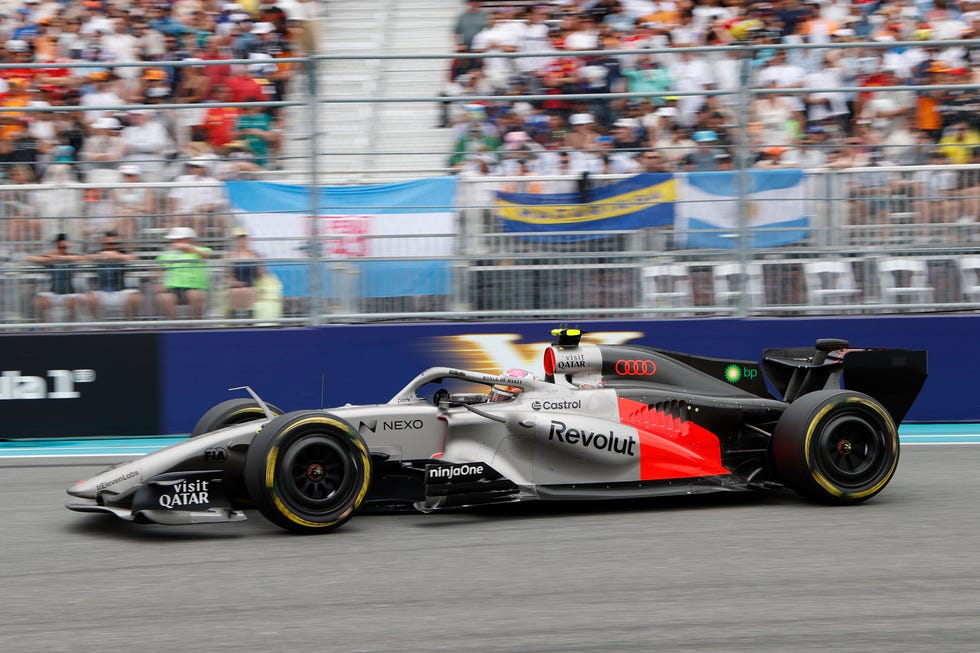
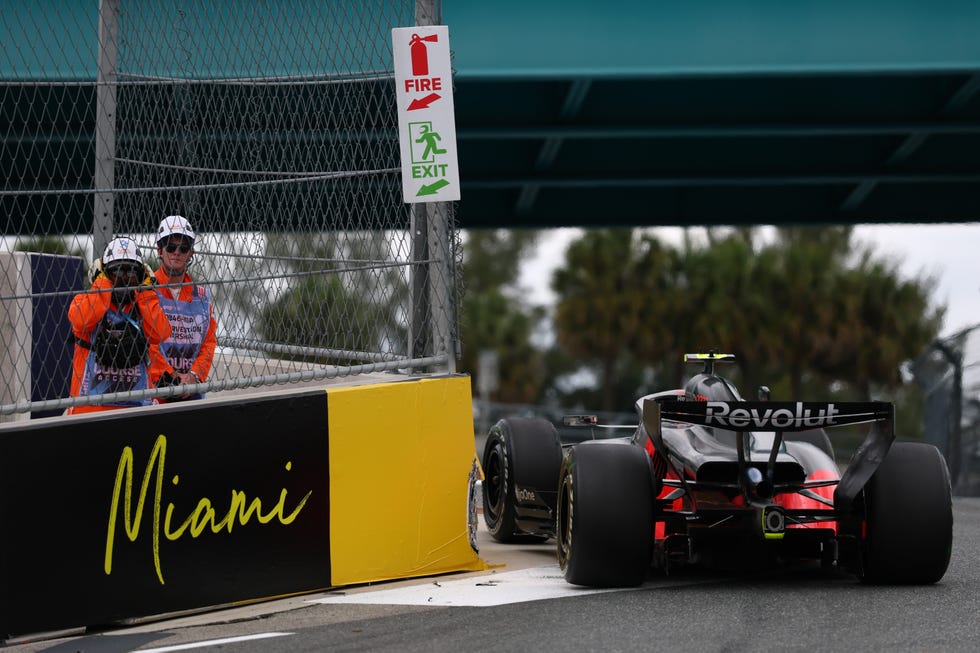
Miami unfolded much like Audi’s other races thus far this season, with a respectable P11 in both sprint and main qualifying indicating that the car is at least at the sharp end of the midfield battle. That was tempered by reliability issues, with Nico Hulkenberg experiencing the team’s third non-start of 2026 in the Saturday sprint, and also retiring in the main race.
“Obviously, that’s not what we need,” said McNish. “We need reliability, and then we can also start developing in other areas as well. We can improve. Clearly, the frustrating part is not having two cars at the start.”
“The thing we’ve got to remember as well is it’s race four for a new team,” he added. “We know that Sauber was there before. However, it’s also the integration of Audi power unit into that system as well. And so therefore, judge us at the end of the year.”
Related Stories