
In an era of geopolitical unpredictability and rapidly shifting capital flows, the concept of diversification is being stretched well beyond its traditional meaning. For ultra-high-net-worth families, it is no longer sufficient to diversify across asset classes or currencies. The conversation has moved to jurisdictions, custody arrangements, and the structural resilience of the frameworks that hold wealth together. And for advisers operating across multiple financial centres, the task is no longer to advocate for one hub over another, but to help clients build architectures that can withstand disruption from any direction.
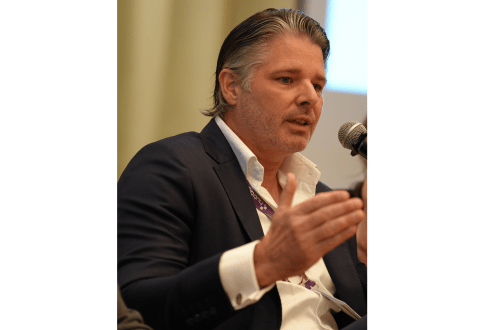
At the recent Hubbis Independent Wealth Management Forum in Singapore, a panel discussion exploring Singapore’s evolving role as a global wealth anchor drew perspectives from across the independent wealth management landscape. Among the panellists, Oliver Ansingh, Chief Executive Officer of Picard Angst MEA, brought a practitioner’s view shaped by the firm’s positioning in Dubai’s DIFC and its active efforts to extend client access across jurisdictions. His remarks offered a pragmatic, at times sobering, assessment of where the UAE sits in the global booking centre hierarchy, why multi-jurisdictional allocation is now a non-negotiable, and what the recent geopolitical turbulence in the Middle East means for client confidence and capital flows.
Key Takeaways
Diversification across jurisdictions is about removing single points of failure: Ansingh framed multi-centre booking not as a competitive exercise between hubs but as a structural imperative to avoid concentrated exposure to any one jurisdiction, however strong it may appear.
The UAE has made real progress but remains a work in progress as a booking centre: While the DIFC has built credibility over its 15-year history and attracted growing international interest, Ansingh was candid that the ecosystem is not yet comparable to Singapore’s in depth or maturity.
Allocating five to ten per cent of assets to alternative jurisdictions is a practical starting point: Rather than wholesale relocation, Ansingh advocated for measured diversification, with a modest share of total wealth placed in complementary centres.
Credibility takes time and has no shortcuts: The DIFC’s trajectory illustrates that regulatory credibility is earned through consistency and track record, not through incentives or marketing alone.
Recent months have tested sentiment in the UAE: Ansingh acknowledged that sentiment in the period leading up to the forum had been challenging, with geopolitical developments in the region introducing new uncertainty for clients and advisers alike.
Financial centres should be viewed as complementary, not competing: Each hub has distinct strengths and weaknesses that evolve over time, and the adviser’s role is to help clients navigate these differences rather than champion one jurisdiction above others.
A Booking Centre Built From a Low Base
Ansingh was refreshingly direct about the UAE’s position in the global wealth management landscape. While the DIFC has become a credible and increasingly busy financial centre, he was clear-eyed about where it stands relative to more established hubs.
“It came from a lower base,” he said of the DIFC’s development. “We’re talking about a centre that has been around for about 15 years. Ultimately, you have to start somewhere. You have to build the credibility and only time will buy that for you. There are no shortcuts, but the DIFC in particular and the UAE as a whole are well on their way.”
This acknowledgement set the tone for Ansingh’s broader contributions to the discussion. Rather than positioning the UAE as a direct competitor to Singapore or Switzerland, he described it as a financial centre in the process of maturation, one that has attracted significant interest but has not yet reached the ecosystem depth required to serve as a full-spectrum booking alternative.
Picard Angst MEA, which manages approximately 1.5 billion dollars from its DIFC base, has pursued a model that explicitly recognises this reality. The firm offers clients the ability to allocate a portion of their assets to other jurisdictions, also providing exposure beyond the UAE for diversification purposes.
“What we chose to do is have a model where, for diversification purposes, clients who want exposure to other jurisdictions for a percentage of their money, we want to offer them that,” Ansingh explained. “So far, it’s been going quite well. We’ve had success in developing our business in Europe and have now commenced our push into Asia.”
The Practical Case for Jurisdictional Allocation
When asked how he would advise a client weighing Singapore against the UAE or Switzerland, Ansingh returned to first principles. The starting point, he argued, should always be where the client’s life is centred.
“The main topic is where is the centre of their life and their existence,” he said. “If it’s Asia, clearly that’s going to be the anchor. There’s absolutely no doubt about that.”
From there, the case for diversification is straightforward but disciplined. Ansingh suggested that clients consider placing five to ten per cent of their assets in alternative jurisdictions, not as a speculative bet on one centre outperforming another, but as a hedge against the unknowable.
“You don’t know the geopolitical spheres, you don’t know where they start or where they end, and you don’t want to get stuck in one or the other,” he said. “It’s really about putting five to ten per cent of your assets in other locations.”
This measured approach reflects a broader philosophy that several panellists echoed: that multi-jurisdictional booking should be complementary rather than duplicative. The goal is not to replicate the same capabilities in every centre but to ensure that no single jurisdiction represents a fatal concentration of risk.
Removing the Single Point of Failure
Ansingh’s most forceful contribution came when the panel debated whether any one financial centre could realistically serve as a one-stop solution for UHNW clients. His answer was unequivocal.
“What you have to start removing is a single point of failure,” he said. “We’re basically trying to avoid exposing a client to a single jurisdiction, as amazing as it may be.”
This framing moved the conversation away from the familiar territory of jurisdictional comparison and toward a more structural way of thinking about wealth resilience. The question, as Ansingh presented it, is not which centre is best, but whether a client’s overall architecture can absorb a shock originating from any one of its component jurisdictions.
He was equally clear that this is not a static assessment. “You can have strengths and weaknesses in every financial centre, and they will develop over time and become more apparent over time,” he observed. The implication is that what constitutes a well-diversified structure today may need to be revisited as regulatory environments, geopolitical alignments, and market dynamics evolve.
Acknowledging the Difficult Months
While several panellists addressed the UAE’s recent trajectory in broad terms, Ansingh was notably candid about the challenges of the period immediately preceding the forum.
“The last few months have not been fun. Let’s put it out there as well,” he said, referencing the impact of regional geopolitical developments both in terms of personal life as well as client sentiment.
The point, implicitly, was that even a jurisdiction experiencing strong tailwinds, as the UAE had enjoyed in the years following COVID, is not immune to sudden disruption. This reality reinforces the case for the kind of multi-centre approach Ansingh advocates.
Complementary, Not Competitive
Throughout the discussion, Ansingh consistently resisted the framing of financial centres as competitors locked in a zero-sum contest for client assets. His preferred lens was one of complementarity, in which each hub plays a distinct role within a client’s broader wealth architecture.
“It’s not the competition,” he said. “Maybe it’s the phrasing of booking centre. It’s about financial centres. Ultimately, you can have strengths and weaknesses in every financial centre.”
This perspective aligns with a broader shift in how the most sophisticated advisory firms approach jurisdictional planning. Rather than selling Singapore or Dubai or Zurich as destinations in their own right, they position each as a node within a network, selected for its particular strengths and integrated into a structure designed for resilience rather than optimisation.
Building for What You Cannot Predict
Ansingh’s contributions to the panel painted a picture of an adviser, and a firm, that has internalised the lesson of recent years: that the geopolitical and regulatory environment can shift faster than most clients expect, and that the structures built to protect wealth must be designed with that uncertainty in mind.
His advocacy for measured, complementary jurisdictional diversification is neither dramatic nor revolutionary. It is, by design, pragmatic. But in an environment where concentration risk has been exposed repeatedly, whether through conflict, regulatory shifts, or market dislocation, pragmatism may be precisely what UHNW families need most.
The UAE, as Ansingh made clear, has earned its place in that conversation. But it has earned it as one component of a broader architecture, not as a destination unto itself. And the advisers who serve these families best will be those who are honest about both the strengths and the limitations of every centre in which they operate.