

Listen to this article
Estimated 5 minutes
The audio version of this article is generated by AI-based technology. Mispronunciations can occur. We are working with our partners to continually review and improve the results.
Manitoba tied for the highest inflation rate in Canada over the past year, and rising food costs are among the main reasons why.
Overall inflation increased by 4.3 per cent in Manitoba and Nova Scotia during the same period, according to the latest consumer price index data from Statistics Canada released Tuesday.
That’s compared with Canada-wide inflation rates that rose 2.8 per cent, due in part to the war in Iran fuelling rising costs.
“I think everyone is concerned about how lengthy the Iranian conflict will be, and the longer it lasts, the more likely we’ll actually see higher prices at the grocery store,” said Prof. Sylvain Charlebois, director of the Agri-Food Analytics Lab at Dalhousie University.
“Servicing a market like the Prairies is quite costly, especially in light of the fact that energy costs are much higher now than just a year ago.”
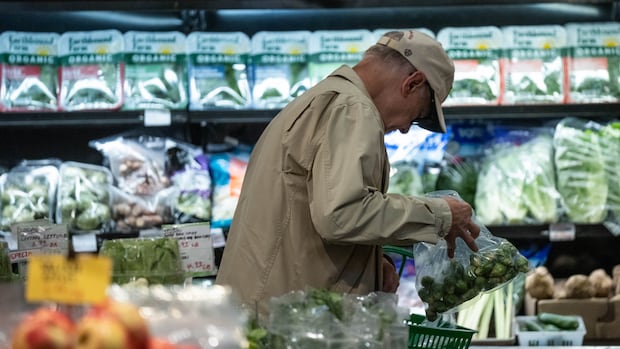
StatsCan data shows Manitoba had the highest food inflation increase of all provinces between April 2025 and April 2026, at 4.9 per cent — roughly a full percentage point higher than the Canada-wide average.
Property taxes also played a role. They increased in Manitoba by more than 19 per cent, about double the next-highest province — British Columbia — at 8.5 per cent.
A breakdown of food costs also shows Manitoba led the way with food bought from stores and fruit, including packaged fruits and nuts, which rose 4.8 per cent and 4.3 per cent, respectively.
Inflation rates were second highest in Manitoba for fish, seafood and other marine products.
Meat prices also shot up in Manitoba, though not as much as in several other provinces. The price of meat is up 6.7 per cent, which was fifth lowest.
Fresh or frozen pork products rose by 5.2 per cent, the lowest in Canada. Fresh or frozen poultry decreased in cost by 0.4 per cent, ranking Manitoba behind only Alberta, Newfoundland and Labrador, and Saskatchewan.
Charlebois, who researches market trends in Canada’s food economy, suggested some of the uptick in prices comes from transportation and trucking sectors.
“If you’re hauling food across the country through Manitoba, you’re going to highball the cost of energy. Because right now, energy costs are so volatile that companies will actually set prices much higher to make sure they make their money,” he said.
“So, it doesn’t matter what happens to oil these days — it’s going to cost you more to move products around across the country, including Manitoba.”
Clothing, electricity up
There were several other sectors outside of groceries where Manitobans are feeling the pinch more than some other spots in Canada, including clothing and footwear. People in this province spent 3.4 per cent more for those items last month compared with April 2025, which was the second-highest increase in Canada.
Electricity was up four per cent in Manitoba, the fourth highest in Canada, and health and personal care goods — such as health-care goods, dental and eye-care services — were highest in Manitoba, at 5.2 per cent.
Alcohol, tobacco and cannabis prices were up 2.6 per cent in Manitoba. That, too, was the highest increase in the country.
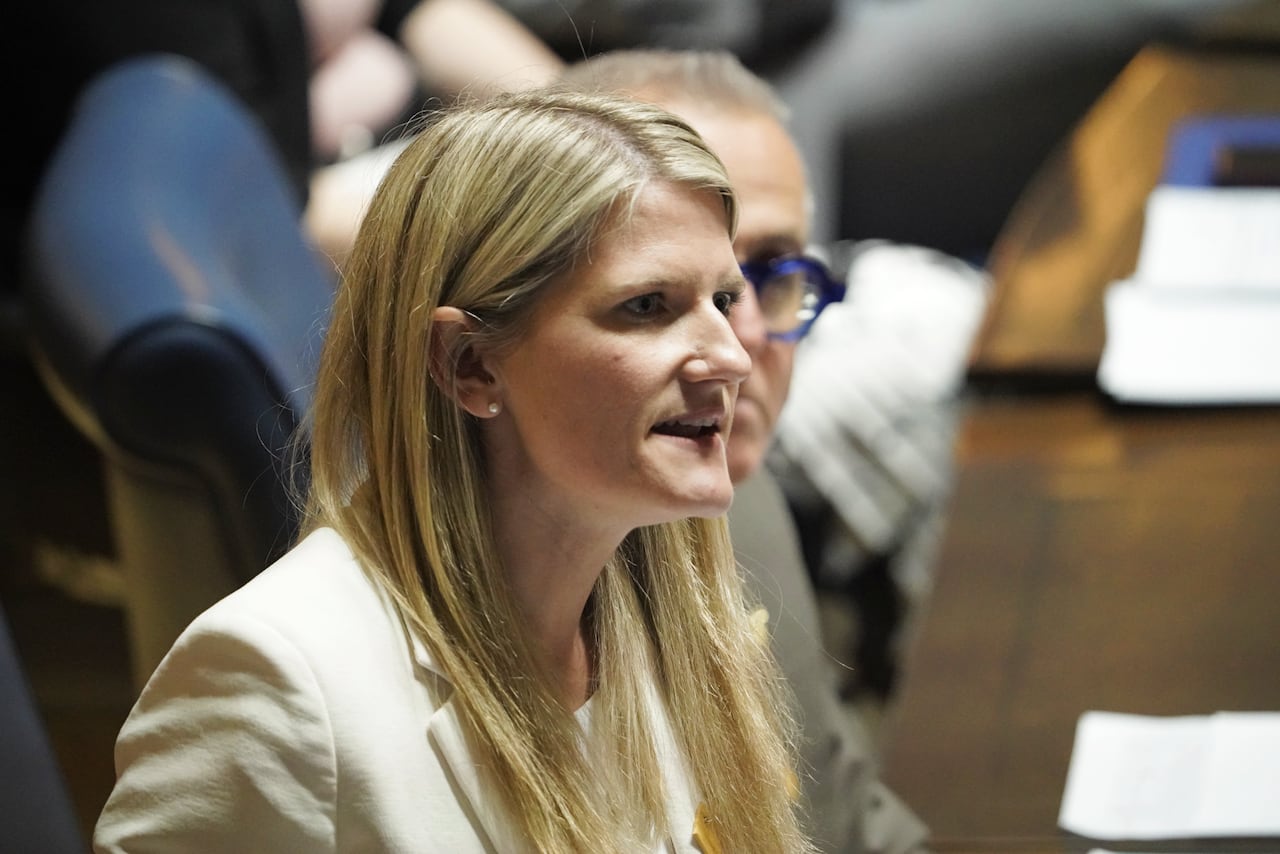 Tory finance critic Lauren Stone says the inflation numbers show the province is ‘going in the wrong direction’ on affordability. (Bryce Hoye/CBC)
Progressive Conservative finance critic Lauren Stone asked why the NDP “allowed Manitoba’s cost of living to become the worst in the country.”
“What’s concerning about these numbers is the significant increase that we’ve seen month to month and that Manitoba is significantly higher than even the national average,” she said in a scrum outside the legislative chamber.
“Manitoba is going in the wrong direction. As I’ve spoken about many times, Manitobans are under a cost-of-living crisis. I think these numbers prove that.”
Finance Minister Adrien Sala pointed to efforts by the NDP to manage countrywide cost pressures through a series of regional affordability initiatives, including cutting the gas tax by 10 per cent.
Sala noted the NDP budget commitment to drop all remaining PST at the grocery store through a tax cut on packaged foods such as ready-made meals and snack foods.
“We know Manitobans continue to face some challenges when it comes to affordability — it’s why our government has been working hard to reduce costs,” he told reporters at the legislature.
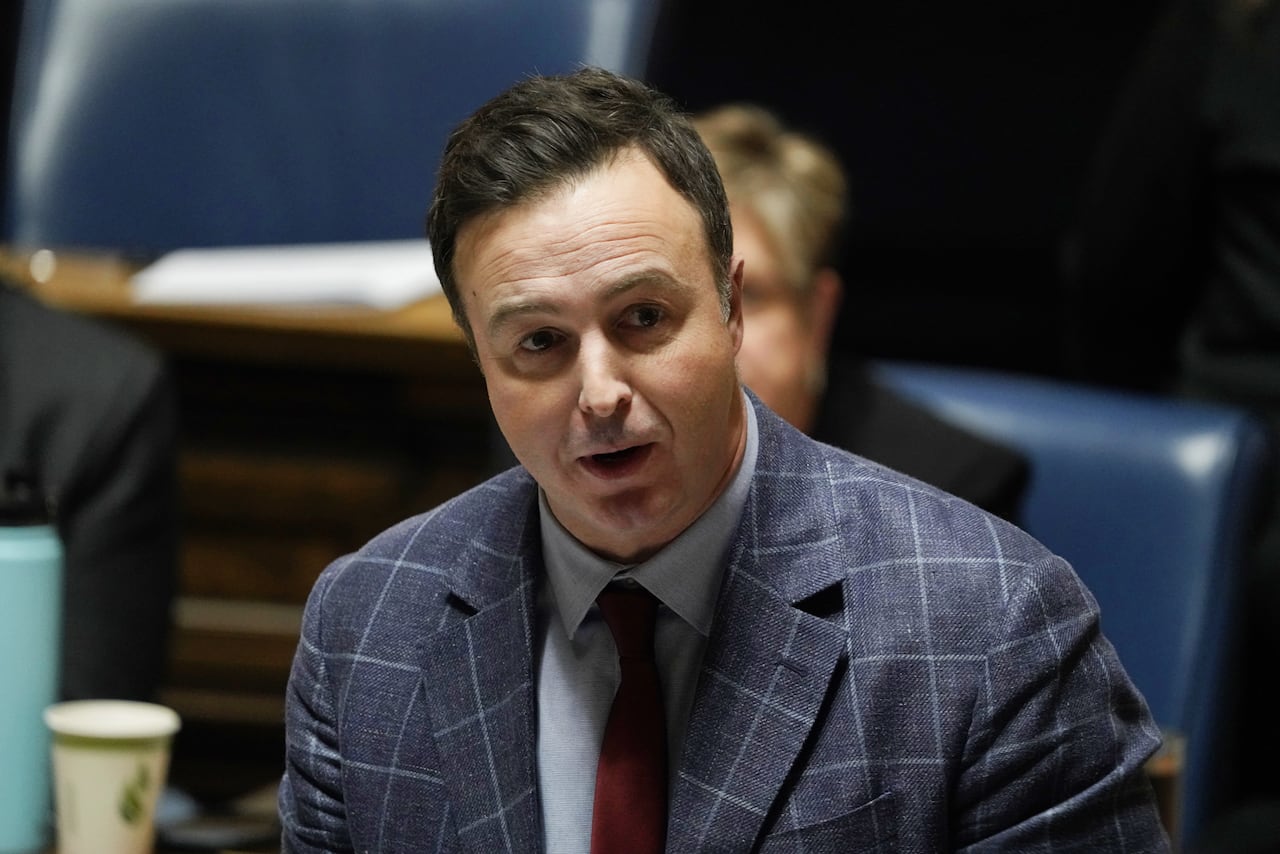 Finance Minister Adrien Sala says the province ‘has been working hard to reduce costs,’ including by eliminating the PST on some items at grocery stores that are still subject to the tax. (Bryce Hoye/CBC)
Sala criticized the Tories for their recent threat to delay easy passage of the budget implementation and tax statutes act until New Democrats commit to increasing the basic personal tax exemption to nearly $21,000, up from the current $15,780.
“The PCs continue to play political games in the House,” he said. “We know Manitobans need these savings. We want them on July 1st. But if the PCs don’t support this bill … we cannot bring the savings for July 1st.”
Charlebois said Dalhousie researchers recently ran the numbers on the proposed PST cut to packaged foods and shared those insights with the Manitoba government.
“Savings aren’t substantial, but they would range anywhere between $80 to $200 a year for an average household in Manitoba,” he said. “It’s not a lot, but it’s not nothing.”
WATCH | Manitoba tied Canada’s highest inflation rate in April:
Manitoba tied for Canada’s highest inflation rate in April
Manitoba and Nova Scotia tied for the highest year-over-year inflation rate in Canada in April — 4.3 per cent — in large part due to soaring gas and grocery prices, Statistics Canada data shows.