

Listen to this article
Estimated 3 minutes
The audio version of this article is generated by AI-based technology. Mispronunciations can occur. We are working with our partners to continually review and improve the results.
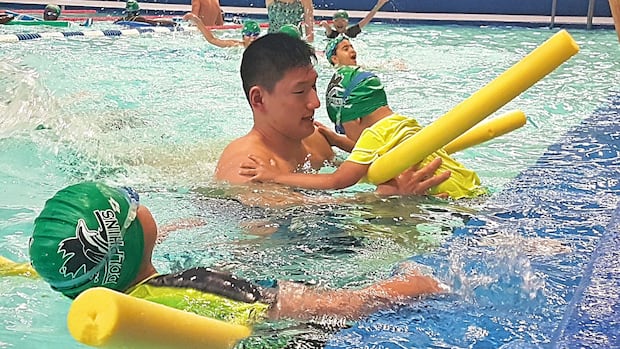
Vancouver city council unanimously backed a proposal to make the first three levels of swimming lessons free for residents.
Mayor Ken Sim’s motion directs city staff to work with the Vancouver Park Board to develop the program, which would prioritize access for kids between the ages of three and 12.
“On a personal note, my own parents couldn’t afford to send me to swimming lessons when I was a kid, so I didn’t learn how to properly swim until I was an adult,” Sim said.
Sim invoked historic Vancouver lifeguard Joe Fortes in introducing the proposal, which he said would help as many people enjoy the city’s beaches and pools as possible while reducing the risk of drowning.
WATCH | Vancouver mayor pitches free swimming lessons:
Vancouver mayor proposing free swim lessons for beginners
A new motion from Vancouver Mayor Ken Sim would implement free swim lessons for beginners. Sim calls the matter a core public safety policy. But as Troy Charles reports, the chair of the Vancouver Park Board isn’t convinced it’s a feasible plan.
A majority of speakers at Wednesday’s meeting backed the concept of expanding access to lessons and aquatic facilities in general.
Several parents described how hard it was to find lessons in the city, with one telling councillors she’d had to enrol her kids in Burnaby.
The plan also earned the backing of the Lifesaving Society B.C. and Yukon.
“Drowning is the leading cause of accidental death of children under the age of five in Canada,” society executive director Lenea Grace told council.
“There is no better way to prevent [drowning] than to intervene early with lessons.”
Council heard that swimming lessons generate about $420,000 in annual revenue for the city, prompting COPE Coun. Sean Orr to press Sim on how the city would pay for the plan.
“That’s a big chunk of money,” Orr said.
“Considering that we’ve asked the park board to find $15 million in savings due to the ‘zero means zero budget,’ where will we find the money for this?”
WATCH | Should B.C. include swimming lessons in the school curriculum?: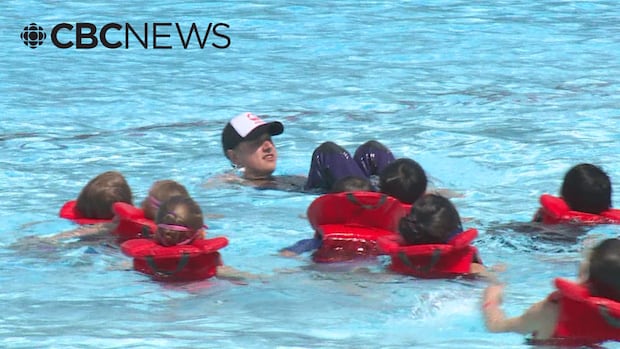
Should swimming lessons be part of the B.C. school curriculum?
BC Today guest host Dan Burritt and Kimiko Hirakida of the Lifesaving Society of B.C. hear from callers who say they have benefited from swimming lessons. Hirakida says having swimming lessons included in the school curriculum would better educate people about water safety and even conducting a rescue.
“We will be looking for staff to review … the city’s operating budget and capital budget and there’s always different opportunities, be it looking at our city innovatively,” Sim responded.
“We’ve already generated a lot of additional non-tax revenues through sponsorships, and the learnings from the mayor’s budget task force.”
Other elements of the motion call on the city to develop per-capita pool targets and to look at capacity expansion options, including extended pool hours.
Councillors heard from several park board commissioners who argued council was stepping outside its jurisdiction, and should have advanced the proposal through the elected park board.
“For 136 years, you know, mayor has been calling up chairs of the park board and saying, ‘Hey, look, we should do something for children of the city,’ and they work together to get this solution,” park board chair Tom Digby said.
“You’re welcome to call me anytime.”
WATCH | Controversy over Kits Pool reservation policy:
Backlash over Kits Pool keeping its reservation system in place
Backlash over Kits Pool keeping its reservation system in place
The motion also directs the city to ask the park board to scrap its controversial reservation system and return to a pre-COVID first-come, first-served system for visitors.
However, council heard that the park board had already voted in March to keep the reservation system in place.
Staff have been told to report back on the plan early next year with a phased implementation plan, including pilot locations and financial analysis.