

Listen to this article
Estimated 4 minutes
The audio version of this article is generated by AI-based technology. Mispronunciations can occur. We are working with our partners to continually review and improve the results.
Patients and visitors arriving at the emergency department of the Royal Alexandra Hospital will now be subject to a formal weapons detection system, as Alberta Health Services looks to increase safety at the facility.
The screening system, which is a two-year pilot program, follows other changes to safety procedures at the hospital, such as new bag policies. But this latest measure — which had been previously promised by Alberta Hospitals Minister Matt Jones — follows an incident in April, when a man suffered life-threatening injuries after he was stabbed in the ER waiting room.
Dr. Warren Thirsk, an emergency department physician at the Royal Alex, said the screening system is well-received by health-care workers, but he would like to see it in every emergency room in the province.
“I don’t think my hospital is particularly special or unique in the amount of violence or weapons that are coming through the door,” said Thirsk, who is also president of the Alberta Medical Association’s emergency medicine section.
All visitors to the emergency department at the Royal Alex must now go through the detection system, which is similar to walk-through screenings at concert and sport venues, AHS said in a news release Tuesday.
“It is designed to enhance safety while allowing people to move through screening quickly and respectfully,” AHS said.
The system uses technology — including artificial intelligence and sensors — to detect potential weapons, AHS said in a statement to CBC News.
If the detector identifies a weapon, hospital security will ask the individual to undergo a second screening.
Prohibited items will be allowed to be stored by visitors in an on-site locker, their vehicle or with family or friends at the hospital, but not in the emergency room, the agency said.
 Dr. Warren Thirsk is an emergency physician at the Royal Alexandra Hospital. He says weapons shouldn’t be allowed inside emergency departments no matter the circumstance. (Samuel Martin/CBC)
Since 2021, people entering the emergency department at the Edmonton hospital have been subject to a verbal screening process and a voluntary surrendering of weapons, AHS said.
Despite this, nurses have long called for increased weapon detection at the Royal Alex, saying the previous process was not enough to keep people safe.
Thirsk said while the new system satisfies some safety concerns from health-care professionals, he’s worried it may be too lenient on patients and visitors.
Under the new screening process, patients requiring urgent care who refuse to participate in the screening won’t be turned away but will instead be accompanied by security while in the emergency room.
Security can connect other patients, with less pressing needs, to Health Link.
Visitors who refuse screening will not be allowed inside the emergency department, unless the patient they are with is a minor, requires communication support, or if health-care professionals determine the visitor must be present.
Weapons shouldn’t be allowed inside emergency departments no matter the circumstances, Thirsk said.
Allowing health-care workers to assess patients who are armed is not only dangerous, but also makes the already stressful emergency room environment even more volatile, said Thirsk, noting that the security guards inside the Royal Alex emergency room are unarmed.
“Those of us who are working in the hospital are already under a lot of pressure and we are frequently the victims of both verbal and physical assaults and abuse, which leads to burnout,” he said.
“Hospitals should be houses of healing, not places where weapons are ever brought or ever needed.”
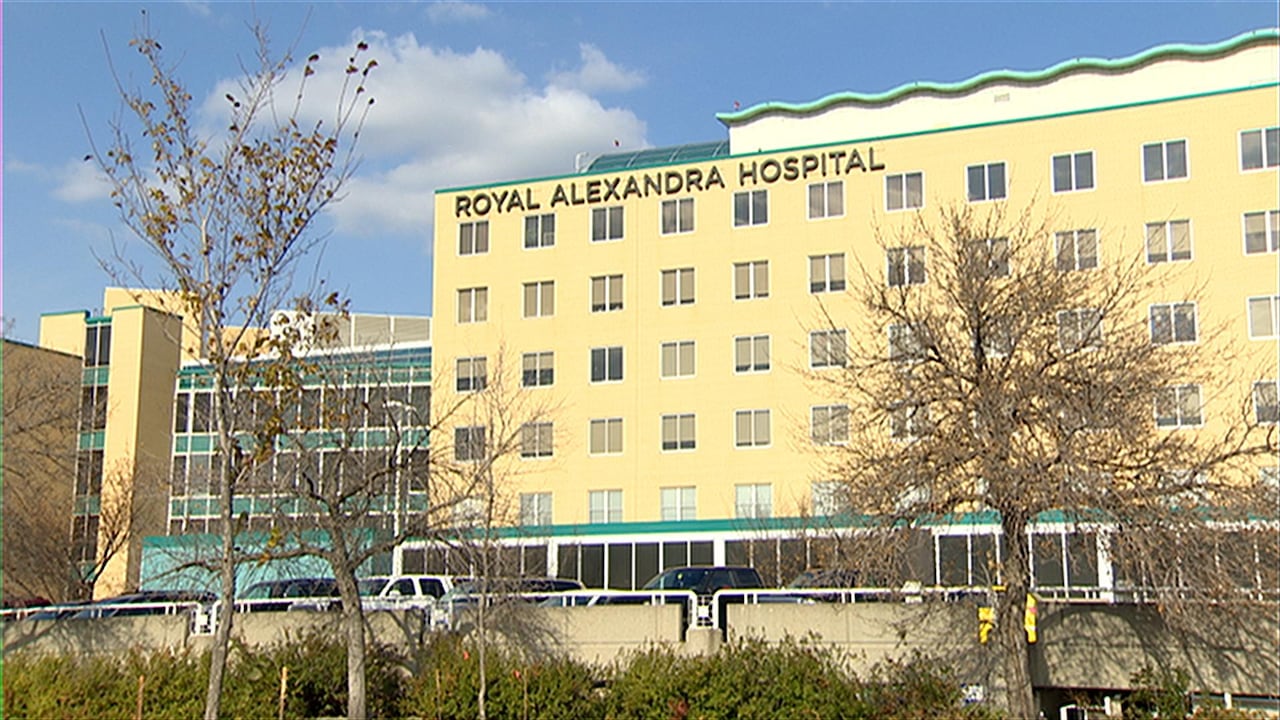 All visitors to the emergency department of the Royal Alexandra Hospital must now go through a weapons detection system. (CBC)
A report from the Canadian Federation of Nurses Unions suggested lost-time injuries related to violence among health-care workers rose by 66 per cent between 2006 and 2015, and a different survey from United Nurses of Alberta last year found that four in 10 nurses in the province reported experiencing physical violence.
Thirsk also called on the provincial government to create legislation that prohibits weapons from being brought into hospitals — except by on-duty police officers — and allows them to be confiscated.
The province did not provide comment to CBC News by publication time.
“It’s shocking to me that we put the right to carry a weapon above the safety of everyone in the hospital,” Thirsk said.