
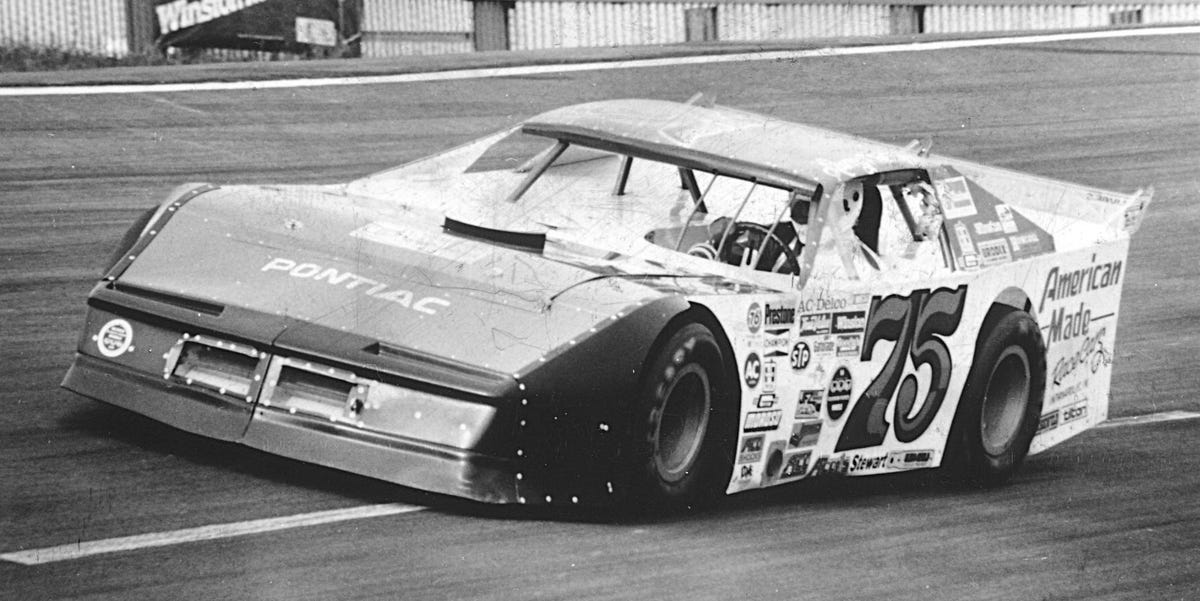
A very big door was thrown open at the NASCAR Hall of Fame Tuesday.
Drivers like Dick Trickle and Butch Lindley could walk through it.
When Midwestern short-track star Larry Phillips, a driver who produced fear among his contemporaries but on a very limited regional scale, was elected to the hall, the action was a turning point.
Related Story
Phillips, who died in 2004, was a repeater on NASCAR Hall of Fame ballots. Although he wasn’t elected year after year after year, nominating committees continued to put his name forward. On Tuesday, he took the biggest checkered flag of his career more than two decades after his death, joining a room that includes Richard Petty, Junior Johnson, Dale Earnhardt, David Pearson, Cale Yarborough, and many others with decorated resumes, impressive Cup Series statistics and lasting fame.
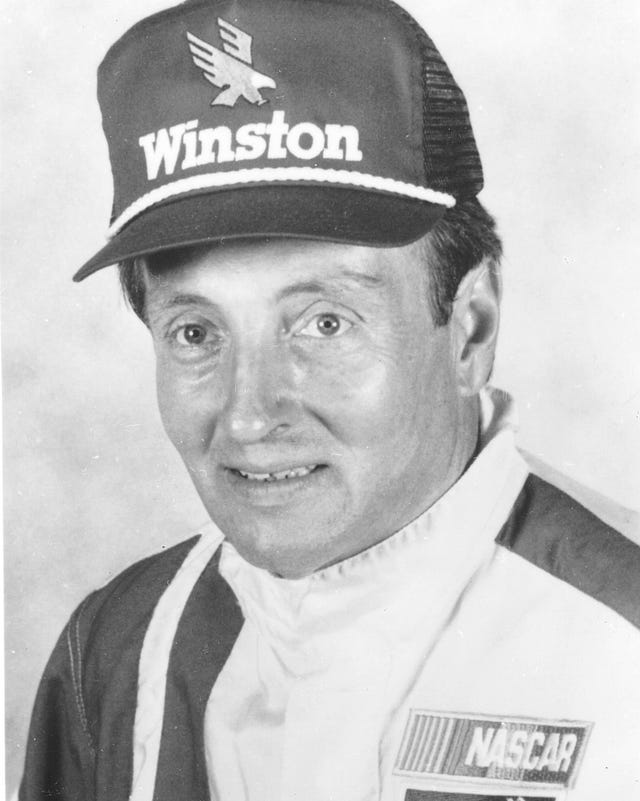 RacingOne//Getty Images
Short track star Larry Phillips captured five NASCAR Winston Racing Series national championships.
Phillips was a big fish in a small pond. Many racing fans probably hadn’t heard his name. He chose to dominate—and “dominate” is actually an inadequate term in this case—on Midwestern short tracks, piling up hundreds, perhaps thousands, of victories while choosing a road of relative comfort. He largely ignored bigger series, racing only once in Cup, finishing 13th at Ontario Motor Speedway in a 1976 race, 12 laps behind winner David Pearson.
Phillips won five NASCAR Weekly Series championships and was such a power in his circle of strength that competitors sometimes would avoid races he entered because they knew they would be racing for second place.
Despite vocal (but limited) support in the Hall of Fame voting room over the years, Phillips seemed destined to never win this, his biggest race. All that changed Tuesday as former drivers and others in the 50-member group voiced support, and a Phillips wave seemed to move through the room. The reasoning seemed to go something like this: This guy has been on the ballot most of forever; it’s time to get him in.
Phillips was a big fish in a small pond. Many racing fans probably hadn’t heard his name.
Phillips will be inducted into the hall in January having received 38 percent of the Pioneer Ballot votes. That means 19 of 50 voters checked his name, lifting him over crew chief/mechanics Herb Nab, Harry Hyde, Banjo Matthews, and Ray Fox.
Although NASCAR doesn’t list the vote totals in hall balloting (a mistake, as viewed from this corner), it seems obvious that the contest for the Pioneer winner was very tight.
The fact that this bridge—honoring the near-legendary accomplishments of a driver who stuck to short-track racing—has been crossed should give hope to fans of drivers like Lindley and Trickle, both of whom became shining stars despite scoring no wins in Cup racing.
 RacingOne//Getty Images
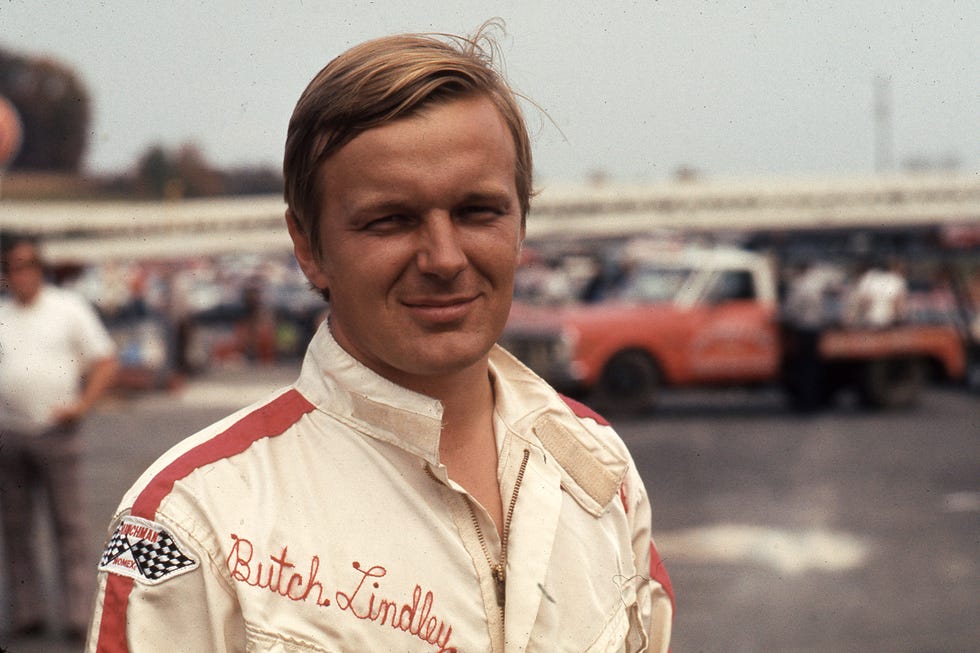
Butch Lindley.
Lindley, who has an active group pushing for his election to the hall, raced 11 times in Cup with a top finish of second. He had six wins in what is now the O’Reilly Auto Parts Series and won two championships in that series’ predecessor, Late Model Sportsman. Those who raced often against Lindley remember him as one of the most consistent short-track racers ever. David Pearson, a close friend, recalled Lindley repeating lap after lap in the same groove and expertly keeping faster cars behind him.
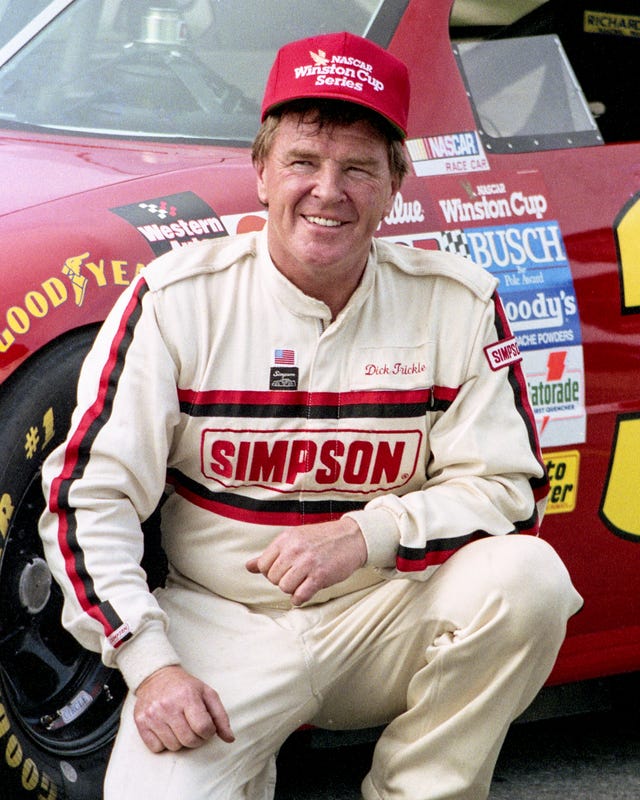
Trickle raced 303 times in the Cup Series without a win but won two O’Reilly races and hundreds of short-track races of various kinds. Like Phillips, he remains a legend in Midwestern racing circles.
Related Story
There forever will be debates about the relative value of success outside Cup racing when matching short-track stars against Cup candidates. Some voters take the view that any driver who is hall of fame worthy should have reached—and succeeded at—the Cup level.
 Brian Cleary//Getty Images
Dick Trickle.
As expected, Kevin Harvick led the Modern Era balloting, receiving 46 of 50 votes. There was grumbling that Harvick’s win wasn’t unanimous, but he probably missed a few votes because some individuals considered him a lock for election and used their two votes on others.
The voting for the second winner from the Modern Era ballot was very close. Again, we don’t know exactly how close because the numbers aren’t released, but Burton, certainly an impressive candidate by several measures, goes in with only 32 percent—16 votes of 50—of the total.
Of course, winning percentages in the Modern Era voting can be relatively low because only two of 10 candidates are elected. Burton, Neil Bonnett, Randy Dorton, and Greg Biffle likely were bunched closely, and Burton might have won by only one vote.
This is a difference—and not necessarily a good one—in the way NASCAR elects its hall members. For example, in National Baseball Hall of Fame elections, candidates must receive at least 75 percent of the votes to be elected. The comparison is somewhat apples and oranges because baseball voters can check as many as 10 of the nominees on those lists.
On the down side of the baseball approach, there have been more than a few years when no candidate received 75 percent of the vote, and thus there was no induction ceremony. NASCAR probably doesn’t want to have a year in which no one enters its hall.

Mike Hembree has covered auto racing for numerous media outlets, including USA Today, NASCAR Scene, NBC Sports, The Greenville News and the SPEED Channel. He has been roaming garage areas and pit roads for decades (although the persistent rumor that he covered the first Indianapolis 500 is not true). Winner of numerous motorsports and other media awards, he also has covered virtually every other major sport. He lives near Gaffney, South Carolina and can be convinced to attend Bruce Springsteen concerts if you have tickets.