

Listen to this article
Estimated 4 minutes
The audio version of this article is generated by AI-based technology. Mispronunciations can occur. We are working with our partners to continually review and improve the results.
Former employees of a Toronto-area subscription grocery service say the company used a warehouse relocation to carry out mass firings in an act of union-busting.
In March, dozens of Mama Earth Organics employees were told their jobs would end eight weeks later on May 12.
Matt Davis was a delivery driver with the company for just under four years when he was handed his notice at work.
“It told us that 101 people were getting terminated … that accounted for every hourly employee that was working there at that time.” Davis told CBC Toronto. “Looking around, everyone’s heads were just down. It was brutal.”
Mama Earth — a community-oriented organic food delivery company owned by Fresh City Farms — said the move to Mississauga followed plans to close its East York warehouse. Because the union’s collective agreement was limited to Toronto, the company was not required to carry it over, effectively separating the jobs from the unionized workforce.
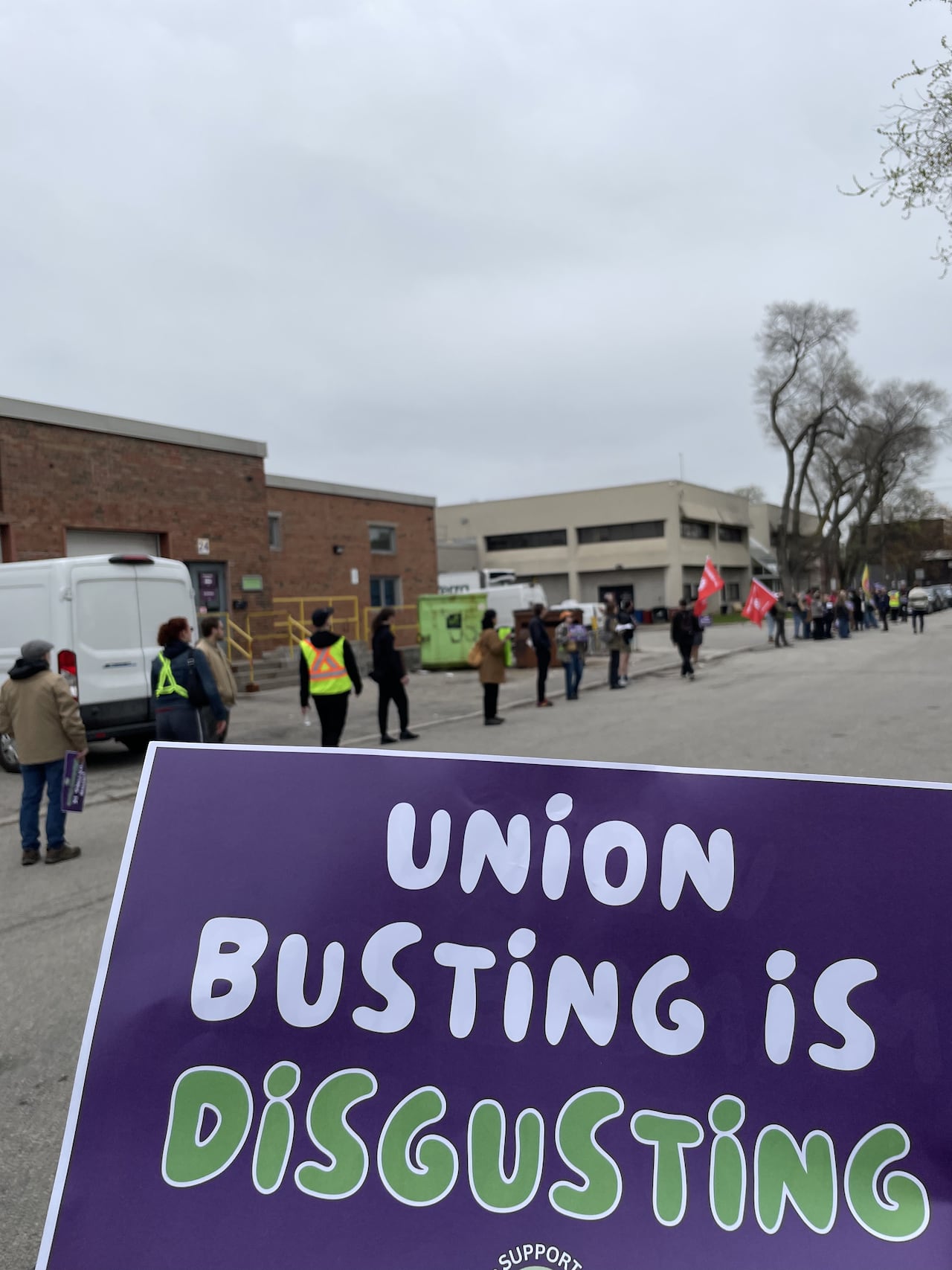 Former Mama Earth Organics employees believe the company used a loophole in their collective agreement to carry out mass firings in an act of union-busting. (Submitted by Matt Davis)
Those jobs were then posted and workers told they could reapply.
“You’re terminated and then you’re told, ‘Wow guys, we have a great deal for you. You can apply for the new place,’” Davis said. “It’s a shameful way to spin this.”
For Ian Goff, another former Mama Earth driver, the decision came as less of a shock than it did for some of his coworkers. “I’m disappointed, but I’m not surprised,” he told CBC Toronto. “It felt like it was kind of the climax … of a number of very anti-worker policies.”
He cited cameras installed in delivery vans, including in-cab cameras facing drivers during 10–12 hour shifts, as an example.
But Mama Earth CEO, Ran Goel, denied the move to Mississauga was intended to undermine the workers or union, saying it was driven by financial pressures.
Move to Mississauga driven by financial pressures, CEO
“We didn’t do this flippantly,” he told CBC Toronto. “We did it because we had to.”
He pointed to rising lease costs and over $1 million in required upgrades at the Toronto facility, including HVAC and refrigeration, and said other locations within Toronto did not meet requirements.
When asked why the unionized employees weren’t automatically moved to Mississauga as well, Goel said that would have been unfair and unethical.
“I would not feel good about forcing people and saying, ‘You’re not going to get your severance. You have to move 40 kilometers. You have to, in some cases, transit two and a half hours,” he said.
He clarified that employees who reapply at the Mississauga site would still receive severance and could then be rehired.
WATCH | Toronto city councillor proposes city-run grocer:
Why city-run grocery stores may help combat rising food prices
As food prices continue to rise, one Toronto city councillor is proposing non-profit, city-run grocery stores as a possible solution. CBC’s Alejandrina Alvarez looks at how the pilot program would work.
But in a statement provided to CBC Toronto, UFCW Canada Local 1006A president Wayne Hanley said the company needs to reverse its decision outright.
“Mama Earth should do the right thing and allow workers who wish to transfer to the new facility the opportunity to do so,” Hanley wrote. “This supposed community-minded company should respect the dedication and service of our members who have contributed to the company’s success.”
Labour lawyer Mark Rowlinson told CBC Toronto that Ontario law commonly ties bargaining rights to municipal boundaries, meaning the relocation outside Toronto may end union coverage lawfully.
However, if the union can show the move was motivated by anti-union considerations, it could amount to an unfair labour practice before the Ontario Labour Relations Board, he said.
“The real question is, is there a business case for this transfer?” Rowlinson said. “[If not] the board could draw the inference that really what they’re trying to do is get out of the collective agreement.”
In the meantime, Davis feels the company has lost a big part of what made it great in the first place — a workforce dedicated to its mission of supporting local, sustainable food systems.
“This was our company,” he said. “We want them to do well. It’s just sad that they don’t want us a part of that.”