
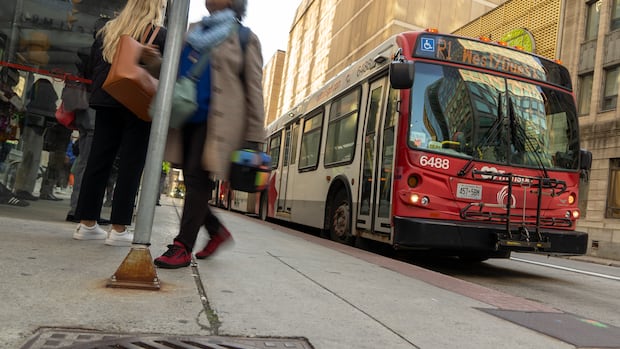
Transit has leapt to the forefront in the early days of Ottawa’s municipal election campaign, as three challengers look to convince voters they can do a better job turning around OC Transpo than Mayor Mark Sutcliffe.
Three term-city councillor Jeff Leiper, home builder Alex Lawson and economist Neil Saravanamuttoo have all made major transit announcements in the first weeks of the campaign, running from $1 transit fares to a money-back guarantee.
Sutcliffe, who has yet to register as a candidate, is putting his faith in a new 10-point plan to improve service for riders, but his challengers are eager to focus attention on OC Transpo’s many problems.
The agency posted a $52-million deficit last year. Ridership remains far below pre-pandemic levels. Hoped-for federal and provincial bailouts have yet to materialize. Winter saw a surge in bus cancellations as aging buses kept breaking down.
Then there’s the LRT. In just the past few months, it’s suffered from electrical breakdowns and worsening bearing issues that have kept most trains off the rails. Last week, councillors heard that a long-term solution to a separate bearing problem that caused a 2021 derailment is probably still years away.
In a recent wave of social media posts detailing his rides on the transit system, Sutcliffe said Ottawa is now making “significant progress on the huge challenges we inherited” from the previous term of council.
Four years ago when Sutcliffe was elected, OC Transpo was also in dire financial straits. Ridership had cratered during the pandemic. The LRT was put under the microscope during a scathing public inquiry that eventually found “egregious violations of public trust.”
Now, Sutcliffe is pointing to a recent rebound in bus reliability as long-delayed electric buses finally start rolling in, as well as a plan to get back to double-car LRT service next month.
Besides, he said the deal he’s negotiating to upload the LRT to Metrolinx will save the city $85 million, money it can use to plug the deficit and reinvest in service.
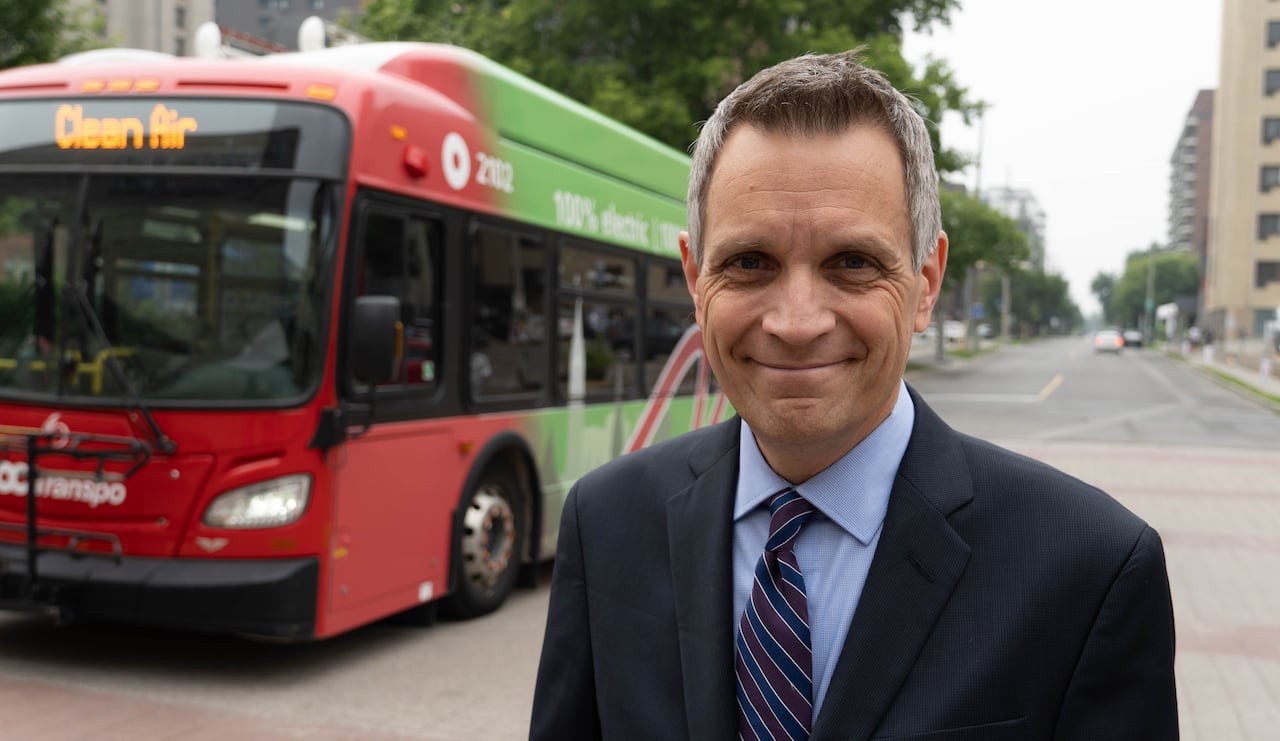 Ottawa Mayor Mark Sutcliffe poses in front of one of OC Transpo’s new electric buses outside city hall in June 2023. (Jean Delisle/CBC)
But his challengers aren’t taking such a rosy view. If anything, they say, the sorry state of the transit system is looming larger as an issue this time around.
Leiper said it comes up again and again on the campaign trail.
“There’s a really strong anger on the part of taxpayers that they’re not getting the service that they consider they deserve for the money they’re paying,” he said.
Reliable buses, or your money back
Leiper announced his transit plan a day before registering to run. The centrepiece is what he calls a “transit service guarantee.”
“Your bus is going to be reliable, it’s going to be punctual, or you’re going to be reimbursed,” he said at his announcement in late April.
His other promises offer ways to make the buses reliable, including by speeding up plans for dedicated bus lanes and the Baseline BRT. He said he would reverse last year’s route changes, which he called service cuts, and bring back a citizen seat on the transit committee to ensure riders have a voice in decision-making.
“I cannot stress enough the importance of public transit to this city. If we don’t have transit that works, nothing in the city is going to work,” Leiper said.
He’s also floating a “bus acquisition strategy” to even out purchases and ensure Ottawa is never again caught waiting for a huge bulk order of buses.
Leiper said he still has questions about the 10-point plan released by new transit services general manager Rick Leary last week. Will new schedules mean buses run less often? Will a return to double-car trains cut frequencies? Does Leary’s plan depend on federal funding — and what happens if it doesn’t come through?
He said the answers aren’t clear.
 From left, 2026 Ottawa mayoral candidates Alex Lawson, Jeff Leiper and Neil Saravanamuttoo all filed their nomination papers on Friday, May 1, the first day they could do so. (Arthur White-Crummey/CBC)
Even so, Leiper has shied away from the kind of directly combative language coming out of the Lawson campaign, which says the problems at OC Transpo don’t come from a money shortage, but a management failure.
Lawson’s first transit announcement was an ultimatum to Leary: improve bus reliability numbers within six months or, if elected mayor, he will make “leadership changes” at the top.
Yet Lawson appears to have warmed on Leary. Last week, he said his own plan has much in common with the new general manager’s strategy.
“I like what I’m hearing from him,” Lawson said. “He’s got confidence and he’s not overpromising…. I’m confident that he’s going to get it done.”
Transitway nostalgia
Lawson’s transit platform announcement came out on the same day as Leary’s strategy. Both plans promise bus scheduling reviews, as well as a focus on safety for riders.
But Lawson does propose a shift of direction on several key points. He wants OC Transpo to get away from serving school routes. He doesn’t like double-decker buses. He wants more on-demand transit in rural areas. He wants to look at shaking up OC Transpo’s management structure.
And he’s still looking to capture some of the nostalgia that was on display when he first announced his campaign with a nod to the glory days of the long-lost 95, 96 and 97 routes. His plan says those Transitway routes were “like a subway above ground.”
While he said he has no plans to “pave the tracks,” he promised “a temporary express bus network, station-to-station to downtown, during morning and afternoon peaks.”
He said the express buses will run until the LRT goes “20 consecutive days without issue.”
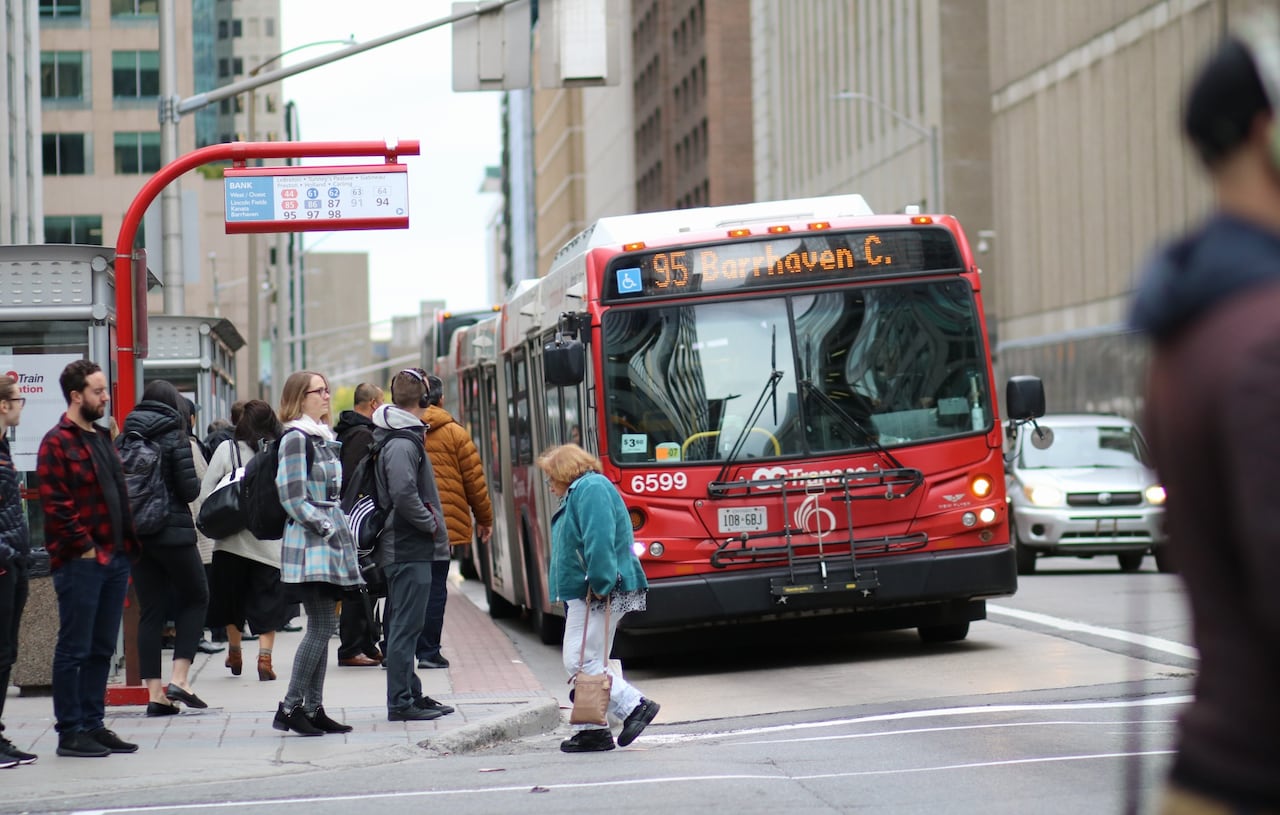 A 95 bus waits for the light to change on Albert Street on Oct. 3, 2019, days before the route was retired. (Trevor Pritchard/CBC)
Several city councillors, including Leiper, pitched a similar bus backstop after the first wave of LRT failures in 2019, though the idea proved challenging to implement given a shortage of buses.
Asked where he would find the buses now, Lawson acknowledged it would be “a bit of a challenge to do at first.”
“I think it’s going to be about prioritizing some routes, looking at which ones could be trimmed down a little,” Lawson said.
He noted that Ottawa is expecting more shipments of electric buses this year and that his plan will be rolled out when there are enough vehicles to do it.
Those new buses are supposed to allow for the retirement of aging and unreliable diesel models, but Lawson’s campaign said he’s willing to hang onto those old buses a bit longer to carry out his plan.
Fares: cheaper or fairer?
While Lawson suggests bringing back some of OC Transpo’s pre-LRT network, Saravanamutoo’s focus, so far, is on giving riders’ pocketbooks a break.
The grassroots activist and organizer used his campaign launch event to unveil what he called “Buck a Ride, Citywide.” That means $1-per-trip transit fares for every rider, capped at $40 a month.
Saravanamuttoo said there’s little the city can do on frequency and reliability until more new buses arrive. In the meantime, he said working on affordability will deliver “shock therapy” to get more riders onto the system and make it more sustainable in the long term.
“That’s why we’re introducing Buck a Ride. It will ease the burden on taxpayers who have quite frankly suffered under this transit system for far too long,” he said. “But it will bring people back onto the bus, and that’s really critical, that to rebuild the system, we have to be growing it.”
Saravanamuttoo’s plan relies in part on that expected ridership boost to help cover the cost of his fare reduction. Even then, he says the price tag could reach about $82 million, funded through savings from the provincial LRT upload to Metrolinx.
That money is currently earmarked to help plug the deficit, though Saravanamuttoo suggested he can find savings elsewhere to cover it.
Lawson’s plan also has a lengthy section on fares — but he isn’t promising a big cut like Saravanamuttoo. Instead, using his own turn of phrase, he’s pledging “fairness for your fare.”
It’s based on his concerns that broken fare equipment and spotty enforcement is allowing too many people to board for free, penalizing riders who actually pay.
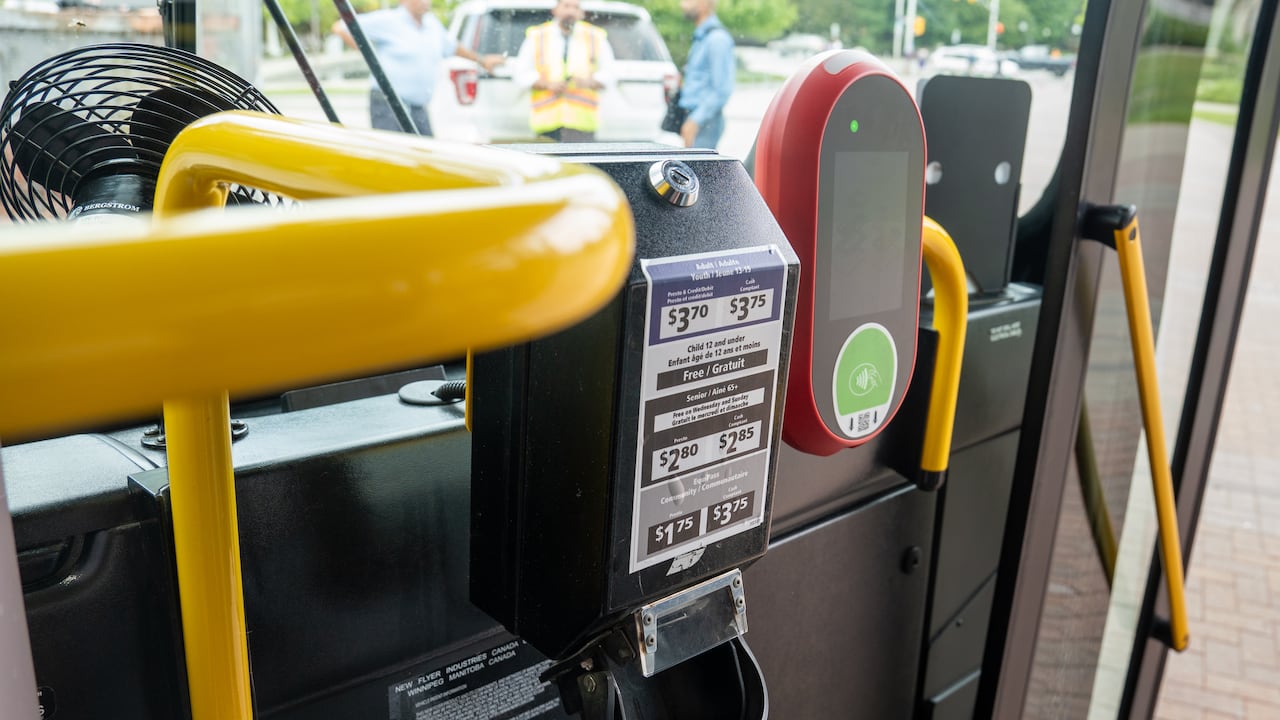 Mayoral candidate Alex Lawson wants to make sure buses go out with working fare equipment. (Melanie Campeau/CBC)
His plan promises weekend fare inspectors and says no bus will be dispatched into service with a broken fare reader.
Asked by CBC whether that means leaving otherwise working buses in the garage, he said “that’s not the intention.” He said his goal is to get the equipment to work, including by using modular components that can be easily swapped out.
But those announcements aren’t the last word on transit. Saravanamuttoo said he will be rolling out a more wide-ranging plan for OC Transpo next week and is planning a transit town hall for the future.
Meanwhile, the system keeps facing new problems, from bus delays that left Ottawa Charge fans stranded to a staffing shortage that temporarily shut down Lines 1 and 4 over the weekend.
There’s plenty of time for new ideas, and still more stumbles, to crop up before the election on Oct. 26.