
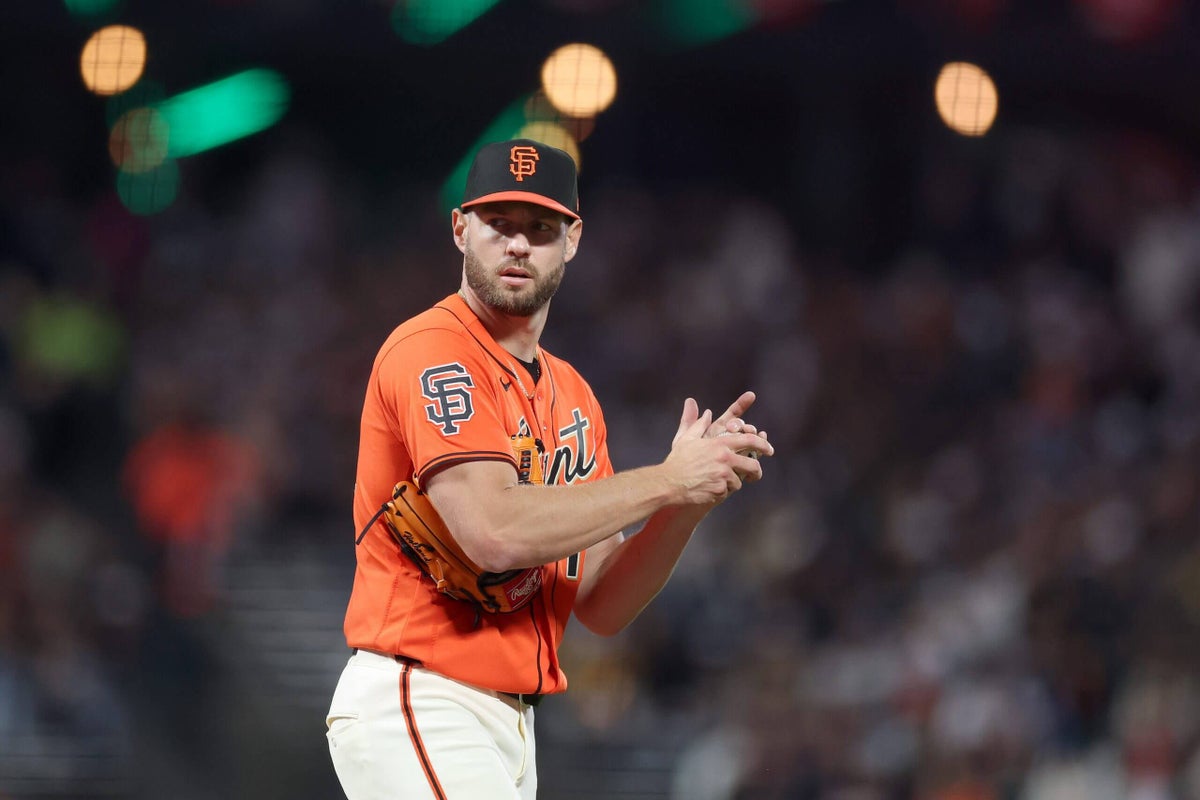
It’s not just the Giants.
This doesn’t make you feel better, but it sure doesn’t make you feel worse. All around baseball, would-be contenders are getting their tongues stuck in the mixer. The Phillies are back to .500, depending on which day you check the standings, but the Astros, Blue Jays, Red Sox, Orioles and Mets are all still there with the Giants, tongue stuck, and saying, “a lnngl hrrp pls*”
* “a little help please*”
Except no help is coming, for this season is damned. Maybe if you, I don’t know, just put your foot here and pull your tongue a little — I SAID A LITTLE — you know what, never mind. The Giants could absolutely win 15 games in a row and vault right back into contention. They could also lose tomorrow and the day after that, probably because of something stupid. You know which one is more likely. Hey, Occam, bring that razor over here, lemme see if that’s what we need …
My working theory is that something has changed in baseball — check out the walk rates and strikeout rates around the league — and the Giants have been slower to adapt. In 2000, the Giants figured out optimal defensive positioning at (then) Pacific Bell Park midway through the season, allowing them to score runs that they were preventing other teams from scoring. They went from a season kind of like the one this team is having to the best record in baseball. That’s the good kind of change. In 2016, the Giants went from the best record in baseball in the first half to one of the worst records in the second half, possibly because of advantages other teams were exploiting in the new batted-ball data that was only recently accessible for every team, in every ballpark. In some ways, they’re still catching up.
If the explanation for the Giants’ struggles this season is close — and it’s just a working theory, your mileage may vary — then there’s nothing else they can do with the lineup core. There isn’t a solution other than “adjust to the league’s adjustments,” which several hitters look like they’re capable of doing. They might have made those adjustments already.
The impossibly slow start from almost everyone in the Giants’ lineup is just One of Those Baseball Things. The organization thought they knew how baseball was going to work, and the baseball had other plans. Sometimes you plan for rain and the wind tears through your umbrella.
It’s probably too late for the Giants to recover, although a reverse-2016 kind of experience would certainly make for a fun season. Let’s assume they’re cooked, even if they’re more than welcome to make us all look silly. In the above telling, it’s hard to get too mad at the players involved. And it’s not the fault of a single hitting coach or a rogue quant named Billy who hasn’t been able to connect to the Oracle Park WiFi for years but is too embarrassed to tell anyone. It was an organizational failure. Everyone shares the blame, from the hitters to the coaches to the suits. The unexpected happened, and it wasn’t pretty.
So let’s talk about the expected. The Giants had two or three rotation slots to fill this offseason, and they made a conscious decision to go for quantity over quality. Neither Adrian Houser nor Tyler Mahle were among baseball’s top 50 free agents last offseason, with more than a dozen pitchers ahead of them. There were so many options — that’s before getting to the trade market, too — that it was possible for a team to suffer from analysis paralysis. If they liked a broad swath of free-agent options, they risked losing their fallback options because they were too confident in their fallback-to-the-fallback options.
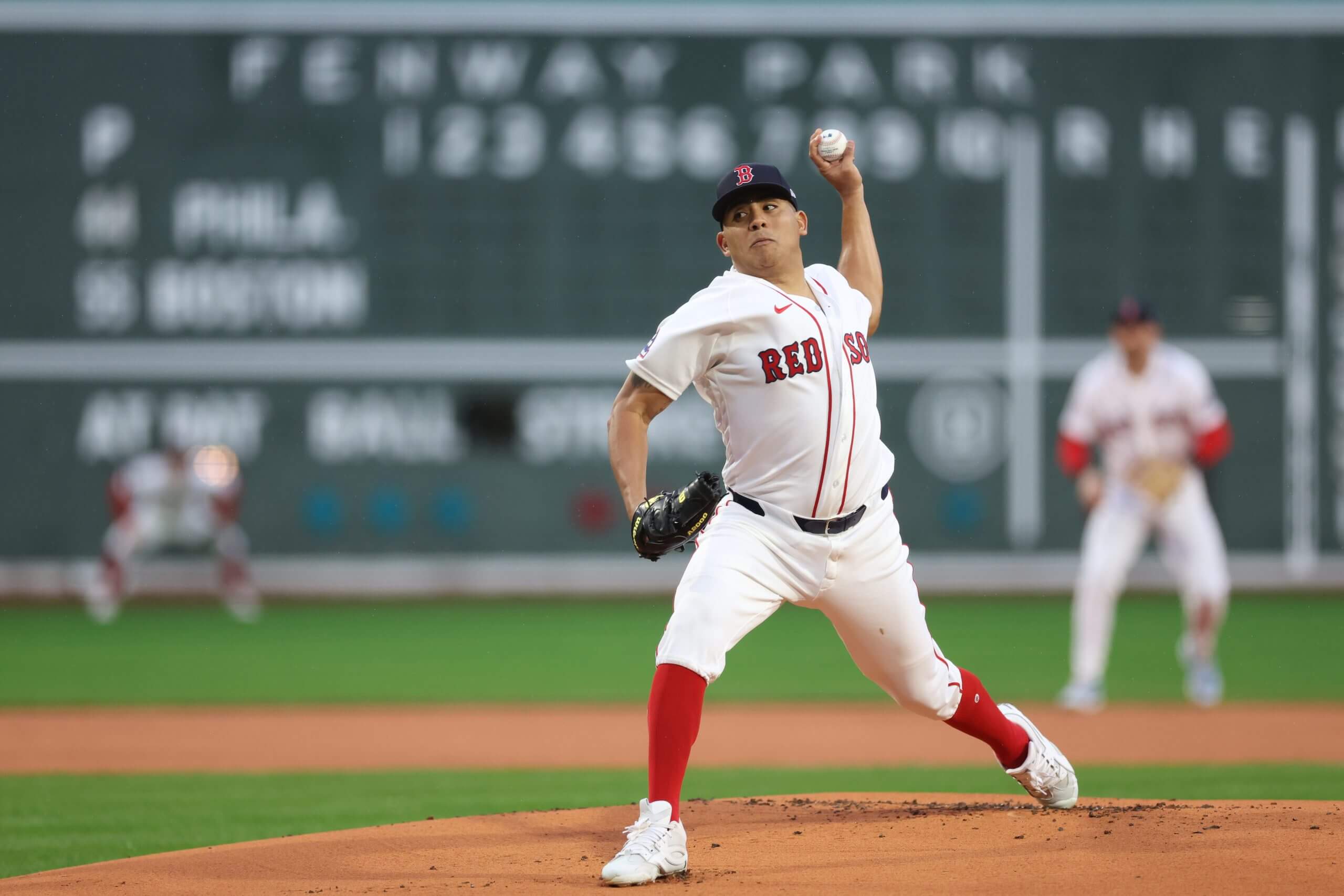
Ranger Suárez looked like a perfect fit for the Giants this offseason, but he signed with Boston and is thriving there instead. (Paul Rutherford / Getty Images)
We’ll never know what the Giants’ offseason wishlist really looked like, whether Houser and Mahle were at the top of a short list, or if they were the last couple of chairs available as the music stopped, but the early returns have been dreadful. Houser has gone deeper into games recently, but he’s been completely unable to miss bats, even more so than usual. Mahle was alternating strong starts with iffy starts, but he’s been more focused on the latter recently.
After Andrew Baggarly reported this offseason that the Giants were unlikely to shop at the top of the free-agent market, I wrote a column that was the equivalent of a deep sigh and a long eye-roll.
Left-hander Patrick Corbin probably isn’t the Giants’ main free-agent target, but let’s use him as a stand-in for the class of free-agent starter that Giants fans should apparently get familiar with. Before defining that kind of starting pitcher, though, we should remember the prime directive of the Giants’ pitching pursuit this offseason, which is this:
They can’t screw it up.
I’ve brought this up several times already, possibly while linking to the same Far Side cartoon that pops into my head every time. The Giants aren’t off to an all-time lousy start solely because of their pitching decisions, but this is where the best told-you-sos and April-morning quarterbacking are stored. They screwed it up.
MLB free agent SP through 5/20/26
The Giants didn’t pick the worst options. Chris Paddack has already been released by the team that signed him, and other pitchers have made a (bad) start or two before going on the IL. The Brewers spent their entire offseason kitty on retaining Brandon Woodruff, who is already having shoulder issues.
But the Giants certainly picked some of the worst options, at least through the middle of May. Seasons can turn around, certainly, but the early returns are about as bad as anyone could have feared. The Giants’ biggest job this offseason was rebuilding the rotation, and they’re 10 games under .500 at least partially because they screwed that job up.
If you were feeling sorry for the Brewers spending their limited funds, don’t. The Red Sox pulled a Lucy and tossed the Giants’ version of a Joe Shlabotnik card in the trash, allowing the Brewers to weaponize Kyle Harrison and feel awfully smug about it. Harrison struck out 11 Cubs over seven innings on Wednesday, dropping his ERA to 1.77. He might not just make the All-Star Game at this pace; he might start it.
The current mood around baseball is to blame the Red Sox more than the Giants for this turn of events, and rightfully so. The Giants felt like Harrison had to be in the Devers trade, otherwise it might all fall apart. The Red Sox said, “Hey, how’d you get here?” over the offseason and traded him for Caleb Durbin, who is somehow hitting worse than anybody in baseball. One team made a tough decision that they might regret; the other team made a nonsensical decision that they already do.
Still, it’s important to remember that the Giants thought of Harrison as a pitcher they could replace. They have been very wrong about that this season. When you combine his development with the struggling, newly signed free agents in the rotation, it’s not only fair to wonder if the Giants can evaluate and develop pitching: It’s required at this point. It’s an incredibly bad look for, say, Ranger Suárez — the perfect fit, and not in hindsight — to be thriving as the Giants are struggling with their thread-the-needle, quantity-over-quantity picks for the rotation.
Instead, the Giants bet on their ability to evaluate the market and out-clever the other teams. It’s still May, but the bet is getting paid off in earned runs and regret, and there aren’t a lot of signs that this is a team that knows how to make pitchers better. Landen Roupp is becoming one of the better stories of the season, and Trevor McDonald has been more effective than either of the free agents, but none of it will be enough to build confidence in the whole operation.
If this doesn’t get fixed, there’s a franchise up there that’s a good cautionary tale for the Giants. The Orioles had the best minor-league system in baseball for a long time, stuffed with top-10 prospects, but it was a system that was heavily weighted towards their position player prospects. They still have an enviable young core, so they’re not absolutely buried, but they were always just a few pitchers away from busting out. Now they’re one of the teams from the opening paragraphs having a Giants-like season of disappointment. Sometimes an organization never really figures out how to prevent runs, even when almost everything else is going right.
This is what should scare Giants fans a lot more than the respective OPSes, salaries and ages of players like Jung Hoo Lee, Willy Adames, Rafael Devers and Matt Chapman. Those hitters will either come around, or they won’t, and it won’t affect the team’s desire (or yours) for the next exciting free agent looking to get overpaid in exchange for immediate help. They’ll still trade for the next Devers when the opportunity arises, if only because “adding All-Star hitters to a would-be contender” isn’t a strategy that will ever go out of favor. But if they can’t figure out how to keep runs off the board — and how to find the same kind of short-term successes that the last front office did — none of it will matter.
The Giants’ bats will likely warm up with the weather, regressing to the mean in the best sense. There are no guarantees when it comes to the run prevention, though. It’s possible that the season ends with Houser’s and Mahle’s numbers looking like their career lines, Carson Whisenhunt throwing strikes in the majors and ol’ Tugboat becoming a fan favorite on the order of Sergio Romo. If the Giants’ front office shows an ability to develop homegrown pitchers like Roupp, they won’t need to have a 100-percent success rate with their free agents.
It’s also possible that the season ends with the Giants needing to rebuild a rotation again, which means we could be back here in 365 days, yapping about the same problem. Here’s the most important pivot point for the franchise going forward. The early returns aren’t exactly conclusive, but it’s perfectly reasonable to be alarmed.