
As Calgary continues to grow, so, too, will the city’s civic partners’ need for more space.
That was one of the takeaways Thursday at city hall, where council’s community development committee heard annual updates from 20 civic partners, including the Calgary Public Library, Heritage Park and the Wilder Institute/Calgary Zoo.
Civic partners range from wholly owned subsidiaries such as Calgary Economic Development, to independent groups such as Tourism Calgary.
A recurring theme in the yearly reports was the need to modernize or expand facilities to respond to increased visitation.
Committee members heard updates on several expansion projects, including the Werklund Centre (formerly Arts Commons), Hangar Flight Museum, Contemporary Calgary and the MNP Family and Community Sports Centre.
Lauren Maillet, interim executive director of the Hangar Flight Museum, said the facility along McCall Way N.E. is constrained by its current space.
“We’re at the point where our staff are working out of closets, essentially, because that’s how little office space we have,” Maillet said.
Her report highlighted that visitation to the museum has risen from 33,000 visitors in 2019 to just shy of 49,000 last year. The increase in patrons led to a record year for revenue, with the aviation museum pulling in more than $636,000 in 2025, up from just over $493,000 in 2023.
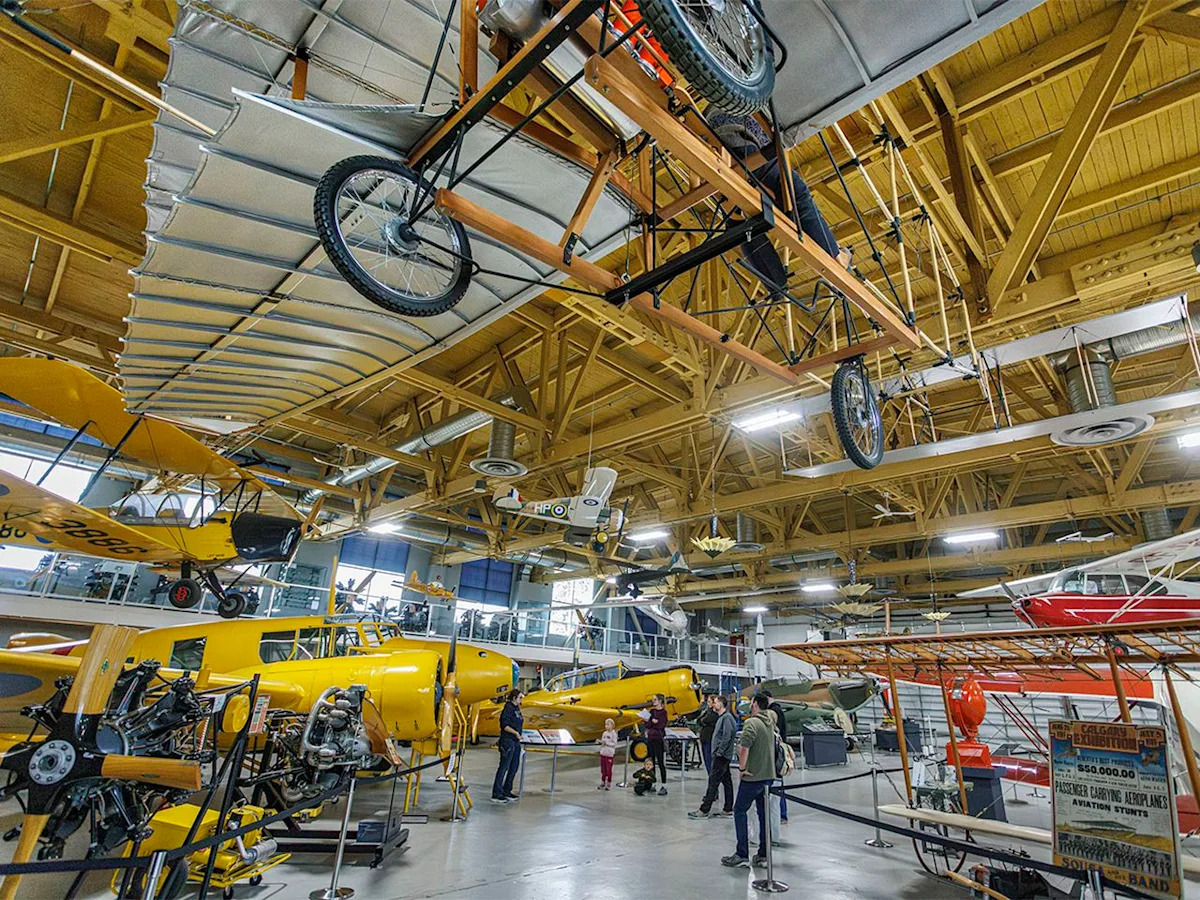
Maillet said the museum is pursuing a $60-million expansion to replace its “tent hangar” with a permanent structure that would triple the size of the facility, from 20,000 to 60,000 square feet.
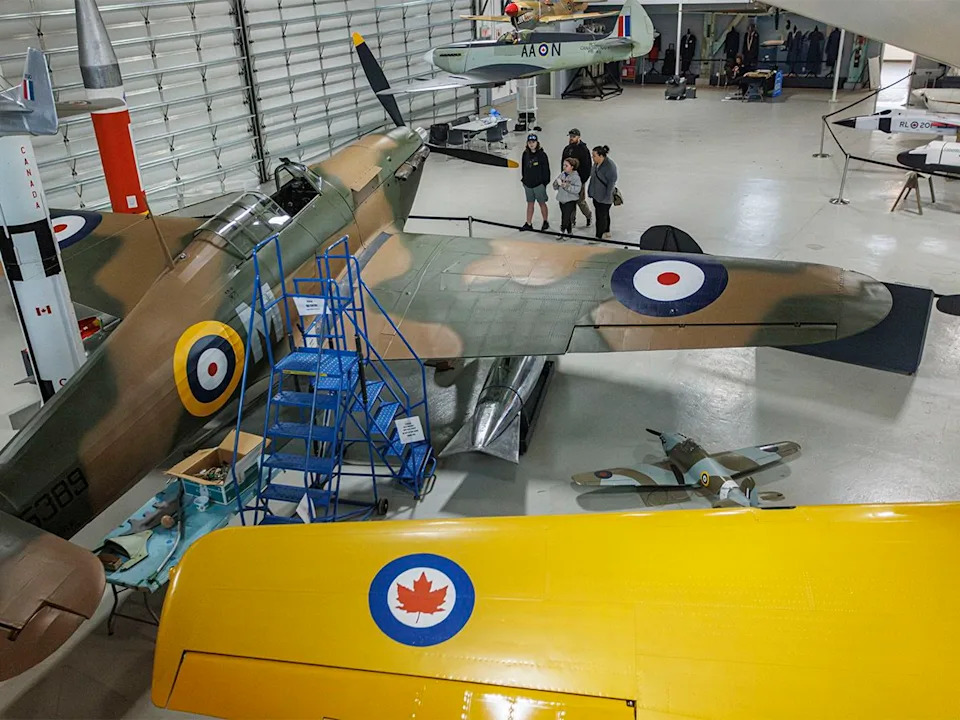
Visitors check out a Hawker Hurricane fighter among the many planes on display at The Hangar Flight Museum in Calgary on Sunday, Nov. 16, 2025.
The tent hangar, installed in 2009, was intended as a temporary solution to increase the museum’s space, Maillet said. But more than 15 years later, it needs more space to display aircraft, while the soft shell fabric of the tent has been damaged twice by heavy snow and wind.
“It was meant to be a 10-year fix while we could build something more permanent, because something that’s unheated and not temperature-controlled, not humidity-controlled, is not safe for artifacts long-term,” she said.
The expansion is in the architectural planning stage, but construction isn’t likely to break ground until 2030.
“This is not an optional thing . . . we need to make sure that this (project) can happen,” Maillet said.
Civic partners looking to ‘keep pace’ with population, visitor growth
Thursday’s meeting provided a rare opportunity for civic partners to present to local lawmakers ahead of council’s four-year budget deliberations in November.
Next week, civic partner representatives will meet with administration to discuss budget submissions for 2027.
Kyle Burks, president and CEO of the Wilder Institute, said that while the zoo doesn’t plan to expand its overall footprint, the institution is pursuing a series of habitat renovations ahead of its centennial in 2029, including a multi-phased redevelopment of Exploration Asia, following a recently completed overhaul of Wild Canada.
He said the zoo attracted 1.4 million visitors in 2025.
The zoo earns 86 per cent of its revenue through admissions, according to Burks, while the city’s operating grant represents the remaining 14 per cent. On the capital side, he said the city funds 24 per cent of the zoo’s infrastructure needs.
The zoo’s operating grant from the city this year was $9,466,051, compared to $9,446,717 the previous year.
“We know we’re on the path to two million people in the region, and we want to keep pace with that,” Burks said. “An expansion for us in the next 10 years allows us to increase our capacity by more than 25 per cent so that we can welcome more Calgarians, more tourists to the region.”
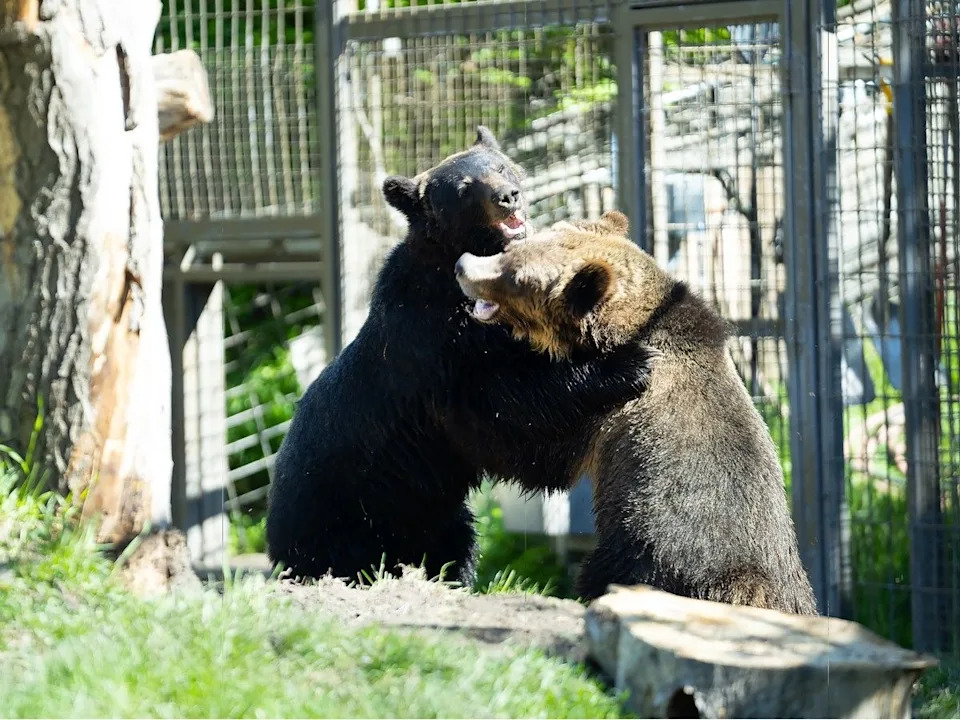
Fitz and Turner, two orphaned grizzly bear cubs, wrestle in their new enclosure at The Wilder Institute/Calgary Zoo on Thursday, May 21, 2026.
Funding civic partners a ‘practical choice,’ says mayor
Maillet said the opportunity to meet with council members is “integral,” considering the city has strict lobbying regulations that prohibit civic partners from advocating their organization’s budgetary needs to councillors ahead of their yearly budget talks.
The Hangar Flight Museum received a $459,618 operating grant from the city in 2025, and $475,698 this year.
“We are the least invested-in attraction in Calgary, as far as civic partners go, and that has been the case for over a decade,” Maillet said.
“While we grow from having two staff to having 11 full-time staff, our funding has not increased at that same level, so we’re really asking for a higher investment based on the impact that we’re having compared to the impact that we used to have.”
In 2025, the city provided more than $145 million in operating grants and $99 million in capital grants to its civic partners.
Mayor Jeromy Farkas defended the city’s financial support of civic partners as a “practical choice,” noting the organizations can leverage their grant dollars to secure funding from other sources, be it corporate support, philanthropy or grants from other orders of government.
The city’s operating grants often generate a five-to-one or even 10-to-one return on investment, he said.
“There’s no better investment out there right now than investing in our civic partners, especially when they take any support from the municipal government and they leverage that five to 10 times from our provincial and federal counterparts,” he told reporters.
Helping to fund civic partners “makes sense from an economic standpoint, but it also makes sense from a safety and quality of life standpoint,” Farkas added.