
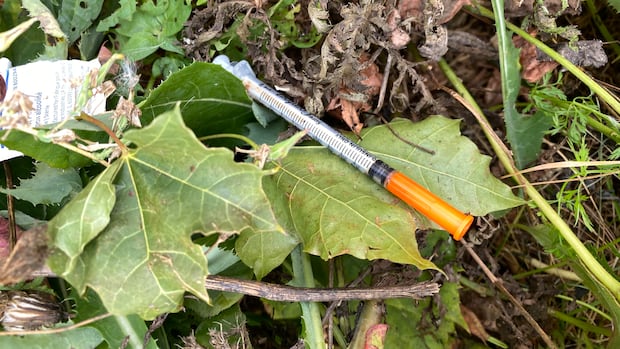
A Winnipeg outreach organization is worried a recent bust that swept hundreds of kilograms of controlled substances from the streets left a gap in the drug supply that could put more people at risk of overdosing.
“We’re already in the middle of our worst toxic-drug supply on the streets right now … and we know that when drugs are taken off, the supply is going to get more toxic,” Jamil Mahmood, the executive director of Main Street Project, said.
More than $37.2 million worth of cocaine, meth and fentanyl were seized in what Winnipeg police are touting as the largest drug bust in Manitoba’s history.
It follows an interprovincial investigation launched in May 2024 that targeted an organized network of people importing drugs from the United States that were warehoused in Ontario and Alberta. The drugs were then transported and distributed throughout Manitoba.
The majority of controlled substances — amounting to more than 525 kilograms — were confiscated in Winnipeg late last month, police say.
While Main Street Project doesn’t condone drug dealing, Mahmood said having a safe supply of substances such as meth is important. The demand for them still exists after police seize drugs, including for those who take them to avoid withdrawal.
Operations that take large amounts of drugs off the street leave a hole in the supply, and Mahmood said that is usually filled with substances of the same kind or others that can be more toxic.
WATCH | Drug bust will lead to more toxic supply, groups say: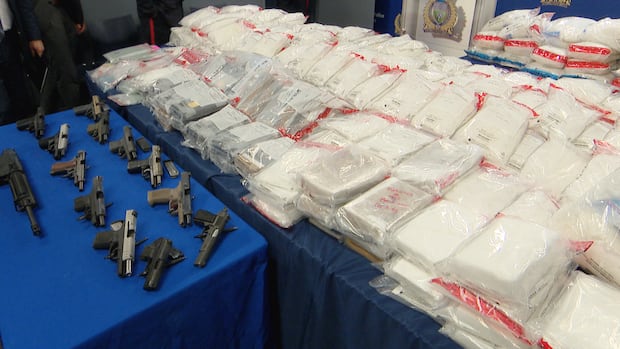
Winnipeg harm reduction advocates worry drug bust could increase overdoses
Some harm reduction advocates are worried a major bust announced by Winnipeg police this week could lead to a more toxic drug supply, and more overdoses.
“Unfortunately, we’ve seen that lately. This stuff they are cutting into drugs is even more problematic,” he said.
The supply is being laced with substances such as medetomidine, a potent veterinary tranquilizer, Mahmood said.
An overdose from that drug can’t be reversed with naloxone, as with opioids, so it takes longer for someone to be revived. Mahmood said that with stronger drugs, people also experience more painful withdrawals and a higher chance of harmful health consequences.
“Any way you kind of cut it, it increases more potential deaths in our community,” he said.
Main Street Project stocks up with naloxone and enhances its outreach efforts, such as foot patrols, in the aftermath of a drug bust. Resources are already stretched thin after April saw a higher number of overdoses in a month than ever before.
“We’re very concerned that it’s going to create a situation that’s just unmanageable,” Mahmood said.
“We know these are preventable deaths, if we had a safer drug supply and we had better front-line resources to respond to this crisis.”
Regarding the risks of increased toxicity in the drug supply, Premier Wab Kinew told reporters at an unrelated news conference Thursday his government is committed to helping people find a path toward recovery.
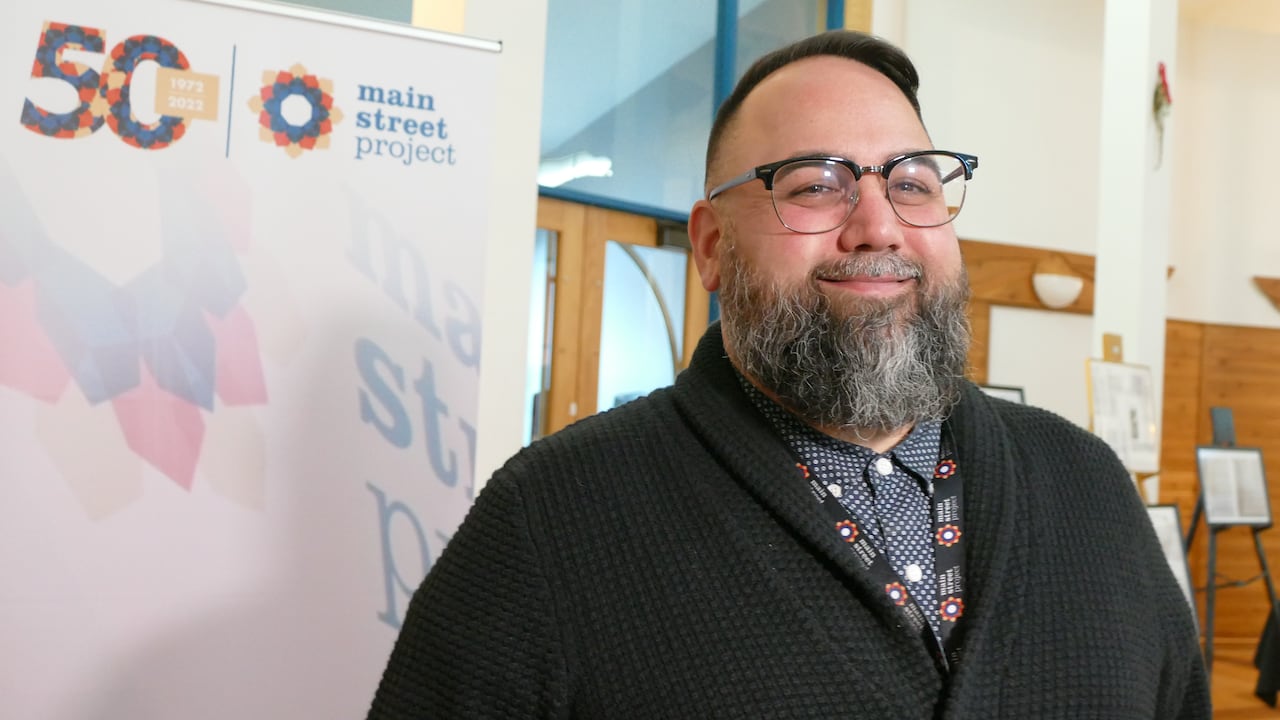 Main Street Project executive director Jamil Mahmood says the organization enhances its outreach efforts in the aftermath of a drug bust, but with resources already stretched thin, he is worried added resources won’t be enough. (Walther Bernal/CBC)
He said it is also important to arrest the people causing damage in communities by supplying drugs.
“Folks on the progressive, the left side of the spectrum, need to understand that law enforcement is part of a public health approach to drugs,” Kinew said. “That’s what we’re being guided by on our provincial strategy.”
Mayor Scott Gillingham said the current supply of drugs in Winnipeg has first responders “running off their feet,” and people who are pushing the drugs into communities need to be held accountable.
“These people that are arrested and charged, I wanted to see the full force of the law thrown at them because this is killing our community members,” he said.
“Even with the current drug supply that’s out there, there’s toxicity issues anyway.”
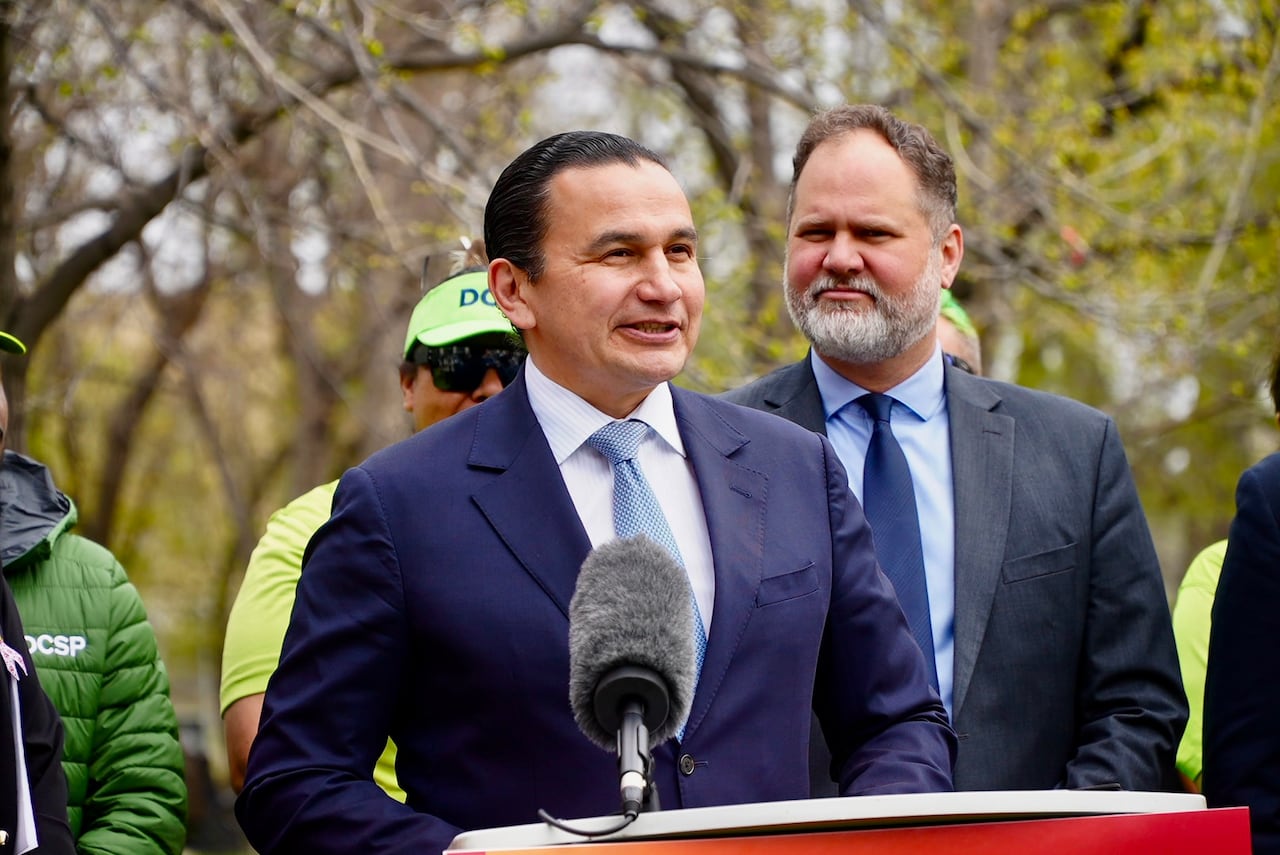 Premier Wab Kinew says law enforcement is part of a public health approach to drugs. (Kevin Nepitabo/CBC)
Research from the U.S. has found more people suffer from overdoses after drugs are removed from the streets, Jennifer Carroll says. The associate professor at North Carolina State University has specialized her research on substance use for more than 20 years.
“I understand that sounds counterintuitive, but I would suggest it’s only that way if we are misunderstanding illicit drugs as consistent,” she said.
Drugs such as fentanyl and heroin can differ in potency each time someone buys them.
For some people who use drugs, sourcing the substance from the same buyer is the only way of getting a similar concentration. But if those drugs are taken off the street, the person who wants to buy them has to deal with a different version of the substance.
“Causing disruption in the market makes it so much harder for people to find a consistent product and dose themselves safely. That’s what increases overdose death,” Carroll said.
The risk can stay high for months at a time and impacts every single person who buys from the same supplier.
“These substances become deadly not because of the risk they confer, per se. These substances become deadly because they’re unpredictable, and the market is kept unpredictable because it’s not regulated,” Carroll said.
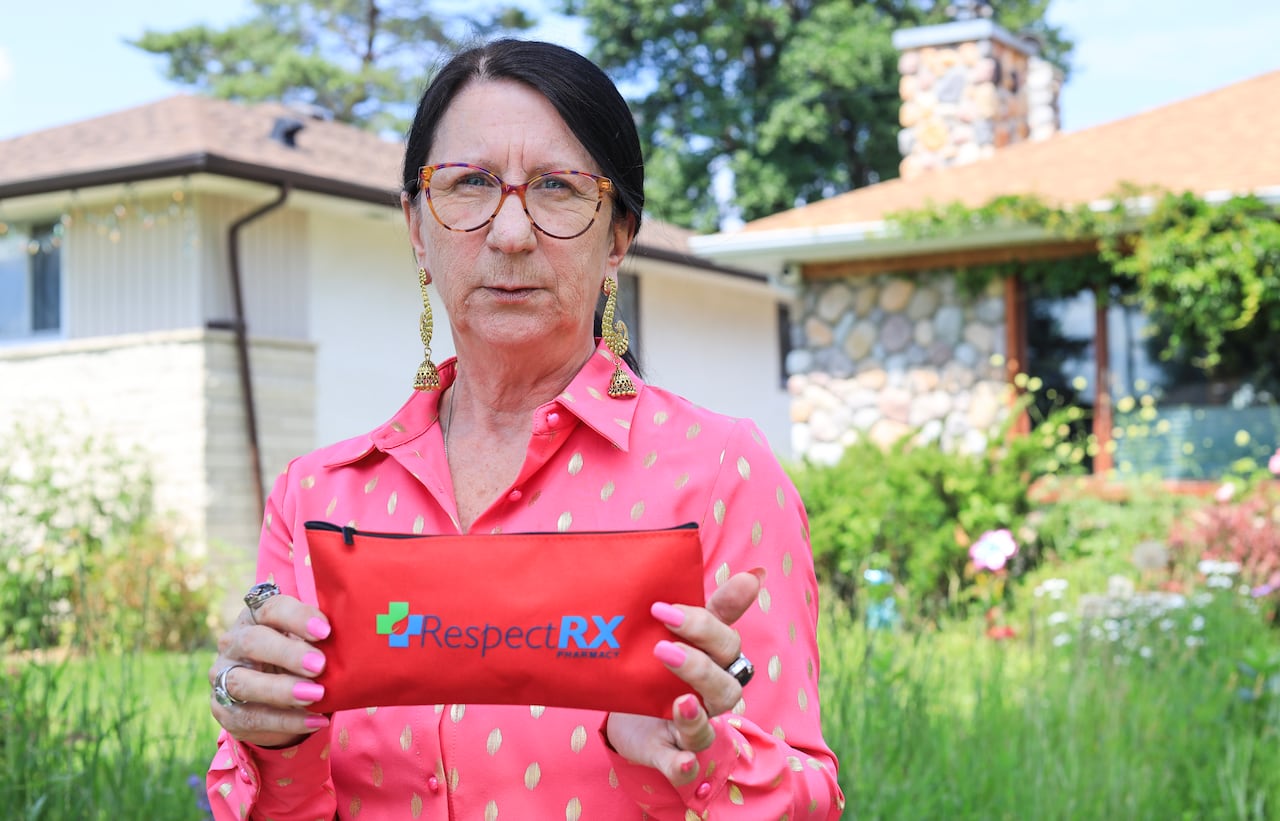 Arlene Last-Kolb, seen in a file picture holding a naloxone kit, says the city can’t police its way out of the drug crisis and safe supply is needed to address the issue. (Natalia Weichsel/Radio-Canada)
Arlene Last-Kolb, an addictions treatment advocate who lost her son to fentanyl poisoning in 2014, is concerned the gap in the drug supply will leave room for tranquilizer substances to be used more.
The Winnipeg Regional Health Authority’s mobile public health service, Street Connections, sent a drug alert earlier this year about traces of heroin and medetomidine in seized tablets.
“We will not be able to handle these overdoses. We will see more people suffering,” she said.
Last-Kolb has long been pushing for a safer and regulated supply of drugs to prevent overdoses.
“We have to try something different,” she said. “We cannot continue to hope and pray that we will get all the drugs off our street by policing them.”
Mahmood argues authorities need to come up with a better plan to respond to the drug crisis, creating spaces to support people while they are using substances and lead them to recovery.
“Every detox bed is full, every treatment bed is full,” he said. “We need real long-term solutions to this crisis.”