
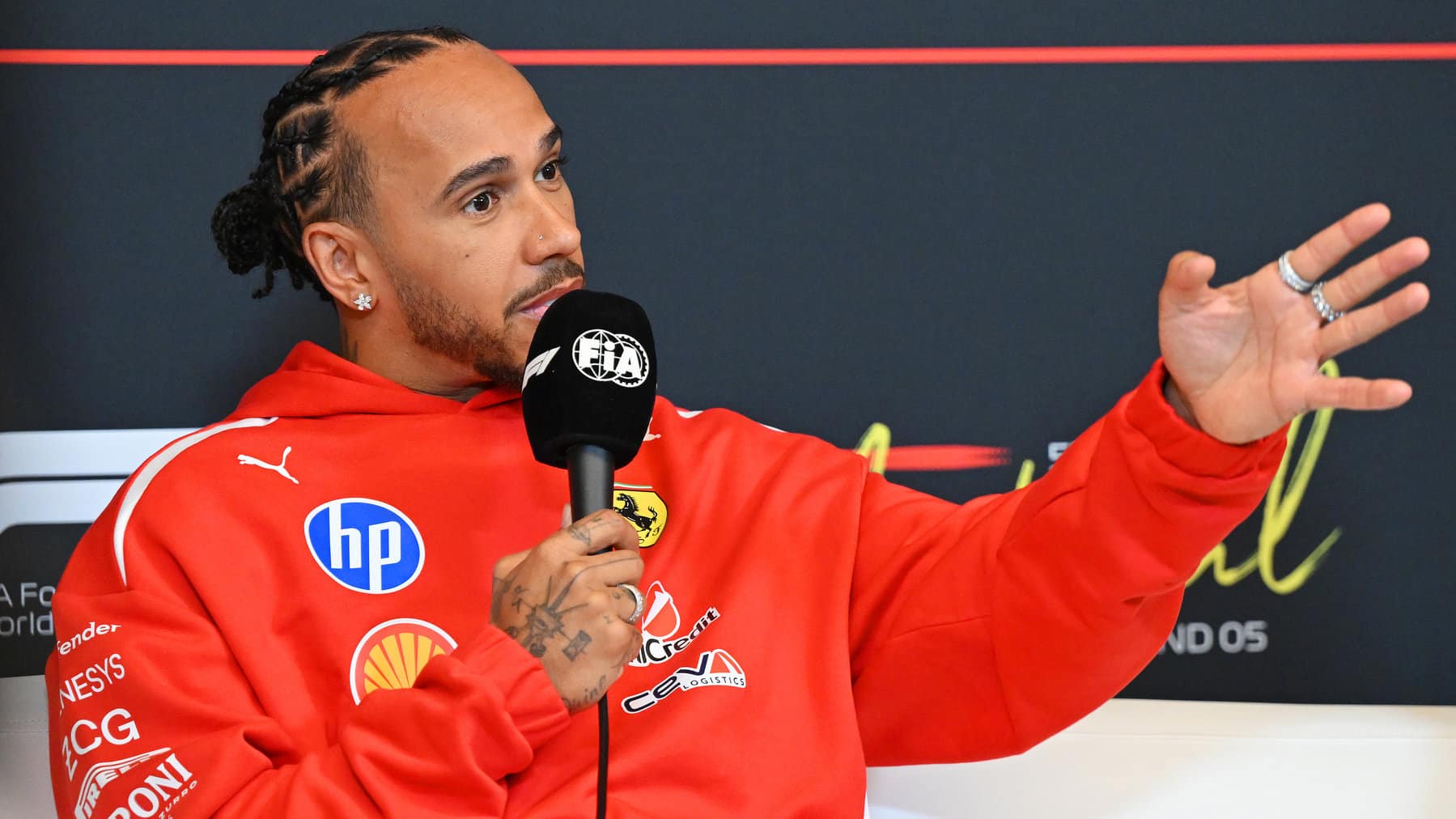
Has Lewis Hamilton chosen exactly the wrong moment to disregard the Ferrari simulator?
As we come into the Montreal weekend, he is at an interesting point in the season. Firstly, he dismissed talk that he will soon announce his retirement, effective from the end of the year: “No. I’m going to be here for quite some time, so get used to it. There’s a lot of people that are trying to retire me and that’s not even on my thoughts. I’m already thinking of what will be next, planning for the next five years. But yeah, still plan to be here for some time.”
Secondly, he has decided not to use the simulator to prepare for the weekend. “Since last year I’ve used it every week and more often than not I felt you do all the work on the sim, you find a set-up that you’re comfortable with, you get to the track and everything is opposite. So, then you’re undoing the things you’ve learned, some of the ways you’ve approached the corners you have to shift and adjust, set-up that you felt that was good on the simulator is not the same at the track. Sometimes it is, and so it’s kind of hit and miss. So, I just decided for this one, I’m just going to sit it out and focus more on the data.”
Montreal has historically been a special track for Hamilton, even as someone who has won at almost every venue. Beyond just the fact that it was where he won a grand prix for the first time, 19 years ago, the circuit’s emphasis on heavy braking into slow corners between the walls was for much of his career a perfect fit with his particular late-braking skills.
An array of very fast team-mates were unable to get close to him in qualifying here (see below) until George Russell outperformed him here in ’24. Sixteen times in 18 years, he’s been faster around here than whoever was alongside him – which is quite some achievement.
Year
Grid
vs team-mate
Note
2007
P1
+0.4s vs Alonso
First Canadian GP pole
2008
P1
+0.5s vs Kovalainen
Kubica P2, over 1sec back
2010
P1
+0.4s vs Button
2011
P5
+0.3s vs Button
2012
P2
+0.3s vs Button
2013
P2
+0.5s vs Rosberg
Wet qualifying
2014
P2
−0.1s vs Rosberg
First time outqualified at Montreal in F1
2015
P1
+0.3s vs Rosberg
2016
P1
+0.04s vs Rosberg
2017
P1
+0.6s vs Bottas
2018
P3
−0.1s vs Bottas
Dead bird in brake duct explained Hamilton’s locking issue
2019
P2
+0.6s vs Bottas
2022
P4
+faster vs Russell
Russell used unsuitable slicks on damp track
2023
P5
+0.25s vs Russell
Wet qualifying
2024
P7
−0.28s vs Russell
Russell on pole
2025
P5
+0.15s vs Leclerc
Faster than compromised Leclerc
But so far this season – just as in ’25 – he is struggling against the searing pace of team Ferrari mate Charles Leclerc.
In fact, the first part of his season has looked quite similar to that of last year – quicker than Leclerc in China, slightly slower everywhere else. So coming to his special place of Montreal – though he was only quicker here than Leclerc last year after the latter hit traffic at the end of his lap – and ditching the misleading suggestions of the simulator, it will feel particularly important to Lewis to halt that pattern.
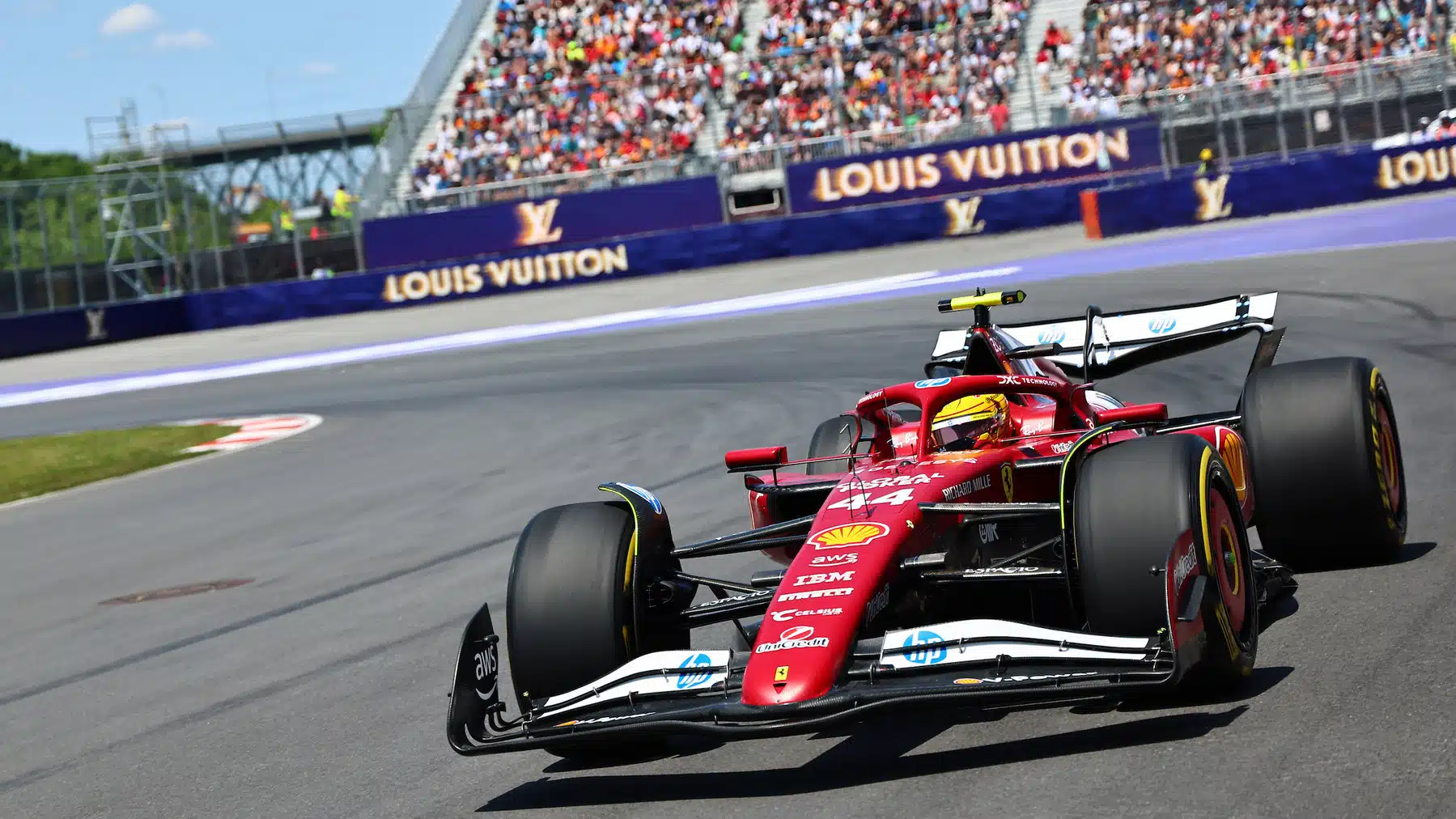
Hamilton has always done well in Canada
But there’s a potential complication to it all, to do with this generation of car. The Circuit Gilles Villeneuve has traditionally been about late braking, and for a big chunk of the lap with this generation of car, that’s no longer the case. Brembo estimates that the braking distance for the Turn 10 hairpin will be almost double that of last year, for example. Because of the unusual track layout, it’s all about not filling the battery too early in the lap – to have the full electrical battery deployment for as far down the long straight as possible.
The regulations only permit so much energy to be harvested each lap (6Mj in qualifying here). That lower limit was part of the changes made after Japan to make it less advantageous to back off through key corners, as there would be less lap time reward on the straight because the deployment would not last as long. However, it potentially has the opposite effect around this track because of the layout.