
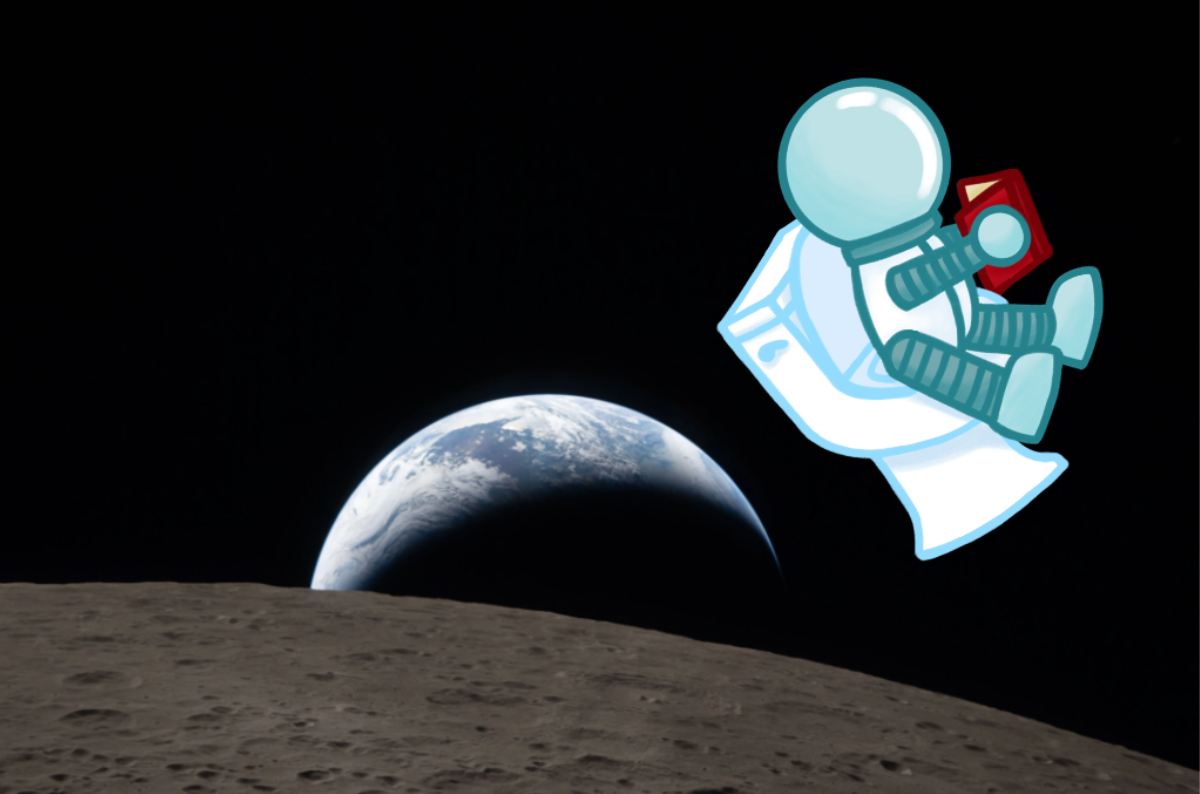
NASA’s Artemis II mission carried a crew of four astronauts whose job was to make sure the spacecraft’s systems operated as designed in the harsh environment of deep space. The mission set many records, including the farthest human spaceflight, the first astronaut of color, the first woman astronaut, and the first non-American astronaut on a lunar spaceflight, and the first…toilet?
The Universal Waste Management System, or UWMS, is a $30 million 3D-printed toilet designed to operate in microgravity. Like one on the International Space Station (ISS), the unit is roughly the size of a bean bag chair and has handholds and foot restraints to keep astronauts from floating away while taking care of business. It uses an airflow similar to a vacuum to safely suction human waste away.
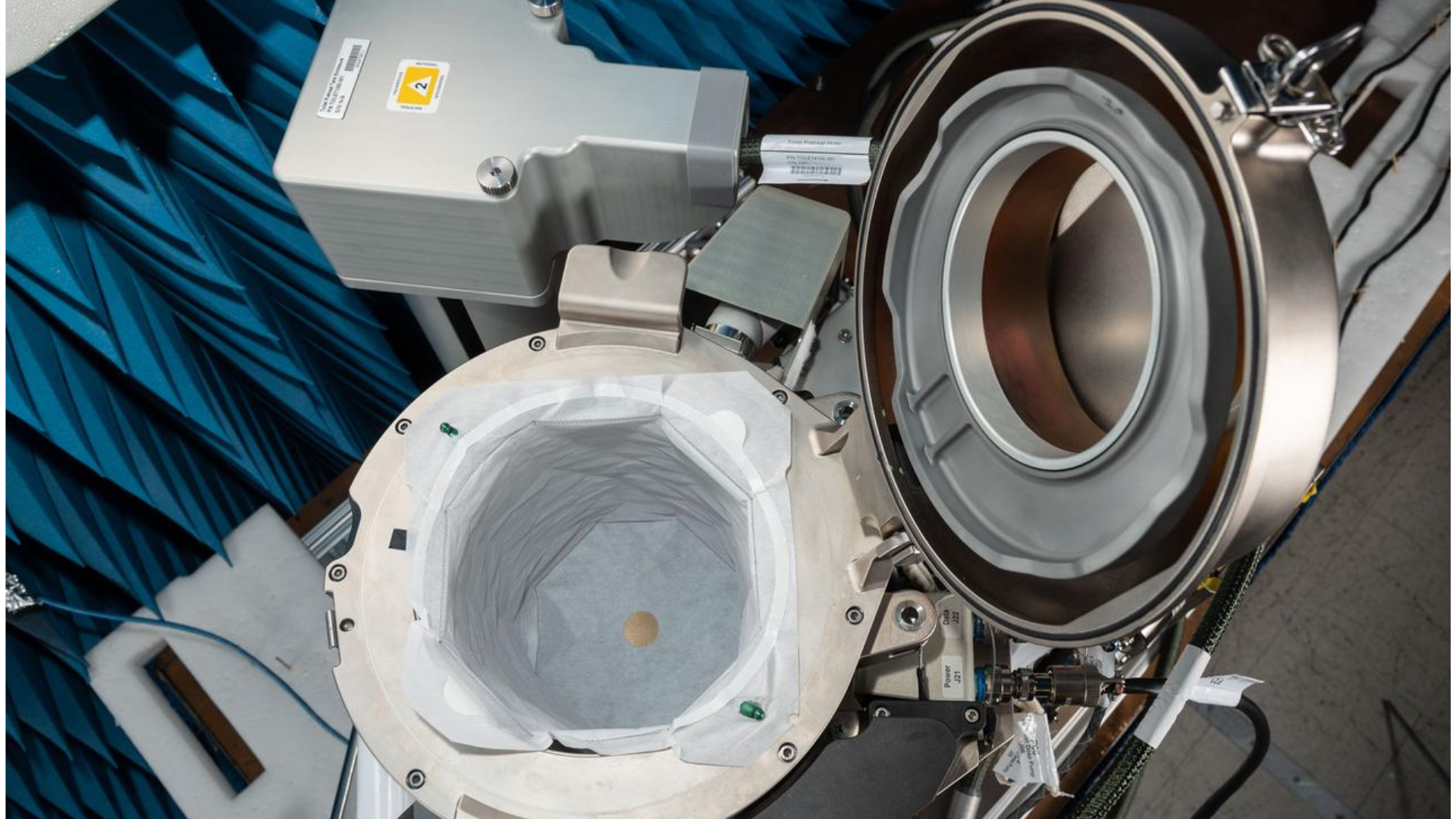 This is the ISS Universal Waste Management System. It served as the model for the unit on Orion. What changes would you make? Credit: NASA/James Blair
“Houston, we have a problem.”
Imagine what would happen if there were no toilet in a small space occupied by four astronauts traveling at approximately 25,000 miles/hr (40,233 km/hr). Shortly after the launch, the high-tech UWMS stopped working. Thankfully, the crew was up to the task.
Mission specialist and engineer Christina Koch explained, “I am the space plumber. I am proud to call myself the space plumber […] and it’s the most important piece of equipment on board.” Soon, the problems were resolved, and UWMS was working again.
Houston’s response? “Go for toilet.”
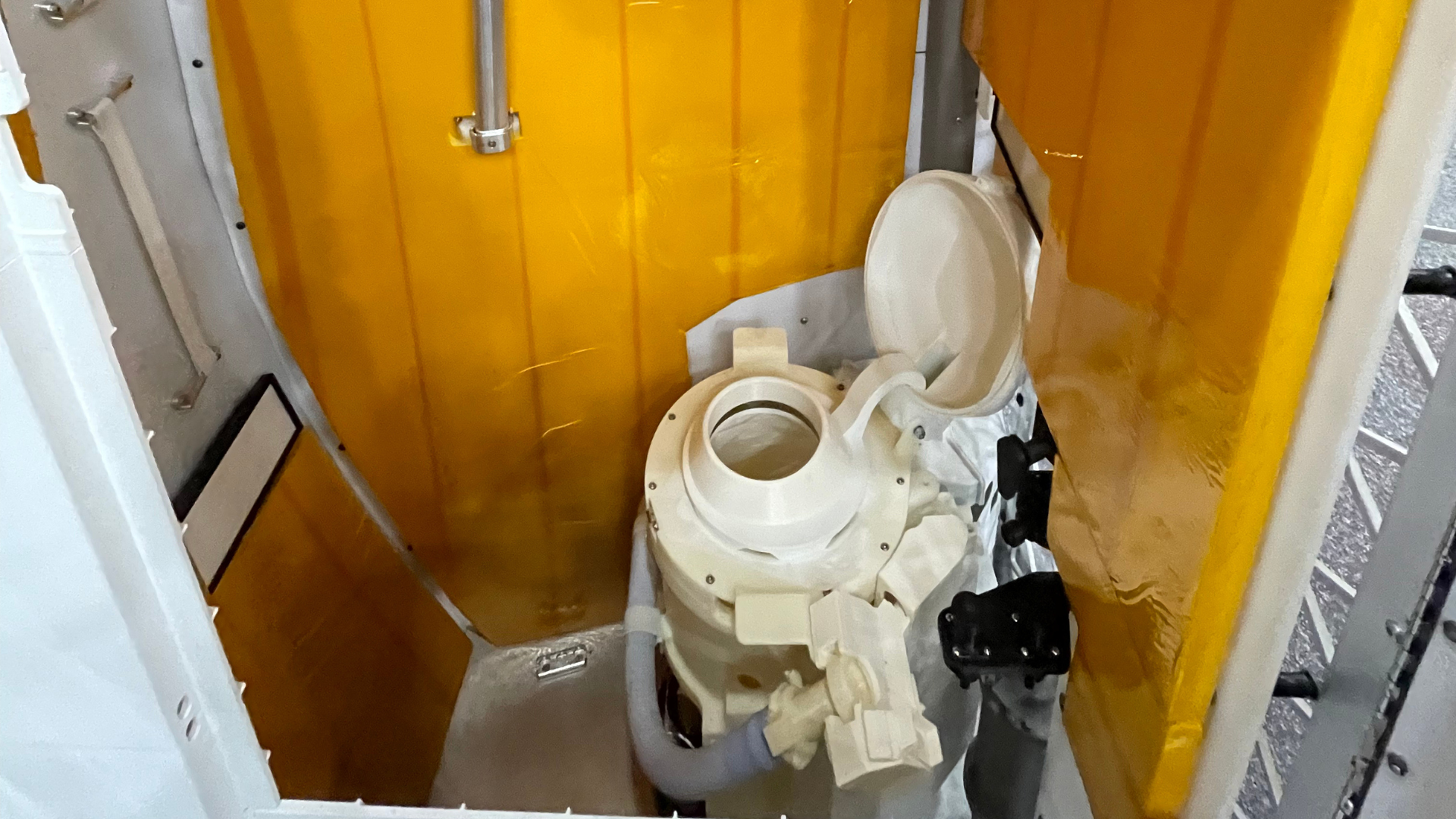 A mock up of Orion’s UWMS that astronauts trained with at NASA’s Johnson Space Center. When used on the Artemis mission, urine will be released into space and solid waste is stored for disposal when the spacecraft returns to Earth. Credit: Canadian Space Agency
You might wonder, if this was the first time a mobile spacecraft had a toilet, how did earlier astronauts deal with their waste? Apollo lunar missions from 1969 to 1972 left ninety-six bags of waste—filled with urine (pee), feces (poop), and vomit (puke)—on the moon. And the bags remain there today! While that might sound gross, those bags represent a fascinating long-term science experiment on how microbes survive zero gravity and the brutal lunar environment. A future Artemis mission might even bring them back for study.