

Listen to this article
Estimated 5 minutes
The audio version of this article is generated by AI-based technology. Mispronunciations can occur. We are working with our partners to continually review and improve the results.
The number of species at risk using the Greenbelt as a “safe haven” has jumped by nearly 70 per cent over the past two decades, a new report says as opposition critics press the government to start a long-delayed review and enhance the protected zone.
The new study from the environmental charity Ontario Nature looks at available government data on species at risk in 2004, a year before the protected area was created by the province. The study traces the progress of birds, reptiles, amphibians, mammals and plants that were vulnerable at that time to present day, and finds that the number of species at risk in the Greenbelt has jumped from 72 to 121.
“It reflects … the growing importance of the Greenbelt for vital habitats, particularly in southern Ontario,” said Tony Morris, conservation policy and campaigns director at Ontario Nature.
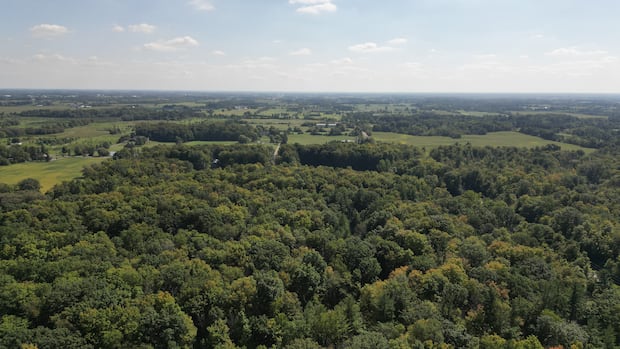
The Greenbelt is an over 800,000-hectare ecologically sensitive zone around the Greater Golden Horseshoe, which was defined in 2005. It provides environmental protection and specifies where development should not occur.
WATCH | Ford government delays mandatory Greenbelt review:
Ford government delays mandatory Greenbelt review
Critics are calling on the Ford government to launch a months-delayed review of the Greenbelt. The mandatory review is required by law and was supposed to start in FebruarySpecies represent 42% of province’s species at risk
The report says the 121 vulnerable species that inhabit the Greenbelt represent 42 per cent of the total species at risk in the province.
They include animals like the the redside dace fish and the Jefferson salamander. Both are struggling because of habitat loss and harms caused by pollution, the report notes.
“There’s increasing fragmentation from roads, cities, and other infrastructure,” Morris said. “A lot of species need large areas, and they need intact areas, to move from one habitat to another, and as soon as you start carving that up and leaving small patches, it leads to declines.”
The report also includes eight recommendations aimed at strengthening the protected zone. Ontario Nature would like to see the province expand the Greenbelt boundaries, enhance protections for species at risk and develop strategies to enhance degraded habitats.
The charity is asking that the recommendations be included in a mandatory government review of the Greenbelt legislation, which is more than a year and a half overdue.
“Ontarians have demonstrated how important the Greenbelt is to them,” Morris said. “We continue to encourage this government to recognize the importance and the value of the Greenbelt and address the gaps in how it currently functions as a plan.”
The mandatory review — which must be completed by law every decade — was delayed by the snap election called by Premier Doug Ford in January 2025.
Key Greenbelt advisory body remains inactive
It requires the government to hear from its own Greenbelt council, a body of 10 representatives it appoints to regularly meet and provide advice to the minister on land use planning related to the zone.
But the term of the last member of that council expired last summer, and the Ford government has not appointed new members to conduct the review. Municipal Affairs Minister Rob Flack has been largely silent on the file since taking on the portfolio last spring.
He said last December that the government still intended to conduct the study, but did not provide any specifics.
“The Greenbelt is enshrined in legislation for generations to come,” Flack said at the time.
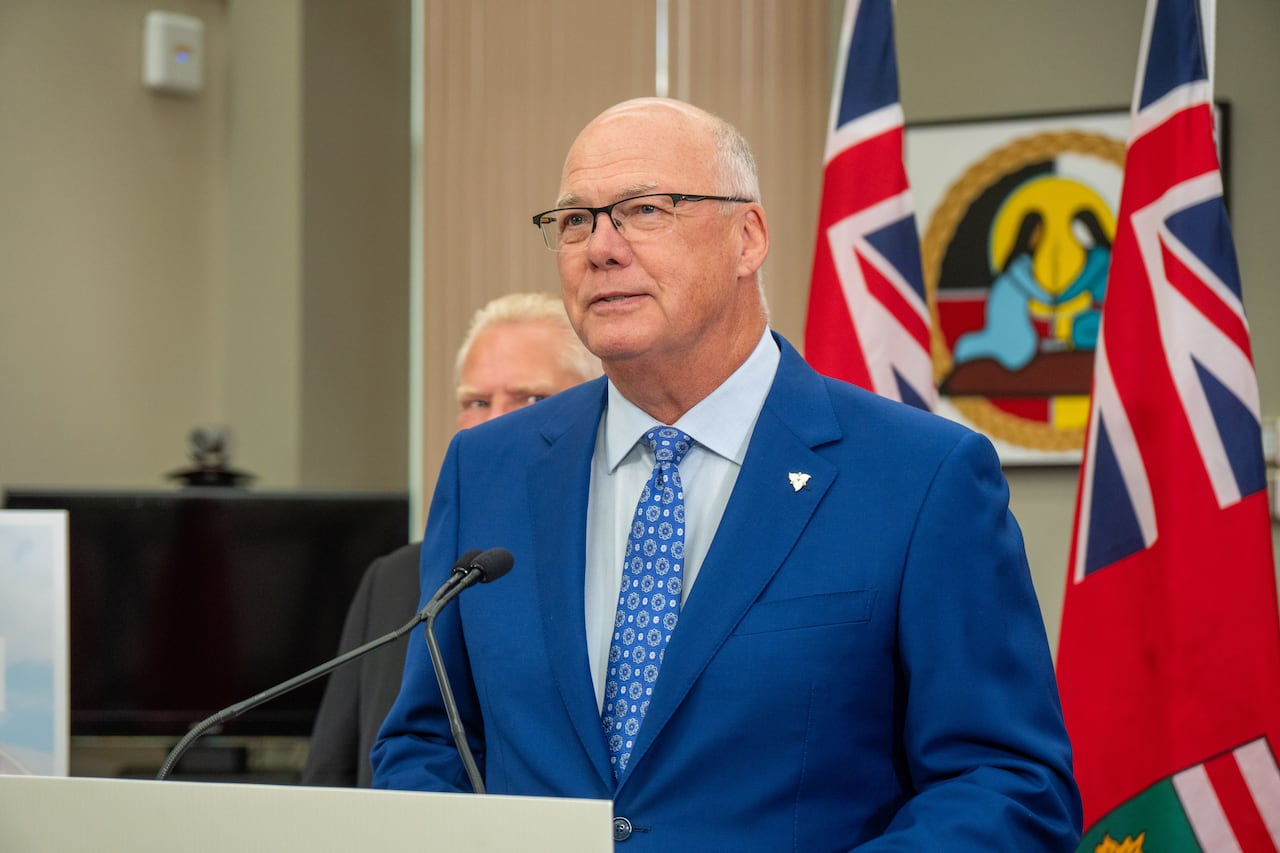 Municipal Affairs Minister Rob Flack said last December that a mandatory review of the Greenbelt would move ahead. But he provided no details since and the study has not moved forward. (Sarah Law/CBC)
His office did not respond to a request for comment on Friday.
The Greenbelt has been the subject of scandal for the Ford government since 2022, when it announced it would swap 15 pieces of land from the protected area and open them up for development. Reports from the auditor general and integrity commissioner found that the process to select lands was rushed and favoured certain developers.
The property owners with land removed from the Greenbelt stood to see their land value rise by $8.3 billion, the auditor general found in her own Greenbelt investigation.
Ford reversed course after heated public outcry, and the RCMP continues to investigate the matter.
Environmentalists and opposition critics have been calling on the government to move forward with the review and state definitively that no lands will be removed from the zone.
Green Party Leader Mike Schreiner said the scandal surrounding the Greenbelt is the reason why the government has not pushed ahead with the review.
“I think the premier’s embarrassed … so they don’t want to touch anything to do with the Greenbelt,” he said. “Meanwhile, the importance of the Greenbelt goes on, regardless of what the government does.”
NDP environment critic Peter Tabuns said the delay on the mandatory review forces groups like Ontario Nature to fill the void left by the government.
“I’m glad that advocates are speaking up, they’re pointing out what needs to be done,” he said. “It gives others the background, the knowledge to demand things that will actually be effective and useful.”
But he slammed the Progressive Conservatives for inaction on the file.
“It’s really disappointing, and it’s upsetting that the government is so disinterested in protecting the world around us,” he added.