
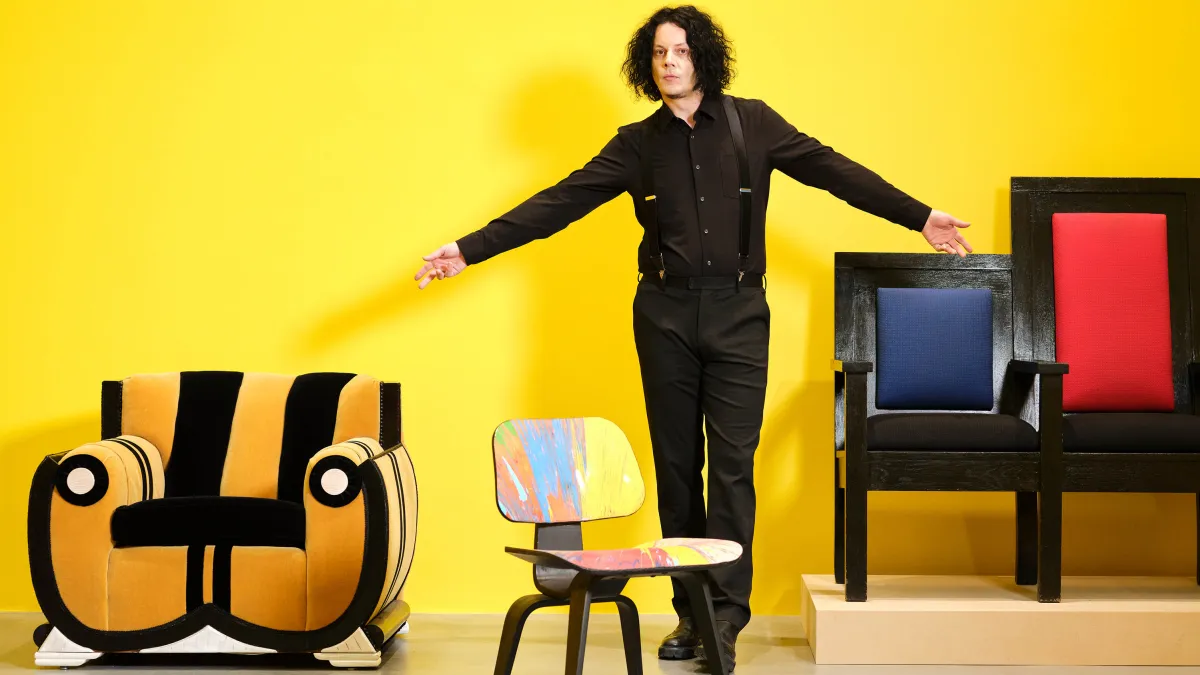
The former White Stripes rock star Jack White is aiming for the top all over again in his alternative career as a furniture-maker — with designs on the most famous address in the United States. The Seven Nation Army hitmaker, 50, has created a wall unit that he thinks would go well with President Trump’s makeover of the White House. It’s covered in gold trimmings, matching the new look of the Oval Office. “I would be overjoyed if it ended up there,” he says, laughing. “I used the exact same gold paint that Trump did, bought from the Home Depot website. He says it’s real gold, but it’s not.”
The decorative panel, which was made out of a pallet that White salvaged from a skip, is part of an exhibition of his art at the London gallery of his friend Damien Hirst. “I showed Damien some of my work and he said, ‘When’s your next exhibition?’ I said, ‘I’ve never had one. I’ve never been asked.’”
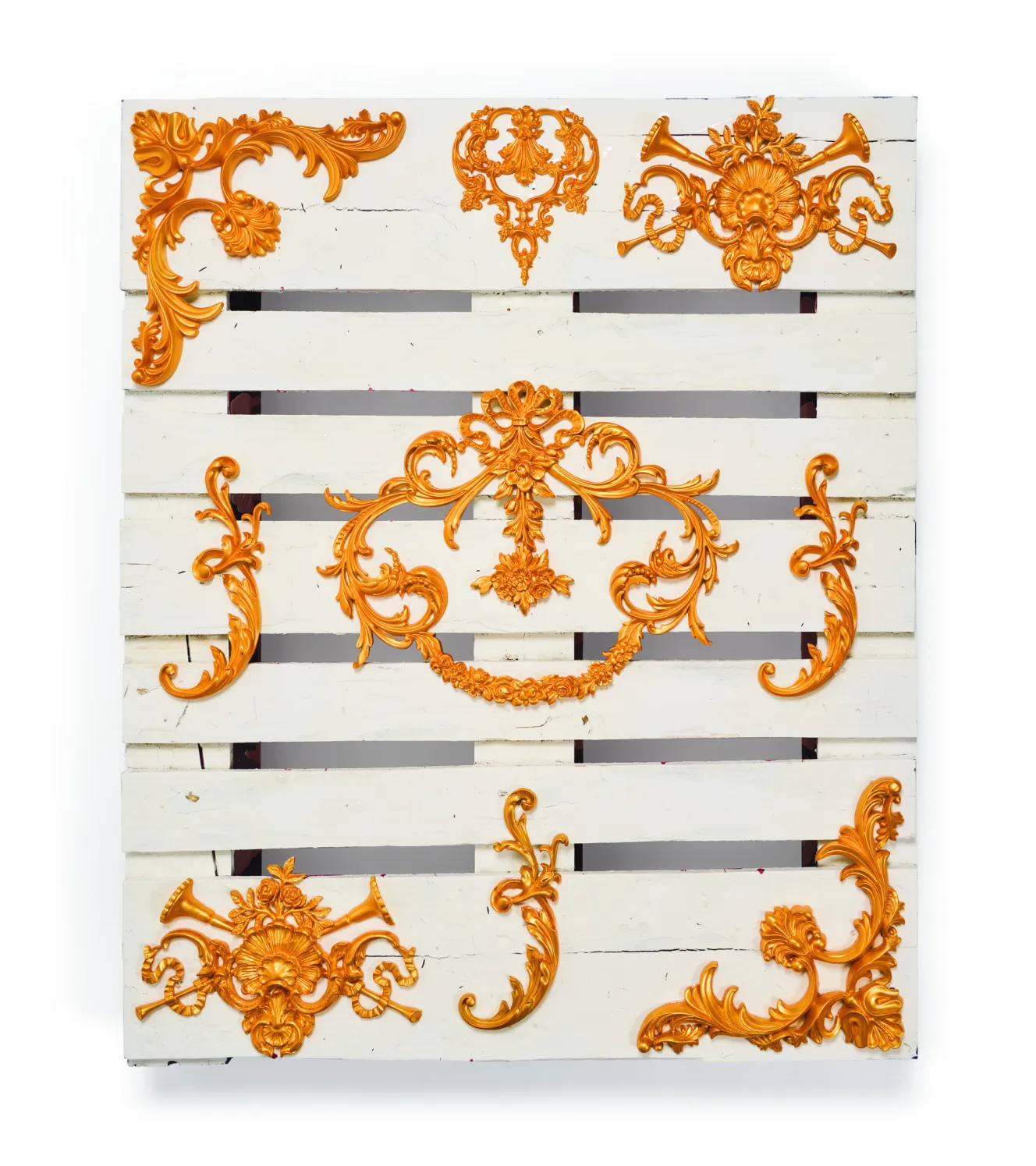 The Presidential Model by Jack White
Well, he has now. For White, making things almost came before making music. His dad had a business repairing transistor radios in Detroit and the young Jack used to watch him at work, fascinated. One of the pieces in his show is a collage of his dad’s old tools, which he rescued after he died. In his twenties White went to work in the furniture trade, learning to gut old sofas before restoring them. He began making his own, often yellow or black, and would sometimes leave a poem inside them or, as his recording career took off, a 7in single.
The White Stripes were a duo: White and his wife, Meg, although she was initially billed as his sister — they thought it made them more interesting. They made six studio albums and their best-known song, Seven Nation Army (adopted by Jeremy Corbyn supporters), has more than 1.5 billion hits on Spotify.
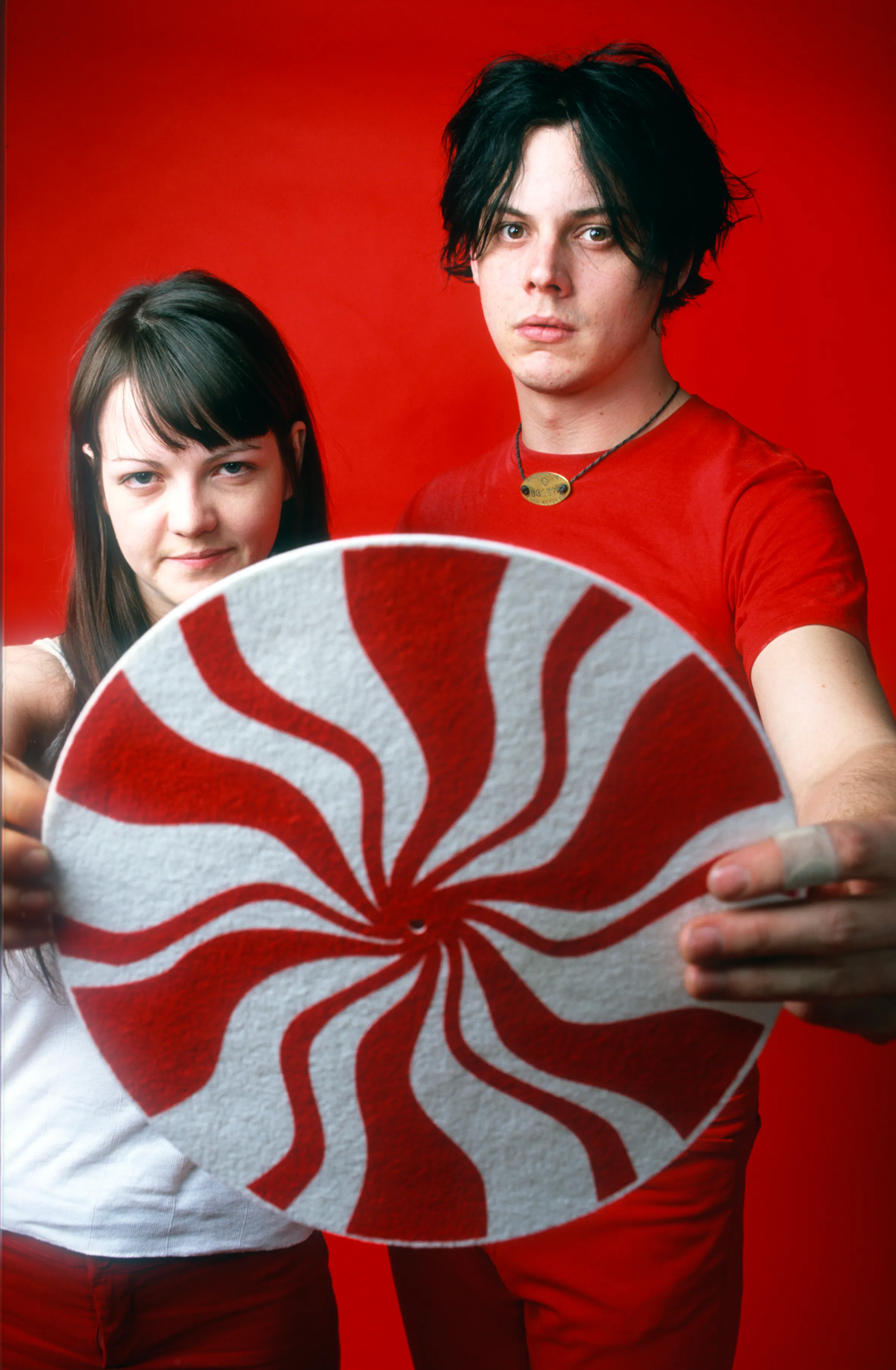 With Meg White of The White Stripes in 2001Gie Knaeps/Getty Images
The couple divorced in 2000 and the band folded 11 years later. He is still recording and performing, has 12 Grammys and he and Meg are on good terms (she was maid of honour when he married his now ex-wife Karen Elson in 2005). But when I ask him what you might call “the Oasis question” — could his mothballed rock outfit with a family connection ever get back together? — he doesn’t quite say no. “I highly doubt it. I think it’s just not on the cards,” he says, preferring to talk about his art.
As well as his art studio, he has a music studio and successful record shop at home in Nashville, where he lives with Olivia Jean, a fellow musician whom he married last year. Before that he dated the actress Renée Zellweger, among others. Did he make a sofa for the Bridget Jones star? “We only dated for a few months.” She didn’t really deserve a sofa, then? “It’s a one-year minimum, yeah,” White says, laughing.
He describes what he makes as “hardware store art” because it draws on his experience in the furniture business. It’s also playful and eccentric. One exhibit is a bench reclaimed from a Masonic lodge. “I call it the sonic bench,” he says, showing me where you can plug an instrument into the base of the seat. In the same gallery is an armchair that White restored to see if he could remove a lingering odour of smoke. He installed a potpourri of cedarwood chips into the arms so that the chair emits a fragrant bouquet as you sit in it. In a nod to one of the great names in 20th-century craftsmanship, the show includes a 1950s Eames chair, designed by Charles and Ray Eames. This piece was a collaboration with Hirst, who spray-painted the leather seat before White cut it for size and fitted it. “I don’t think I’ve ever cut a piece of leather with more care,” White says.
He’s often a one-man band in the workshop. Was that an eye-opener for the former Young British Artist Hirst, who has a reputation for delegating the donkey work to smocked assistants?
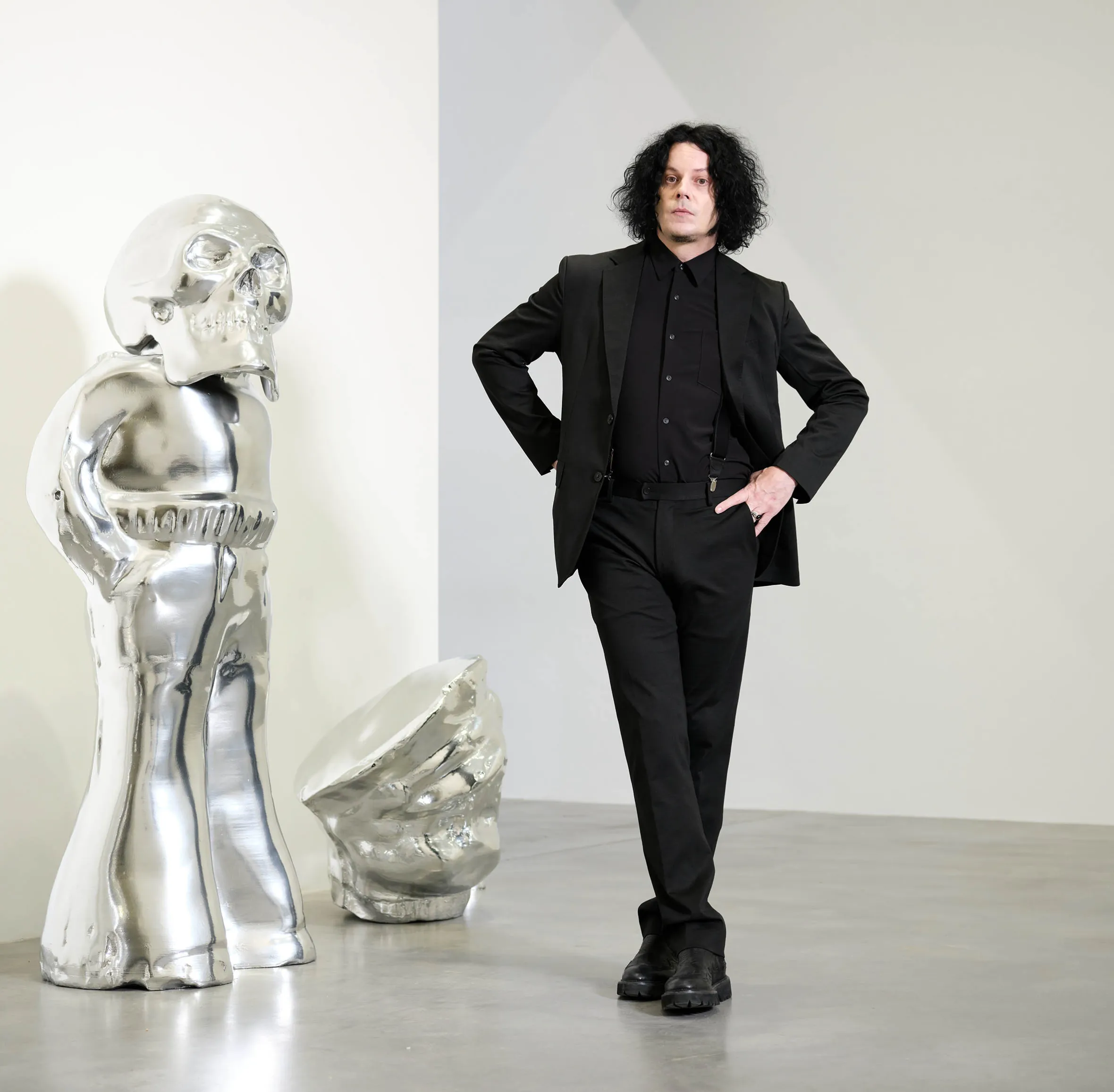 “It’s therapeutic working with power tools”, says WhiteMichael Leckie
“He’s shown me, as a lot of other modern artists have from Andy Warhol onward, that sometimes you do everything yourself, and sometimes it’s the idea and you’re the director of the piece,” White says in defence of his host. “Does it matter if Warhol actually did the silk-screening himself? Nobody would have thought to do Elvis in the style that he did. You realise that everything is a collaborative effort. Even if I build everything from scratch, I still need these guys at this gallery to help me show it.”
The youngest of ten children, White was brought up in Detroit, which was once a booming car town and the home of Motown Records. “Diana Ross and the Supremes went to my high school, but by the time I was growing up I knew Motown hits because they used them in commercials. Detroit used to be the richest city in America, but where we lived had become a rough neighbourhood. Me and Meg played our first show at a local drag queen bar. You could buy a house for $100 there not long ago.”
Appropriately for a future pop star, White used to pay his studio rent with songs. Perhaps he enjoys the peace of making art by himself? In his late twenties, he was in a barroom brawl with Jason Stollsteimer of the band the Von Bondies, after which he was ordered to attend anger management classes and pay a £275 fine.
“It’s therapeutic because when you’re working with power tools, you’re feeling all kinds of different emotions. It’s nice to have this opportunity to get involved in this art form because it’s literally hands-on: it’s sawblades and sanders and epoxy-pouring.”
White goes on, “It makes me feel, like, ‘Oh, I wish people didn’t know me at all from anything else right now. I wish I could wipe the slate clean just for this show.’ It’d be nice.”
The singer has a love of cornball Americana and collects carnival figurines. He’s made his own versions of them, including a musician dubbed Ukelele Joe, using a 3-D printer. Marshall, whose amplifiers are one of the most venerated bits of kit in rock’n’roll, entrusted White with making a new design, and he has invited fellow artists to decorate his prototypes.
But as with everything else in pop, the Beatles got there first. Ringo Starr had his own furniture business in the Sixties, are all other with the designer Robin Cruikshank called ROR. I show White a picture of the drummer in the Blue Peter studio in 1971, proudly demonstrating his coffee table: a length of wood resting on a pair of repurposed Rolls-Royce radiators.
“Ringo was at my house not too long ago. It’s funny because me and him talk, but he never brought that up. He’s being humble.”
Does the former White Stripe have a preference for music or art? He’s a Jack of all trades. He says, “I’ve never felt that I can do one thing very, very well. I’m not the greatest carpenter, but I do it a bit; I’m not the greatest musician, but I can do it a bit. I think I exist in the punk realm, where it’s better to not be perfect at something. It’s more visceral and more emotional when it’s raw. The rawness is where I get a great feeling.”
Jack White: These Thoughts May Disappear is at Newport Street Gallery, London SE11, until Sep 13, Tue–Sun, admission free
Frank Sinatra
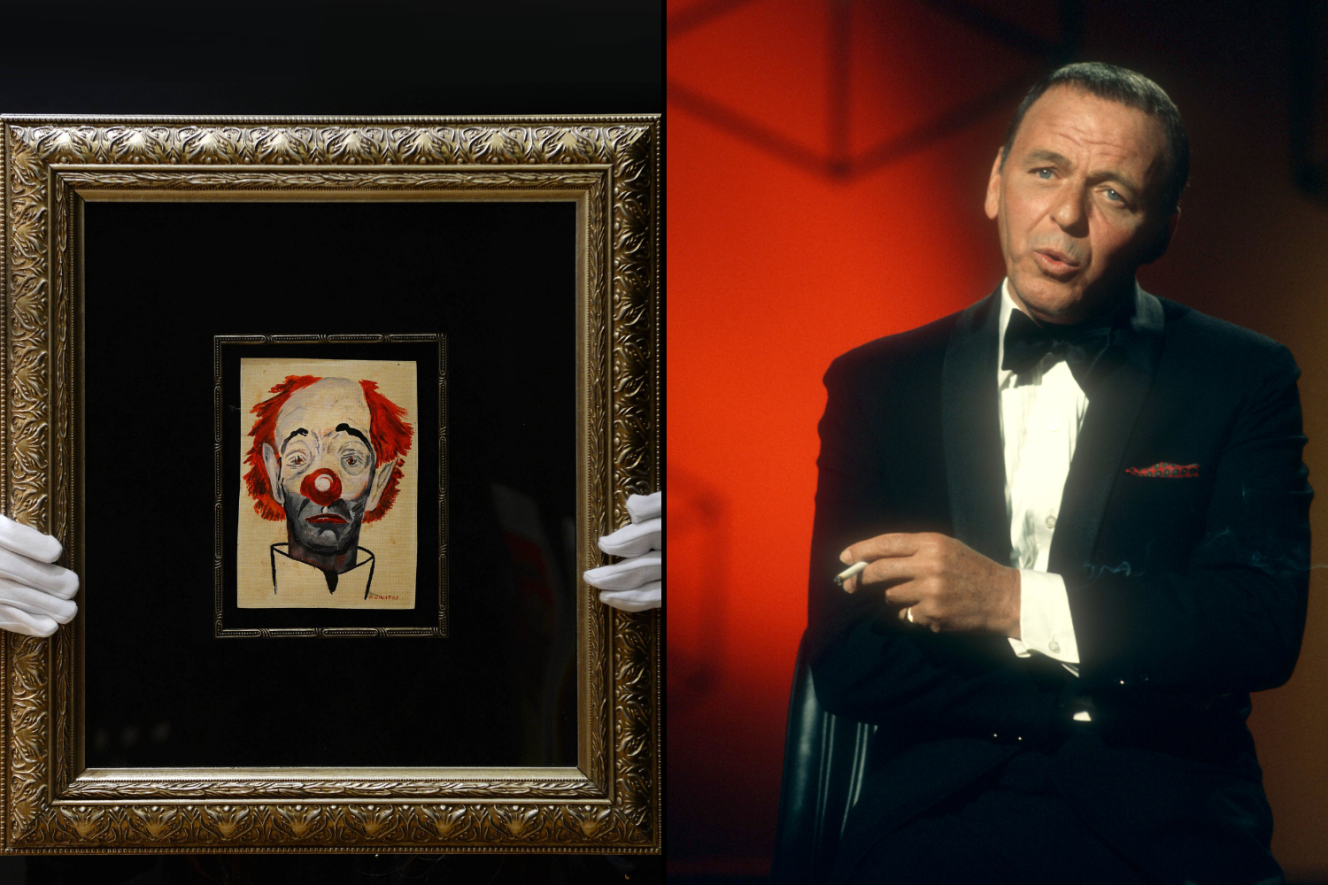 Frank Sinatra in 1968 and his Self-portrait as a Sad Clown Andy Rain/EPA/Shutterstock
Sinatra turned out to be a surprisingly nifty painter. His taste for abstraction — bold patterns, floating rectangles, brightly coloured swirls — seemed at odds with his conservative image. The clowns he liked to paint have a wider range of moods than most of the miserable clowns in art.
Bob Dylan
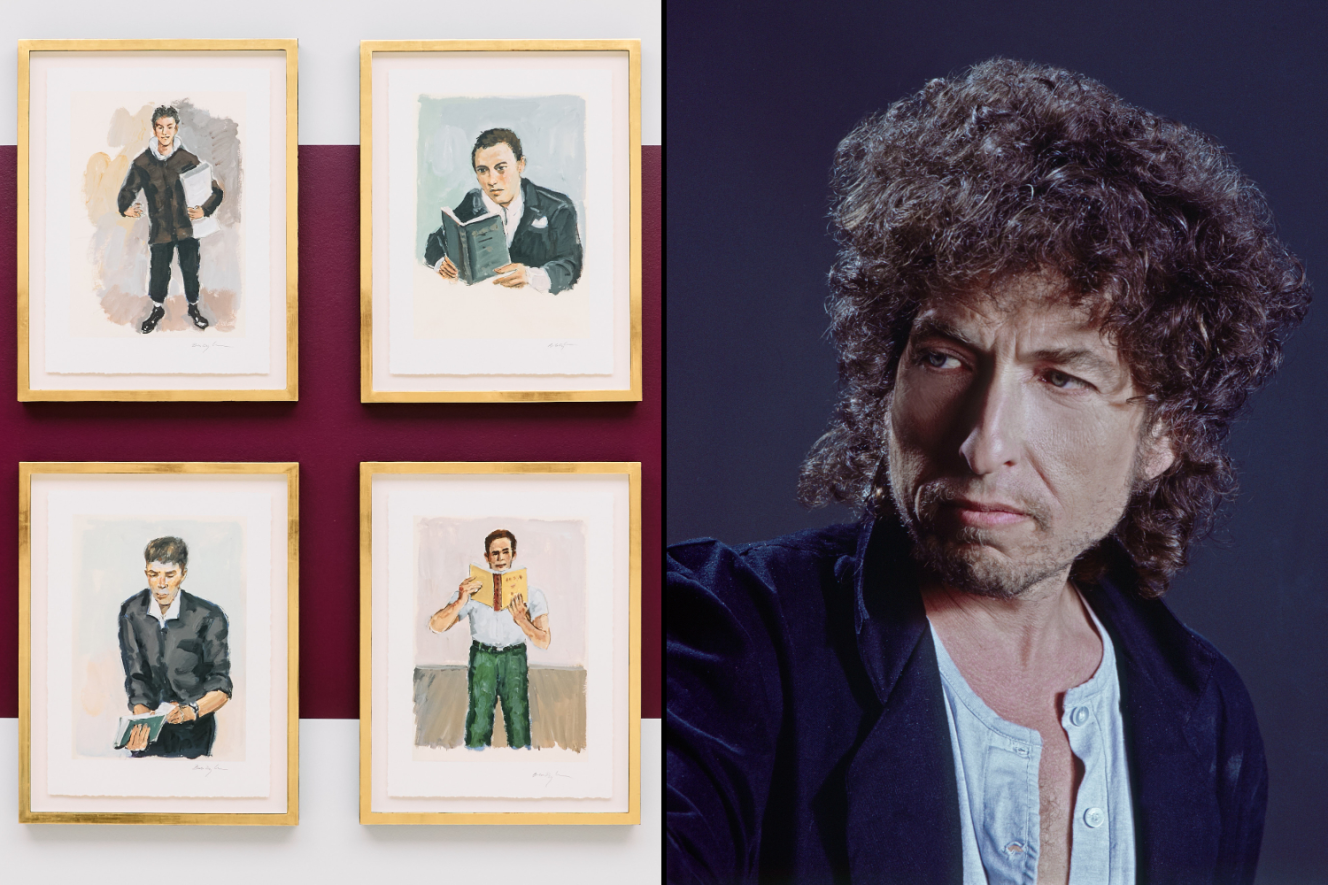 Bob Dylan’s style is a pared-down neo-impressionism
Among the pop stars who paint, Dylan is probably the most exhibited. His style is a pared-down neo-impressionism (landscapes, bar scenes, portraits) with a taste for American ennui. Unfortunately, what works in his music — repetition, loneliness, droning — transfers to art as a lack of imagination.
Chrissie Hynde
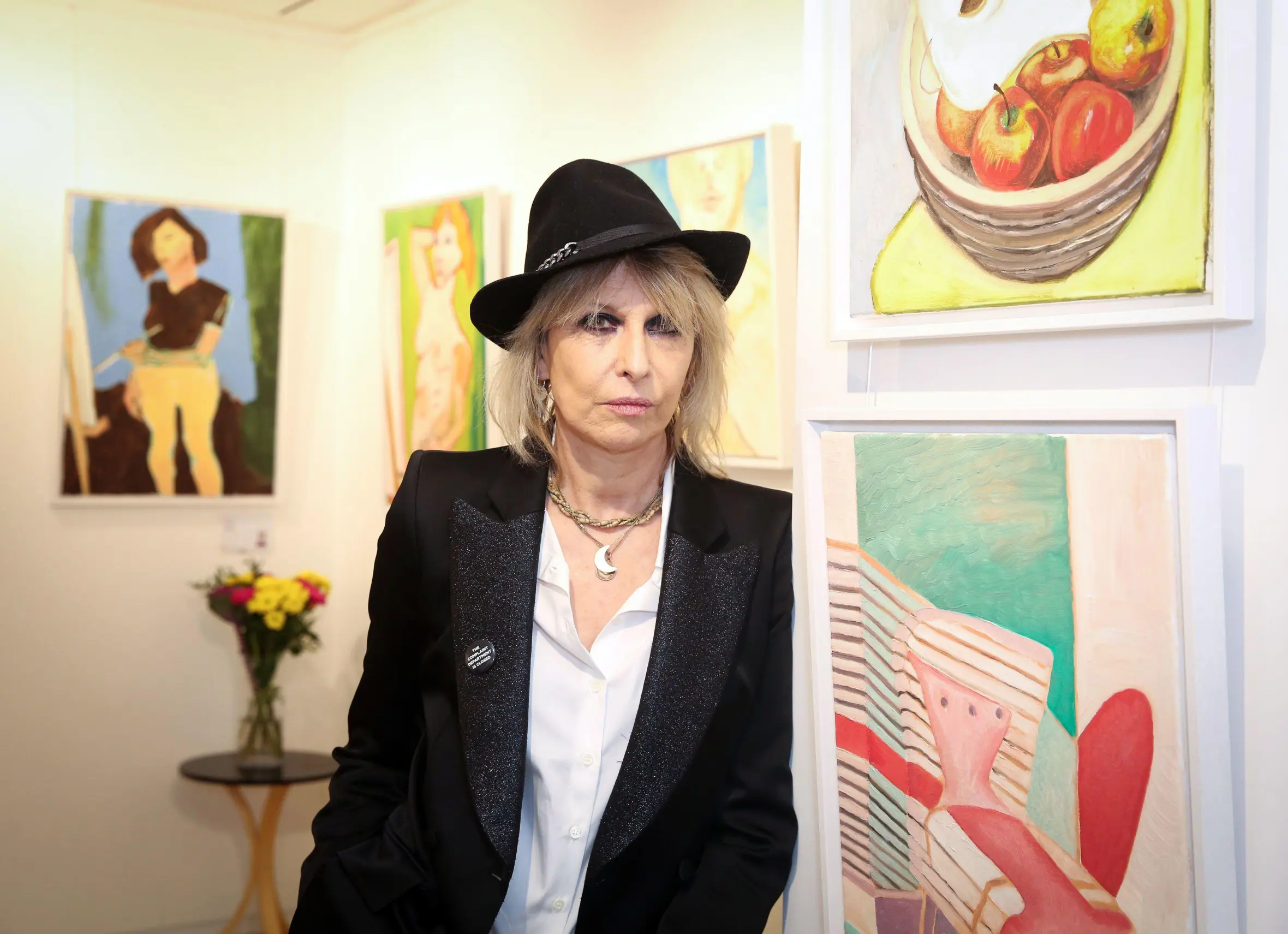 Chrissie Hynde’s book Adding The Blue features nearly 200 of her original artworksAlamy
Hynde’s paintings look as if they were done to cheer her up while she cooks. Not a hint of rock’n’roll disturbs the happy domesticity of her vases of flowers and wonky tabletops filled with still-lifes. Massively influenced by Picasso and co, she’s a century behind in her moods and unexpectedly carefree.
Ronnie Wood
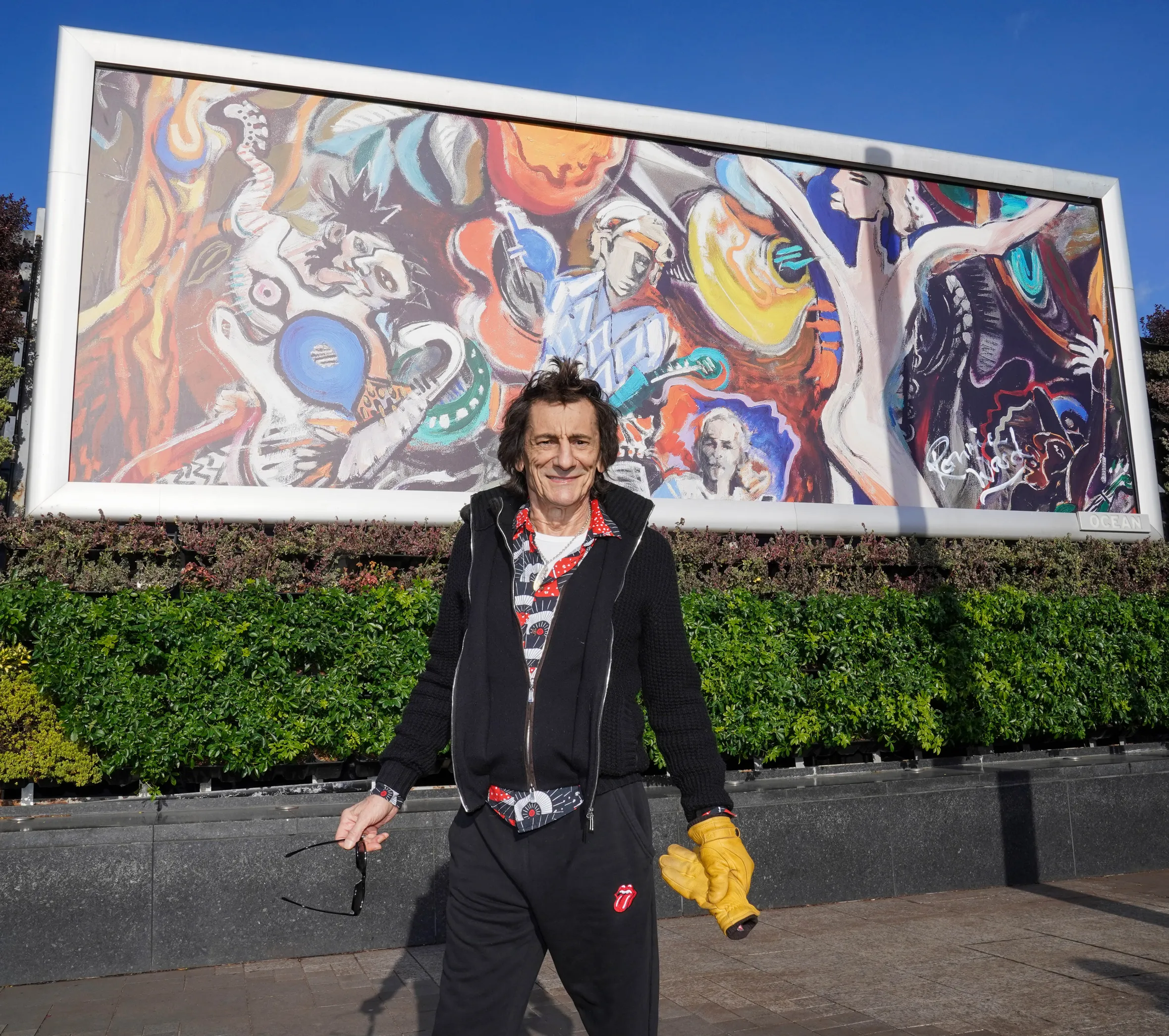 Ronnie Wood and a London billboard of one of his paintings of The Rolling Stones Paul Edwards
Although he studied at Ealing College of Art, Wood’s real education as an artist came, you feel, from looking adoringly at tour posters. Perhaps the most predictable of the painting musicians, and certainly the most prolific, he comes across in his art as a fan of the Rolling Stones rather than a key member of the group.
Shane MacGowan
MacGowan was that rarest of musical hybrids: an artist whose pictures feel exactly like his music. Just as the songs pour out in punkish torrents, so the art was hastily scribbled on scraps of paper, hotel receipts and aeroplane sick bags. The results are full of energy and zero pretence.
What exhibitions have you enjoyed recently? Let us know in the comments below