
On May 6, the Trump White House released its 2026 United States Counterterrorism Strategy that found “legacy Islamist terrorists,” narcoterrorists, and violent extremists as the primary threats to their homeland. Now with the FIFA World Cup kicking off June 11 across North America, the document lands as the U.S., Canada, and Mexico are in the final weeks of preparing to host the largest sporting event on earth.
The threat level has increased considerably in recent months. In March, LBC exclusively reported that ISIS had been actively encouraging followers to target the 2026 World Cup, calling for mass casualty attacks. This month, Al-Qaeda released a new issue of its English-language periodical Inspire in video format, titled “Why We Call for Jihad Operations in the West,” encouraging lone wolf attacks inside Western countries. A Middle East Media Research Institute (MEMRI) analysis published last week concluded: “The risk has never been higher.”
Against that backdrop, U.S. Homeland Security Secretary Markwayne Mullin appeared on Fox Business and delivered a blunt warning. “We feel like that threat level is extremely high, especially in soft areas outside of the stadiums,” he said. “We’re going to have basically 78 Super Bowls in 11 cities.”
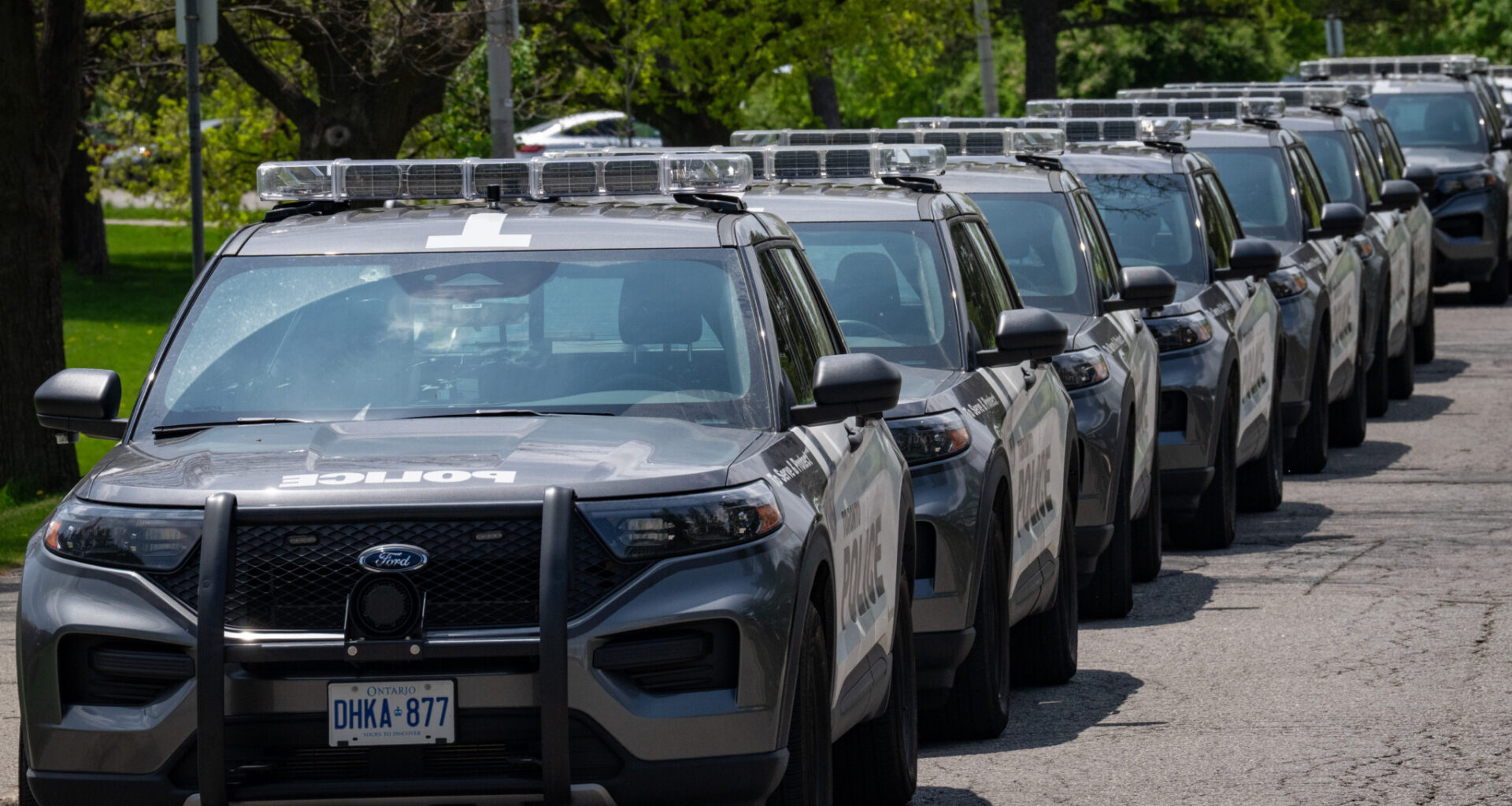
Canada is hosting 13 of those 104 games—seven at BC Place Stadium in Vancouver and six at BMO Field in Toronto, running from June 11 to July 19—and is spending accordingly. According to a report released last week by Canada’s Parliamentary Budget Officer (PBO), the total public cost of co-hosting will exceed $1 billion across all levels of government. In total, Canada is committing roughly $227.6 million in identified federal security spending to protect 13 games—$145 million transferred to host cities for security operations and $79 million directly to the RCMP, plus $3.6 million from Public Safety Canada’s existing budget. Roughly one third of Toronto’s total hosting cost—approximately $126 million—is going toward policing and security, according to Mayor Olivia Chow. These security commitments are tied to guarantees provided by federal ministers to FIFA as part of Canada’s 2018 World Cup bid, in which Canada formally pledged to enhance safety and security, including protection for internationally protected persons.
Both Toronto and Vancouver are home to some of the largest Jewish populations in the country. Toronto’s Jewish community, one of the largest in North America, has been assessed by the Centre for Israel and Jewish Affairs (CIJA) as facing a threat level 14 times higher than other minority groups. CSIS itself recently issued a warning about the severe risk of an attack targeting the Jewish community.
(CSIS did not immediately respond to The Hub‘s request for comment for this story. We will update when we receive comment.)
The Hub‘s senior correspondent Graeme Gordon interviewed Joe Adam George, a foreign policy and national security analyst with the Macdonald-Laurier Institute, to discuss what’s being done to address safety concerns surrounding the games.
George had just returned from a conference in Washington, D.C., where he posed a question to Sebastian Gorka, senior director for Counterterrorism on the White House National Security Council, about Canada’s counterterrorism capabilities. Gorka’s response was blunt: “We find it nigh impossible to work effectively with counterterrorism partners who do not believe in themselves.”

Graeme Gordon: Why are international events like the FIFA World Cup always a major target for terrorist attacks?
Joe Adam George: A couple of reasons. High-profile events like the World Cup or the Olympics offer far more opportunities to terrorist groups—to encourage lone wolf actors to conduct attacks—because firstly, it’s the optics and secondly it offers plenty of soft targets. You’re not looking at targeting the stadiums necessarily. This could be outside the stadiums, or transportation hubs, or even crowded tourist areas, which are often very vulnerable. And if an attack was successful it would help groups like ISIS or Al-Qaeda with the optics of it—to say to their followers, “See, we hit the enemy right at the heart.” That symbolic value is the whole point.
Just to clarify, specifically with regard to the FIFA World Cup: there has not been any threat identified specifically targeting the FIFA World Cup—at least not anything that even the Americans have put out. But that is obviously not to say it’s unlikely to happen, given the geopolitical conflicts across the Middle East. As far as threat risk goes, it’s most likely to be from ISIS and Al-Qaeda-inspired lone wolf actors. I would argue they are more likely to be the ones who would attempt an attack—rather than, say, an Iranian regime-backed actor.
That’s not to say it’s not possible, but Iran is one of the countries playing at the World Cup, and soccer is a big deal in Iran. Even pro-regime people love soccer. The regime targeting a tournament in which the country’s favourite sport and team are playing—that wouldn’t go down well.
Graeme Gordon: But they don’t have to attack their own team or people. It could be innocent bystanders attending the World Cup. Wouldn’t they still be interested in a moment like this?
Joe Adam George: True. The opportunities are significantly greater in an event like the World Cup. But the Iranian regime must understand that if this were an Iranian regime-directed attack, there is always a risk of sanctions that FIFA could slap on the Iranian national team.
Say if the Iranian team was progressing well in the tournament—the last thing they need is to be banned, like what happened with the Russian football team following Russia’s invasion of Ukraine. If any attack were successful and linked back to the Iranian regime, there’s a good chance FIFA might not take it well, and bans could be slapped on the Iranian soccer team from participating in other tournaments. That could also extend to the players who play for clubs in other countries.
But ISIS and Al-Qaeda—they have nothing to lose. They’re non-state actors, so for them it’s the optics that count. To say they were able to target a high-profile event would give them the mileage they’re always looking for. As we saw in the case of Bondi Beach, ISIS tried to take credit for the attack. It’s more likely from non-state actors than from a state actor, especially when it comes to ISIS and Al-Qaeda, because attacks that have largely been perpetrated by lone wolf actors have predominantly come from those two groups.
If Iran really wanted to do something, it would probably be cyber—because they have been consistently doing that. Cyber attacks don’t get the media coverage, or the pushback, that a physical attack involving people being killed would. Iran would think the blowback from a cyber attack is going to be more limited.
Graeme Gordon: Is there a heightened danger for the Jewish community as a soft target during the World Cup?
Joe Adam George: Certainly. The threat to the Jewish community is going to be a constant. And I should also mention that just like during the Vancouver Olympics in 2010, when you had protests linked to Indigenous and environmental causes, I expect to see pro-Palestinian, pro-Hamas protests possibly amplified as well, because it’s a good opportunity—again, you get global visibility, there are large crowds. I think pro-Palestinian groups would want to really milk this opportunity to make themselves visible. So there is always going to be that risk to the Jewish community of possible attacks.

Graeme Gordon: Does Vancouver and Toronto having large Jewish communities factor into that as well?
Joe Adam George: You’re going to see that largely play out in Toronto, probably. You would also need to look at which teams are playing the matches being played in Toronto. Say if the team is from the Middle East, you are obviously going to get crowds from that country, or even from neighbouring countries which support that team. You’re likely going to get pro-Palestinian crowds around those games, especially.
This was seen during the 2022 Qatar World Cup—Morocco was doing really well, and there were instances where Moroccan fans were seen targeting Jews and mocking Israel. There was a Jewish news reporters who were targeted. It got some global attention. So you’re probably going to see something similar here, depending on which matches are played and whether any teams are from the Middle East or North Africa region.
You can expect similar sentiments of Jew hatred and anti-Israel sentiment to play out around these stadiums, or even outside the stadiums, as witnessed during the last World Cup in Qatar. And you’re going to see football fans converge with pro-Palestinian elements as well. It will definitely be amplified.
Graeme Gordon: You mentioned Gorka saying they don’t have high esteem for Canada’s counterterrorism. Are we more vulnerable than the U.S. to an attack, or to some international incident, or even just riots breaking out from these protests?
Joe Adam George: Given the nature of the event and because the U.S. is the lead host, it’s only normal for the security agencies of the U.S., Canada, and Mexico to be operating together. There is definitely going to be a lot of intelligence sharing involved. As far as the threat assessment is concerned, it’s going to vary from city to city. Even in the U.S.—the threat in a city like New York is greater than in, say, Philadelphia. And similarly, I would say the risk in Toronto is greater than in Vancouver.
Graeme Gordon: Why would the threat be greater in Toronto in your estimation?
Joe Adam George: It’s just based on the events that we have seen take place—in terms of demographics, and also in recent years with the terrorist attacks and attempted attacks—as opposed to Vancouver. I’m just basing it on past metrics, which you would consider in any case in the U.S. as well. New York is more vulnerable than Washington, D.C.
Graeme Gordon: How vulnerable is Canada to a lone wolf attack?
Joe Adam George: The risk is always there. Despite the geopolitical events in the Middle East, our national terrorism threat level still remains at medium—indicating that a violent attack could occur—and hasn’t changed since 2014. The risk of a lone wolf attack is something security agencies themselves would have been assessing based on credible intelligence, including from their security partners, particularly the U.S.
My view is that with the World Cup, the lone wolf threat will definitely peak. Large-scale sporting events like the World Cup are always going to attract a heightened degree of threat, no doubt. But it’s hard to predict whether and when and where such an attack would take place. The national terrorism threat level is currently at medium, which indicates a violent act of terrorism is considered a possibility—and even though we are having a World Cup, that hasn’t changed.
This interview has been edited and condensed for clarity.
Fault Lines examines the pressures pulling Canadian society apart and the principles that can hold it together. We look beyond headlines to understand how institutions, communities, and democratic norms are fraying. Our mission is to show how better choices can repair what is broken.

Graeme Gordon is The Hub’s Senior Editor and Podcast Producer. He has worked as a journalist contributing to a variety of publications, including CBC,…
Read more
A national security expert suggests Toronto faces a higher risk of a terrorist attack during the FIFA World Cup than Vancouver. The U.S. Counterterrorism Strategy identifies Islamist terrorists, narcoterrorists, and violent extremists as primary threats. ISIS has encouraged attacks on the World Cup, and Al-Qaeda has called for lone wolf attacks in the West. U.S. Homeland Security warns of a high threat level, especially in soft areas outside stadiums. Canada is spending over $1 billion to co-host the games, with $224 million allocated to federal security. Toronto’s Jewish community faces a significantly elevated threat level. A security expert questioned Canada’s counterterrorism capabilities, receiving a blunt response about a lack of self-belief.