
Article content
Drivers passing the paddock on Meghan Clarke’s horse farm near Petrolia pull over now and then to ask a question.
Article content
It is, and his name is Simon.
“I was contacted by a friend about a zoo in Quebec that was forced to shut down,” Clarke said about how a camel came to the farm in 2024.
“I said we would take Simon and definitely give him some love and attention,” she said.
Simon was emaciated and weak when he arrived.
“He almost died,” Clarke said. “He had no hump at all and he was all skin and bones.”
Glencoe veterinarian James Foot “saved his life, pretty much” and Simon is happy and getting healthier, she said.
Originally from Toronto, Clarke and her family settled nine years ago on an 8.5-hectare (21-acre) farm primarily for horses but with room for other “critters,” she said.
When Simon came up in conversation, folks often asked if they could drop by to see him.
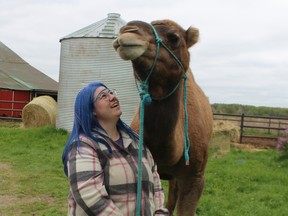 Meghan Clarke and Simon the camel at her family’s horse farm near Petrolia. (Paul Morden/The Observer) Photo by Paul Morden /The Observer
Since then, she has been booking “meet and greet” visits through social media where families and groups spend time with Simon in exchange for a donation that helps with his ongoing medical care. Clarke also started an online fundraising campaign for the same purpose.
Article content
“It also goes toward getting him a friend,” she said.
“He’s friends with my horses and everything is great that way, but they need another camel in order to thrive,” Clarke said.
Recently, Clarke attended a five-day camel clinic in the U.S. to learn more about caring for Simon. She said they also have been helped with advice from other experts.
Simon is nine years old, and camels typically live for 25 to 30 years in North America, she said.
Camels handle cold climates well, although ice is a worry, so Simon and the horses often get exercise on icy days in the farm’s indoor riding arena, Clarke said.
“If it’s super-duper cold out, I do put one of the horse blankets on him,” she said. “He doesn’t particularly love it.”
When Simon first arrived, he appeared terrified of humans but now, he’s at ease with visitors.
“I tell them all about camels, so they get to learn about them,” Clarke said. “They get to give him treats.”
Apples and carrots are Simon’s favourite at the moment, she said. Visitors have tried a few others, including a watermelon that didn’t entice him, but an offer of pitted dates was more successful.
“Everybody loves him,” she said. “He’s just a big, big teddy bear. He’s such a cuddle bug.”
Share this article in your social network