
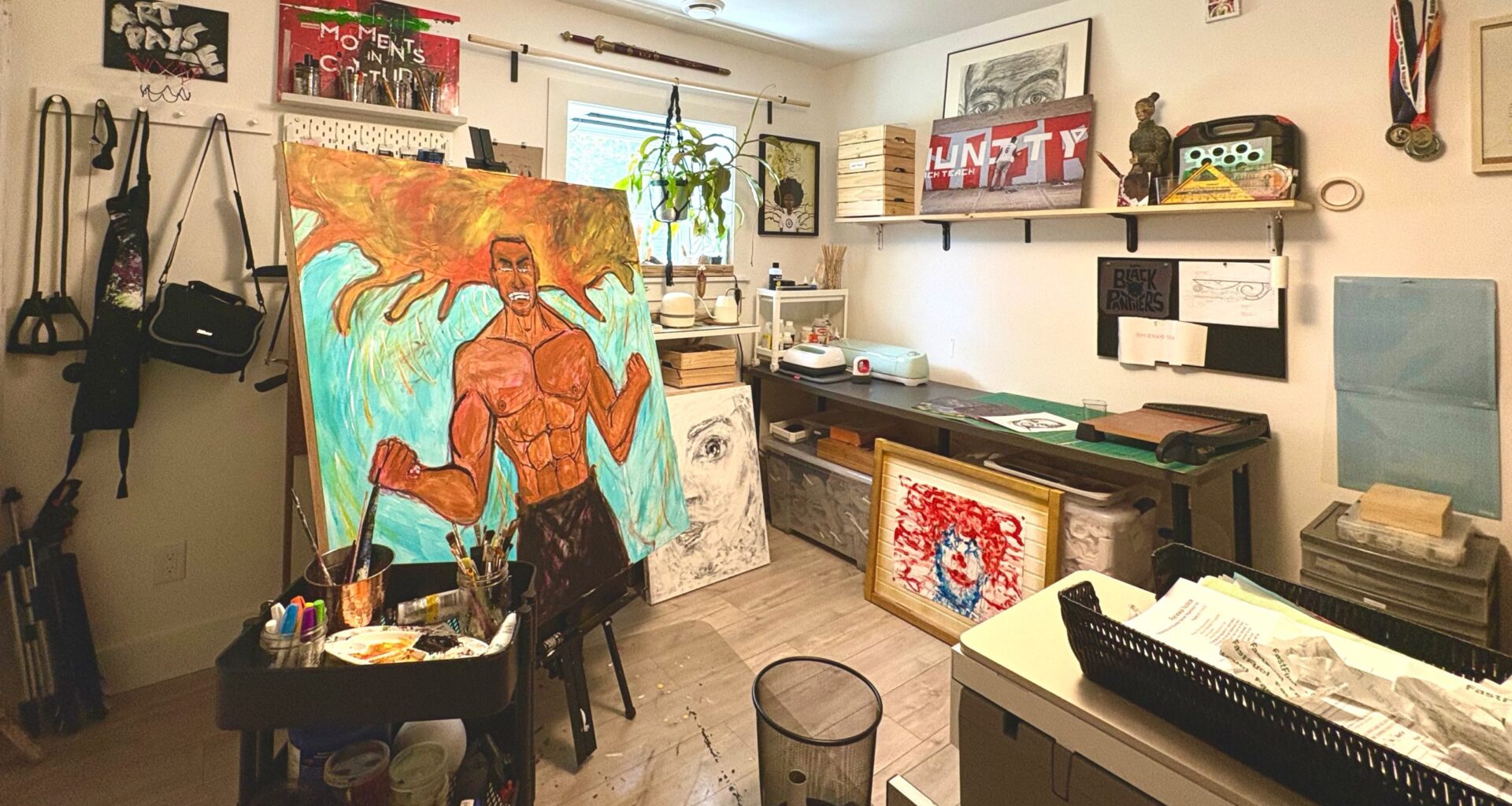
On Friday, the Examiner published Jaya Condran’s story on artist Duane Jones.
That’s his studio in the photo above. Note the sign at the top left that says, “Art Pays Me.” Art Pays Me is Jones’ brand, under which he sells apparel. It’s also the name of his podcast, on which he features interviews with a range of people in the arts.
One of the things I appreciate about this story is Jones’s openness to talking about money, and his framing of creative work in the context of other ventures.
Condran writes:
“We see a popular startup, like Twitter…Then you realize they’ve been propped up by venture capital for the entire time. They’re not making money either,” Jones said.
“So as an artist, we don’t need to feel ashamed if we don’t hit it big right away. Sometimes we all need to percolate.”
Jones said he often hears people say “the market decides” when talking about how much artists should be paid or how much support they should receive.
“Well then why do we keep giving funding to these corporations when ‘the market decides?’ So they shouldn’t need funding,” Jones said.
“I find that hypocritical and I think that’s where my big frustration kicks in.”
Have you ever hung out with startup people? They talk about getting government money all the time. They go online and promote the shit out of their works. Meanwhile, authors are making social media posts that say things like, “I hope you don’t mind if I mention that I have a new book out… it would be nice if you pre-ordered it, but it’s OK if you can’t afford it.”
I am exaggerating, but only somewhat.
The Canada Revenue Agency recognizes that artists may not turn a profit from their work for years, and their agents are supposed to take that into account when deciding whether or not deductions are legitimate. Maybe I’ve spent years researching a novel. I have legitimate research-related expenses, even though it may be years until I see a profit. Or, I may never see one. We can’t know how the novel will sell.
(Many years ago, someone giving a presentation on this subject cautioned that if you’re writing a book about gambling, you can’t go to Vegas twice a year and write off all your losses at the blackjack table; you have to be reasonable.)
There’s the stereotype of the artist with no business sense, but most of the writers and artists I know think about money all the time. They are running small businesses, and they understand how to get the most out of limited funds. (A few years ago, I was talking with writer Stephen Marche, a Canadian living in the U.S., who said every writer and artist talked a lot about getting and keeping health insurance; at least that’s something we don’t have to worry as much about on this side of the border.)
Jones does note though, that brushing up on business skills is important for artists, and that some undervalue those skills:
Beyond his paintings, Jones does graphic design and fashion, notably via his endeavour called Art Pays Me. As noted on its website, the initiative aims to “eradicate the ‘broke artist’ stigma that we’ve all been conditioned to accept.”
“I don’t want to turn all artists into raging capitalists. But at the same time, I think artists have to pay attention to the bottom line of practical things,” Jones said when asked to expand on that notion.
“There are business skills that we should all be paying attention to that a lot of us don’t.
Jones works full-time at Dalhousie University, as a records and information manager. I think many people would be shocked at how many of their favourite musicians, writers, actors, and other artists are working full-time jobs. On social media, I frequently come across people who seem to think that because they see a writer or illustrator being interviewed in the media they are somehow rich.
Instead, actors and TV directors are taking vacation days to shoot episodes of series, musicians are taking unpaid leaves of absence to go on tour, and writers are either typing away early in the morning and late at night, working around their day jobs, or cobbling together teaching gigs, temp contracts and more, to make it all work.
***
Artists need money, and so does the Halifax Examiner. Stories about the arts are the anchor to our current subscription drive. Your subscriptions power the Examiner, allowing for great arts, political, and other coverage. Subscribe here.
(To send or post this item, copy the website address at the top of this page.)
NOTICED
1. Picking a colour
 Credit: Or Hakim/Unsplash
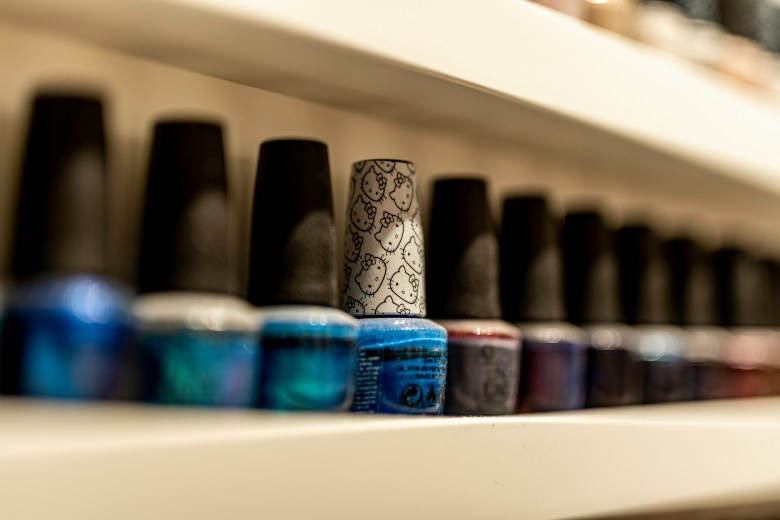
My partner and I were at the nail salon last weekend. I was sitting in the chair, feeling my back being gently kneaded while the nail tech worked on cleaning up my horrible feet and hands. As she was filing the nails, clipping the cuticles, bringing some sense of order to my fingernails, she asked if I wanted any colour.
I’d never really thought about colour. I didn’t have much of a history of going to nail salons, either.
The first time was several years ago, when my partner suggested we go get our feet done. We were standing outside one of the nail places on Quinpool and I was horrified.
Not that there was anything bad about getting your feet done. Growing up, I had an aunt — my mother’s cousin — who did in-home nails in residences and long-term care. I loved listening to them speaking Greek, talking about their lives in Canada and in Greece, while my aunt soaked my mother’s feet and painted her nails while they watched soap operas, talked, and then drank coffee together.
No, I was horrified because my feet were in terrible shape. I mean, I would walk around barefoot a lot, including on the gravel outside. I didn’t want anyone else looking at my feet! Even if I know the people who work in the nail salons and do the mani-pedis have seen everything.
So, in we went. And it felt great. I can’t say I’ve become a regular, but every so often I look at my nails, notice my feet, and think, yeah, I should probably drop in somewhere to get these done. I used to be an inveterate nail-biter. It’s a terrible habit, and it’s very hard to break. I’ve mostly given it up, and having decent looking nails helps; I don’t want to mess them up.
When the woman who was working on my nails asked if I wanted colour, I resisted the urge to immediately say no. “I don’t know,” I said. “Do I?” Her teenage son was working in the place also, buffing a man’s feet two chairs down. He looked up at me and said, “Do it! Do it!” My partner, in the chair next beside mine, looked at me and shrugged, her expression saying, “Why not?”
I thought about a guy I met in Haarlem two years ago. He was a math teacher and kombucha maker, and we sat in a cafe and talked about fermentation for a couple of hours. He had brightly coloured nails; they were striking and I liked them. I admired them, but they were not something I’d ever think of doing myself. Why? I don’t know. Foolishness.
So I said, yeah, I guess so. I mentioned having met a guy who had nice nails. “Rainbow?” the nail salon worker asked. No, I said, not rainbow.
I eyed the wall of coloured bottles across the room. Totally intimidating. So many shades. And here I am, a guy who knows basically nothing about colour. “Do you want shellac?” she asked. I had no idea. Did I? I’m a person who, one day at Scotia Square saw a nail salon price list with “Polish Nails” on it and went home and asked what Polish (as in the country) nails were. I had no idea if I wanted shellac.
Apparently without shellac the nails would last only a couple of days, so yes, I wanted shellac. At first I thought of just doing a couple of nails. Pinkie and index finger on each hand. Devil horns. Then I thought that might look kind of silly.
The nail tech walked over to the shelf with the colours, and I pointed. When her fingers came to rest on the one I had wanted, a lime green, she shook her head. No. I figured I would trust her judgment.
Earlier this year, I read Pick A Colour, the Giller Prize-winning novel by Souvankham Thammavongsa. The whole thing takes place over the course of one day in a nail salon, and not much happens externally. But it’s a great character study of Ning, the lead character and salon owner — a former boxer working among women who, to their customers, are all named Susan. “Pick a colour, pick a colour, pick a colour.” It’s a refrain repeated all day long, throughout the book.
Instead of the lime green, the nail tech (we did not exchange names and she was not wearing a name tag) came back with a kind of bluish purple with sparkles. All right, I said. She told me I could pick two colours. So I got another sparkly one too. A little more rust coloured.
As she started putting on the shellac, I realized how ignorant I was of this whole process. The layers, the steps, the hardening under the light. Paint, harden, paint, harden. Switch from one hand to the other. She worked quickly and precisely, and I admired her skill.
As I’m typing this, I glance down and see the sparkles on my thumbnails. When I’m outdoors, the fingernails glint in the sunlight.
They’re fun. I like them. A bit of cheer.
“What does it mean?” or “Why?” I got asked, over and over, when I first had ear piercings, many years ago — something nobody would ask now. Sure, some guys had earrings, but they were generally still seen as a very gendered form of expression. That’s changed. Maybe it can change for nails too.
(Send this item: right click and copy this link)
2. Canadian book of the week: Ontario & Back
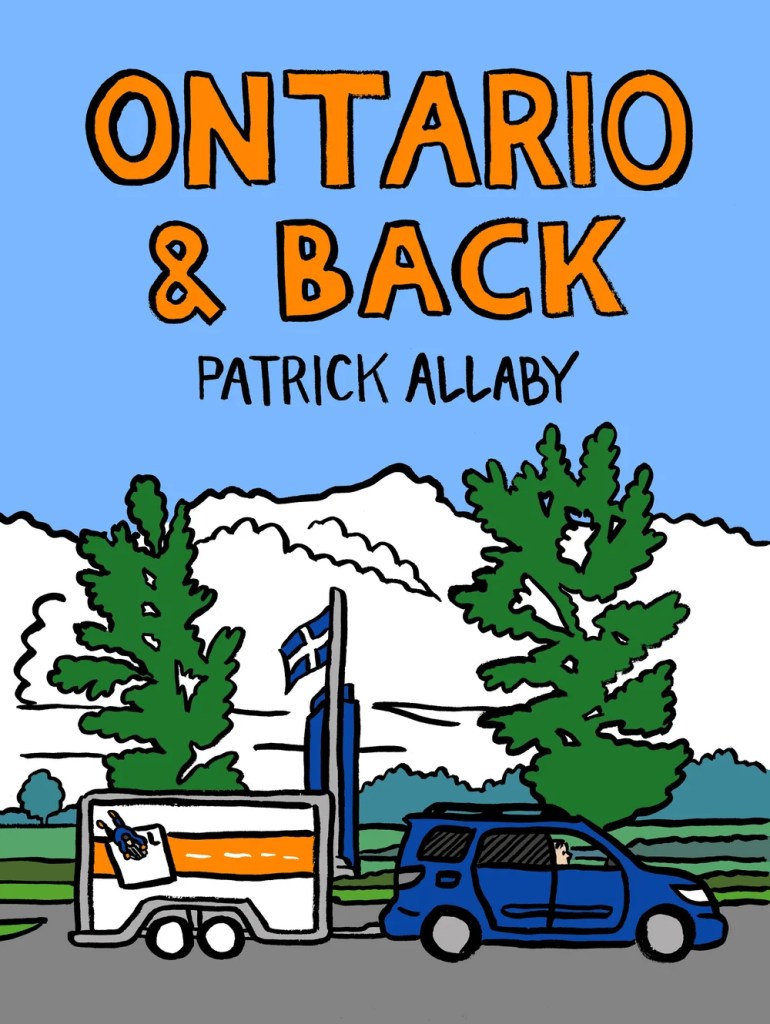 The cover of Ontario & Back, by Patrick Allaby. Credit: Patrick Allaby
I’ve enjoyed Patrick Allaby’s work since I read his book Martin Peters, which I picked up at Sappyfest. Allaby has been a regular at the zine fair there for years.
Ontario & Back is a “heavily fictionalized” version of a period in the unnamed main character’s life, when he is adrift in Ontario — going to grad school at Waterloo while obsessing over Bob Dylan bootlegs, and spending far too much money (that he can ill afford) on them.
There’s something disarmingly simple seeming about Allaby’s work, but there is more depth to it than you might first realize. You could whip through this book in about half an hour, but I recommend taking a bit more time with it.
I’m interviewing Allaby later today, and if all goes according to plan will run that interview in the Morning File on Thursday, so I won’t say too much more about the book here. If you have ever been to Sappyfest; if you’ve been away from home, miserable and wondering what the hell you’re doing; if you’ve ever done a deep dive into Bob Dylan’s work; or if you have had an obsession you know you need to break but can’t, you will find a lot you can relate to in this book. (I happen to fall into a few of these categories, so maybe that’s why it resonated with me.)
(Send this item: right click and copy this link)
3. ‘Mid’ foods: best and worst
 The full glory of Swedish fulpizza. Credit: @NiklasAstrand on Twitter
I enjoy the Action Cookbook Newsletter, written by Scott Hines (day job: architect). Hines’ most recent entry is called, “What’s the Best ‘Mid’ Food?” In other words, what’s the food that, no matter how bad it is, is still pretty good?
Hines says pizza is often the answer to this question, but those who give that answer have “never had pizza in northern Europe.” Eh, I thought, how bad could it be? But then I remembered that a few years ago, I wrote this about Swedish fulpizza, aka “ugly pizza.”
The question of the best mid food was prompted, Hines says, by “eating lunch at the fifth-grade field trip to an amusement park that I chaperoned this week.”
Fulpizza aside, I would probably still go for pizza. Even the stuff they advertise on the screen at the Irving gas pumps looks good to me. Nachos top the list for Hines, because they are so hard to screw up. The floor and the ceiling, as he puts it, are close together.
I particularly enjoyed his discussion of the worst mid foods, including salmon:
The baseline ‘fancy’ food, served tepid and dry to you at weddings, fundraising galas, corporate luncheons and medium-nice restaurants. It is simultaneously overcooked and undercooked, and you will wish you had ordered the chicken instead. (The chicken is also bad, but it was never pretending to be otherwise.)
Now I’m wondering if a donair would be more likely to land among the best or worst mid foods. I can see an argument for each.
(Send this item: right click and copy this link)
4. Ripping off Ansel Adams with AI-generated ‘art’
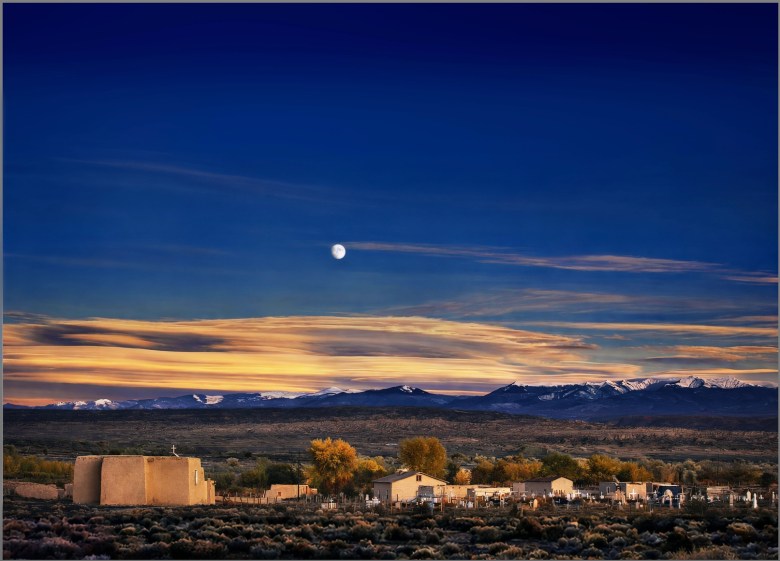 An AI-generated image made by prompting the generator to create a colour version of Ansel Adams’ famous photo, ‘Moonrise, Hernandez.’ Credit: Danziger Gallery
The Ansel Adams Trust is furious with the Danziger Gallery, featured an AI-generated print for sale, based on Adams’ famous photo, “Moonrise, Hernandez,” ArtNews reports.
From the story:
The artwork, which still appears on Danziger’s website, does not contain a title but is headlined A.I. GENERATED, From the prompt: Make a realistic color version of Ansel Adams’ iconic “Moonrise Over Hernandez”. It is listed as printed by master printer Esteban Mauchi. Danziger offered the piece in its booth at the [AIPAD Photography Show] — which ran from April 22 to April 26…
In the statement, the trust said it “did not authorize, endorse, consent to, or acquiesce” to the work being exhibited or offered for sale and claimed that the piece “exploited Ansel’s name, reputation, and his most iconic image, while failing to identify any human artist responsible for its creation.” The trust said further that it was not notified by the gallery prior to its appearance and that, once it was alerted, it reached out to Danziger to have the work removed, which the gallery appears not to have done.
The gallery has not made any public statement, nor responded to requests for an interview.
I’m with former White House photographer Pete Souza, who called this “morally wrong.” Actually, I think he is being restrained. It is truly infuriating, and represents so much that’s wrong with how we see the value of art and the act of creation.
You can read about how Adams created the original photo here.
(Send this item: right click and copy this link)
THE LATEST FROM THE HALIFAX EXAMINER:
1. ‘He didn’t give specifics’: Councillors weigh in on Mayor Andy Fillmore’s state of the municipality address about ‘brutal facts’ of growth
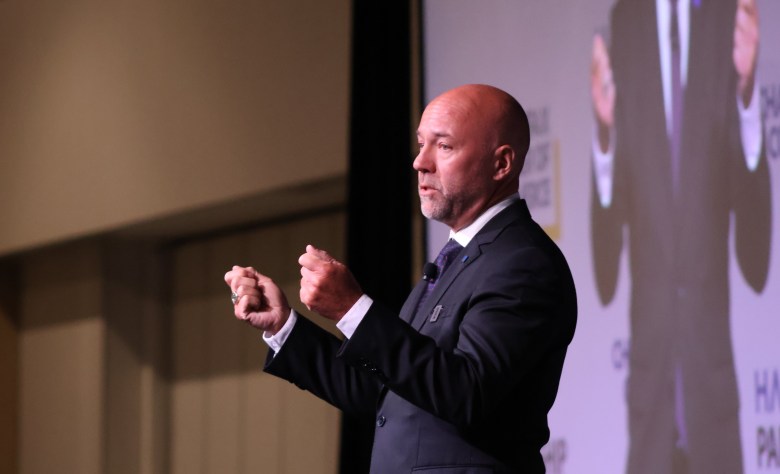 Halifax Mayor Andy Fillmore gives his state of the municipality address at the Halifax Convention Centre on May 20, 2026. Credit: Suzanne Rent
Suzanne Rent reports on Halifax mayor Andy Fillmore’s second state of the municipality speech — delivered last week at an event sponsored by the Halifax Chamber of Commerce — and on reaction to it.
From the story:
Fillmore spoke about the three pillars he ran on during his mayoral campaign: affordability, housing, and congestion.
Fillmore’s address for 2026 focused on the three aspects he spoke about in his 2025 address, but he added a fourth factor: infrastructure readiness…
In March, the federal government announced it is spending $3 billion on defence infrastructure across Atlantic Canada. That includes spending in Halifax: $1.2 billion at CFB Dockyard; $240 million for the new Hartlen Point land-based test facility; $180 million for the new Combatant Training and Integration Centre at Stadacona.
In his speech, Fillmore said Halifax must be ready for those improvements, and called Halifax “Canada’s City of Defence.”
Rent also reports that Coun. Kathryn Morse called into question Fillmore’s claim that the city needs 68,000 new housing units by 2032, and said she worries he “may be making a case for a watering down of regulations… in place to protect the public.”
Click or tap here to read “‘He didn’t give specifics’: Councillors weigh in on Mayor Andy Fillmore’s state of the municipality address about ‘brutal facts’ of growth.”
(Send this item: right click and copy this link)
2. Avi Lewis speaks to Halifax audience
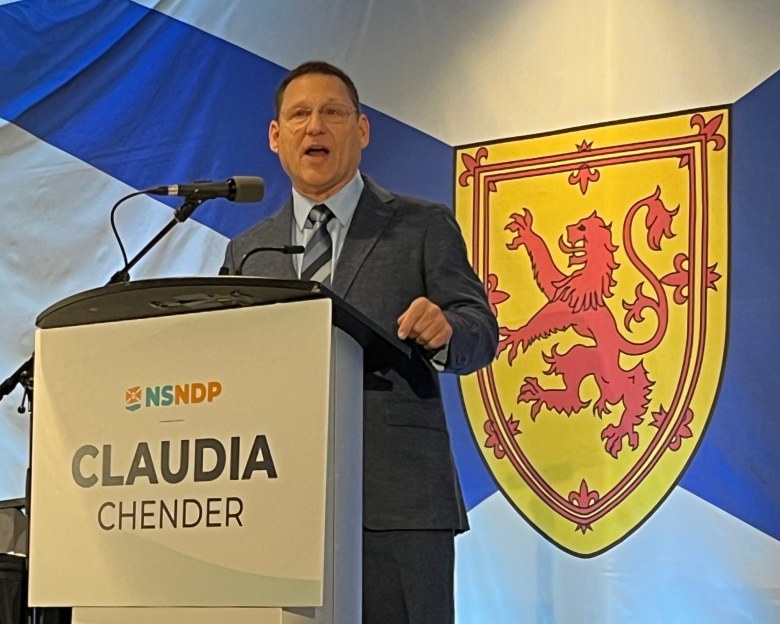 Avi Lewis at the Nova Scotia NDP convention on May 24, 2026. Credit: Jennifer Henderson
Federal NDP leader Avi Lewis was in Halifax over the weekend, speaking at the provincial NDP’s annual general meeting, and Jennifer Henderson reports on his speech to some 200 delegates:
On the housing front, Lewis sees another failure of the free market to build affordable housing on the size and scale required by Canadians. His proposed solution is to establish a government-owned corporation with a mandate to build a million non-market homes.
“Public is not a dirty word,” Lewis told the audience, reminding them that as Canadians we are familiar with publicly-owned liquor and cannabis stores, car insurance, and in most provinces, publicly owned electric utilities. He criticized Mark Carney for acting as a banker treating Canadians as “an asset class” rather than “a common good.”
“First, the prime minister mused about selling our airports to foreign investors. And just weeks later, he is musing about selling our ports — [Brings boos from the audience] — telling us he is open ‘as a part of a comprehensive approach to catalyze the building of an economy that could include recycling certain asset classes’… as if hiding privatization in a macro-economic word salad of microgreens would fool us and slip one by us.”
Lewis also praised the Nova Scotia NDP as a model for “how effective the NDP can be even when we don’t have a huge number of seats in legislature or parliament.”
Click or tap here to read “Avi Lewis speaks to Halifax audience.”
(Send this item: right click and copy this link)
3. Municipality of Cumberland Mayor Rod Gilroy on the Chignecto Isthmus and the land of eagles, tides, and legends
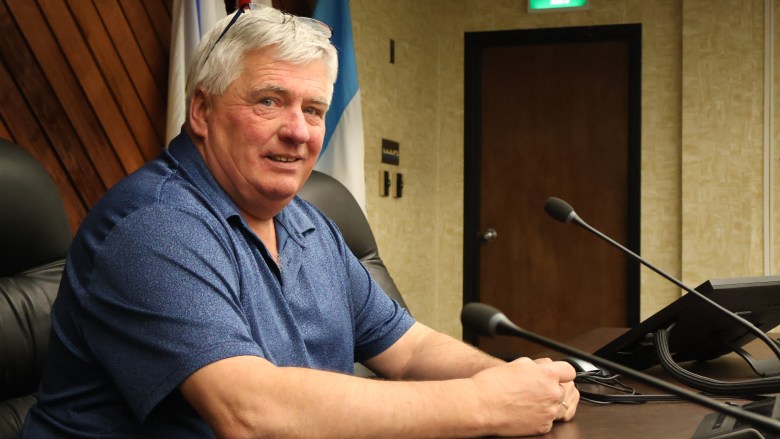 Municipality of Cumberland Mayor Rod Gilroy in his office in council chambers in Upper Nappan, N.S. on April 10, 2026. Credit: Suzanne Rent
Suzanne Rent’s ongoing series, interviewing all mayors in Nova Scotia continues, this time featuring Rod Gilroy, mayor of the Municipality of Cumberland County.
The municipality is huge, covering over 4,000 square kilometres, and includes the former towns of Parrsboro and Springhill. Gilroy says driving from one end of the municipality to the other takes four hours. Despite the large area, it is sparsely populated, with only 23,000 people.
Gilroy invites Rent to hop into his white pickup for a tour of the Chignecto Isthmus and dykelands around Amherst:
Gilroy is a longtime hunter, fisherman, and forager who spends much of his time outdoors. We drove around in his white pickup making a large circle from Upper Nappan to the dykelands around Amherst, through the access roads of the Amherst Community Wind Farm.
As he looked out across the area, Gilroy called this the place of eagles, legends, and tides. We saw several bald eagles flying overhead and fishing for gaspereau…
We also visited Beaubassin and Fort Lawrence, where Gilroy was raised and spent much of his time on the surrounding marshlands.
This is where the Tantramar, Missaguash, and LaPlanche rivers all dump into the Bay of Fundy. Gilroy calls this spot “the end of the earth.”
“You can go out there at 3 o’clock in the afternoon and the water is level with the dyke. You can go out there at 8 o’clock at night and it’s 155 feet [walking out from the dyke] down to the water,” Gilroy said.
“If you’re out there in a storm, you really get to see what could potentially happen. You can run ahead of that tide.”
The Chignecto Isthmus is a beautiful landscape with seemingly endless views that include the turbines of the wind farms in Amherst, the tides, and even lines in fields that are the evidence of historic dykes built by Acadians.
Of course, Gilroy talks about the challenges of being mayor of the community, the compensation and expectations, and his thoughts on the Chignecto Isthmus project. “You already found out I have an opinion on just about everything in some form or another,” he tells Rent, when she asks him about that.
Click or tap here to read “Municipality of Cumberland Mayor Rod Gilroy on the Chignecto Isthmus and the land of eagles, tides, and legends.”
(Send this item: right click and copy this link)
4. ‘There’s a lot of beauty that comes out of here’: Duane Jones on art in Nova Scotia
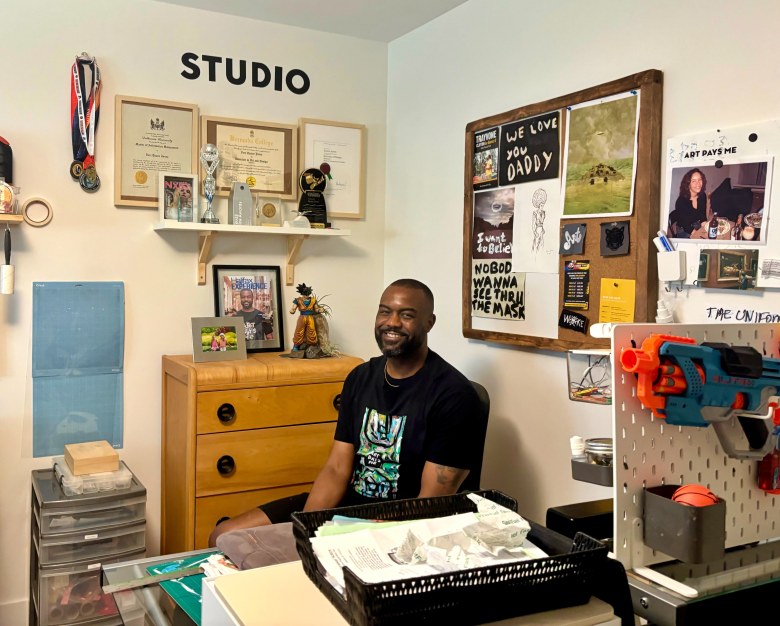 Duane Jones in his home studio in Timberlea on May 20, 2026. Credit: Jaya Condran
Jaya Condran interviews Duane Jones about his work, art, and the challenges of making a living:
He said although it isn’t necessarily intentional, a lot of people are taught growing up (by their parents and society) that art is not a profession in which you can make money.
But through his work at a magazine startup, Jones realized how valuable his design work was for advertisers. He also came to realize that value himself.
“That kind of triggered something in me. But also as a designer, people didn’t want to pay you. So you’re dealing with this weird thing,” Jones said.
“I wanted to create my own product, and I was like, what better [than] to have a product that advocates for the creative space and the creatives, and saying ‘Hey man. We deserve to get paid just like lawyers and everybody else.’”
That’s when he created Art Pays Me, using apparel as a means of expression.
“You know, most people can’t afford my paintings, but they can afford a T-shirt,” Jones said.
Click or tap here to read “‘There’s a lot of beauty that comes out of here’: Duane Jones on art in Nova Scotia.”
(Send this item: right click and copy this link)
IN OTHER NEWS
1. Newborn’s body found; two people face charges
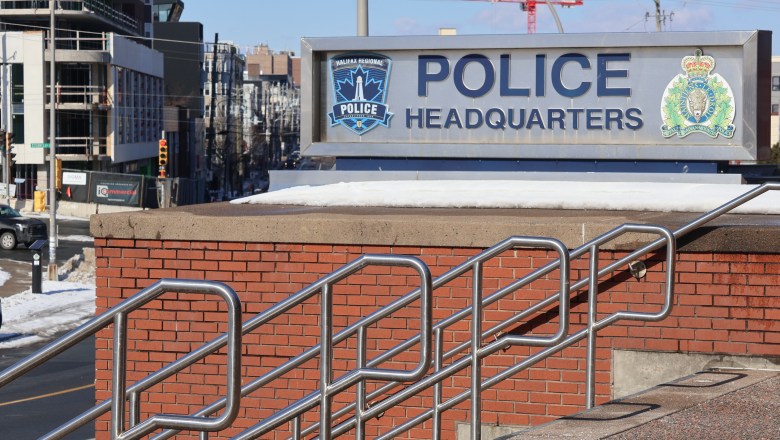 Halifax Regional Police headquarters on Gottingen Street. Credit: Suzanne Rent
CBC news reports on the tragic end to the story of a missing newborn:
Halifax Regional Police say they were notified on Friday by hospital staff that a 23-year-old woman was there in life-threatening condition and she appeared to have just given birth. The baby was not at the hospital with her.
The baby’s remains were found off the Prospect Road.
Stephanie Tsicos at CTV reports:
Police said it’s believed the woman experienced a medical emergency and do not believe her condition is the result of violence…
Sukhpreet Singh, 23, who police said is a relative of the woman, and his wife Ramandeep Kaur, 26, are scheduled to appear in court Monday to face charges of concealing the body of a child, obstruction, and indignity to a dead body.
I looked at a local Reddit post about this story, and there was a sea of comments deleted by the moderators. I can only imagine what must be going on on Facebook, with all the local amateur crime investigators out in full force.
This is a terrible story. Infants dying goes against what we see as the natural order of things. But we don’t know what happened, and we shouldn’t jump to conclusions. Let’s hope the mother recovers.
(Send this item: right click and copy this link)
2. Former Upper Clements land up for development again
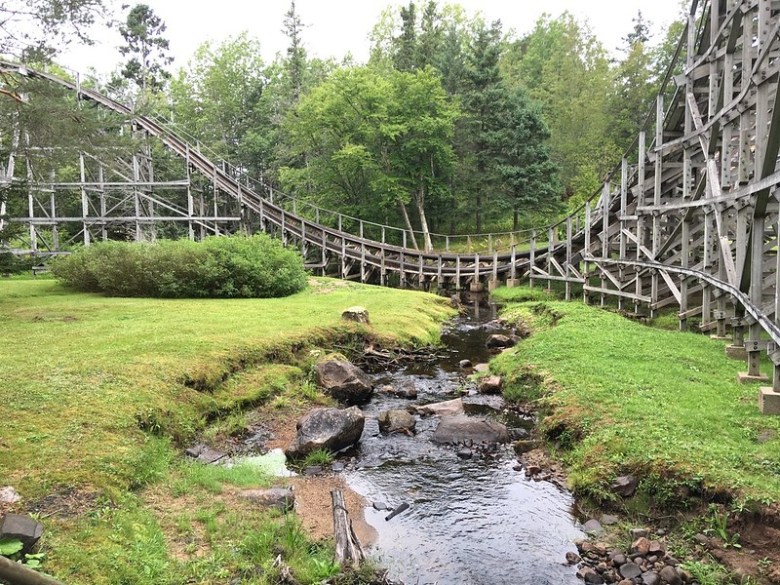 Roller coaster at Upper Clements Park. Credit: Photo: Martin Lewison/Flickr
Linus Mulherin reports for CBC that the County of Annapolis is taking another kick at the development can for the site of the now defunct Upper Clements Park.
This, after the former absurd plan to make it the site of an elite private school fell through.
From the story:
“We’re excited. It’s a beautiful piece of property. We know it was great as a park and we’re interested in who might be interested in making it the next best thing for Annapolis County,” said Rob Frost, the county’s chief administrative officer.
He said that the council is open to all proposals…
“Like everywhere in Nova Scotia, housing is a critical issue and something we’d like to see more of, but if there’s something that can create additional jobs, that can spur on additional housing, those would be great too,” he said.
“So we’ll have to evaluate what’s the best thing for the county in general.”
(Send this item: right click and copy this link)
Government
City
Monday
Executive Standing Committee (Monday, 9:30am, hybrid) — agenda
Accessibility Advisory Committee (Monday, 4pm, virtual) — agenda
Tuesday
Halifax Regional Council (Tuesday, 10am, City Hall) — agenda
Province
Monday
No meetings
Tuesday
Natural Resources and Economic Development (Tuesday, 1pm) — details here
On campus
Dalhousie
PhD Defence: Mathematics and Statistics (Monday, 1:30pm, hybrid) — Thiago Holleben will defend “The failure of Lefschetz properties: a combinatorial perspective”
Mount Saint Vincent
Monday
No events
Tuesday
Connecting for Action: Gender-based Violence and Leadership in Nova Scotia (Tuesday – Wednesday, 8:30am) — a free two-day community and academic gathering, with featured panelist Tracey Raney, Toronto Metropolitan University, and co-editor of Gender-based Violence in Canadian Politics in the #MeToo Era; register here
NSCAD
Opening receptions (Monday, 5:30pm, Anna Leonowens Gallery) — exhibitions of work by Ruby Gillam, Bree Kuhnen and Beth Neville, and Ruben Viktor Valentine
Literary Events
Monday
No events
Tuesday
Book launch (Tuesday, 7pm, Halifax) — Stephen Gerard Malone‘s The Unnameable
In the harbour
Halifax
05:30: Nabucco, car carrier, arrives at Autoport from Zeebrugge, Belgium
06:00: Tropic Lissette, cargo ship, arrives at Pier 42 from Philipsburg, St. Croix
06:45: Floretgracht, heavy lifter, arrives at Pier 9 from Belfast, Northern Ireland
07:00: Rt Hon Paul E Martin, bulker, sails from Gold Bond for Saugatuck, Connecticut
08:45: Zuiderdam, cruise ship with up to 2,364 passengers, arrives at Pier 22 from Portland, on a 14-day roundtrip cruise out of Québec City
13:00: Floretgracht sails for sea
17:45: Zuiderdam sails for Sydney
20:30: Nabucco moves to Pier 9
Cape Breton
09:20: Acadia Desgagnes, cargo ship, transits through the causeway, en route from Halifax to Pugwash
10:45: Volendam, cruise ship with up to 1,718 passengers, arrives at Sydney Marine Terminal from Halifax, on a 13-day cruise from Fort Lauderdale to Montréal
17:30: Volendam sails for Charlottetown
18:00: AlgoScotia, oil tanker, arrives at Government Wharf (Sydney) from Sept-Îles, Québec
Footnotes
I was not stoned at the nail salon, but I had this song running through my head the whole time anyway.