


Listen to this article
Estimated 5 minutes
The audio version of this article is generated by AI-based technology. Mispronunciations can occur. We are working with our partners to continually review and improve the results.
A senior researcher with the Canadian Centre for Policy Alternatives (CCPA) says smaller hospitals like the ones in Sault Ste. Marie and across northern Ontario are facing disproportionate setbacks in funding and emergency room wait times.
Those allegations were made in a recent report from Andrew Longhurst entitled Failure, by Design, which calls on the Ontario government to address hospital funding and capacity issues in the province.
In his report, Longhurst reported more than half of Ontario’s public hospitals ran an operating deficit in the 2024-25 fiscal year — including the Sault Area Hospital (SAH).
He noted that smaller hospitals with operating revenues under $100 million — like those in Thessalon and Blind River — have been especially at risk of bleeding money, leading to poor patient outcomes.
Longhurst said smaller hospitals accounted for 61 per cent of those that recorded a deficit last year — despite only representing 49 per cent of Ontario’s total network.
“There’s a mismatch between the disproportionate impact that the funding crisis is having on smaller hospitals,” he said.
“This is creating a lot of pressure on many smaller hospitals to withstand multiple years of these financial pressures.”
 Andrew Longhurst, a senior researcher with the Canadian Centre for Policy Alternatives, says staffed hospital beds are far below what is required in Ontario and is projected to get worse. (Alex Flood/CBC)Ontario’s Ministry of Health refutes funding criticisms
In an email to CBC, Ontario Ministry of Health spokesperson Ema Popovic called Longhurst’s claims “misguided,” explaining the province has one of the largest publicly funded health care systems in the world.
“Our government is investing over $101 billion this year alone, including a four per cent increase in the hospital sector for the fourth consecutive year, to connect people to the care they need when they need it,” she wrote.
“Since 2018, we have also increased funding for the Sault Area Hospital by nearly 39 per cent.”
Longhurst argued the province should provide a six per cent annual increase — not four — to the hospital sector to account for population growth, aging and inflation.
Also voicing concerns on emergency room wait times, Longhurst said SAH patients waited 5.5 hours to see a physician in 2025, up from 3.4 hours in 2021.
Over that same time frame, SAH wait times for inpatient beds increased by 108 per cent, compared to a provincial increase of 52 per cent, his study found.
“It demonstrates a system under immense strain, unable to cope with demand for acute care,” he said. “The longer patients languish in the emergency department waiting to be admitted, the risks of deteriorating health status increase.”
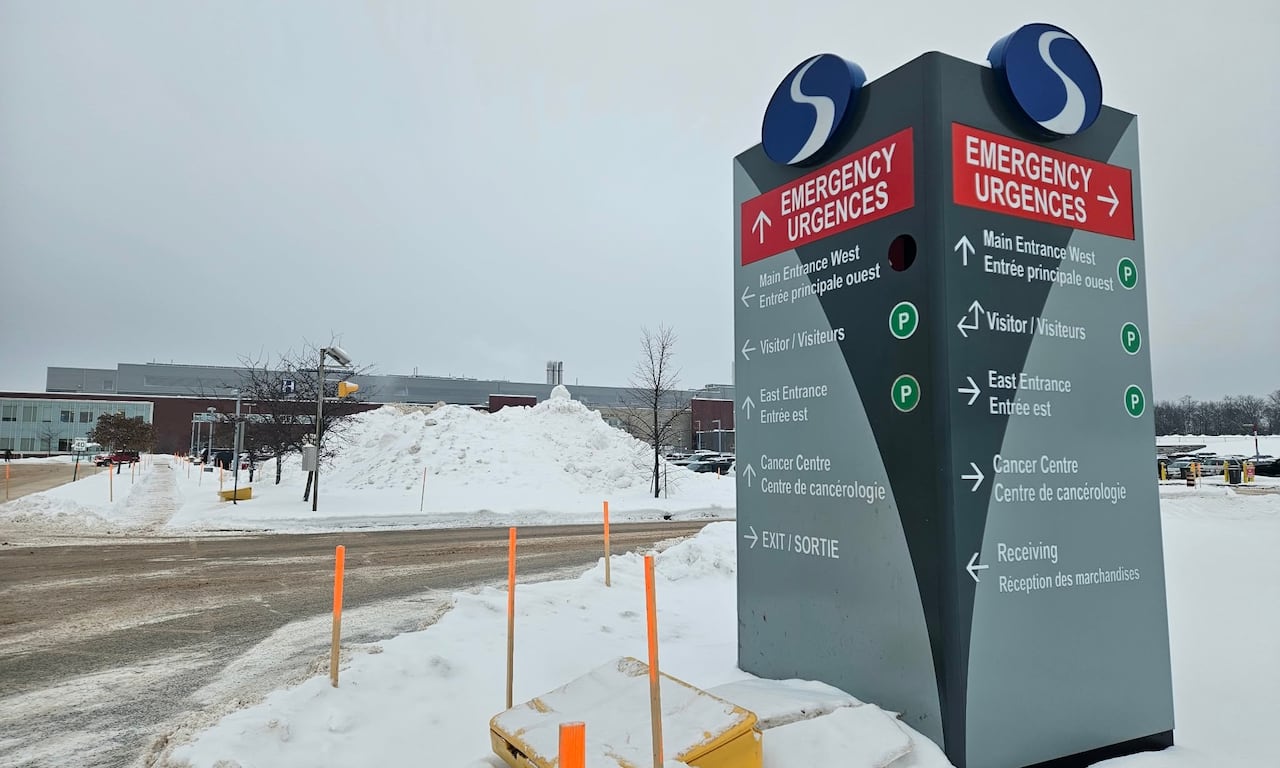 Sault Area Hospital was among half of Ontario’s hospitals that ran an operating deficit in the 2024-25 fiscal year, according to a recent report from the Canadian Centre for Policy Alternatives. (Alex Flood/CBC)Tackling long wait times
The SAH has been working to address emergency room wait time concerns with its new Virtual Home Waiting Room.
The program allows patients with non-urgent medical complaints to wait from home instead of sitting in busy, sometimes overcrowded, waiting rooms while preparing for their emergency room visit.
During its three-month pilot last year, wait times went down by about 25 per cent, according to the SAH. The program is now a permanent addition to the hospital.
While he’s supportive of initiatives like the virtual queue, Longhurst said it doesn’t address other major issues, including a lack of hospital beds and staff retention.
“It’s only a segment of the patient population that can be safely cared for in the [Virtual Home Waiting Room],” he said. “The bigger issue remains unresolved, which is the staffing levels and the investments in staffed bed capacity.”
“In a situation where we’re increasing the numbers of nurses being trained, to then not even have positions for them to move into upon graduation, doesn’t make any sense.”
Ontario’s Ministry of Health said it employs one of the largest health care workforces in Canada, adding over 100,000 new nurses and nearly 20,000 new physicians since 2018.
Aiming to connect every person to a primary care provider by 2029, the ministry noted the province has some of the shortest wait times for critical procedures and has reduced the annual total volume of emergency room visits by nearly 200,000.
“We continue to build on this progress by getting shovels in the ground for over 50 hospital redevelopment projects, adding new MRI and CT machines in communities across the province [and] upskilling nurses to work in emergency departments,” Popovic wrote.
 Andrew Longhurst, a senior researcher with the Canadian Centre for Policy Alternatives, chats about his new report, Failure, by Design, with Sharon Richer, secretary treasurer of Ontario Council of Hospital Unions and CUPE, during a visit to Sault Ste. Marie on Tuesday. (Alex Flood/CBC)Billions of dollars needed to address funding issues, researcher argues
Through his report, Longhurst is recommending the provincial government immediately stabilize hospital finances in Ontario and increase capacity through an estimated $3.2 billion of additional funding across the sector.
He also recommends the province form a health care workforce strategy to focus on retention and recruitment challenges — particularly in northern Ontario.
“I hope the province takes the concerns from the hospital sector seriously, from frontline workers who are saying [they] aren’t able to provide the level of care [they] know patients need,” Longhurst said.
“Frontline health-care workers are choosing to leave health care all together because of that moral distress they face.”