

Listen to this article
Estimated 4 minutes
The audio version of this article is generated by AI-based technology. Mispronunciations can occur. We are working with our partners to continually review and improve the results.
It may soon become easier to get your ripped tent or broken ski boots fixed in British Columbia.
A college in southeastern B.C. is opening what it calls Canada’s first outdoor gear repair and advanced manufacturing centre.
The initiative is a partnership between the College of the Rockies and the Kootenay Outdoor Recreation Enterprise (KORE), an industry group that represents about 100 local gear makers and designers.
LISTEN | Canadian-first outdoor gear repair program takes root in Cranbrook:
Daybreak South8:01A first in the country: a local outdoor gear repair program is launching in Cranbrook
Matt Mosteller, co-founder of KORE Outdoors, explains how they’re working with the College of the Rockies to create Canada’s first outdoor gear and advanced manufacturing centre.
The Rehub Circular Technology Centre, which has received $1 million in provincial funding, aims to create a local research and development hub for gear makers, while giving students the chance to learn how to design and repair outdoor equipment.
Speaking with CBC’s Daybreak South, KORE board chair Matt Mosteller said life in the Kootenays is all about getting outdoors, whether its hiking, skiing or biking. That, he said, has allowed a unique cottage industry around outdoor equipment to develop.
“We’re fortunate to have a lot of skilled, what I call ‘textile engineers,’ that live in the Kootenays and we have this great love for the outdoors, great love for the outdoor gear,” he said.
“But we needed to find a solution because we don’t want all this outdoor gear ending up in the landfill.”
Keeping outdoor equipment in circulation for longer through maintenance and repair is already one of KORE’s focuses.
The organization’s Rehub circular gear initiative deploys a mobile repair team that tours through the Kootenays over the summer to help people keep jackets, ski poles, backpacks and other gear out of the trash.
The college’s Gold Creek Campus in Cranbrook will now give that work a permanent home.
Mosteller said the ultimate goal is for the facility to become a key node in Canada’s outdoor recreation world by bringing together students, industry and the outdoor community.
“That really starts with creating a hub at the college, a place where we can put equipment in, where we can bring in the knowledge, our leaders and develop courses for workforce training, workforce development,” he said.
“And also offer our core collective members, those craft outdoor gear makers, a place where they can do R&D and prototype and run a small-batch, light-manufacturing run of gear that they would like to see go to market.”
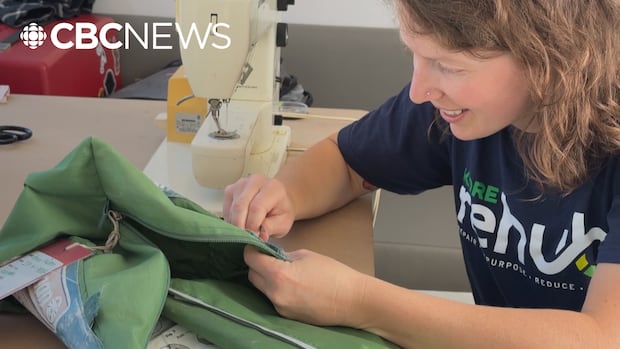
Kootenay-based company looks to reduce waste in outdoor recreation industry
A mobile repair studio, called the re-hub, is touring B.C.’s Kootenays in an effort to keep outdoor gear out of landfills. Industry group Kootenay Outdoor Recreation Enterprise (KORE) Outdoors is behind the initiative, offering repairs of soft and hard goods, from ski jackets and hiking backpacks to tent poles.
According to data from the provincial government, outdoor recreation contributes $4.8 billion annually to B.C.’s economy.
The College of the Rockies described the initiative as a chance to deepen the school’s role in developing the region’s economy, while giving students a chance to develop hands-on skills.
“For decades, College of the Rockies has been a leader in adventure education and outdoor recreation, rooted in the landscapes and industries of our region,” president and CEO Michael Crowe said in a statement.
“This partnership with KORE builds on that legacy by connecting our outdoor expertise with advanced manufacturing, applied research, and circular economy innovation.”
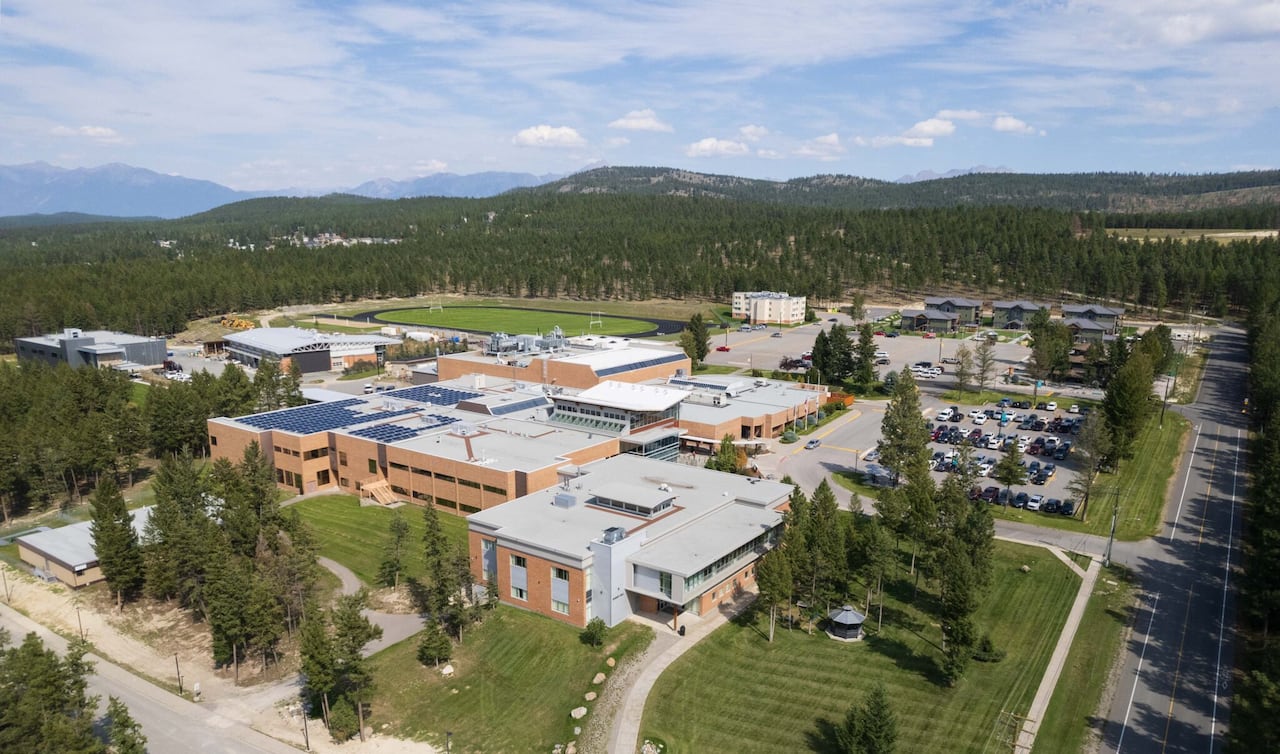 The College of the Rockies’ Cranbrook campus. (College of the Rockies)
Mosteller said the first step is getting the space set up with equipment and resources for KORE’s maker community.
But he said they’re looking to get the programming and educational side up and running as fast as possible.
If that work is successful, he said, it could create a pathway for students to build new careers in their own communities.
“A lot of the youth in these mountain towns, you know, they want to live there,” he said.
“They just want to figure out how they can … build something, and doing what they love outside, and creating a future where they can buy a house and raise their family.”