
Delivering holistic wealth management is a phrase the industry uses freely, but the operational requirements behind it are rarely examined in detail. Collecting the right information, in real time, across a client’s full financial picture is a prerequisite for any genuinely integrated advisory offering, yet it remains one of the most difficult capabilities for independent firms to build. Without it, holistic advice is an aspiration rather than a service.
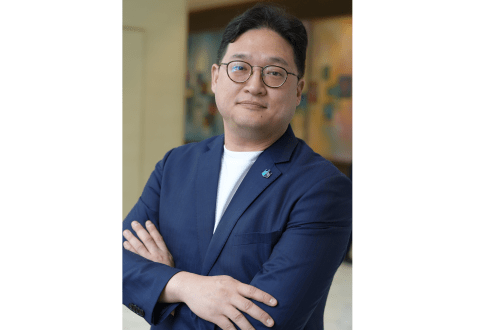
At the recent Hubbis Independent Wealth Management Forum in Hong Kong, Grant Ko, Chairman and Founding Partner of Wisdom Family Office, addressed this challenge directly. Speaking on the opening panel of the day, he drew on more than a decade of experience running an multi-family office to outline the infrastructure, people, and processes required to deliver advisory services that go beyond investment management. His perspective was operational and forward-looking, focused less on the philosophical case for independence and more on the practical systems that make it work.
Key Takeaways
Data Collection Is the Foundation of Holistic Advice: Without the ability to gather accurate, real-time information across a client’s full financial picture, integrated advisory remains aspirational.
Technology Has Shifted the Equation: Advances in artificial intelligence, APIs, and data integration have transformed what was previously a cumbersome reverse-engineering exercise into a more scalable capability.
People Must Be Solution Partners, Not Product Distributors: The advisory model requires practitioners who are embedded in client problem-solving over the long term, not transactional relationship managers.
Continuous Training Is Non-Negotiable: Policies, regulations, and product landscapes evolve rapidly, and firms that do not invest in keeping their teams current will fall behind.
Scaling Requires Discipline Across Four Dimensions: Geographic diversification, in-house specialisation, scalable infrastructure, and internal talent development must advance in parallel.
The Information Problem
When Ng asked whether firms can consistently deliver holistic advice or whether it remains fragmented and adviser-dependent, Ko’s response began not with strategy but with data.
“To be holistic, you have to collect the right information, and also in real time,” he said. The statement is deceptively simple, but it points to a challenge that has historically constrained independent firms. A family’s financial affairs may span multiple custodians, jurisdictions, asset classes, and advisory relationships. Aggregating that information into a coherent and current picture has traditionally required what Ko described as a reverse-engineering exercise, piecing together data from disparate sources with significant manual effort.
What has changed, Ko argued, is the technology available to perform this aggregation. Advances in artificial intelligence, robotic process automation, file transfer protocols, and application programming interfaces have made it possible to collect and process client data at a speed and scale that was not feasible even five years ago. The result is that the information barrier to holistic advice, while still significant, is lower than it has ever been.
Ko was careful not to overstate the point. Technology enables data collection, but it does not by itself produce good advice. The tools are a necessary condition, not a sufficient one. What matters is how firms combine these capabilities with the right people and the right processes. A firm that can aggregate data in real time but lacks the advisory depth to interpret it will produce dashboards, not insights. The technology, in Ko’s framing, is an enabler that must be matched by human judgment and client understanding.
People as Solution Partners
Ko’s second theme was the nature of the advisory relationship itself. In his framing, independent family offices are not in the business of distributing products or managing transactions. They are in the business of solving client problems, and this requires a fundamentally different type of practitioner.
“We are not traditional bankers in advice,” he said. “We provide solution partners within the teams. That means we solve the client’s problems, and this is a long-term journey.”
The distinction between a product distributor and a solution partner is more than rhetorical. A product distributor responds to a client need by selecting from an available shelf. A solution partner diagnoses the underlying problem, considers the full range of options, and works with the client over time to implement and adjust the response. This model demands deeper client knowledge, broader technical capability, and a longer engagement horizon than the transactional approach that characterises much of private banking.
Ko acknowledged that building teams with this orientation is neither quick nor easy. It requires deliberate hiring, structured development, and a firm culture that reinforces problem-solving over deal-making. But he positioned it as essential to delivering on the promise of holistic advice. Without the right people, even the best technology and data infrastructure will produce superficial outcomes.
The Training Imperative
Ko’s third operational pillar was continuous professional development. In an environment where tax regulations, product structures, and compliance requirements evolve rapidly, the knowledge base of an advisory team can become outdated in months.
“We have to keep the training, because I believe that now every day all the policies and solutions have been updated very quickly,” he said. “How we actually stay on the right track and solve the right problem for the right clients, this is one of the key things for us.”
For smaller independent firms, the investment required to maintain rigorous training competes directly with the demands of client service and business development. But in a model that depends on trust and expertise rather than institutional brand, the consequences of underinvestment are immediate and severe.
Scaling with Discipline
When the discussion turned to how independent firms can grow without diluting quality, Ko outlined a framework built around four dimensions.
The first is geographic diversification. Wisdom Family Office had originally been concentrated in a narrow set of markets but has since broadened its client base across regions, reducing concentration risk and sharpening the firm’s overall capability.
The second is in-house specialisation. Rather than covering every advisory domain, Ko’s approach is to build focused expertise in areas where Wisdom can add demonstrable value and differentiate from generalist competitors.
The third is infrastructure. Ko stressed the importance of building systems that are inherently scalable, so that growth does not require a proportional increase in manual effort. The same technology tools that enable holistic advice also provide the operational backbone for a larger business.
The fourth is talent development. Ko described a preference for developing people internally rather than relying on lateral hires. “Once you are a sizeable company, you have your own culture. You know what kind of people you’re looking for,” he said. “What we do is develop them from the beginning.”
The approach reflects a belief that cultural alignment is as important as technical skill. Ko added that advancing all four dimensions in parallel also serves as a risk management function, allowing the firm to grow without the quality erosion that often accompanies rapid scaling.
Building the Operating System for Independence
Ko’s contributions throughout the panel were less concerned with the strategic rationale for independence, which he took as established, and more focused on what it takes to make the model function at a high level. His message was that holistic advice is not a philosophy but an operating system, one that requires real-time data, solution-oriented people, continuous training, and scalable infrastructure working in concert.
For firms that have already made the decision to operate independently, Ko’s perspective offers a practical checklist. The question is no longer whether independence is better, but whether the firm has built the operational foundation to deliver on its promise. Technology has lowered the barriers, but execution remains demanding, and the firms that invest most deliberately in their internal capabilities are the ones most likely to sustain quality as they grow.