
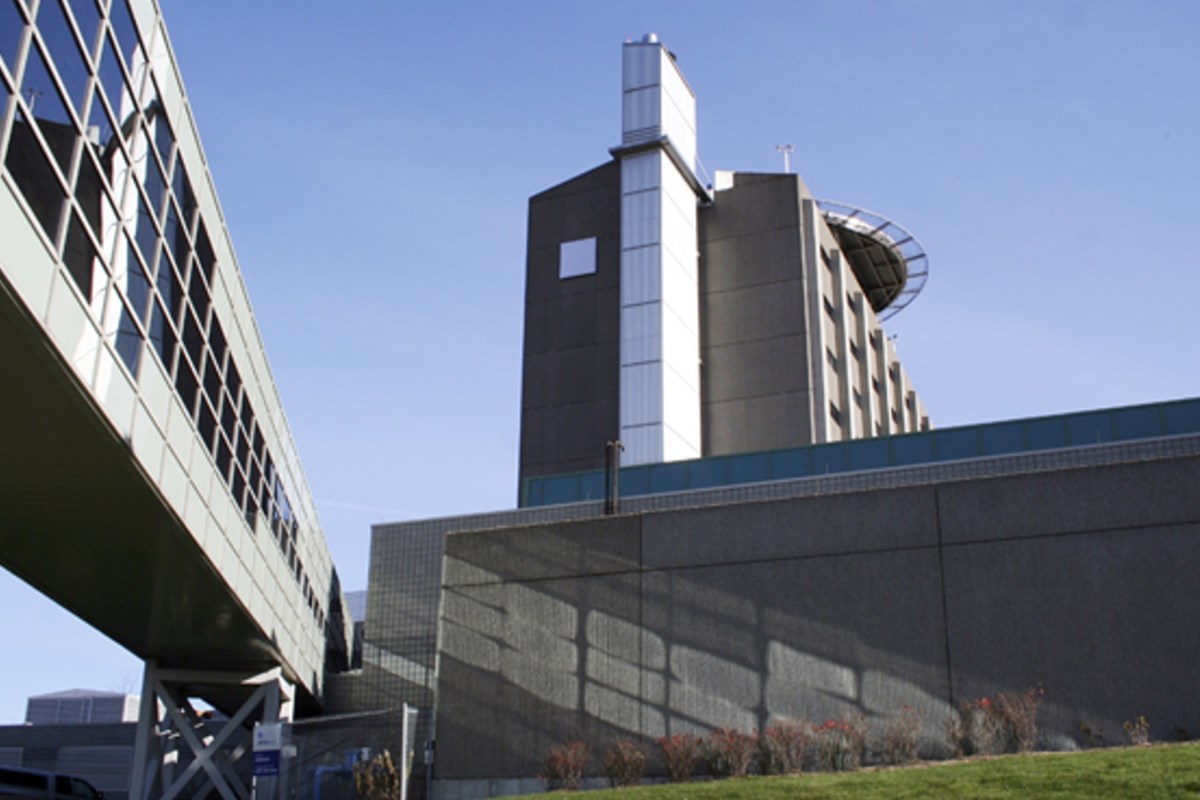
While the Ontario health ministry rejects the OCHU/CUPE report linking underfunding to soaring ER waits in Sudbury, a HSN spokesperson says demand remains high as hospital runs over capacity, but they are set for a balanced financial position
Calling their report warning of dire hospital underfunding “misguided,” the Ministry of Health pushed back on a report by OCHU/CUPE and the Canadian Centre for Policy Alternatives that showed a more-than-doubling of emergency department wait times since 2020.
While the province denied Sudbury.com’s request for an interview and did not specifically state why they felt the report is inaccurate, a ministry spokesperson provided a statement detailing “investments” in health care since the Conservative government came to power in 2018.
Health Sciences North also offered a response to the report, updating their financials and the number of hours cited as average before patient admission, which has decreased significantly since the report was written.
However, HSN spokesperson Jason Turnbull stated in an email that “demand at HSN remains extremely high.”
The day comment was requested, May 20, Turnbull said the hospital was operating at 108 per cent capacity.
“Our hospital routinely operates above 100-per-cent capacity with 120 to 130 patients receiving care in hallways, tub rooms, the Emergency Department, or in temporary placements such as retirement homes each day.”
Report: Failure by design, Ontario’s deepening hospital funding crisis
According to the report by Ontario Council of Hospital Unions/Canadian Union of Public Employees (OCHU/CUPE) and the Canadian Centre for Policy Alternatives, provincial underfunding has triggered a severe hospital crisis in Ontario, with Northern Ontario disproportionately affected.
At Sudbury’s Health Sciences North, the report states the average emergency room wait times have surged by 169 per cent over five years to seven hours — well above the provincial average of 4.5 hours — while patient admission delays have jumped to 51 hours.
Report author Andrew Longhurst and the OCHU/CUPE secretary-treasurer, Sharon Richer attributed these worsening delays to systemic provincial underfunding that fails to match inflationary cost pressures, compounded by a critical shortage of regional family doctors forcing residents to seek primary care in ERs. Consequently, said Longhurst, more than half of Ontario’s hospitals are running deficits, leading to warnings of compromised care and criticism over provincial dollars being funneled into private clinics rather than staffing existing, underutilized public hospital operating rooms.
And while the ministry denied Sudbury.com an interview and did not specifically address any of the statistics within the report, Lily Barnes, press secretary and senior communications advisor to Health Minister Sylvia Jones spoke of investment in the industry.
“Our government is investing over $101 billion this year alone, including a four-per-cent increase in the hospital sector for the fourth consecutive year, to connect people to the care they need when they need it,” she wrote.
Staffing and beds
But Longhurst said that while the province capped hospital funding increases at four per cent, the Ontario Hospital Association reports that actual costs are rising at six per cent annually: a two per cent deficit that will compound yearly.
Longhurst said that despite finance minister Peter Bethlenfalvy claims in January that health care spending is “unsustainable,” data he collected from 2014 to 2023 that shows spending as a share of GDP grew by only 0.2 percent over the decade, a rate well within historical norms and entirely sustainable, he said.
The report contains data up to the 2024/25 fiscal year, but Turnbull offered the wait time averages for admission for the 2025/26 fiscal year, stating nine out of 10 patients admitted through HSN’s Emergency Department received an in-patient bed within 33 hours, compared with the provincial wait time of 28 hours.
He indicated that several factors are contributing to longer wait times for inpatient beds at HSN, “including high hospital occupancy rates and increasingly complex patient care needs.”
In the ministry statement, spokesperson Barnes wrote that the province has increased funding at HSN by 44 per cent since 2018, “while investing $5 million to support the planning for future expansion, over $10 million to build a new 52-bed Acute and Reactivation Care Centre, which is already helping patients transition home and free up acute care beds.”
Opened in November, 2023, the full cost of the care centre was $11.9 million with $9.6 million provided by the Ontario government and $2.3 million coming from the HSN’s Volunteer Association through the successful HSN 50/50 Cash Lottery, which features monthly draws.
Barnes also spoke to “more than $2 million to support Sudbury-area Interprofessional Primary Care Teams to connect over 5,500 people to primary care, helping reduce pressure on emergency departments and improve patient flow.”
These funds went to the City of Lakes Family Health Team and Shkagamik-Kwe Health Centre.
Critical procedures
In the ministry statement, Barnes wrote: “we have one of the largest health care workforces in Canada, adding over 100,000 new nurses and nearly 20,000 new physicians since 2018, some of the shortest wait times for critical procedures, reducing the annual total volume of ED (emergency department) visits by nearly 200,000, with over 83 per cent of people receiving surgery within the clinically recommended times, and the highest primary care attachment rate in the country.”
However, on Feb. 10, another report from OCHU/CUPE warned of low staffing levels, with representatives telling media the lack of staff would add to wait times for critical procedures, like surgery.
“According to the most recent data reported by the provincial government (March 2024) there were nearly 73,000 patients in Ontario who waited longer than clinically recommended for their surgeries, up from 36,360 in 2019,” said Doug Allen, a senior researcher with CUPE. That increase comes after a provincial-government promise to eliminate “hallway medicine” in 2018, said Allan.
“The number of patients receiving care in hospital hallways increased to 1,860 in 2024 from 826 in June 2018,” states the report, but at the press conference, Allan wryly noted that rather than change the numbers, “the government has decided to stop tracking this problem altogether.”
Barnes added that the ministry is also putting “shovels in the ground for over 50 hospital redevelopment projects, adding new MRI and CT machines in communities across the province, upskilling nurses to work in emergency departments, expanding programs like Learn and Stay and, taking bold action to make it easier to access care in the community, including allowing pharmacists to treat common ailments and our plan to connect every person to a primary care provider by 2029.”
And while Turnbull said HSN is in better shape for 2025/26, and “ended the fiscal year in a balanced position” (with more details to come at their June AGM), Longhurst said in the two fiscal years before that saw HSN in a deficit position. “In 2023/24, it was a $10-million deficit,” he said. “In 2024/25, it was an $11.2 million deficit.”
The report states that in the 2024/25 fiscal year, 55 per cent of Ontario’s 136 hospitals have operating deficits; hardest hit are “smaller and rural hospitals” such as Espanola Regional Hospital, said Longhurst at the press event. The report states that smaller hospitals with operating budgets under $100 million disproportionately had deficits in 2024/25.
“Smaller hospitals made up 61 per cent of the hospitals in deficit but made up only 49 per cent of all Ontario hospitals.”
Future funding
And though they are consistently over-capacity, Turnbull told Sudbury.com in the statement that the Ministry of Health is “aware of these challenges.”
“We are actively working with them on long-term capital expansion planning that would see HSN increase its current bed capacity at the Ramsey Lake Health Centre in the Emergency Department, Pediatrics, Mental Health and Addictions, as well as inpatient units,” he wrote. “We continue to work closely with Ontario Health and the Ministry of Health and appreciate recent investments to support our long-term financial sustainability so HSN can continue to provide specialized healthcare services in Northeastern Ontario for years to come.”
In response to the report, Nickel Belt MPP France Gélinas, also the shadow minister of health, released a statement.
“Once again, this Minister of Health is ignoring the experts and blaming hospitals instead of listening to what they are actually telling her: Ontario’s hospitals are in crisis,” she wrote. “Hospitals and frontline workers are doing everything they can with fewer resources, growing deficits, and impossible staffing pressures, yet this government continues to pass the buck onto the very system she is supposed to protect.
“Instead of fixing overcrowded ERs, hallway medicine, and dangerous wait times, this minister seems more focused on eroding the system than making sure patients can get the care they need, when they need it.”
You can find the full report here.
Jenny Lamothe is a reporter with Sudbury.com.