
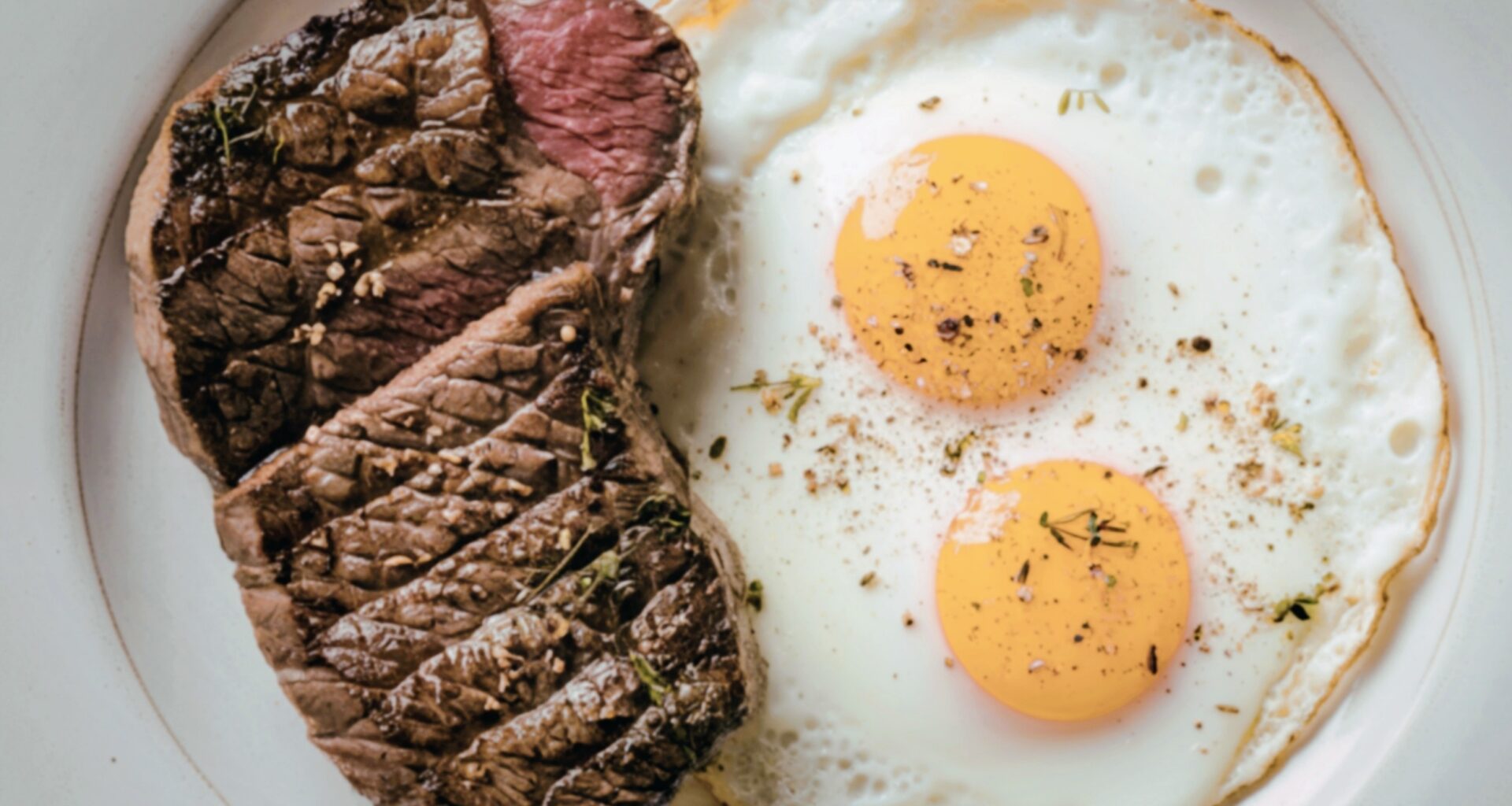
Skip enough protein and the body steers toward steak. It’s not just hunger – but a specific pull toward the one nutrient going missing.
Scientists have long assumed the brain runs that steering, tuning appetite from the top down.

A new study found that the gut makes that call. It does so through two pathways at once – one fast and electrical, the other slower and hormonal.
Both are driven by a molecular signal researchers had not fully traced before.
Two paths, one goal
The work comes from a team led by Dr. Greg S. B. Suh, director of the Center for Microbiome–Body–Brain Physiology at the Institute for Basic Science (IBS) in South Korea. His group studies how the gut steers appetite.
What they uncovered is a system with two channels on different clocks. One is fast and electrical. The other is slower and hormonal. Both push the body toward the same nutrient.
That layered design is striking on its own. The gut is not just reporting to the brain after the fact – it is actively pushing the body toward specific foods in real time.
A fast and targeted response
When fruit flies were starved of protein, certain cells in the lining of their gut produced a small signaling molecule called CNMa.
This was not a slow background change, but a fast and targeted response to the missing nutrients.
The cells doing the work are enterocytes – lining cells in the intestine.
Until this study, biologists mostly thought of enterocytes as digestive workers. The new finding shows them doubling as alarm bells.
Following CNMa turned out to be the way to map the entire circuit. Tracking the molecule showed researchers exactly which cells were responding to its signal.
Gut signals in the fast lane
CNMa first fires up a set of nerve cells embedded in the gut wall. Those cells are wired directly into specific neurons in the brain, with no intermediate stops.
Speed matters here. The signal travels along that line in seconds.
By the time the fly registers any change in body state, the message has already arrived in the brain regions that drive feeding choices.
Inside the fly brain, the destination is a structure that helps direct movement. CNMa activates it, and the animal hunts down food with the missing nutrients.
A slower hormonal route
The same molecule also travels a second route.
CNMa leaks out of the gut into the bloodstream, circulates as a hormone, and eventually reaches the brain on its own.
This slower arrival reinforces the first signal like a backup alarm.
The fast circuit alerts the brain, and the hormonal wave keeps that alarm ringing long enough to actually change behavior.
Together the two paths create a feedback loop. As long as the gut keeps sensing a shortage, it keeps pushing the brain to fix it.
Sugar gets sidelined
The appetite change was not a generic boost in hunger – not more food, but a swap.
Protein-deprived flies became more interested in amino acids and less interested in sugar.
CNMa managed both sides. Beyond activating the protein-seeking circuit, the same molecule shut down a separate set of sugar-sensing cells called DH44 neurons.
That dual action is what made the swap so clean.
The brain did not just turn up the volume on hunger. It changed the channel.
Microbes change appetite
The team also tested what happens when gut microbiota are stripped out.
Flies raised without their normal bacteria showed even stronger activation of the amino acid-seeking circuit.
Some of the bacteria living in a fly’s gut produce amino acids.
When those microbes are present, they fill part of the nutritional gap. An earlier paper from the same group first noted the link.
Take the microbes away, and the gut starts shouting.
That finding adds a layer to the gut-brain axis story: the microbial community sits in the middle, buffering when it can and amplifying when it cannot.
From flies to mice
The pattern carried over to mammals. Mice on a low-protein diet preferred foods rich in essential amino acids – the protein building blocks the body cannot make itself.
Their preference matched what flies had shown.
What surprised the team was what happened in mice missing a liver hormone long thought to drive protein cravings called FGF21.
Those mice developed the preference anyway. Same pattern, no FGF21.
A widely cited study had pinned the protein appetite on FGF21.
The new finding means that hormone is not the only one in charge, and the team has not yet identified what other system is taking its place.
Broader implications of the study
That picture of the gut as an active sensor is new.
“Our study shows that the gut is not simply a digestive organ, but an active sensory system that continuously monitors nutritional state and directly guides behavioral decisions,” said Suh.
Until this work, the field knew the gut released hormones tied to hunger and fullness.
No one had shown that a single gut signal could activate one set of brain cells and silence another, all for a specific nutrient.
Most current obesity drugs blunt appetite overall.
The new circuit suggests a finer dial – one that could nudge cravings toward or away from particular nutrients without switching hunger off.
For eating disorders and metabolic disease, that selectivity opens treatment options the field did not have. What mammalian signal fills FGF21’s role remains the obvious next question.
The study is published in the journal Science.
—–
Like what you read? Subscribe to our newsletter for engaging articles, exclusive content, and the latest updates.
Check us out on EarthSnap, a free app brought to you by Eric Ralls and Earth.com.
—–