
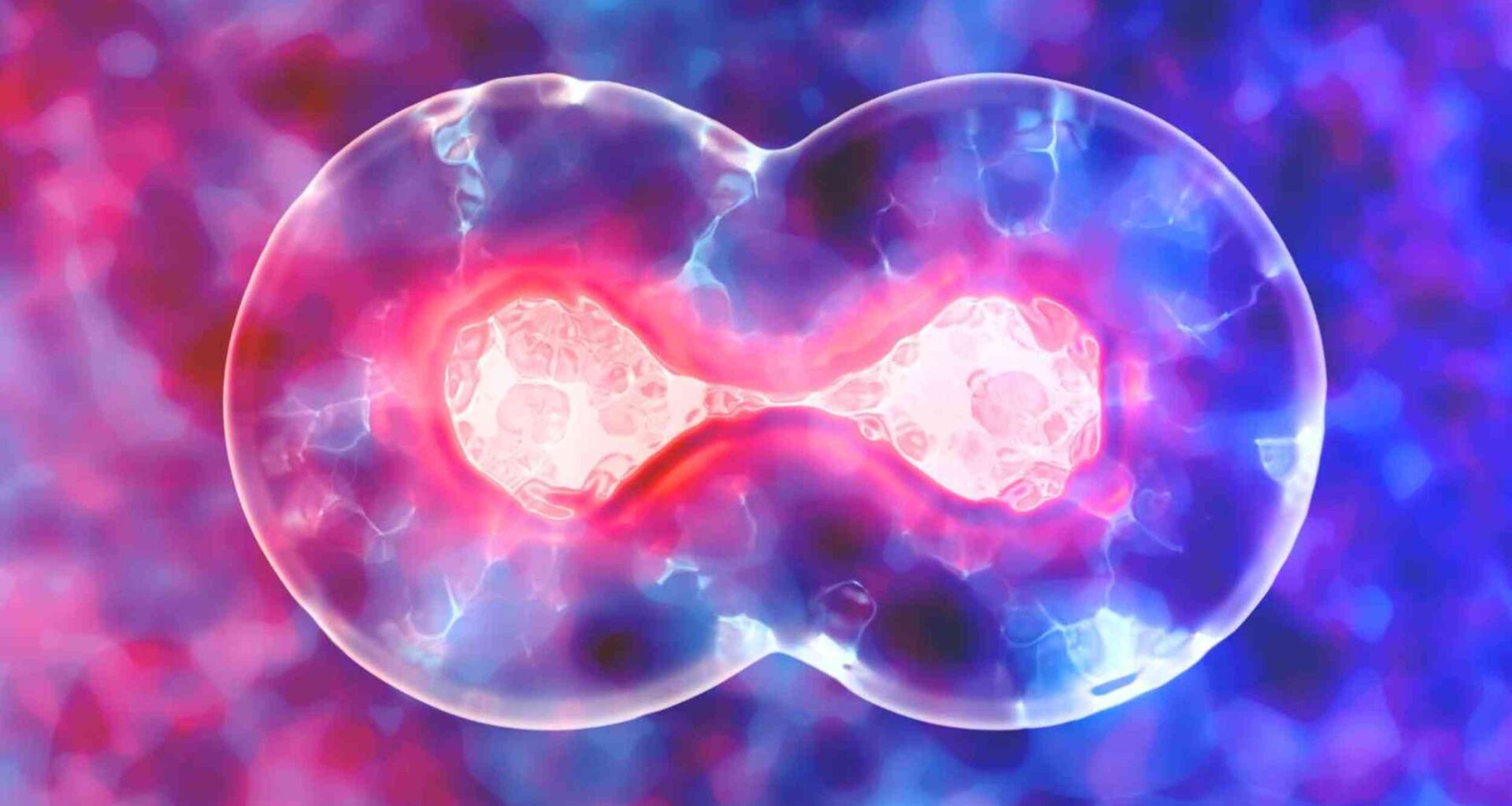
Every cell runs a constant cleanup operation, tagging old or damaged proteins and destroying them before they cause trouble. Scientists had a solid handle on how that process worked.
Then a team studying energy production found that a common amino acid carries a hidden switch – one that tells the cleanup machinery to pause specifically at the cell’s power-generating structures. Nobody had seen that layer of control before.
Energy on demand

Inside every cell sit hundreds to thousands of mitochondria, the tiny structures that produce most of the energy a body uses. They constantly adjust output based on how hard a cell is working.
How mitochondria know when to ramp up has been one of biology’s open questions. Scientists figured out long ago that nutrients influence the process – eat more, generate more – but no one had mapped the actual molecular handoff.
That is the question Professor Dr. Thorsten Hoppe of the University of Cologne set out to answer. His team at the institution’s CECAD aging-research center spent years narrowing the puzzle down to a single amino acid.
Leucine’s quiet job
Leucine is one of the essential amino acids the body cannot make on its own. It has to come from food, especially protein-rich items like meat and beans.
Nutritionists have long known the molecule drives muscle growth, a claim with decades of research behind it. The new study reveals a second job: leucine also protects a class of proteins on the outer surface of each mitochondrion.
Those surface proteins are not random. They control what enters and leaves the mitochondrion, and some of them import the proteins that actually run energy production inside. Pull them away, and output drops.
The hidden switch
To track what was happening, the team built a fluorescent marker in tiny roundworms that glows whenever a specific protein on the outer mitochondrial surface gets broken down. They bathed the worms in extra leucine and watched what happened.
The marker brightened. Protein levels on the mitochondrial surface jumped. Tracing back, the researchers identified a quality-control protein called SEL1L – something that marks proteins on the mitochondrial surface for destruction. This marked a newly identified layer of mitochondrial regulation.
When leucine was abundant, SEL1L levels at the mitochondria dropped, and the proteins it normally targets stayed intact. The team traced the signal back to a cellular sensor called GCN2, which appears to read amino-acid levels and regulate SEL1L accordingly.
Same in human cells
Roundworms are not humans, so the team repeated key experiments in human kidney cells. Excess leucine cut the level of mitochondrial SEL1L, stabilized the same outer-surface proteins, and pushed up energy production. The same loop produced the same result.
“We were thrilled to discover that a cell’s nutrient status, especially its leucine levels, directly impacts energy production,” said Dr. Qiaochu Li, first author in Hoppe’s lab, finding the result striking.
Roundworms and humans diverged hundreds of millions of years ago. Finding the same control loop in both suggests it is an old, core feature of cell biology, not a quirk of any one species.
A tumor loophole
Some cancers behave as if they have already figured this out. The team examined three lung cancer cell lines and found that two of them, both with mutations affecting leucine breakdown, carried elevated leucine inside their cells.
Those lines also showed fewer marks tagging proteins for destruction. When the team applied a drug that blocked protein entry into mitochondria, those lines kept growing while a third line stalled. A useful trick for a tumor.
The pattern hints at an escape route some tumors may already be using. A growing body of research has linked amino acids like leucine to tumor growth, and the new findings give that work a specific molecular handle.
Fertility and balance
There is a flip side. SEL1L is also part of the cell’s broader quality-control system, sweeping up damaged proteins so they do not pile up and cause problems over time. Suppressing it for an energy boost carries a cost.
The worm experiments hinted at one cost. Animals engineered to carry a disease-linked mutation in leucine handling produced normal egg counts under standard conditions, but when the GCN2 sensor was also disabled, their fertility dropped sharply.
Li cautioned that this approach has limits. SEL1L helps clear damaged proteins from the cell, so suppressing it indefinitely could let trouble accumulate. “It is important to proceed with caution,” said Li.
What changes now
Until this study, scientists could see that food affects mitochondrial output without knowing how the signal travels. Now the route is mapped: leucine works through a sensor called GCN2, which holds back SEL1L and keeps key proteins intact.
That opens new questions to investigate. Diseases in which cells struggle to produce enough energy now have a specific molecular target, and cancers leaning on leucine for survival have a vulnerability worth probing.
Drug developers will want to know whether nudging SEL1L could help patients whose cells fail to generate enough energy.
Oncologists will ask whether blocking GCN2 can strip that same protection from cancer cells that depend on it. Those questions are likely to drive years of future research.
The study is published in Nature Cell Biology.
—–
Like what you read? Subscribe to our newsletter for engaging articles, exclusive content, and the latest updates.
Check us out on EarthSnap , a free app brought to you by Eric Ralls and Earth.com.
—–