

Listen to this article
Estimated 4 minutes
The audio version of this article is generated by AI-based technology. Mispronunciations can occur. We are working with our partners to continually review and improve the results.
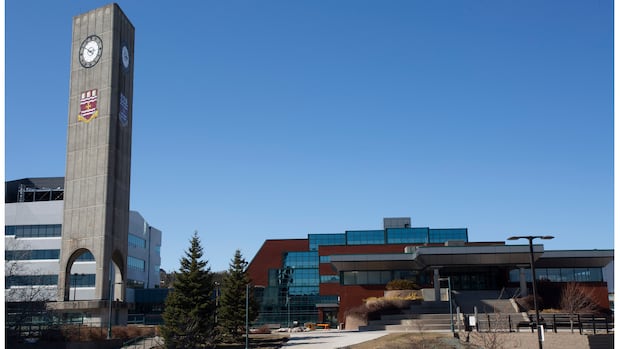
Memorial University is cutting academic spending by four per cent in its new budget and offering voluntary retirement to employees aged 60 and up — raising “serious concerns” for MUN’s faculty association.
As a way to save money, MUN says eligible employees can choose to retire this summer. According to a post on its website dated May 21, the decision is “designed to reduce costs while offering long-service faculty and staff additional financial support for retirement.”
Additional cost-cutting measures will be determined in August, after MUN knows how many people choose to retire. Employees are only eligible if they are at least 60 years old with at least 30 years of service, or are 71 years old, regardless of service years.
The retirement plan is part of MUN’s recently approved $432 million budget for 2026-2027, which includes a four per cent cut to academic units and six per cent cut to administrative units.
The cuts will “lead to some serious consequences,” said MUNFA president Lisa Moores on CBC Radio’s The St. John’s Morning Show.
She worries multiple retirements this summer could mean a lack of teaching faculty come fall.
The university is facing major financial challenges, and recently cut multiple programs, slashed vice-president positions and announced it was selling several properties. Meanwhile, the new provincial government reinstated a tuition freeze until the university gets its finances in order.
Budget is ‘risk informed’ approach, MUN says
MUN describes the overall budget as a “balanced and risk-informed approach to managing financial pressures while protecting Memorial’s academic mission and public role.”
The university says it needs to reduce costs as it faces a decline in the university-aged population, more competition across Canada, changes to federal immigration police, rising costs and “constrained” public funding.
 Lisa Moores, president of MUN’s faculty association, says the new budget will lead to losses across the university. (CBC)
The provincial government’s recent budget increased MUN’s total operating grant by $17 million — $10.4 million of which offsets the tuition freeze. The rest of the funding increase includes $2.4 million for the Doctor of Psychology program, $1 million for negotiated MUNFA collective agreement increases, $240,000 in grants for education students, and $3 million for nursing school satellite sites in Gander, Grand Falls and Happy Valley-Goose Bay.
MUN budgeted a 7.6 per cent decrease in tuition revenue from last year’s budget, due to lower projected registrations.
Moores pointed to a recent Senate report that said undergraduate admissions were up by 10 per cent, with graduate admissions up 16 per cent. She said MUNFA didn’t have input into the budget or university’s proposal to government.
Town hall on budget June 3
The university noted its investments, including support for first-year students and improving retention; more recruitment efforts; and more spending on contract teaching to support program continuity.
MUN is also giving $500,000 in more base funding to the School of Music and $450,000 extra for varsity athletes’ travel expenses. There is also an extra $50,000 for board of regents member education, and $171,620 for information technology investments.
Units will receive their budget allocation on June 5. MUN will host a town hall on the budget on June 3.
In a statement, MUN spokesperson Michelle Osmond said stakeholders were contacted when the budget was released May 20 and were given the opportunity for additional engagement.
“Memorial University is making responsible decisions now that safeguard our ability to deliver high-quality education, research and community impact for years to come,” it reads.
No one from MUN was available for an interview due to ongoing convocations.
In a post on MUN’s Gazette website last week, president Janet Morrison said the budget’s priority is to “support core academic delivery while making deliberate, evidence-informed decisions about the investment of our resources.”
“That means improving how we operate and focusing on long-term sustainability,” Morrison said.
Download our free CBC News app to sign up for push alerts for CBC Newfoundland and Labrador. Click here to visit our landing page.