
More than one million Montrealers are being asked to drastically reduce their water consumption this summer due to the advanced deterioration of one of the city’s key water mains.
Residents are being called on to limit outdoor watering and take shorter showers after an inspection revealed a 48-inch water pipe that feeds the McTavish water reservoir is in critical condition. The pipe, under Atwater Ave. between Sherbrooke St. downtown and Workman St. in St-Henri, is one of four pipes that feed the reservoir, one of the main drinking water basins for the city. Another 60-inch feeder pipe that runs under Cathédrale St. is already undergoing repairs, so only two water supply lines will be in operation.
It’s the first time in the city’s history a call to the population asking for reduced water usage has been issued, officials said.
The pipe will be shut down as the city carries out emergency repair work starting in the coming days that’s expected to take six to eight weeks. The pipe was installed in 1984. Recent inspections showed portions of the steel armature reinforcing the pipe were decaying.
“We are facing an exceptional situation that requires equally exceptional measures,” said Alan DeSousa, the city’s executive committee member responsible for mobility and infrastructure, at a news conference Friday morning. “The city will do its part with targeted measures, but the success of the operation also depends on a collective effort.”
Sixteen of the city’s 19 boroughs are affected by the call for a water reduction. Those that are not because they’re supplied by separate pumping stations are Pierrefonds-Roxboro, Île-Bizard—Ste-Geneviève and Lachine. Six demerged suburbs are also affected: Westmount, Hampstead, Côte-St-Luc, Montreal West, Town of Mount Royal and Montréal-Est.
Since the shutdown is occurring at the start of the summer season, when water demand is at its peak, the pressure on drinking water production infrastructure will be high, the city said.
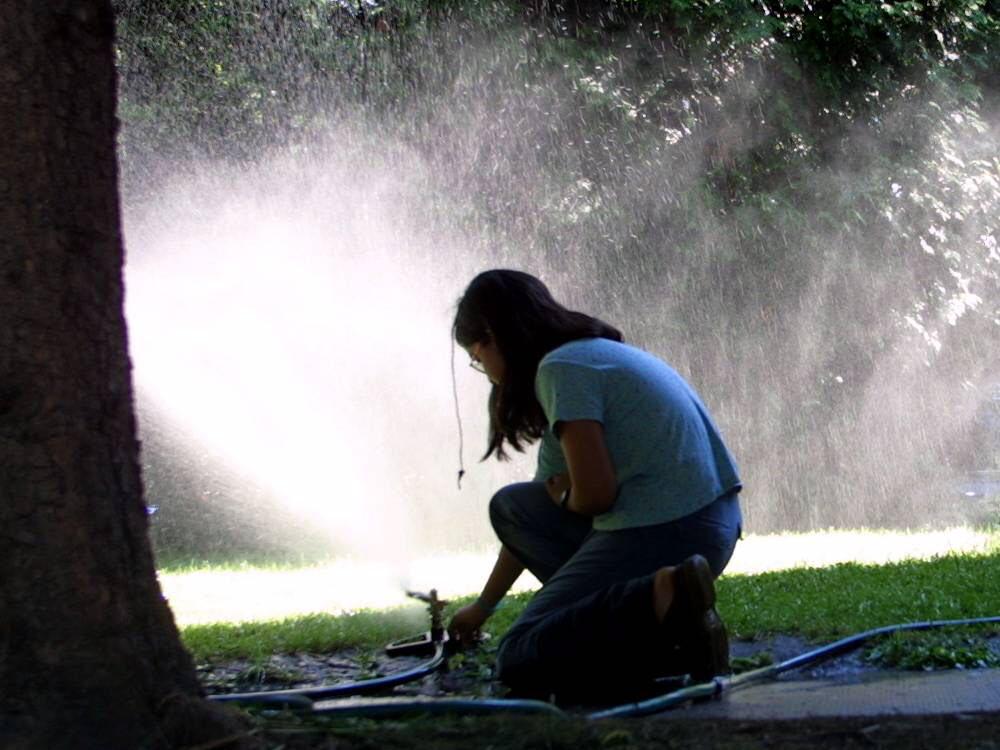
Residents are being asked to reduce watering of lawns and gardens, and avoid using water for outdoor cleaning. They are also being asked to shorten their showers and to avoid running the water while brushing their teeth.
On average, Montrealers use just over 300 litres of water per day, far above the Canadian average of 220 lites. At the same time, roughly one third of Montreal’s drinking water leaks out of decaying pipes and into the ground.
For its part, the city will suspend the continuous flushing of water mains normally done to clean sediment out of pipes, and suspend the preventative flushing and cleaning of sewer lines. It will also suspend or limit street washing, the use of decorative fountains and reduce non-essential watering.
The city added that a watering ban or fines could be put in place if necessary.
“We’ve got a proactive and preventative strategy that, as a first call, asks for all players to reduce water consumption, and we think that with the collaboration of the communities involved, individual, institutional, commercial, and industrial as well as the city, we will be able to get there,” Desousa said.
The city is hoping that a collective effort will diminish use by seven per cent, reducing pressure on the water pipes.
The city will monitor water consumption and the state of the infrastructure to decide whether further measures will be needed, DeSousa said.
The chief of Montreal’s fire department, Richard Liebmann, said the force will have the resources it needs to combat fires. But Chris Ross, president of the firefighters’ union, questioned why his members were not informed before the news conference. A potential water shortage can impede firefighters’ ability to fight a blaze, he said.
“If we think we’re going to run short on water, we move to a defensive operation because we can’t have firefighters in a building if we’re not able to protect them with water,” he said. “If you run out of water, well, the only way to stop that fire spread is by tearing buildings down,” he said.
Projet Montréal leader Ericka Alneus questioned why the bulk of the responsibility seemed to fall on the shoulders of residents.
“No details have been provided regarding the restrictions or measures that will apply to businesses and large institutions,” she said. “If we are to get through the entire summer with a significantly reduced water supply, everyone will have to do their part.”
DeSousa responded that industries and commercial enterprises have already been advised.
Editor’s Picks