
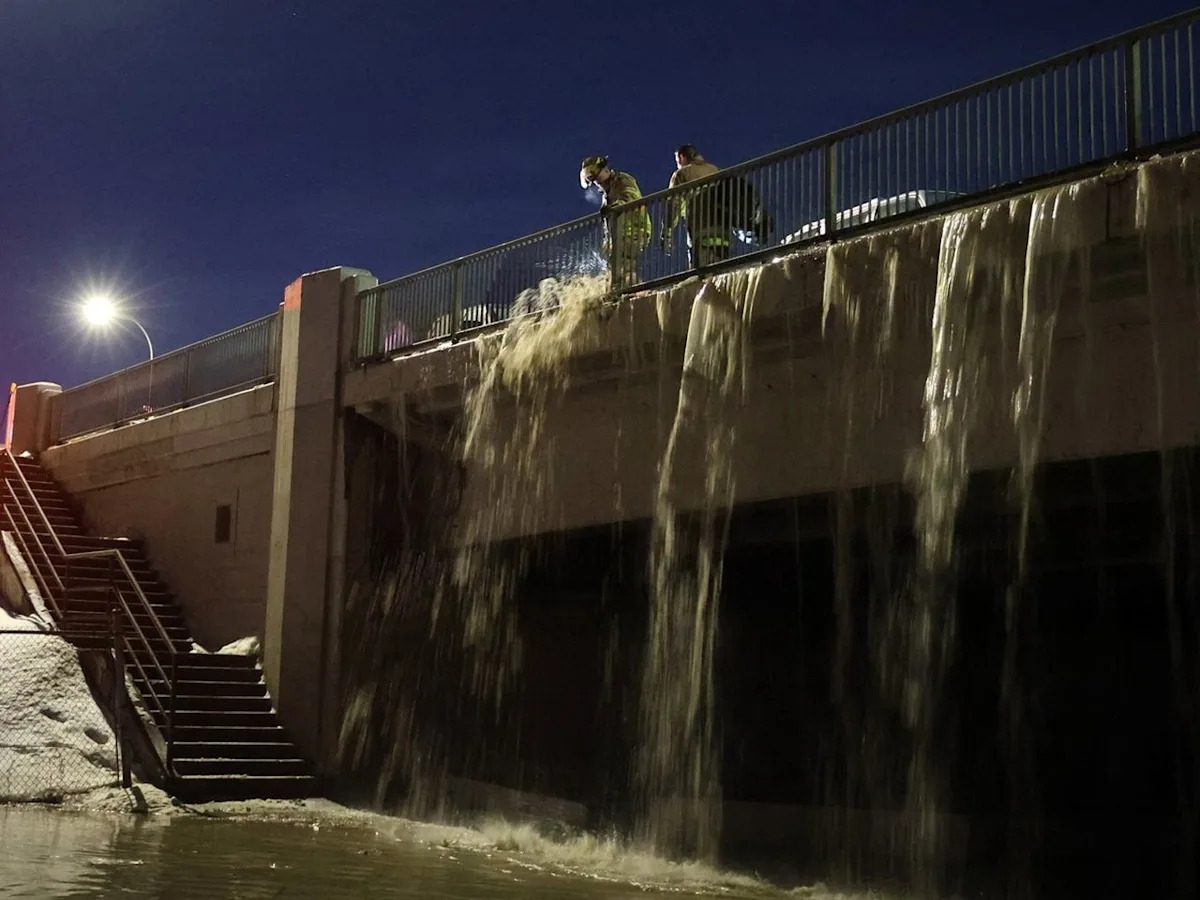
Aging infrastructure and a leaky distribution network caused Calgary to lose nearly one-quarter of its treated water last year, according to a report coming to a city council committee next week.
The city lost 23 per cent of its water in 2025 — a rate that falls within the average range of 20 to 24 per cent experienced since 2019, states the report, which will be presented to council’s infrastructure and planning committee Tuesday.
Water loss is estimated by comparing how much water is generated by the city’s two water treatment plants with how much is billed through customer meters. The report notes, however, that the 23 per cent figure is an estimate, its accuracy depending “on how well we can measure, detect and confirm what’s happening throughout the entire system.”
The loss rate is no surprise to Dr. Kerry Black, a civil engineering professor at the University of Calgary and the Canada Research Chair in integrated knowledge, engineering and sustainable communities.
Black said every municipality loses some of its treated water.
“The older infrastructure gets, the more chances there are for it to leak and the more that number goes up,” she said in an interview.
“When you start to see (water loss rates) between 20 to 30 per cent, these are not necessarily surprising. But it doesn’t mean it’s not concerning and that something shouldn’t be done to address it.”
Calgary has more than 5,500 kilometres of belowground water pipes, which deliver water to more than 1.6 million customers in Calgary, Airdrie, Chestermere, Strathmore and the Tsuut’ina Nation. The network includes more than 345,000 service connections.
While some leaks are to be expected along such a large network, the city’s report notes recent system challenges — namely the two failures of the Bearspaw south feeder main — reinforced the need to reduce how much water Calgary is losing.
“When you have people’s attention and people caring about water in Calgary — that’s the time to be pushing forward ambitious agendas for water,” Black said. “It’s when we’re not paying attention that people don’t want to spend money toward it.
“Now is the time to seize on the fact that most Calgarians are the most informed they’ve ever been about water infrastructure. There’s no question about that. So, now that we have everyone’s attention, let’s focus on that.”
Admin calls for $342 million investment over four years
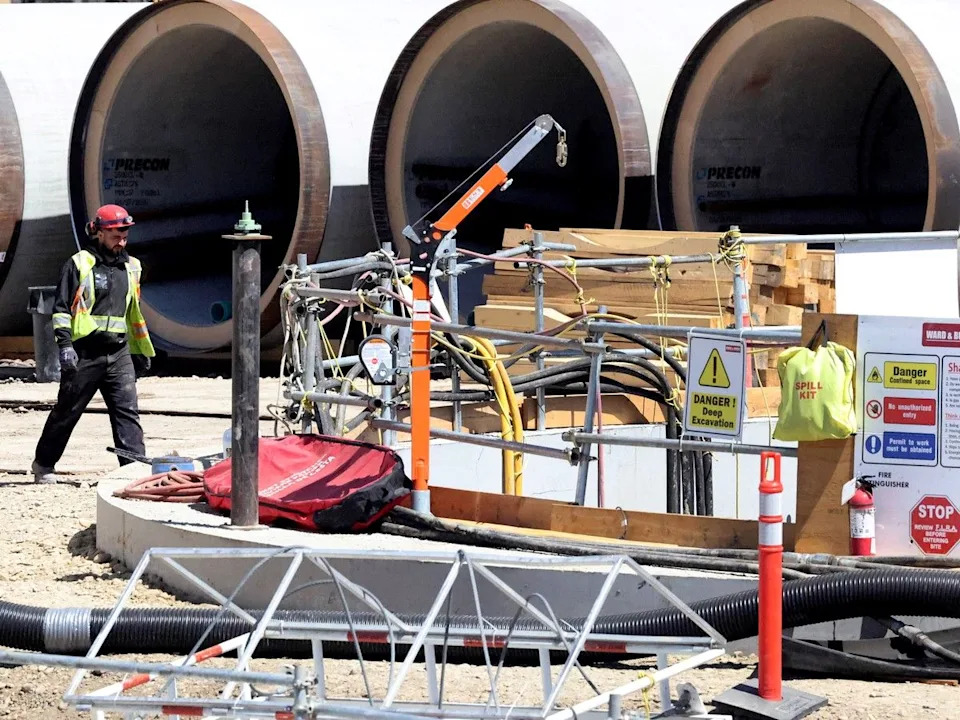
The City of Calgary will begin Stage B construction on the Bearspaw South Feeder Main replacement project in May 2026.
The city produces 550 million litres of water per day, on average, though this can be much higher during the summer months. A 23 per cent loss rate means Calgary is losing approximately 40 billion litres of water annually, or about 115 million litres daily.
To bring this down, administration is recommending council approve a capital spending plan of $342 million for the 2027-30 budget cycle to replace aging water infrastructure and improve how the city detects leaks and measures water usage.
That is roughly double the $162 million the city budgeted for the same purposes in the 2023-26 fiscal plan, the report says.
Ward 3 Coun. Andrew Yule said the funding request is extensive, but indicative of the challenge facing the current council to address Calgary’s water infrastructure issues.
“We’ve been talking about water ever since I started as a councillor, so the numbers don’t surprise me,” he said. “I’d say this was an administration-initiated effort to get ahead of this, and I think it’s just a matter of making sure we take action — and continue to take action — to help reduce this number.”
Yule referred to the city’s new water efficiency plan, which council approved earlier this spring. The plan aims to reduce Calgary’s overall water consumption by 20 per cent by 2040.
It also includes an accelerated water loss program, with a goal to reduce Calgary’s rate of water loss to 15 per cent by 2030.
Considering water scarcity and drought will likely be more pronounced in the future, Yule said it’s crucial for the city to be as water-efficient as possible.
“We’re a city on two small rivers,” he said. “I’d say the resource is finite, but the growth of our city is exponential. It’s all tied together, from our housing strategy to our environmental strategy.
“We need to make sure we’re giving future Calgarians the most amount of runway to make sure the resources can be stretched as far as they need to be stretched in the future.”
How will Calgary reduce water loss?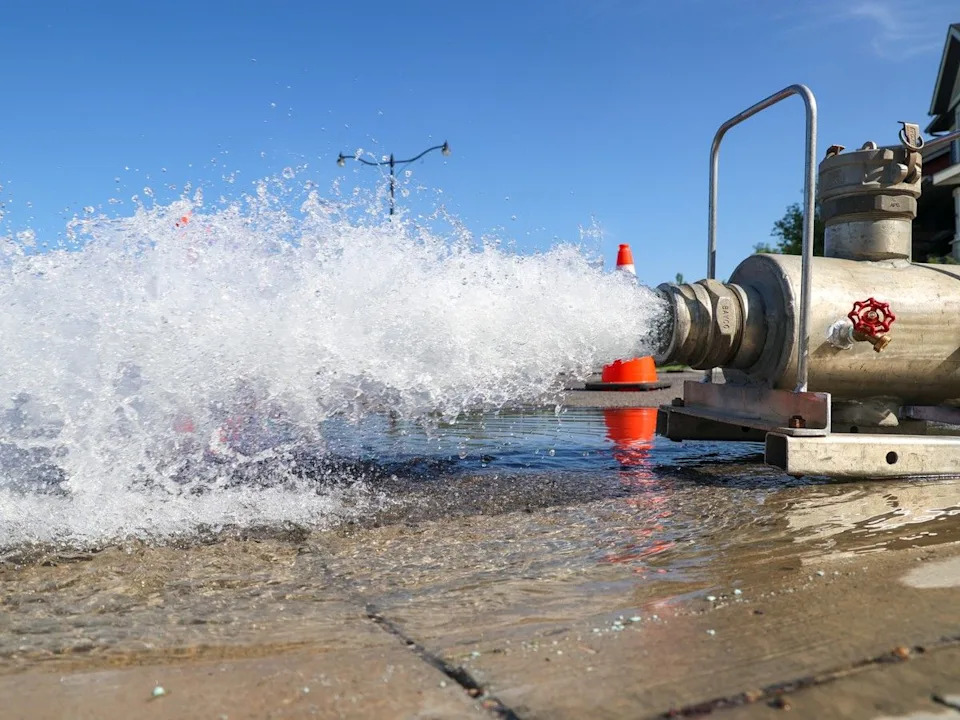
A City of Calgary crew flushes out a water main through an open fire hydrant to clear potential contaminated water following a large water main break near Silverado on Friday, June 2, 2023.
Calgary manages its water loss through a proactive leak detection system and a cathodic protection program that aims to delay the deterioration of metallic pipes, a city official previously told Postmedia. The city’s waterworks team uses acoustic sensors and even satellite imaging to identify where leaks are occurring, as part of an annual replacement, testing and inspection program.
Earlier this year, the city launched a program to replace water meters at residential and commercial properties with new smart meters. The five-year program, set to last until 2031, will replace more than 400,000 meters with newer devices that use cloud technology that more accurately track how much water a property is using and how much the property should be billed.
The city is also recommending council budget $179 million over the next four years to replace 10 kilometres of aging water mains this year, and then 15 kilometres annually from 2027 to 2030, according to the report.
The city replaced 7.8 kilometres of water mains in 2025, 3.2 kilometres in 2024 and 2.5 kilometres in 2023.
“I think we are doing the work and we just need to continue doing the work,” Yule said. “We sort of classified ourselves, from the mayor to the rest of council, that we’re going to be that ‘infrastructure’ council. It’s not flashy. It’s not big arenas and big projects.
“It’s really about getting down to the core services of our city, like our pipes, and making sure we’re being efficient with the infrastructure we have.”
How does Calgary’s water loss compare to other cities?
Though Calgary’s water leakage is extensive, some Alberta municipalities lose even more of their treated water output, while others lose much less.
A report to Cochrane’s town council in 2023 found the town had lost 552 million litres of treated water in 2021, or 18 per cent of its total output.
A 2019 water use and conservation report from the now-defunct Calgary Metropolitan Region Board found the Town of Okotoks was losing 23 to 35 per cent of its water, at the time of the study. Wheatland County, east of Calgary, was losing more than 50 per cent of its water.
Calgary’s water loss rate far exceeds Edmonton’s, which, according to reporting from that city’s municipally hydro provider Epcor, was just over five per cent in 2021.
A City of Calgary official noted that other cities and towns may use different methodologies for tracking and reporting their water loss statistics, however, which makes inter-municipal comparisons difficult.
Yule said Edmonton’s lower water loss may be due to geotechnical advantages; Edmonton’s clay-based soil makes it easier for Edmonton’s waterworks crews to identify leakages sooner.
“It’s really easy for Edmonton to find those leaks because when a pipe is leaking, it bubbles to the top right away and you know you have an issue,” he said. “Whereas with Calgary and the sandy base we have in our soil, the leak kind of seeps into the groundwater and we’re none the wiser.
“We can’t really anticipate or find these leaks as easily as another municipality like Edmonton.”