
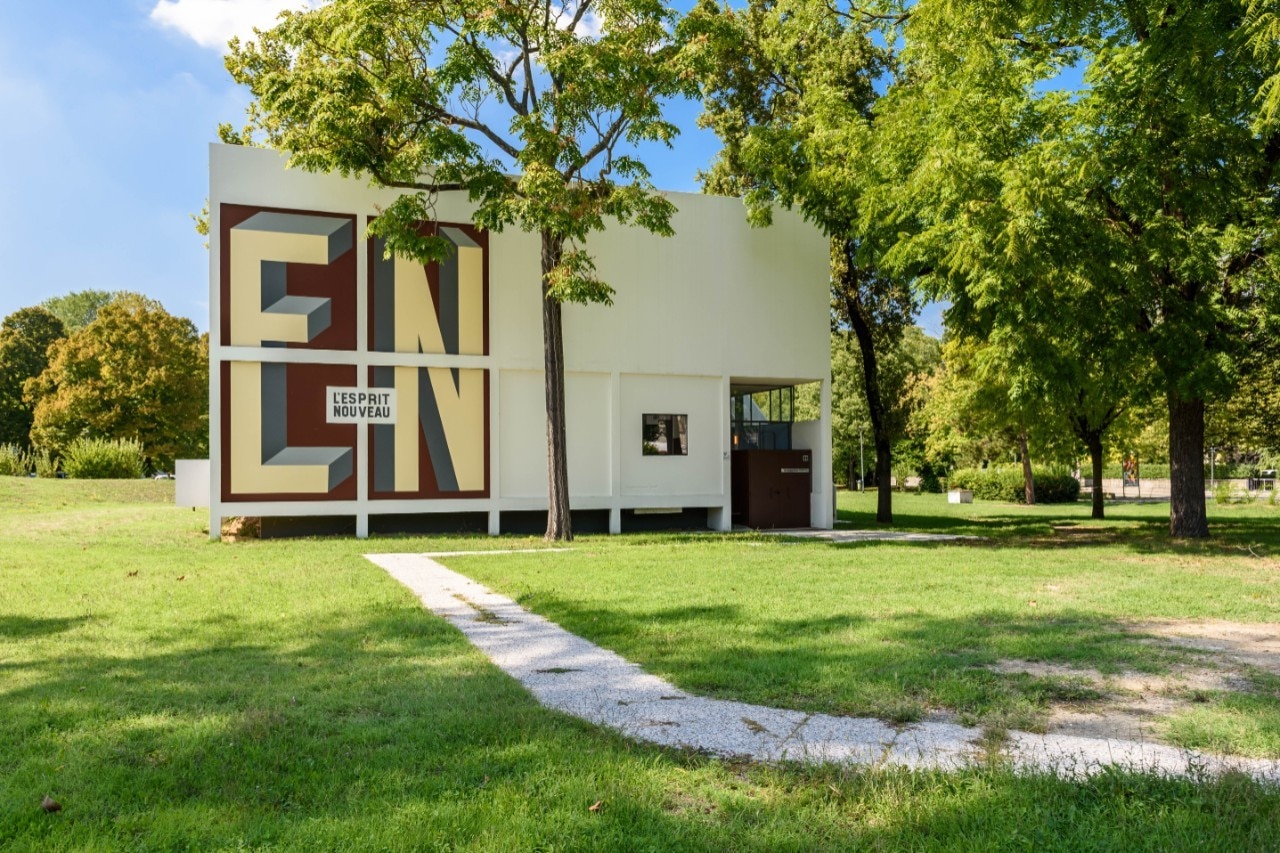
Let’s start with the obvious: Le Corbusier was the architect of the great rational utopias of the twentieth century. From the Unité d’Habitation in Marseille to the Plan Voisin — which envisioned demolishing part of historic central Paris and replacing it with a grid of towers set among green spaces — his work consistently sought to impose order, geometry, and function onto the complexity of urban life.
The Pavillon de l’Esprit Nouveau, designed with Pierre Jeanneret for the 1925 Exposition Internationale des Arts Décoratifs et Industriels Modernes, emerged directly from this vision: not simply as a temporary structure, but as a habitable manifesto for the modern city. Today, Bologna is home to the world’s only existing replica of the pavilion.
Dixit, by contrast, is almost its complete opposite. Created in 2008 by French neuropsychiatrist Jean-Louis Roubira, the card game became one of the most popular phenomena in contemporary tabletop gaming precisely because it rejects logic, precision, and singular interpretations. Its dreamlike imagery operates through mental associations, intuition, and ambiguity.