
By Raj Singh Bhandall
Wanjara Nomad Collections
Reconciliation must include rectification. Legal registration belongs in the record of exclusion. Community authorship belongs at the front of national redress.
Canada must not apologize in the language of the colonial archive
Canada is now facing a question larger than one memorial panel, one municipal plaque, or one academic dispute over nomenclature. The question is whether the national record will continue to centre the name by which state institutions, immigration officials, courts, newspapers, maritime registries, and imperial archives recorded the exclusion, or whether Canada will finally place at the front of remembrance the name through which the community authored, carried, prayed through, and remembered the voyage.
That name is Guru Nanak Jahaz.
The Coal Harbour gathering itself has also been misframed. It was not simply a City of Vancouver ceremony to “inaugurate” a memorial. The memorial had already been unveiled in 2012. Nor was the event organized by the City as a municipal unveiling of a panel. It was the 112th Guru Nanak Jahaz Remembrance, a community-rooted act of Sangat memory that continues the remembrance work carried forward by the Sangat in previous years.
Civic recognition matters, but it does not make the City the author of the remembrance. To describe the moment primarily through municipal action shifts agency away from the community and back to the institution, repeating the very hierarchy this correction seeks to challenge. Guru Nanak Jahaz was not authored by the state in 1914, and its remembrance is not authored by the state today. The City’s role is to recognize, correct, and support public memory, not to replace the Sangat (community) as the source of that memory.
The SS Komagata Maru belongs in the evidentiary record, not at the forefront of remembrance. No serious correction requires its deletion. But registry is not remembrance, and a vessel’s legal name should not govern a memorial, national commemoration, or federal apology.
A memorial is not a shipping ledger. A federal apology is not a customs file. A national act of remembrance is not a court exhibit. Canada’s 2016 federal apology was important, but it remains incomplete if it continues to centre only the registered vessel name while leaving Guru Nanak Jahaz outside the primary language of national remembrance.
SS Komagata Maru records how the state filed the injustice. Guru Nanak Jahaz records how the community carried the resistance. That distinction must now guide Canada’s federal record.
Legal registration is not historical authorship
The central error in the archival-obedience argument is the confusion of legal registration with historical authorship. The issue is not whether SS Komagata Maru should remain in the record. It should. The issue is whether the registered name should continue to govern public remembrance simply because it appears in maritime records, legal proceedings, immigration files, newspapers, government correspondence, and colonial- imperial archives.
That is a different claim entirely. Those records were produced by structures that excluded, detained, litigated, racialized, and expelled the passengers. To make those records the final authority over the memorial or federal apology is not historical clarity. It is colonial archival obedience.
The registered name tells us what the vessel was called in legal and maritime paperwork. It does not tell us who authored the challenge. It does not tell us what moral world the passengers travelled within. It does not tell us how the Sangat remembered the voyage. It does not tell us why Sri Guru Granth Sahib Ji was aboard. It does not tell us why Guru Nanak’s name mattered.
A state file can preserve colonial evidence. It cannot be allowed to monopolize meaning.
The colonial archive is indispensable, but it is not innocent
The colonial archive must be preserved. It is necessary for legal tracing, historical documentation, and public accountability. Without immigration records, court files, shipping documents, newspapers, and state correspondence, proving Canada’s exclusionary regime would be far harder.
But preservation is not the same as supremacy. This is not an argument against archives; state files can preserve traces of resistance alongside the mechanics of repression, including petitions, legal challenges, and community fundraising. The problem is not the archive itself, but allowing the colonial state’s naming conventions within that archive to become the final authority over public remembrance.
State records preserve evidence of injustice while reproducing the bureaucratic categories through which that injustice was administered. They tell us what immigration officials filed and what courts recognized, but they cannot tell us how a community named its own courage.
Canada should not confuse colonial archival continuity with historical justice. The federal record must preserve the evidentiary trail of the injustice without forcing the vocabulary of exclusion to remain supreme in the language of national redress.
Guru Nanak Jahaz was authorship, not nickname
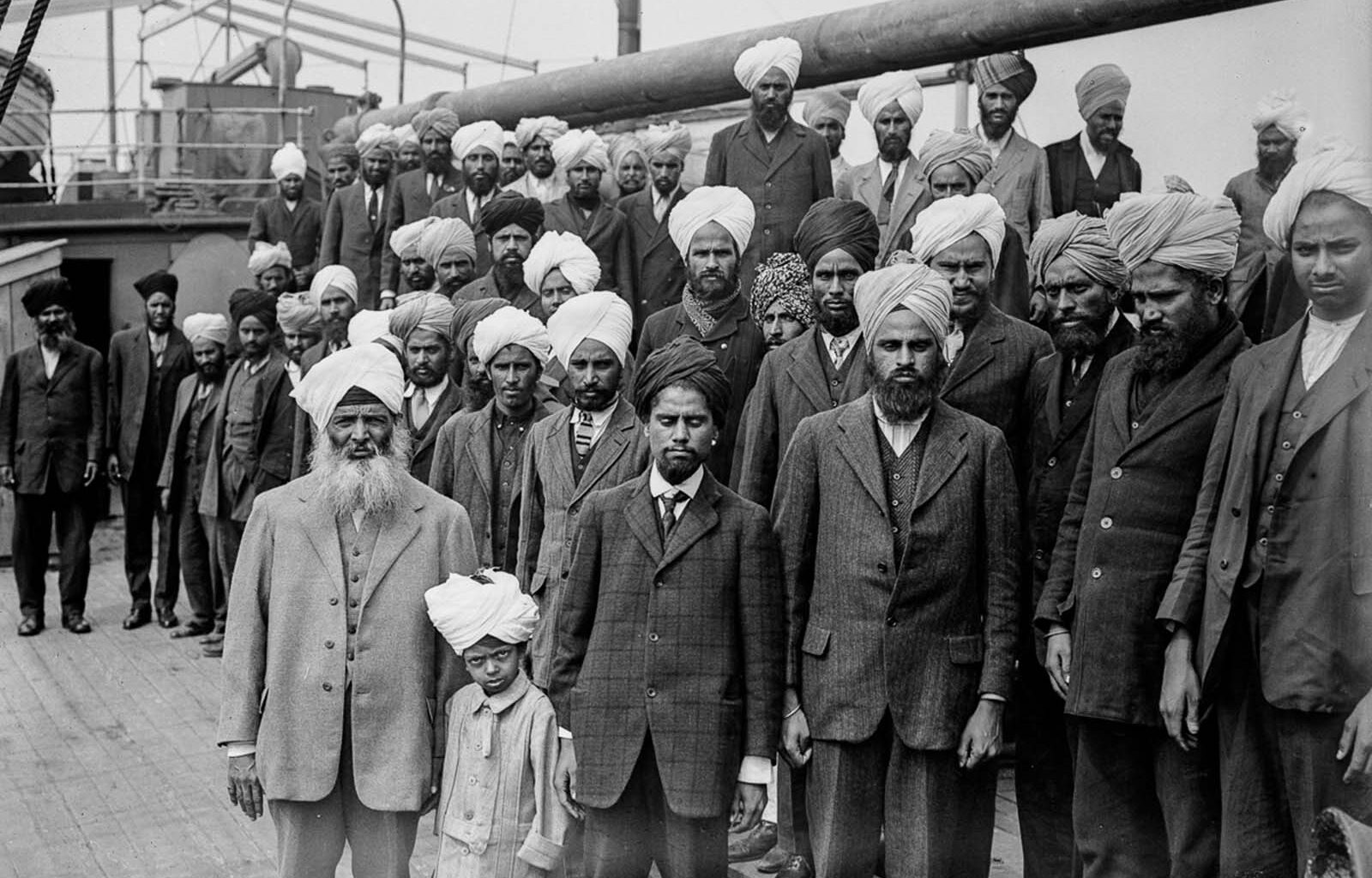
Guru Nanak Jahaz was not a late emotional nickname invented generations after the event. It was the authored identity of a historic act of resistance against Canada’s exclusionary immigration regime. Baba Gurdit Singh may not have owned the Japanese vessel, and the hull may have remained legally registered as SS Komagata Maru, but ownership is not authorship. Through the Guru Nanak Steamship framework, the widely recorded $66,000 charter arrangement, the invocation of Guru Nanak’s name, and the presence of Sri Guru Granth Sahib Ji aboard, the voyage moved within a moral, spiritual, commercial, and organizational identity that cannot be reduced to maritime paperwork.
The resistance was also never his alone: the passengers, the Shore Committee, the Khalsa Diwan Society, local supporters, and the wider Sangat carried it forward.
A registry may name the hull; a charter names the undertaking; Ardaas names the memory. That is why any responsible memorial or federal apology must distinguish between the registered vessel and the authored voyage: SS Komagata Maru belongs in the record of exclusion, while Guru Nanak Jahaz belongs at the front of remembrance.
The vessel had many registry names. The voyage had one moral name.
The argument that SS Komagata Maru must remain supreme because it was the vessel’s registered name becomes even weaker when the vessel’s broader naming history is considered. The ship moved through several commercial and registry identities, including Stubbenhuk, Sicilia, Komagata Maru, and later Heian Maru. These names reflected ownership, registration, maritime commerce, and the administrative life of a steel vessel.
That history matters because it exposes the narrowness of the registry argument. If public remembrance must be governed by the vessel’s legal or commercial name, why should one registry name be treated as morally supreme over all the others? Why not Stubbenhuk? Why not Sicilia? Why not Heian Maru?
The answer is obvious: because none of those names carries the moral authorship of the 1914 resistance.
Komagata Maru belongs in the record because it was the registered name under which Canadian officials, newspapers, courts, and immigration authorities filed the exclusion. But it was not the name through which the community authored the voyage’s ethical meaning. The voyage that challenged Canada’s exclusionary regime was not remembered by the Sangat as Stubbenhuk, Sicilia, or Heian Maru. It was carried forward as Guru Nanak Jahaz.
Registry names follow ownership. Community names carry memory. A vessel can pass through commercial labels, corporate registries, and maritime paperwork. A people’s act of resistance is remembered through the name that carried its prayer, purpose, and courage.
This is why Guru Nanak Jahaz cannot be treated as a decorative alternative to Komagata Maru. The registered name records how the state filed the incident. The community name records how the resistance was authored, prayed through, and transmitted. To place Guru Nanak Jahaz at the front of remembrance is not to deny the vessel’s registry history. It is to refuse the mistake of treating one commercial registry name as the final moral name of the voyage.
Sri Guru Granth Sahib Ji was not a “religious layer”
Sri Guru Granth Sahib Ji was not a “religious layer” added to an otherwise secular political voyage. Within Sikh ontology, Sri Guru Granth Sahib Ji is not a symbol, supplement, or devotional object; Sri Guru Granth Sahib Ji is Guru, the living spiritual authority of the Sikh Panth. The presence of Sri Guru Granth Sahib Ji aboard Guru Nanak Jahaz transformed the journey from a mere commercial crossing into a spiritually anchored, community-organized challenge to imperial exclusion. In Sikh public life, Ardaas, Sangat, Bani, Guru Granth Sahib, and public resistance are not separate compartments; they form the framework from which courage, duty, and anti-colonial defiance are drawn. That is why, within Sikh and Panjabi memory, Guru Nanak Jahaz is remembered as the first floating Gurdwara Sahib to bless the Pacific: the Nishan Sahib flew high, the vessel was cradled in Bani, and the journey was animated by Sangat, Pangat, and Langar.
This truth became unmistakable at Budge Budge, near Calcutta, when returning passengers sought to carry Sri Guru Granth Sahib Ji with dignity and place Guru Sahib in a local Gurdwara Sahib, only for colonial power to treat even that sacred duty as a threat. In the confrontation that followed, at least nineteen passengers were killed, many others were injured or imprisoned, and Sikh and Panjabi memory remembers their stand not merely as resistance to arrest, but as a defence of Guru Sahib, dignity, and Panthic obligation.
This Sikh-led and Panjabi-rooted framework did not exclude others; it carried Panjabi passengers of Sikh, Muslim, and Hindu faith backgrounds in a shared confrontation with Canada’s racialized immigration regime.
For these reasons, the federal record must not treat Guru Nanak Jahaz as a sentimental nickname or ceremonial afterthought. A federal apology that fails to grasp this risks apologizing to the passengers while still misnaming the moral universe they inhabited. The correction is not cosmetic; it is ethical, historical, and structurally necessary.
The real anachronism is “South Asian”
Another contradiction must be confronted directly. The objection to Guru Nanak Jahaz is often framed as a defence of historical precision against present-day politics. Yet the same argument repeatedly relies on the term “South Asian” to describe the 1914 passengers.
That label is not neutral. When imposed retroactively on the passengers of Guru Nanak Jahaz, it is historically anachronistic, intellectually lazy, and morally flattening. It was not the language through which those passengers identified themselves in 1914. The historical vocabulary of the period included British Indian, Panjabi, Sikh, Muslim, Hindu, “Hindoo,” East Indian, and Asiatic. “South Asian” belongs to a later bureaucratic and academic imagination.
Wanjara Nomad Collections has already described “S.A.” and “S.A. Canadian” as racist, reductive, and repressive labels. In this context, that critique becomes even more urgent. To call the passengers “South Asian” is not an act of inclusion. It is an act of administrative dilution. It replaces a Sikh-led, Panjabi-rooted, multi-faith anti-colonial undertaking with a modern umbrella term the passengers did not use, the organizers did not invoke, and the Sangat did not preserve in Ardaas.
If anachronism is the concern, then “South Asian” must be interrogated first
Guru Nanak Jahaz, by contrast, is tied to Baba Gurdit Singh’s own framing, the Guru Nanak Steamship framework, Sri Guru Granth Sahib Ji aboard the vessel, Ardaas, Sangat memory, and the community’s living remembrance. It is not a present-day invention inserted into the past. It is the name through which the voyage’s moral and communal meaning was carried forward.
To treat Guru Nanak Jahaz as a political intrusion while treating “South Asian” as neutral is not historical precision. It is selective policing of language.
Canada’s federal record must be more precise than bureaucratic convenience. The passengers were not an abstract “South Asian” mass. They were overwhelmingly Punjabi and Sikh, joined by Panjabi Muslim and Hindu passengers in a shared confrontation with white exclusion.
Federal remembrance must have the courage to name that reality.
Sikh-led does not mean Sikh-only
The historical record varies slightly in count, but the composition is consistently clear: the passengers were overwhelmingly Panjabi and Sikh, with Panjabi Muslim and Hindu passengers also aboard.
• Vancouver records list 376 British subjects from Panjab, including 340 Sikhs, 24 Muslims, and 12 Hindus.
• Surrey records list 377 British subjects from Panjab, British India, including 341 Sikhs, 24 Muslims, and 12 Hindus.
That composition requires precision. It shows that the voyage was overwhelmingly Sikh-led and Panjabi-rooted, yet multi-faith in its human reality—not a generic “South Asian” episode, but a powerful symbol of Panjabi unity against exclusion.
To say the voyage was Sikh-led is not to say it was Sikh-only. To say the voyage was Panjabi-rooted is not to deny its broader anti-racist meaning. To say Guru Nanak Jahaz belongs at the front of remembrance is not to erase the Muslim and Hindu passengers. It is to name the moral and organizational framework through which all the passengers travelled, suffered, and resisted together.
Guru Nanak’s name is not a sectarian boundary. It is a universal moral witness. The presence of Panjabi Muslim and Hindu passengers does not make the Sikh framework less historically real. It shows that the moral force of the voyage extended beyond one religious community while remaining rooted in the institutions, leadership, and memory that made the journey possible.
Canada’s federal record must be precise enough to hold all these truths at once. The law that excluded the passengers was racial. The resistance to that law was historically specific. It was Sikh-led, Panjabi-rooted, multi-faith, anti-colonial, commercially organized, spiritually framed, and remembered through Guru Nanak’s name. The Muslim and Hindu passengers did not view Guru Nanak’s name as an alien imposition but actively participated in the vessel’s shared moral economy. These facts do not contradict one another. They complete one another.
That lineage of resistance also travelled through descendants: Harnam Singh Khalra, remembered as a Guru Nanak Jahaz passenger, was the grandfather of Shaheed Jaswant Singh Khalra, the Sikh human-rights defender who exposed enforced disappearances, unlawful killings, and secret cremations in Punjab, India, before Punjab Police abducted, tortured, murdered, and disappeared him.
The pattern beyond the panel
The concern over the memorial panel exposes a broader methodological pattern in which Sikh and Panjabi agency is tolerated only when subordinated to secular, academic, or state narratives. This archival obedience creates a deep asymmetry: Guru Nanak Jahaz may be accepted as a devotional footnote, but the moment it challenges the public hierarchy of memory, it is dismissed as distortion.
This same imperial logic traps the language debate; while critics like Ali Kazimi correctly identify Hindi as anachronistic to the 1914 voyage, redirecting the memorial toward the administrative language of colonial Panjab merely substitutes one colonial archive for another. True remembrance must be governed not by the vocabulary of the state, but by the language of community authorship—rooted in the Guru Nanak Steamship framework, Ardaas, Sri Guru Granth Sahib Ji, and living Gurmukhi Sikh memory.
Canada’s exclusionary legal regime and institutional racism must remain starkly visible, but acknowledging that wrongdoing does not require the state’s maritime registration or colonial paperwork to maintain supremacy. Ultimately, treating the colonial archive as the final authority over Sikh and Panjabi memory subordinates the very community institutions—the Gurdwaras, the Shore Committee, and the Sangat—that authored the resistance, allowing the vocabulary of the oppressor to overwrite the moral universe of the passengers.
Archives preserve former names. Redress corrects public memory.
Canada already understands that historical clarity does not require a former name to remain supreme in public life. When Ryerson University became Toronto Metropolitan University, the old name did not vanish from archives, legal history, institutional records, or scholarly discussion. It remained available for critical explanation. But it no longer governed the institution’s public identity. The former name was preserved in the record, while the public-facing name was corrected.
The same principle is visible in British Columbia’s bridge-naming landscape. The replacement for the Pattullo Bridge has received the name stal̕əw̓asəm Bridge from Kwantlen First Nation and Musqueam Indian Band. The former Pattullo name remains historically traceable, but the corrected public name now carries a different relationship to place, memory, and Indigenous recognition.
These examples matter because they expose the weakness in the claim that changing public hierarchy somehow destroys history. It does not. It changes the moral order of public memory. Former names can remain in archives. They can remain in footnotes. They can remain in legal history and institutional interpretation. But they do not have to remain supreme in the public act of remembrance.
That is the same principle at stake with Guru Nanak Jahaz. No one is asking Canada to erase SS Komagata Maru from the archive. The question is whether Canada will continue making a Japanese colonio-imperial corporate registry name, born from commercial ownership and boardroom paperwork rather than Sangat memory, the leading public name of a Sikh-led, Panjabi-rooted, multi-faith, anti-colonial resistance. Historical clarity did not require Toronto to keep Ryerson as its primary public name. Historical clarity does not require Canada to keep Komagata Maru at the front of remembrance.
Remembrance honours people, not the machinery that carried them
With deep reverence and humility, these examples are offered not to compare suffering, but to illustrate a broader principle of public memory: remembrance honours human courage, dignity, and resistance, not merely the machinery that carried people through history.
When Jews were transported to concentration and extermination camps during the Holocaust, we do not remember that history through the names or classifications of the railway equipment that carried them. We remember the people, their suffering, their resistance, and humanity’s obligation never to repeat such evil.
When enslaved Africans were forced across the Atlantic on vessels such as La Amistad, The Brooks, and The Jesus of Lübeck, remembrance does not centre the ships. It centres the human beings who endured enslavement, the resistance they offered, and the injustice they suffered.
When Columbus arrived aboard the Niña, Pinta, and Santa María, public memory does not end with the names of the vessels. It turns to the consequences of colonization for Indigenous peoples and the histories that followed.
Panjabi memory already understands this principle. The trains of Partition carried refugees, survivors, and, in some cases, entire carriages of the dead between East and West Panjab. Yet we do not remember Partition by the names, numbers, or mechanical classifications of the trains. We remember the human catastrophe: the dead, the displaced, the dishonoured, the uprooted, and the survivors who carried memory across a broken Des Panjab. Public memory honours people and moral meaning before it honours the machinery of transport. Guru Nanak Jahaz must be treated with the same seriousness.
These examples are not equivalent to the history of Guru Nanak Jahaz, nor are they offered as comparisons of suffering. They are offered to clarify a principle: public remembrance normally honours people, communities, courage, resistance, and historical meaning before it honours the machinery of transport.
Yet in the case of Guru Nanak Jahaz, the hierarchy has too often been reversed. Panjabis of Sikh, Muslim, and Hindu faith backgrounds challenged exclusion, confronted racism and weaponized the Empire’s legal framework by asserting their rights as British subjects to expose imperial hypocrisy.
Baba Gurdit Singh initiated the challenge. The passengers, the Shore Committee, the Khalsa Diwan Society, local supporters, and the wider Sangat carried that resistance forward. Yet the public record has too often centred the registered vessel name while relegating the community-authored name to a secondary position.
The argument is not that the registered name should disappear. The argument is that remembrance should reflect the people and the moral meaning of the voyage before it reflects the administrative label attached to the vessel.
Legal registration belongs in the record of exclusion. Community authorship belongs at the front of national redress.
From Vancouver and Surrey to federal rectification
Vancouver and Surrey have already begun correcting the public record, moving Guru Nanak Jahaz from community insistence into civic, provincial, and federal recognition. The City of Vancouver’s 2025 proclamation places the community name first in Guru Nanak Jahaz Day of Remembrance, while Surrey’s proclamation goes further by recognizing the Guru Nanak Jahaz Steamship Company and the Indigenous support networks that supported the passengers while they were held under Canada’s armed maritime blockade, culminating in the deployment of HMCS Rainbow and the Sea Lion.
This momentum has now climbed the political ladder. British Columbia Premier David Eby, Senator Baltej Singh Dhillon, MP Sukhman Gill, MLA Mandeep Dhaliwal and the Leader of His Majesty’s Loyal Opposition, Pierre Poilievre, have all placed Guru Nanak Jahaz into public political speech, acknowledging its historical meaning and, in Senator Dhillon’s framing, its sacred significance, while preserving the registered name in context.
Canada’s 2016 federal apology cannot remain trapped in colonial registry language while the rest of Canada’s public memory moves forward.
The four resolutions from the 112th Guru Nanak Jahaz Remembrance
The demand for federal rectification is not abstract. At the 112th Guru Nanak Jahaz Remembrance, the community articulated a clear civic-policy framework for correcting Canada’s national record.
• The first resolution calls on the Government of Canada to formally recognize Guru Nanak Jahaz as the principal community name for the 1914 Sikh initiative led by Baba Gurdit Singh through the Guru Nanak Steamship Company.
• The second calls on all levels of government to support enduring educational, archival, interpretive, and memorial initiatives that preserve and transmit the history of Guru Nanak Jahaz.
• The third calls on ministries of education, public archives, museums, and cultural institutions across Canada to undertake a formal review of relevant historical materials to ensure Guru Nanak Jahaz is properly recognized.
• The fourth calls on the Government of Canada to formally designate May 23 as Guru Nanak Jahaz Remembrance Day.
Together, these resolutions transform memory into policy. They give Canada a clear path: preserve the archive, correct the hierarchy, and place Guru Nanak Jahaz where it belongs: at the front of national remembrance.
Policy directives for Canada’s national record
Canada should now update its federal language to reflect the distinction between the registered vessel name and the community-authored commemorative name.
• Canada should recognize Guru Nanak Jahaz as the primary commemorative name in federal apology materials.
• Federal materials should continue to explain SS Komagata Maru as the registered vessel name used in shipping records, preserving the evidentiary trail without forcing the archive’s vocabulary to remain supreme in remembrance.
• Federal records, apology materials, Parks Canada interpretation, parliamentary summaries, museum exhibits, educational resources, and public commemorations should use the formula: Guru Nanak Jahaz—chartered through the Guru Nanak Steamship Company; registered as SS Komagata Maru.
• Federal language should acknowledge the voyage as Sikh-led, Panjabi-rooted,and anti-racist.
• Canada should not flatten the passengers into the modern bureaucratic label “South Asian.” They were not an anonymous regional category. They were Panjabi passengers, overwhelmingly Sikh, joined by Panjabi Muslim and Hindu passengers, in a Sikh-led, Panjabi-rooted stand against exclusion.
• National commemoration should clearly distinguish between the archive and remembrance. The archive records how the state named, filed, and enforced exclusion. Remembrance must honour how the community named, carried, and transmitted resistance.
This is not a demand to erase SS Komagata Maru. It is a demand to stop making the Japanese colonial-imperial corporate name supreme in contexts of apology, memory, and honour. Komagata Maru has not vanished; what has disappeared is its monopoly.
Conclusion: Canada should not apologize to the colonial archive
The old hierarchy placed the registered name first and the community’s name, if mentioned at all, second. That hierarchy is no longer morally or historically sufficient.
The global record of remembrance must now recognize Guru Nanak Jahaz—the first floating Gurdwara Sahib to bless the Pacific—not as a bracketed alternative, but as the name carried by the passengers, the Sangat, and the community’s living memory.
Canada should not confuse archival continuity with historical justice. Canada should not mistake legal registration for authorship. Canada should not allow the language of exclusion to remain supreme in the language of apology.
The passengers were not merely subjects in immigration files. They were human beings who challenged exclusion. The voyage was not merely a maritime incident. It was an organized act of resistance. Baba Gurdit Singh authored the initiating challenge, while the passengers, the Shore Committee, the Khalsa Diwan Society, local supporters, and the wider Sangat carried the resistance forward.
Sri Guru Granth Sahib Ji was not a religious layer. Sri Guru Granth Sahib Ji was the living Guru carried aboard. The Guru Nanak Steamship framework was not decorative. It was part of the voyage’s organizing identity. Within Sikh memory, Guru Nanak Jahaz is remembered as a Sikh-led, Panjabi-rooted moral undertaking carried in Bani, Sangat, Pangat, and Langar.\
The federal apology must now reflect that truth.
The archive can tell us what Canada called the vessel while excluding its passengers. It cannot be the final authority over what the community calls the voyage in remembrance. Canada must now choose whether its apology will remain trapped in the colonial file, or whether it will honour the name through which the people carried their memory.
Canada should not apologize to the colonial archive. Canada should rectify its apology to the people, in the name through which the people remember the voyage.
For more information on the Wanjara Nomad Collections, visit its website.
Follow Pancouver on Instagram @PancouverMedia and on Bluesky @pancouver.