

The FDA has warned doctors about the risks of prescribing the antibiotic clindamycin as a preventative tool. Patients say they had no idea.
ATLANTA — An antibiotic commonly prescribed after dental procedures carries a serious — sometimes fatal — risk that many patients say they were never told about.
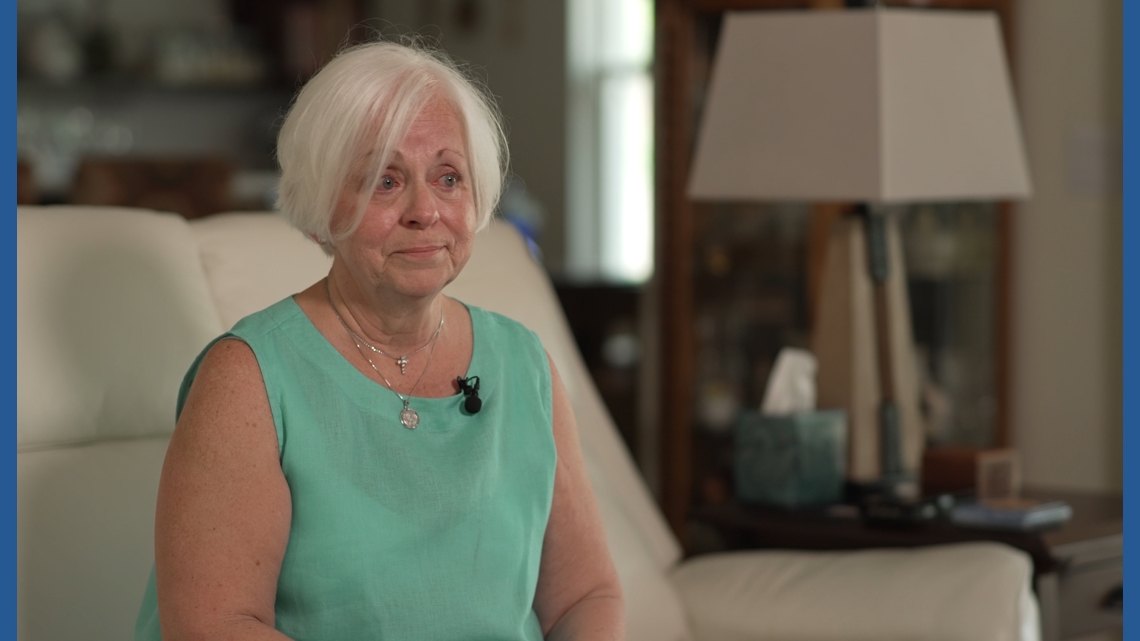
Mary Tielve thought she was doing the right thing. After a routine root canal, her tooth started bothering her again. She was going to need another surgery. But the dentist couldn’t see her for several months.

This story continues below.
So he handed her a prescription for clindamycin — telling her only not to take it unless she absolutely had to, without explaining why.
“I had no idea what it was,” Tielve said. “Didn’t think anything about taking an antibiotic because I trust that dentist or doctor knows what they’re doing.”
When the pain got worse, she started taking the medication. After she finally found an oral surgeon who could perform the procedure, she was again prescribed clindamycin to prevent a possible infection.
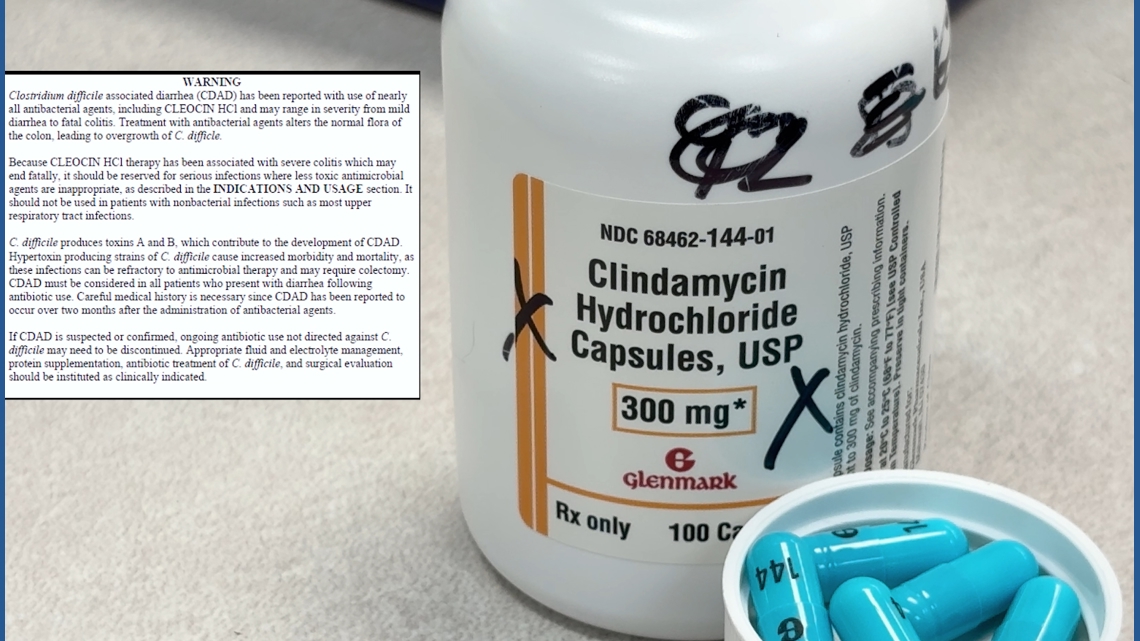
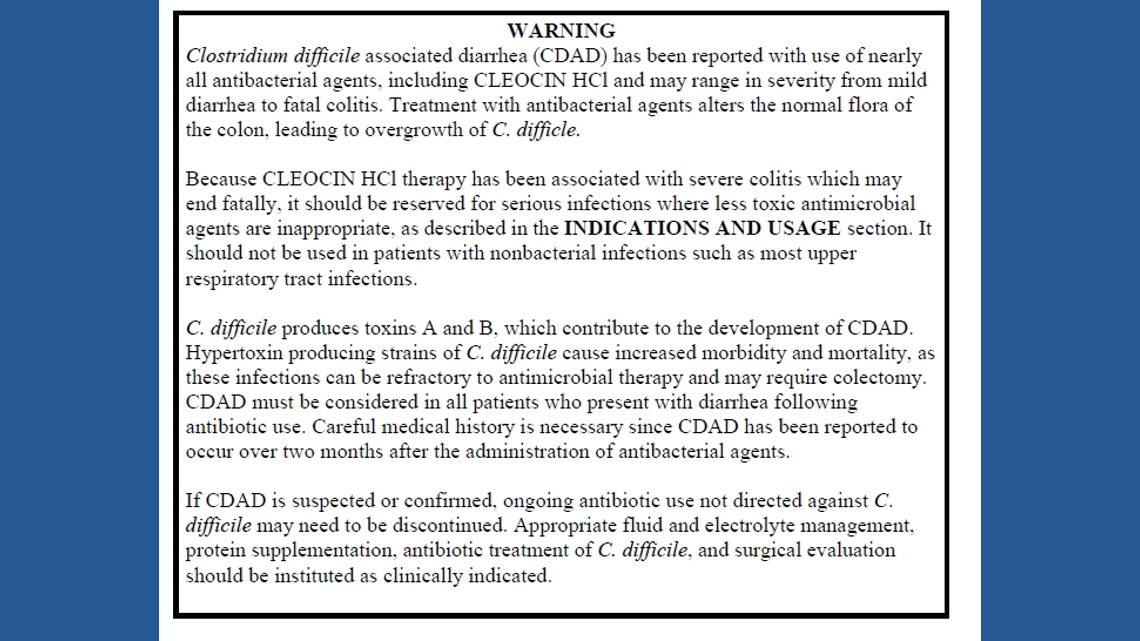
What she says she wasn’t told is that the drug carries a black box warning — the most serious caution the Food and Drug Administration issues — alerting doctors to a dangerous and potentially deadly side effect.
“Do you have any problems with antibiotics? Any digestive issues? Nobody asked me,” said Tielve.
About a week and a half after finishing her second course of the drug, the symptoms began. Shivering chills. A fever spiking to 103 degrees. Severe cramping, bloating, bathroom issues, and total exhaustion. One doctor told her she was fine. It wasn’t until she got a second opinion that she was diagnosed with Clostridioides difficile, commonly known as C. diff.
“When I was told C. diff — I had heard of it, but I really had no idea what it was,” she said.
Because bacteria from the mouth can travel throughout the body, dentists sometimes prescribe antibiotics after oral surgery. Clindamycin was long considered the go-to option for patients allergic to penicillin.
But research has shown the powerful drug can disrupt a healthy gut, creating conditions that allow a dangerous bacteria to take hold: Clostridioides difficile, commonly known as C. diff.
In serious cases, C. diff releases toxins that rapidly destroy the intestinal lining.
The Centers for Disease Control and Prevention estimates roughly 250,000 people contract C. diff every year, and about 15,000 of them die. The drug is effective, but advocates say there are safer options, especially consider the medication is often used as a prevention tool. If the medication is used, they feel patients should be given more information about potential side effects to make sure they respond quickly if they occur.
To understand just how widespread the problem is in Georgia, researchers at Georgia Tech’s Center for Health Analytics and Informatics teamed up with the state Department of Public Health. Their analysis draws from the Georgia All-Payer Claims Database — a massive resource signed into law by Governor Kemp in 2020 that compiles insurance data from every payer.
The database spans more than 2 billion medical, dental, and pharmacy claims dating back to 2018, giving researchers a rare pre-COVID baseline from which to track prescribing trends over time.
For the Dental Antibiotic Stewardship program, the team specifically focused on clindamycin prescribed during routine preventive dental visits — not major oral surgeries, where antibiotic use carries a different rationale — to identify prescribing that may be difficult to justify under current medical guidelines.
What they found was the top 10 percent of dental providers who prescribed clindamycin prophylactically, accounted for 57 percent of the prescriptions filled. In other words, the vast majority of prescribers have largely gotten the message to cut back — but a small group continues writing prescriptions at the same rates as before, or even higher.
The researchers also found a notable geographic divide: rural areas showed higher prescribing rates than metro urban areas. Researchers say this likely reflects a pattern common to many public health shifts, where some practitioners are slow to adopt updated guidance — not out of indifference, but because they may lack the time, awareness, or institutional support to change long-standing habits.
There’s also a demographic pattern in who is receiving these prescriptions. Older women — particularly those 75 and older.
Researchers say this may reflect a well-intentioned but outdated instinct to protect higher-risk patients from infection, without fully accounting for the serious risks the antibiotic itself can pose. As one researcher put it, the harms from the antibiotics themselves can outweigh the benefits on a population scale.
DPH says it’s primary role is surveillance and data, but that it does share the findings with the Board of Dentistry and the Department of Community Health provides “education and outreach to prescribers and presentations at dental conferences.”
DPH also added a survey to the Board of Dentistry’s license renewal process to collect even more information on prescribing practices.
The APCD data has its limits. Because the analysis is based on filled prescriptions captured through insurance claims, it does not account for prescriptions that were written but never picked up. Researchers also cannot see specific details about a provider’s training, age, or practice history — only the patterns their prescribing leaves behind in the claims data.
There is some encouraging news.
Clindamycin prescribing rates have declined since 2019, and the downward trend holds across both rural and urban populations. Still, more than 3,000 prescriptions were filled in Georgia by dental patients in 2024.
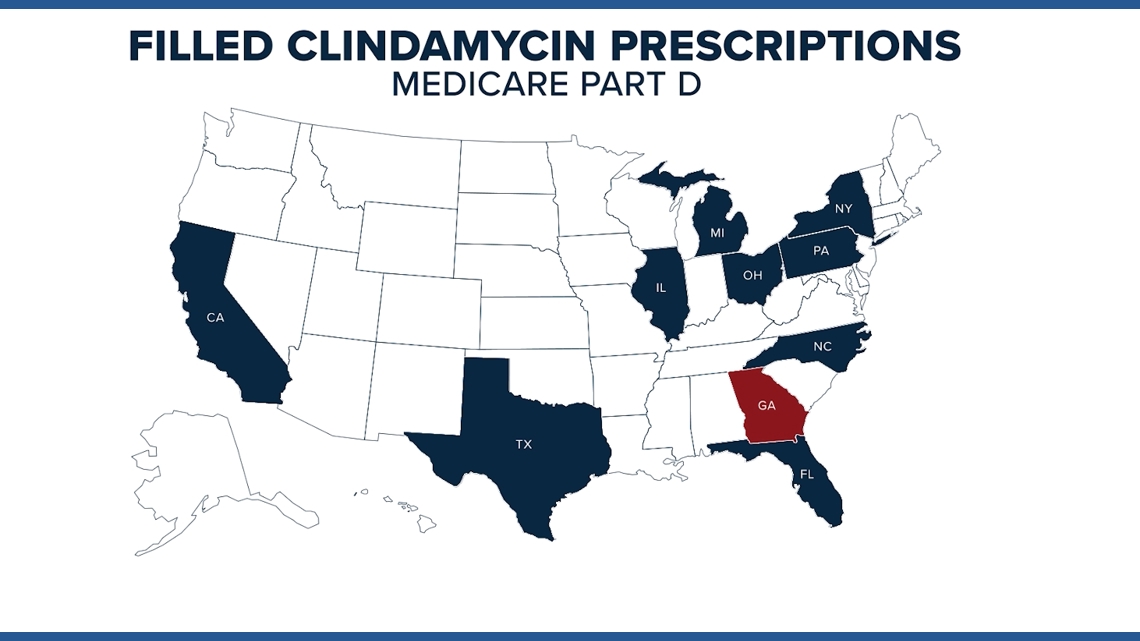
Given the age of most people filling those prescriptions, 11Alive Investigates studied another data set – Medicare claims.
It shows Georgia ranks among the top ten states in the country for clindamycin prescriptions.
When Tielve learned that Florida, where she now lives, ranked 2nd in the country in Medicare clindamycin claims, her reaction was visceral.
“That just gave me chills,” she said. “That’s insane.”
Researchers say the goal of making the data public is not to shame providers, but to give dentists and physicians the information they need to take a fresh look at their own practices — and to empower patients to ask better questions.
11Alive Investigates reached out to several of the top-prescribing dentists identified in the data. None returned calls for comment.
Meanwhile, Tielve’s ordeal has continued well past her diagnosis. She has relapsed multiple times, cycling through courses of other powerful medications. Because of the complications, she had to have another tooth extracted, this time without any antibiotics.
She even tried VOWST — a treatment she affectionately calls “the poop pill,” which uses human fecal microbiomes to try to restore healthy gut bacteria. The 12-pill course carries a price tag of $20,000, and she had to fight her insurance company to get it approved. She began the treatment in April.
“I just feel for people that either don’t have insurance or don’t have what my sister calls my New York tenacity,” she said.
Once you have C. diff, she has learned, antibiotics become a source of dread rather than comfort. She now faces ongoing monitoring for conditions like Crohn’s disease, IBS, and ulcerative colitis — all potential long-term consequences of a C. diff infection. Her husband has had to travel to New Jersey alone for much of the past year to manage his medical care, because Tielve could not make the trip.
“You lose your confidence, you lose your life, pretty much,” Tielve said. “Your social life is gone. Your health is gone. It’s a nightmare.”
Tielve’s message to other patients is simple: don’t assume a prescription is without risk just because it came from a dentist’s office. Before filling any antibiotic prescription, she urges patients to ask whether the medication is truly necessary, whether a safer alternative exists, and what side effects they should watch for — questions, she says, that her own doctors never thought to raise.