

Listen to this article
Estimated 3 minutes
The audio version of this article is generated by AI-based technology. Mispronunciations can occur. We are working with our partners to continually review and improve the results.
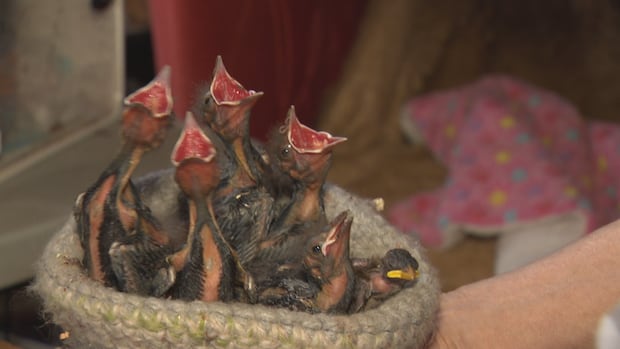
On Thursday, Candy Gallant, founder of P.E.I. Wildlife Rescue and Rehabilitation, had around 75 baby starlings in her home — but those numbers are low given the amount she’s seen so far this year.
“I did have up to 150 literally hours ago,” Gallant told CBC News in her Miscouche home. “I’ve got a couple farmed out for a few days because I can’t physically feed them all.
“This year is a banner year for starlings. I’ve gotten up to 50 in a day.”
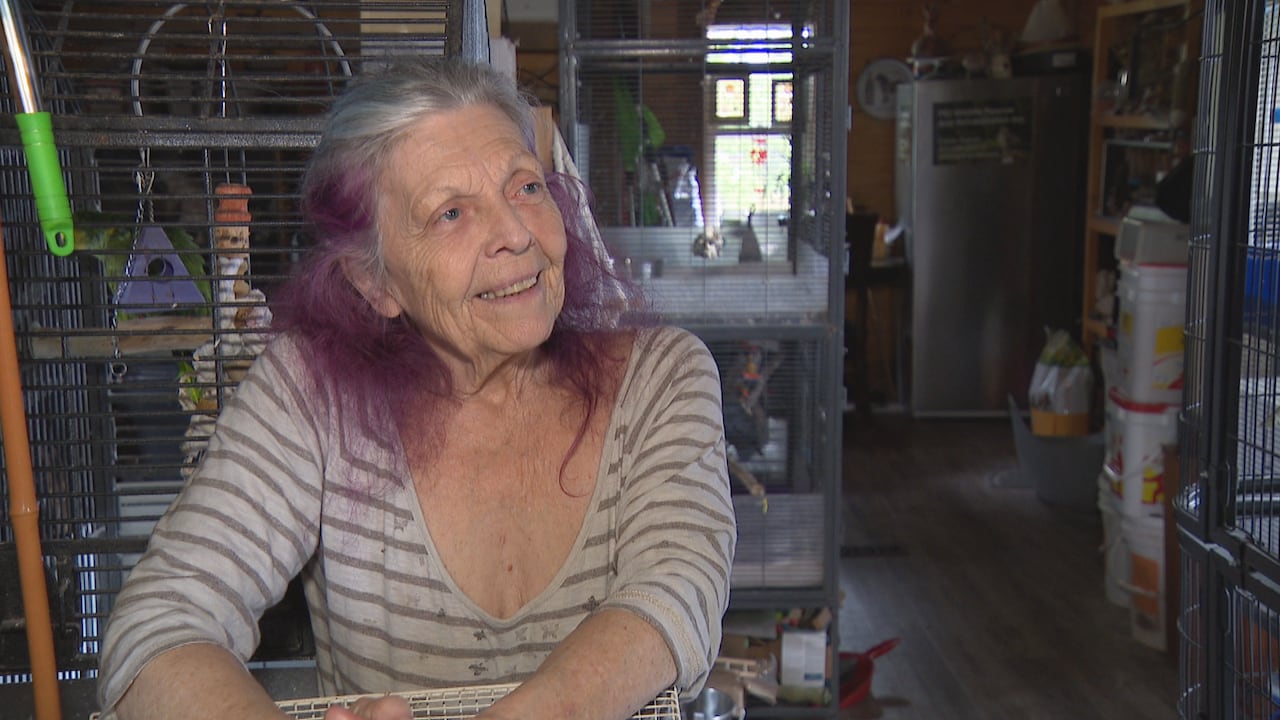 Candy Gallant, founder of P.E.I. Wildlife Rescue and Rehabilitation, has been taking care of rescued, injured and abandoned wildlife on P.E.I. for more than 50 years. (Aaron Adetuyi/CBC)
Gallant, a licensed wildlife rehabilitator, is trying to help Islanders to better understand how to handle wildlife nesting on their properties. She has been taking in baby starlings found roosting in barbecues, eaves and air vents in homes across Prince Edward Island.
“Anything that looks like a tube that they can go in, they’ll go in and nest,” she said.
Gallant said homeowners should never remove nests themselves. Instead, she urges residents to wait until the baby birds leave the nest of their own accord — typically two weeks after they start chirping loudly — or contact a professional to remove the nest safely.
“Unfortunately, some people are just not happy with having them in their barbecues or in their eaves and they close them in,” she said.
“Or they just take the babies out…. A little bird without feathers that doesn’t know how to eat yet will starve to death, freeze to death on the ground.”
To prevent unwanted nests, Gallant encourages homeowners to cover any exposed spaces that birds could enter. She also urges Islanders to undertake home renovations outside nesting season when possible.
“We’re making places that look like fabulous homes for many of our wildlife,” Gallant said. “We just need to make it so that they don’t have a welcome mat sitting at our holes and our attics or our barbecues. If they don’t have that hole, they’re not coming in.”
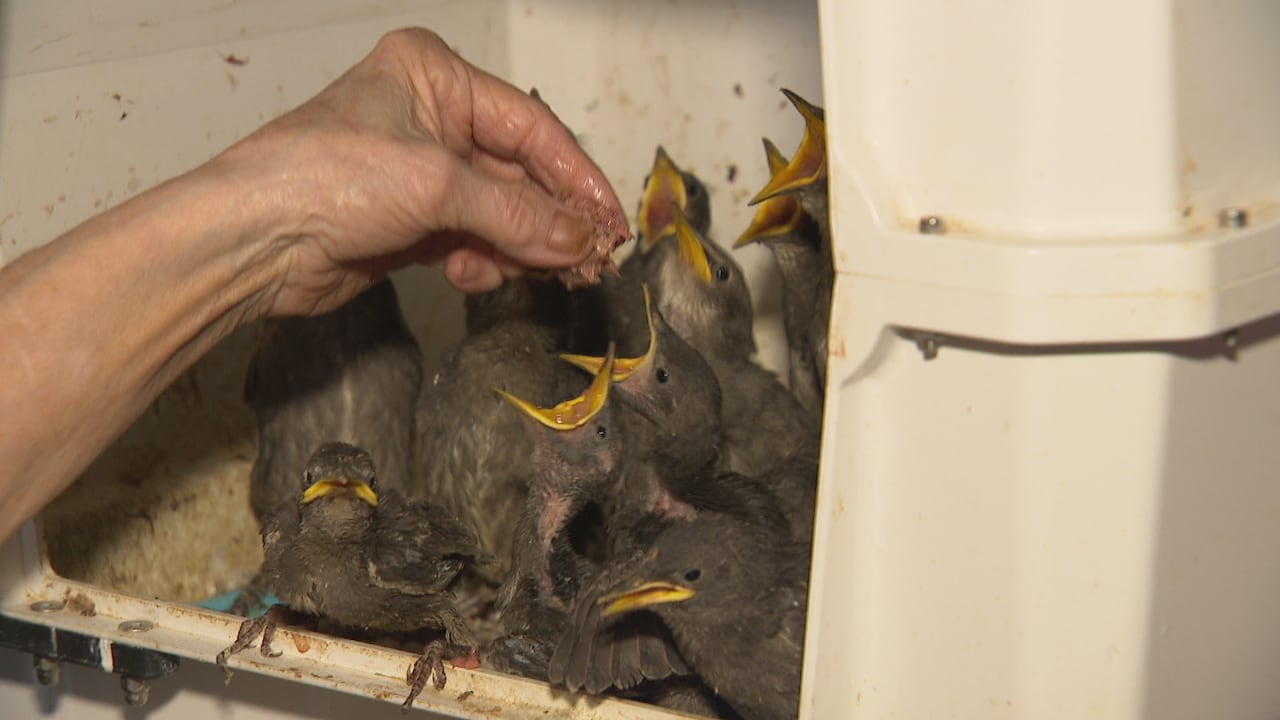 Candy Gallant, a licensed wildlife rehabilitator, feeds a brood of baby starlings in her house in Miscouche, P.E.I. She says she’s received up to 50 in a day this season. (Aaron Adetuyi/CBC)
If homeowners cannot wait for baby starlings to leave nests on their own, she instructs Islanders to call P.E.I. Wildlife Rescue. Gallant said she will then step in to take and raise the birds “begrudgingly.”
She expects to receive calls to take starlings until early September. While she’s unsure why there have been so many this year, Gallant said the problem is most likely exacerbated by people.
“I’m assuming it’s because we’re building so many new complexes everywhere and we’re cutting down more and more trees,” she said. “P.E.I. is not an infinite place.”
Gallant has been taking care of rescued, injured or abandoned wildlife on P.E.I. for more than 50 years — her full house serves as a testament to her life’s work.
“I just think we need to live with nature,” she said. “I’m proof we can live together without having any issues.”