
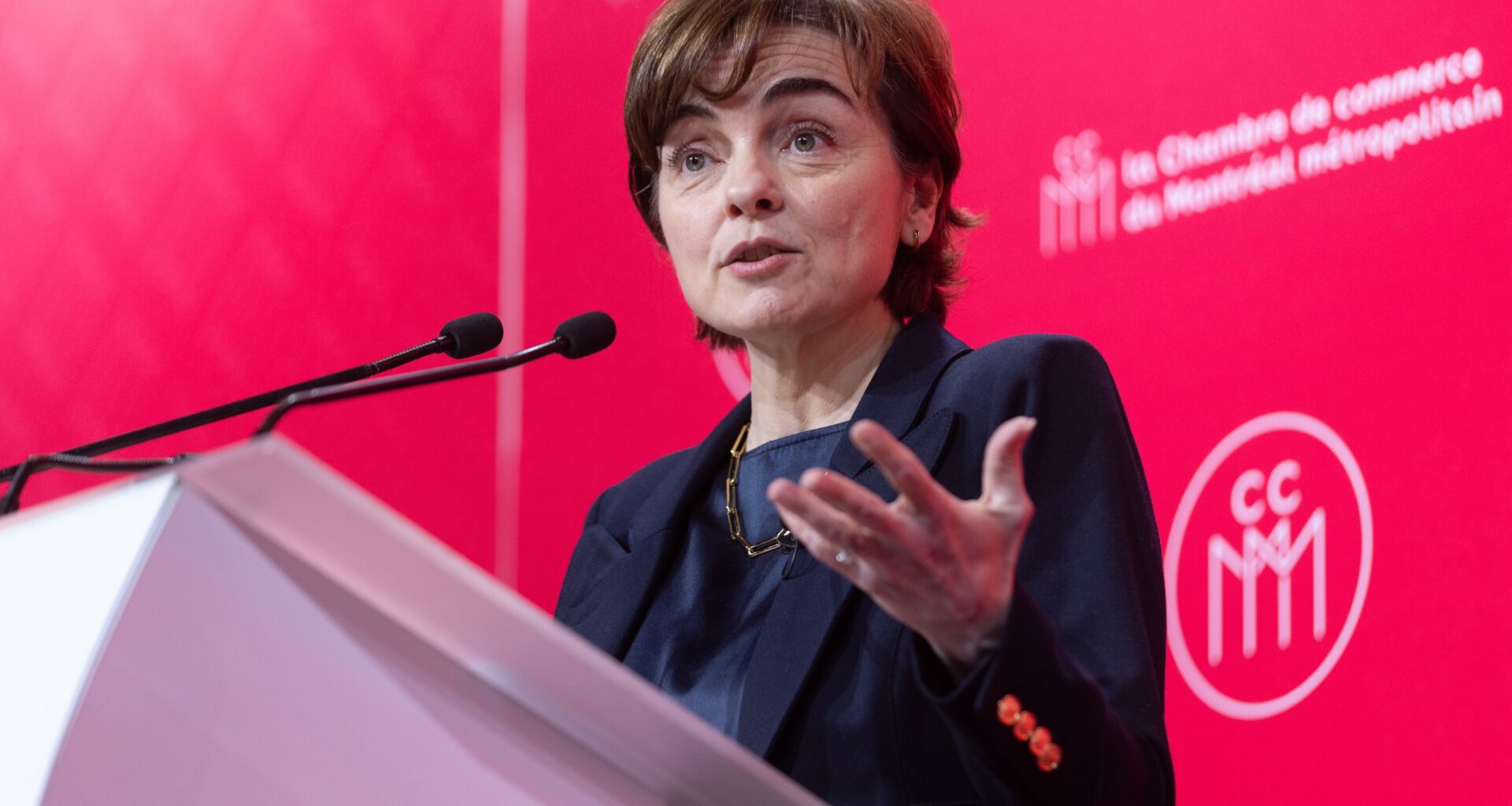
Premier Christine Fréchette made an overture to Quebec anglophones on Monday, promising to set a “different tone” after years of acrimony between the Coalition Avenir Québec government and the community.
In an aside during a speech to a Montreal business audience, Fréchette said she wanted to talk about the importance of Quebec’s English-speaking community.
“My overarching responsibility to promote and protect French will not change, but tone matters,” she said in English.
“As the premier of all Quebecers, I hope to bring a different tone to these discussions.”
Fréchette has been criticized for not speaking directly to anglophones in previous speeches since becoming premier in April.
Under former premier François Legault, the CAQ government clashed with the anglophone community over language laws, the financing of English universities and the government’s plan to abolish English school boards.
On Monday, Fréchette pointed to Quebec’s bid for Montreal to host a proposed NATO global defence bank as proof that her government values anglophones.
“We have highlighted the presence not only of a large francophone community, but also an important anglophone community in Montreal and the availability of English-language health and education services as well.”
Fréchette added: “I firmly believe that the vibrant presence of our historically important English-speaking community — not only in Montreal, but throughout Quebec — is an integral part of our ‘vivre-ensemble.’”
She noted that of Quebec’s nine million residents, roughly one million are anglophone — and that they speak more French today than ever before. “I think that deserves to be commended,” she said in French.
Since taking office, Fréchette has faced sharp criticism from the anglophone community over her government’s plan to move 27,000 students from English-language adult education and vocational programs into the French system.
Her remarks on Monday came during a wide-ranging speech in which the premier laid out her government’s economic agenda for Montreal and Quebec before a Chamber of Commerce of Metropolitan Montreal audience of 1,100 people.
Fréchette said her government will boost the economy by raising made-in-Quebec procurement targets, cutting taxes for some small and medium-size businesses, reducing red tape and reactivating the PEQ immigration program for two years — measures she framed as essential as U.S. tariffs continue to bite Quebec’s economy.
The premier also vowed to improve Quebec’s dilapidated major infrastructure, much of which was built in the 1960s and ’70s and is now reaching the end of its useful life.
She said her approach will prioritize maintenance over new construction, and announced that the finance minister will soon release a formal infrastructure maintenance policy.
Montreal, which generates 54 per cent of Quebec’s GDP, is the engine of the province’s economy, Fréchette noted, as she pledged to reset what she acknowledged has been a strained relationship between the provincial government and the city.
She offered two promises to Montreal, though they did not include dollar figures or timelines.
She said the CAQ government plans to help finance a major public transit project in Montreal’s east end and a long-promised major expansion of the Palais des congrès.
The convention centre project would include a hotel, adding 13,000 square metres of space — enough to accommodate 50 additional events per year, the government says.
Fréchette said the project must also include funding from Ottawa, the City of Montreal and the private sector.
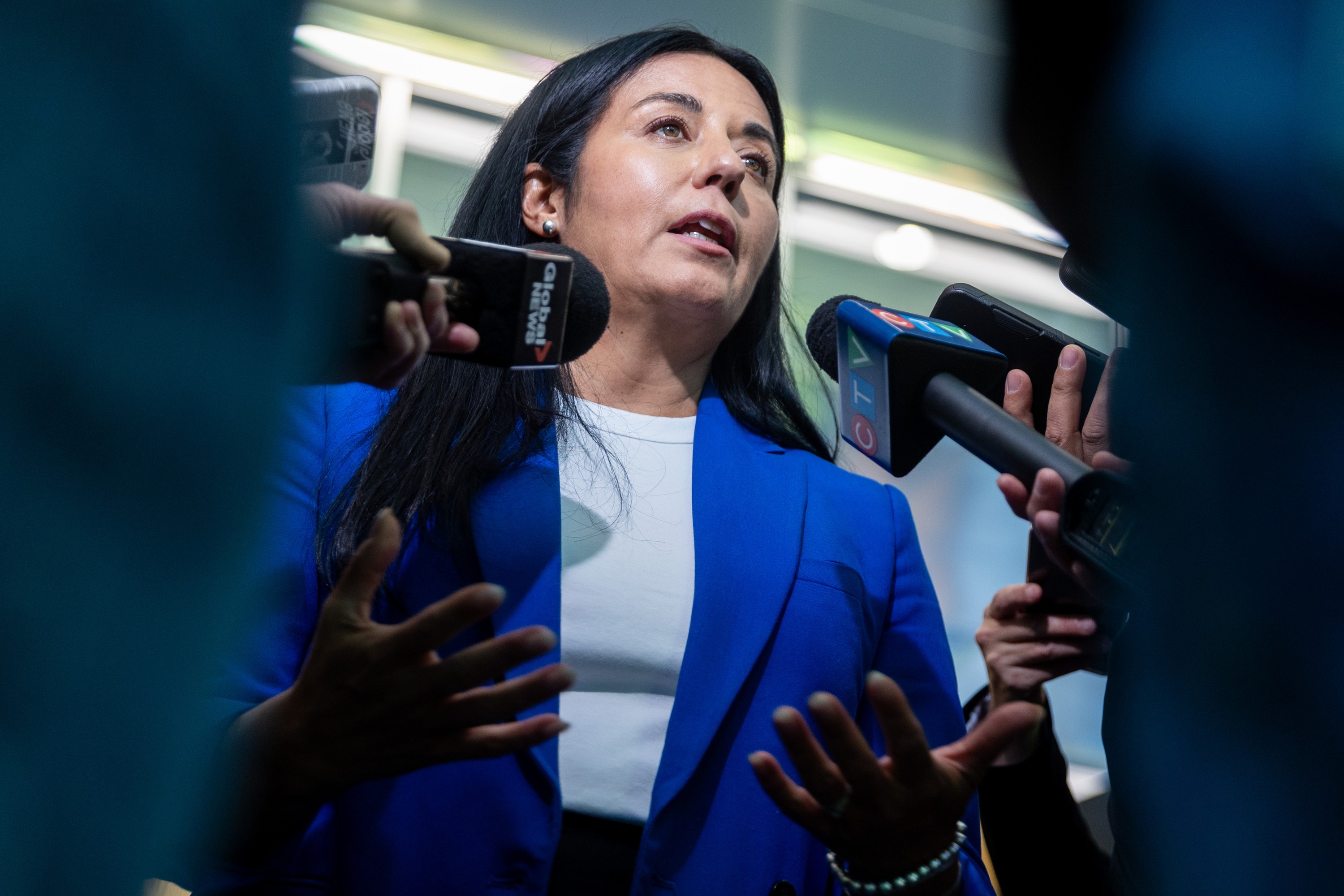 Soraya Martinez Ferrada, mayor of Montreal, speaks to media following a speech by the premier in Montreal on Monday, June 1, 2026. Evan Buhler / Montreal Gazette
Among those listening to Fréchette was Montreal Mayor Soraya Martinez Ferrada.
Speaking to reporters later, Martinez Ferrada said she was glad to hear Fréchette say it’s time to stop pitting Montreal against Quebec’s regions.
However, “I don’t think there was anything new in the premier’s speech,” Martinez Ferrada said. “I think we’re still waiting for something more concrete.”
She said she hopes the coming provincial election campaign will encourage the CAQ and other parties to explain what they will do to help Montreal in areas such as housing and homelessness.
Martinez Ferrada said she was happy to hear Fréchette “acknowledge our important anglophone population.” The mayor said Montreal’s large number of trilingual workers is a major economic asset.
However, she added, “French must continue to be protected and promoted. If we don’t protect French, we’ll lose that competitiveness and the identity that matters — that of being a Quebec people.”
Editor’s Picks

A Montreal native, Andy Riga has reported for The Gazette since 1991, covering technology, transport, business, and now politics, language and other Quebec issues.
Montréalais d’origine, Andy Riga est journaliste à la Gazette depuis 1991. Après avoir couvert la technologie, le transport et les affaires, il traite aujourd’hui de la politique, des enjeux linguistiques et d’autres sujets d’actualité au Québec.
ariga@postmedia.com